Lucas 5
Nǫ̀htsı̨̨ Nı̨̨htł'è · Toca un versículo para ver sus referencias cruzadas.
Zezì t'akwełǫ̀ǫ̀ edecheekeè gòį̀hchì
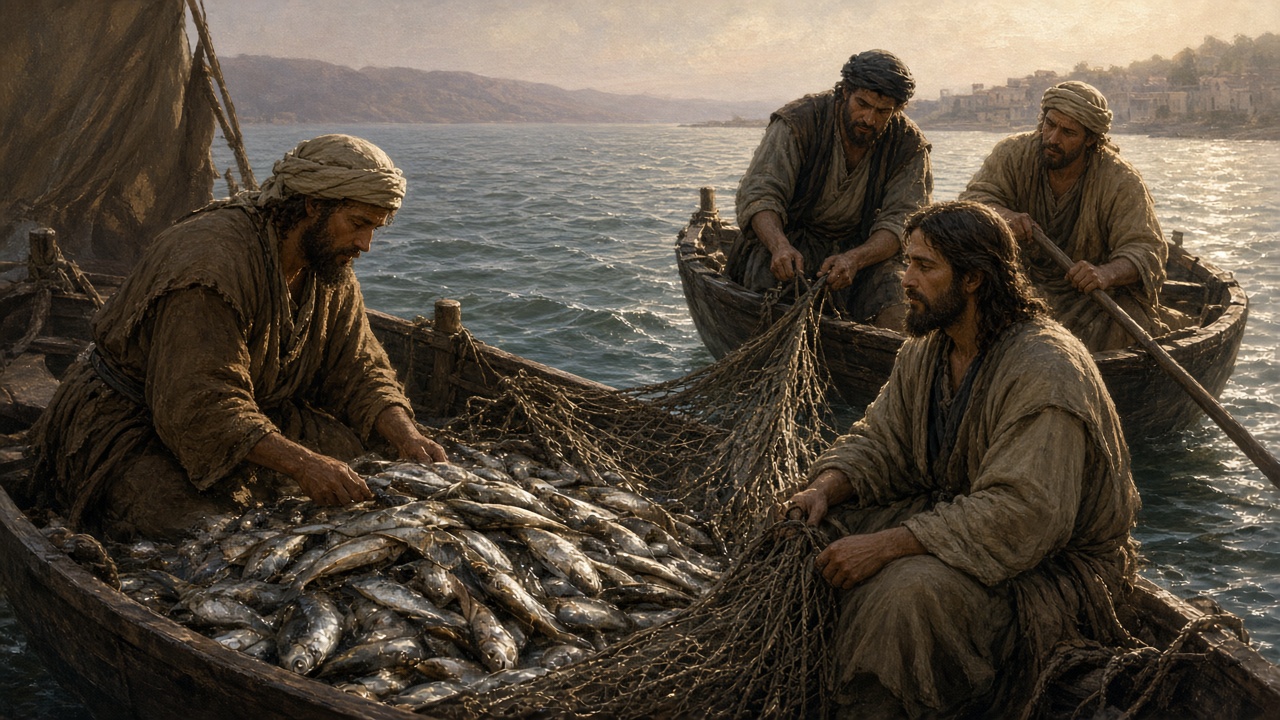
1Įłàà Zezì Genesaret-tì gà nàwo ekò, dǫ łǫ Nǫ̀htsı̨ weyatıì geèhkw'ǫ ha gı̨ı̨wǫ t'à, wemǫǫ̀ ełek'e aget'ı̨. 2Zezì tabàa elà nàke whela yaɂı̨. Łı-k'aàdèe-dǫǫ̀ edemį̀ k'enagehtse t'à gıts'ǫ elà aìla nǫǫ̀. Łı-k'aàdèe-dǫǫ̀ edemį̀ k'enagehtse|src="HK074B.tif" size="span" ref="5.2" 3Zezì Sımon wets'ǫ elà ne sìı yeyìetła. Zezì Sımon ts'ǫ̀ hadı, “Yaazea nets'ıhɂè,” yèhdı. Zezì elà yìı wheda gà dǫ hoghàehtǫ.
4Hòt'a dǫ ts'ǫ̀ goı̨de tł'axǫǫ̀ Zezì Sımon ts'ǫ̀ hadı, “Łı łǫ į̀lì ha ne t'à, tagoǫhwhàà ts'ǫ̀ ts'ııɂè gà mį̀ tèı̨wa,” yèhdı.
5Sımon yets'ǫ̀ hadı, “Gots'ǫ̀ K'àowo, to ghàà mį̀ k'alats'ı̨ı̨dè, hanìkò t'asìı wı̨ı̨zìı ts'ehłì-le. Hanìkò ‘hanele,’ sį̀ı̨dı nı̨dè mį̀ tènaehwha ha,” yèhdı.
6Hagı̨į̀là tł'axǫǫ̀ łı łǫ gehłì t'à gımį̀ tàdaadlà. 7Eyıt'à gıàgı̨ą elà eyıì-le t'à-aget'ı̨ı̨ sìı gots'àgedı ha gı̨ı̨wǫ t'à gots'ǫ̀ nàgeetsį̀. Gogà nègı̨ı̨ɂe ekò elà į̀łah weyìı łıwe sıì dagoòɂǫ agį̀į̀là t'à k'àhdzǫ elà gıxè tèı̨là-t'e.
8Sımon-Peter hanì nàhòwo yaɂı̨ ekò Zezì ts'ǫ̀ nàgòı̨hgè gà hayèhdı, “Sets'ǫ̀ K'àowo, hołı̨ı̨-hohtsı̨ı̨-dǫǫ̀ aht'e t'à segà anet'ı̨-le,” yèhdı. 9Sımon-Peter eyıts'ǫ dǫ wexè aget'ı̨ı̨ sìı łıwe łǫ gehłì t'à gıgha enıìyah dìì. 10Sımon weàgı̨ą, Zebedee weza nàke James eyıts'ǫ John, ededı̨ sı gıdaà hagòjà t'à gıgha enıìyah lanì.
Eyıt'à Zezì Sımon ts'ǫ̀ hadı, “Nı̨ı̨jı̨-le! Jǫ gots'ǫ ı̨daà segha dǫ į̀hchı ha,” yèhdı. 11Eyı tł'axǫǫ̀ elà dèè k'e nègı̨į̀sı, t'asìı hazǫǫ̀ weyìı aìlaà agį̀į̀là gà Zezì k'èè geède.
Dǫ wekwǫ̀ tàda t'à eyaelı̨
12Įłàà Zezì kǫ̀ta wheda ekò, dǫ ı̨łè gokwǫ̀ tàda t'à eyaelı̨ xè wekaà wek'e kàaɂa-le, eyı nììtła. Zezì eɂı̨ ekò yegà ets'ǫ̀zhıìɂaà nàgòı̨hgè gà yeghǫnàdaetì, hadı, “K'àowo, haneewǫ-ı̨dè k'aàt'ıì ası̨ı̨le ha dìì-le,” yèhdı.
13Zezì edılà yek'e ayį̀į̀là gà hayèhdı, “Hęɂę, hahwhǫ. K'aàt'ıì anede!” yèhdı. Ekòet'ıì wekwǫ̀ tàda whìle ajà.
14Zezì yets'ǫ̀ hadı, “Nets'ǫ̀ dànàhòwoo sìı dǫ wı̨ı̨zìı ts'ǫ̀ haı̨dı-le. Nek'ahoeta gha yahtıı ts'àątła. Moses wenàowoò k'ę̀ę̀ nehołı̨į̀ neghǫ nahoezhe k'èxa yahtıı t'asìı negha k'egııhk'ǫ̀. Hanì-ı̨dè weghàà k'aàt'ıì anaąjà dǫ gık'èezǫ ha,” yèhdı.
15“Dǫ wı̨ı̨zìı ts'ǫ̀ haı̨dı-le,” yèhdı kò eyı godı dǫ hazǫǫ̀ ta ts'ǫ̀ ajà, eyıt'à dǫ łǫ Zezì weyatıì gıìkw'o eyıts'ǫ k'aàt'ıì agede ha gı̨ı̨wǫ t'à Zezì ts'ǫ̀ geède. 16Hanìkò Zezì yahtı ha gowhatsǫǫ̀ gòɂǫǫ ts'ǫ̀ anat'į̀.
Dǫ wekw'ǫǫ̀ ełaı̨dèe sìı k'aàt'ıì ajà
17Įłàà Zezì kǫ̀ goyìı dǫ hoghàehtǫ. Pharısee gı̨ı̨lı̨ı̨ eyıts'ǫ Nǫ̀htsı̨-yatıì-k'ègedìı-dǫǫ̀ Galılee nèk'e gots'ǫ, Judea nèk'e gots'ǫ eyıts'ǫ kǫ̀ta Jerusalem gots'ǫ hazǫǫ̀ eyı nègı̨ı̨de t'à goyìı geèhkw'e. Zezì dǫ k'aàt'ıì agole gha Nǫ̀htsı̨ wets'ǫ t'asìı nàtsoo wets'ǫ̀-èlı̨. 18Zezì dǫ hoghàehtǫ ekò, dǫ mǫ̀hdaa dǫ wekw'ǫǫ̀ ełaı̨dèe tè k'e whetı̨ı̨ Zezì ts'ǫ̀ geèhchì. Zezì wenadąą̀ nègıhtè ha hogeèhdzà. 19Hanìkò dǫ łǫ gonadąą̀ nàgeèhza t'à goyageedè ha dìì. Eyıt'à dahmò ka dekegıìchì gà xàgǫǫɂàa k'è gogèhtsı̨. Eyı dǫ tè k'e whetı̨ xè ı̨zhıì dǫ gonı ts'ǫ̀ hodàgeèlì, Zezì wenadąą̀ nègı̨ı̨htı̨.
20Zezì dǫ gıgha ehkw'ı-ahodı gok'èezǫ t'à, dǫ wekw'ǫǫ̀ ełaı̨dèe ts'ǫ̀ hadı, “Àgı̨ą, nehołı̨į̀ neghǫ nahoazha,” yèhdı.
21Pharısee gı̨ı̨lı̨ı̨ eyıts'ǫ Nǫ̀htsı̨-yatıì-k'ègedìı-dǫǫ̀ hagı̨ı̨wǫ, “Eyı dǫ amìı aht'e edeewǫ? Nǫ̀htsı̨ k'èch'a gode. Nǫ̀htsı̨ zǫ gohołı̨į̀ goghǫ nahoele hǫt'e,” hagı̨ı̨wǫ.
22Zezì dànì nànıgedèe sìı gok'èezǫ t'à dagoehke, “Dànìghǫ naxıdzeè yìı hanì nànıahdè? 23Dǫ wekw'ǫǫ̀ ełaı̨dèe sìı dàwets'edı nı̨dè denahk'e dezhì-le. ‘Nehołı̨į̀ neghǫ nahoazha,’ ts'edı hanì-le-ı̨dè ‘Nıį̀tła gà k'eı̨tło.’ 24Dıı nèk'e Dǫ-wet'àaɂàa-deè hołı̨ı̨ dǫ ghǫ nahoele ha weghàhòt'ǫǫ sìı wek'èahsǫǫ̀ anaxehłe ha,” gòhdı tł'axǫǫ̀ dǫ wekw'ǫǫ̀ ełaı̨dèe sìı ts'ǫ̀ hadı, “Nıį̀tła, netè nı̨į̀ɂa gà nekǫ̀ ts'ǫ̀ naı̨tłe,” yèhdı. 25Ekòet'ıì eyı dǫ, dǫ hazǫǫ̀ gonadąą̀ nıìtła gà edetè nıìɂah eyıts'ǫ edekǫ̀ ts'ǫ̀ naèhtła. Naeda xè Nǫ̀htsı̨ ghàsǫedı. 26Dǫ hazǫǫ̀ gıgha enıìyah dìì t'à Nǫ̀htsı̨ ghàsǫgeedı, hagedı, “Dıı dzęę̀ k'e enıìyah nechàa goxè nàhòwo,” gedı.
Levı Zezì k'èè èhtła
27Eyı hagòjà tł'axǫǫ̀ Zezì naèhtła. Sǫǫ̀mba-nàhtsį̀ı̨-dǫǫ̀ Levı wìyeh ladà k'e eghàlaeda yaɂı̨. Zezì “Sek'èı̨tła!” yèhdı. 28Eyıt'à Levı t'asìı hazǫǫ̀ aìlaà ayį̀į̀là gà Zezì k'èè èhtła.
29Eyı tł'axǫǫ̀ Levı edekǫ̀ Zezì gha nàsı̨ whehtsı̨. Sǫǫ̀mba-nàgehtsį̀ı̨-dǫǫ̀ łǫ eyıts'ǫ dǫ eyıì-le łǫ goxè shègezhe. 30Hanìkò Pharısee gı̨ı̨lı̨ı̨ eyıts'ǫ gıta gots'ǫ Nǫ̀htsı̨-yatıì-k'ègedìı-dǫǫ̀ Zezì wecheekeè ts'ǫ̀ sǫagedı, “Dànìghǫ sǫǫ̀mba-nàhtsį̀ı̨-dǫǫ̀ eyıts'ǫ hołı̨ı̨-hogehtsı̨ı̨-dǫǫ̀ xè shèahzhe xè aahdǫ?” gògedı.
31Zezì gots'ǫ̀ hadı, “Dǫ hotıì geedaa sìı nàèdı-k'èezǫǫ gıgha wet'àaɂà nıìle, dǫ eyagı̨ı̨lı̨ı̨ sìı zǫ nàèdı-k'èezǫǫ gı̨ı̨wǫ hǫt'e. 32Dǫ ehkw'ı geedaa sìı gıkayahtı gha jǫ ts'ǫ̀ ahjà nıìle, hanìkò hołı̨ı̨-hogehtsı̨ı̨-dǫǫ̀ sìı edek'egı̨ı̨lı̨ gha ahjà,” gòhdı.
Edets'egǫ ghǫ Zezì dageehke
33Zezì ts'ǫ̀ hagedı, “John-Baptıst wecheekeè t'aats'ǫǫ̀ edegegǫ xè yagehtı, eyıts'ǫ Pharısee gıcheekeè sı haget'ı̨, hanìkò nı̨ necheekeè t'aats'ǫǫ̀ shègezhe xè gedǫ,” gògedı.
34Zezì gots'ǫ̀ hadı, “K'ǫadzàa ı̨łaà goxè wheda et'ıì, dǫ gıghǫ nìı̨dee sìı edegegǫ ha nì? 35Į̀le ne, hanìkò ı̨łè dzęę̀ k'e k'ǫadzàa goghǫ wììchı ha, eyı dzęę̀ k'e nı̨dè edegegǫ ha hǫt'e,” gòhdı.
36Zezì dıı godı t'à goxè godo hadı, “Dǫ wı̨ı̨zìı goht'ǫ gòò gots'ǫ ehtł'ı̨ tàyeehdlà gà goht'ǫ zǫą k'e nètèyeèlı nıìle. Hayį̀į̀là nı̨dè goht'ǫ gòò yedıhohtsı̨ ha, eyıts'ǫ ehtł'ı̨gòò goht'ǫ zǫą k'e nètèyeèlı nı̨dè wexıìzǫ ha-le. 37Eyıts'ǫ dǫ wı̨ı̨zìı jìetì wegòò hoèlı̨ı̨ sìı jìetìwò wezǫą yìı yehtł'ì nıìle. Hayį̀į̀là nı̨dè jìetì wegòò ts'ıhɂǫ̀ jìetìwò wezǫą wenìtsǫedlà xè jìetì xàetł'ì ha, eyıts'ǫ jìetìwò wedıhołè ha hǫt'e. 38Į̀le ne, jìetìgòò hoèlı̨ı̨ sìı jìetìwò wegòò yìı ts'ehtł'ì ha hǫt'e. 39Eyıts'ǫ dǫ wı̨ı̨zìı jìetì whaà ı̨htǫ̀ǫ yats'e tł'axǫǫ̀ jìetì wegòò hoèlı̨ı̨ sìı yı̨ı̨wǫ nıìle, jìetì whaà ı̨htǫ̀ǫ sìı denahk'e wegha nezı̨ t'à,” gòhdıì goxè godo.
¿Sabías que…?
Llamados, sanaciones y vino nuevo
- Jesús enseñó a la gente desde la barca de Simón, en el lago de Genesaret, mientras la multitud se apretaba en la orilla. El nombre proviene de una ciudad de Neftalí, en la orilla occidental, antes llamada Cineret; la llanura junto al lago, notable por su fertilidad y su belleza, era llamada “el Paraíso de Galilea”.Fuentes: Gennesaret · el propio texto bíblico
- Simón, también llamado Pedro, creció en Betsaida, en la costa occidental del mar de Galilea, y aprendió el oficio de pescador. Santiago y Juan, sus socios en la otra barca, eran hijos de Zebedeo, un pescador galileo; el Diccionario Bíblico de Easton (1897) infiere que Zebedeo tenía cierta posición en Capernaúm, pues poseía dos barcas y jornaleros.Fuentes: Simon Peter · James (Son of Zebedee) · Zebedee · el propio texto bíblico
- El hombre a quien Jesús llamó del puesto de los impuestos se llama Leví en este capítulo; en otros relatos es Mateo, hijo de Alfeo, recaudador de impuestos en Capernaúm. El Diccionario Bíblico de Easton (1897) sugiere que quizá adoptó el nombre Mateo en grato recuerdo de su llamado, y describe el gran banquete que ofreció ese mismo día como una fiesta de despedida.Fuentes: Matthew · el propio texto bíblico
Notas escritas con ayuda de IA a partir de fuentes abiertas (Theographic Bible Metadata, CC BY-SA 4.0; Easton’s Bible Dictionary, dominio público) y revisadas antes de publicarse.
Lugares de este capítulo
- Gennesaret · Hoy: El Ghuweir · 32.861, 35.507 · versículo 1
- Galilee · 32.760, 35.527 · versículo 17
- Jerusalem · 31.777, 35.234 · versículo 17
- Judea · Hoy: Judea 1 · 31.777, 35.234 · versículo 17
Solo aparecen lugares identificados con alta confianza (90 % o más según las fuentes académicas reunidas por OpenBible). Mapa de la época: DARE (Digital Atlas of the Roman Empire), CC BY 4.0; mapa actual: © colaboradores de OpenStreetMap; lugares: OpenBible.info (CC BY 4.0).
Créditos y licencia de esta traducción
Nǫ̀htsı̨̨ Nı̨̨htł'è
Dogrib: Dogrib Genesis & New Testament New Testament & Portions of Old Testament
copyright © 2009 Canadian Bible Society
Language: Dogrib
Translation by: Canadian Bible Society
Tłı̨chǫ Genesis and New Testament
About Tłı̨chǫ
Tłı̨chǫ (Dogrib) is a Na-Dene (Athabaskan) language. It is spoken by the First Nations Tłı̨chǫ people in the Northwest Territories in Canada. It has the largest number of speakers of any of the Aboriginal language communities in the NWT, and is one of the official languages of the Northwest Territories.
About This Translation
This translation includes the book of Genesis and the New Testament in Tłı̨chǫ. The first edition of the Tłı̨chǫ New Testament was published in 2003. It was a historic event, as it was the first time in more than a hundred years that a complete New Testament was published for one of the Dene First Nations in the Territories. The first edition was well received and quickly sold out. In the meantime the book of Genesis had been completed. Consequently, the 2008 reprint of the Tłı̨chǫ New Testament included Genesis.
Though this translation of the New Testament and Genesis took a total of ten years, the people who worked on it built on years of labor invested by the Tłı̨chǫ people, elders, priests and missionaries, translators, educators, and linguists. The material contained in this book was checked and approved by consultants from Wycliffe Bible Translators and the Canadian Bible Society.
If you are interested in obtaining a printed copy of this Bible, please contact the Canadian Bible Society at http://www.biblescanada.com .
Copyright Information
Dogrib Genesis and New Testament © 2003, 2008 Canadian Bible Society
The text of the Bible in Tłı̨chǫ that appears in this electronic format or website is for personal use only.
Up to five hundred (500) verses of the Bible text in any form (written, visual, electronic or audio) may be quoted without permission. The quoted verses may not be more than 50% of a complete book of the Bible, or more than 25% of the total text of the work in which they are quoted. Prior written permission must be obtained for any other use of the text. Copyright acknowledgement must in all cases appear on the title or copyright page.
For more information on copyright conditions or to apply, visit http://www.biblesociety.ca/copyright .
This translation is made available to you under the terms of the
Creative Commons Attribution-Noncommercial-No Derivatives license 4.0.
You may share and redistribute this Bible translation or extracts from it in any format, provided that:
You include the above copyright and source information.
You do not sell this work for a profit.
You do not change any of the words or punctuation of the Scriptures.
Pictures included with Scriptures and other documents on this site are licensed just for use with those Scriptures and documents.
For other uses, please contact the respective copyright owners.
2014-04-22
Fuente: http://ebible.org/dgrDOGNT/ · eBible.org