Juan 11
Nǫ̀htsı̨̨ Nı̨̨htł'è · Toca un versículo para ver sus referencias cruzadas.
Lazarus ełaı̨wo
1Dǫ ı̨łè Lazarus wìyeh kǫ̀ta Bethany nàdè. Eyı dǫ sıì eyaelı̨. Weba nàke eyı kǫ̀ta nàgedè. Įłè Mary wìyeh eyıts'ǫ ı̨łè Martha wìyeh. 2(Įłàà Mary yìk'eetł'òo Zezì wekè k'e ayį̀į̀là gà edekwìghà t'à yedı̨ı̨tso ı̨lè. Eyı wechı Lazarus dıì eyaelı̨.) 3Eyıt'à weba Zezì danatıgı̨ı̨ɂǫ, “K'àowo, neàgı̨ą weghǫneę̀tǫǫ sìı eyaelı̨,” gıìhdı.
4Zezì yeghǫ ıìkw'o ekò hadı, “Eyı tàda t'à ełaàwı ha nıìle, hanìkò eyı ts'ıhɂǫ̀ Nǫ̀htsı̨ weghàsǫhoedı ha eyıts'ǫ Nǫ̀htsı̨ Weza sı weghàsǫhoedı ha hǫt'e,” gòhdı. 5Zezì Martha, Mary eyıts'ǫ Lazarus goghǫneètǫ hǫt'e. 6Hanìkò Lazarus eyaelı̨ yeghǫ ıìkw'o ekò nàke dzęę̀ ts'ǫ̀ edı̨į̀ whedaa sìı ekǫ ı̨ı̨dà.
7Eyı tł'axǫǫ̀ edecheekeè ts'ǫ̀ hadı, “Judea nèk'e ts'ǫ̀ anats'ııde,” gòhdı.
8Wecheekeè gıts'ǫ̀ hadı, “Gots'ǫ̀ K'àowo, dıì whaà-lea Judea nèk'e gots'ǫ k'aodèe kwe t'à ełaànegìhwhı ha gı̨ı̨wǫ ı̨lè, hanìkò ı̨łaà ekǫ naı̨tła ha neewǫ nì?” gıìhdı.
9Zezì gots'ǫ̀ hadı, “Hoònǫ-daats'ǫ̀-nàke sadzeè gots'ǫ̀ dzęh agǫ̀ht'e sǫnaà? Dǫ dzęh k'etło nı̨dè daèkw'ı ha nıìle. Dzęh t'à wegha xègaat'ı̨ hǫt'e. 10Hanìkò to k'etło nı̨dè daèkw'ı ha, wexè dzęh whìle t'à,” Zezì gòhdı.
11Eyı tł'axǫǫ̀ Zezì hadı, “Goàgı̨ą Lazarus dètı̨ hǫt'e, hanìkò ts'ewèehwhı ha,” gòhdı.
12Eyıt'à wecheekeè hagedı, “Gots'ǫ̀ K'àowo, Lazarus whetı̨ nı̨dè k'aàt'ıì ade ha ne,” gıìhdı. 13Zezì Lazarus ełaı̨wo dıì-adı, hanìkò wecheekeè ekìı whetı̨ hǫt'e dıì-adı gı̨ı̨wǫ ı̨lè.
14Eyıt'à Zezì ehkw'ı gots'ǫ̀ hadı, “Lazarus ełaı̨wo hǫt'e. 15Naxıgha sınà wegà whıhda-le ı̨lè. Hanì-ı̨dè ehkw'ı adı seahwhǫ ha. Hòt'a wets'ǫ̀ ts'ııdè,” gòhdı.
16Thomas (Ełèchǫekèa wìyeh) Zezì wecheekeè ts'ǫ̀ hadı, “Zezì wexè ełaàts'ıde nǫǫ̀ t'à wek'èts'ııdè,” gòhdı.
Zezì Lazarus weba gots'ǫ̀ gode
17Zezì kǫ̀ta Bethany gà nıwà-lea nììtła ekò hòt'a dı̨ dzęę̀ ts'ǫ̀ Lazarus wekw'ǫǫ̀ nègı̨į̀tǫ ı̨lè yeghǫ ıìkw'o. 18Kǫ̀ta Jerusalem gots'ǫ kǫ̀ta Bethany ts'ǫ̀ nàke echı̨ hǫt'e. 19Eyıt'à dǫ łǫ Mary eyıts'ǫ Martha ts'àgede. Gıchı ełaı̨wo t'à gogà geèhkw'e. 20Martha Zezì naetłe yeghǫ ıìkw'o ekò yenìhdǫǫ̀ èhtła. Hanìkò Mary edekǫ̀ wheda.
21Martha Zezì ts'ǫ̀ hadı, “K'àowo, jǫ needà nı̨dè sechı ełaàwı ha-le ı̨lè. 22Hanìkò dıì kò Nǫ̀htsı̨ wı̨ı̨kè nı̨dè nıìkw'o ha, wek'èehsǫ,” Martha yèhdı.
23Zezì yets'ǫ̀ hadı, “Nechı naìdà ha hǫt'e,” yèhdı.
24Martha hadı, “Hęɂę, nǫǫde dzęę̀ k'e nı̨dè naìdà ha, wek'èehsǫ,” yèhdı.
25Zezì yets'ǫ̀ hadı, “Sı̨ set'à dǫ naìdà xè eda hǫt'e. Amìı ehkw'ı adı sı̨ı̨hwhǫǫ sìı, ełaàwı kò, eda ha. 26Eyıts'ǫ amìı ı̨łaà eda xè ehkw'ı adı sı̨ı̨hwhǫǫ sìı ełaàwı hǫı̨lı̨ ha-le. Eyı asį̀į̀ negha ehkw'ı-ahodı?” Zezì yèhdı.
27Martha hadı, “Hęɂę, nı̨ sìı Chrıst, Nǫ̀htsı̨ Weza dıı nèk'e ts'ǫ̀ ade ha sìı eyı anet'e. Eyı segha ehkw'ı-ahodı hǫt'e,” Martha yèhdı.
28Hadı tł'axǫǫ̀ ek'èt'à naèhtła gà ededè ts'ǫ̀ gode. Whatsǫą yets'ǫ̀ hadı, “Gots'ǫ̀ K'àowo nììtła, nets'ǫ̀ gode ha nıwǫ,” ededè èhdı. 29Hadı t'à ekòet'ıì Mary nıìtła gà ı̨whąą̀ Zezì ts'ǫ̀ èhtła. 30Zezì ı̨łaà eyı kǫ̀ta ts'ǫ̀ nììtła-le; edı̨į̀ Martha yenìhdǫǫ̀ èhtłaa sìı ı̨łaà eyı wheda. 31Dǫ gıgà geèhkw'ee sìı Mary ı̨whąą̀ xàèhtła gıaɂı̨ t'à gık'èè xàgeède. Wechı wekw'ǫǫ̀ whetǫǫ gà etse ha at'ı̨ gı̨ı̨wǫ ı̨lè.
32Mary, Zezì edı̨į̀ whedaa sìı eyı nììtła. Zezì eɂı̨ ts'ǫ̀et'ıì yets'ǫ̀ nàgòı̨hgè, hadı, “Sets'ǫ̀ K'àowo, jǫ needà nı̨dè sechı ełaàwı ha-le ı̨lè,” yèhdı.
33Mary etse, dǫ gıxè at'ı̨ sı getse. Zezì goaɂı̨ ekò wedzeè nàèhdǫ t'à wegha dìì agòjà. 34Dagoehke, “Edı̨į̀ nèweahtı̨?” gòhdı. Hagedı, “Gots'ǫ̀ K'àowo, gok'èątłe gà weghàı̨da,” gıìhdı.
35Zezì goghǫ ı̨tsè.
36Eyıt'à dǫ hagedı, “Sıì yeghǫneètǫ ı̨lè nǫǫ̀,” gedı.
37Hanìkò dǫ mǫ̀hdaa hagedı, “Dǫ gıdaà goìlee k'egeet'į̀ agǫ̀ǫ̀là, sǫnaà? Lazarus ełaàwı-le ayele ha ı̨lè,” gedı.
Zezì Lazarus naìdà ayį̀į̀là
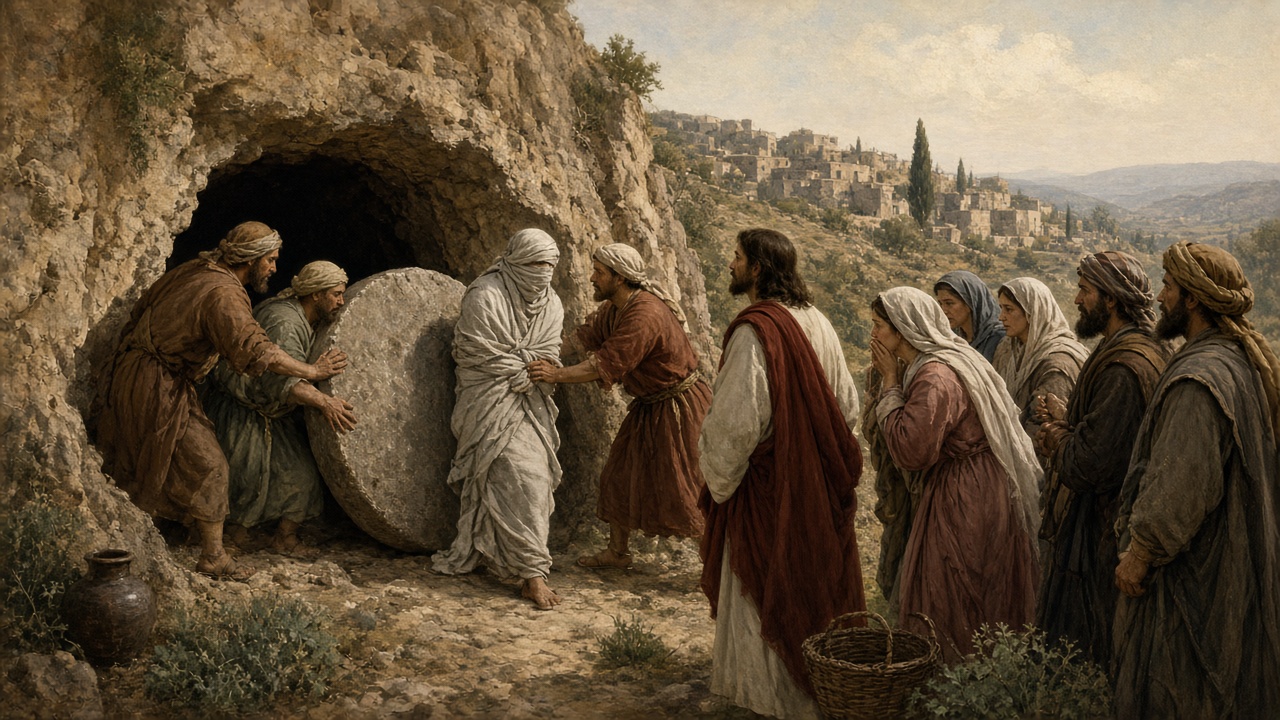
38Zezì k'achı̨ wegha dìì agòjà. Dǫkw'ǫǫ̀ whetǫǫ ts'ǫ̀ èhtła. Kwe yìı dǫkw'ǫǫ̀ whetǫǫ k'è kwe nechàa enìnìı̨ɂǫ. 39Zezì dǫ ts'ǫ̀ hadı, “Kwe ı̨ɂǫ̀ǫ̀ aahłe,” gòhdı.
Martha, Lazarus weba, yets'ǫ̀ hadı, “K'àowo, wekw'ǫǫ̀ nìtǫ ts'ǫ dı̨ dzęę̀ agòjà t'à goyìı goma ha sǫnı,” yèhdı.
40Zezì yets'ǫ̀ hadı, “Negha ehkw'ı-ahodı nı̨dè Nǫ̀htsı̨ enıìyah t'à nàtsoo elı̨ı̨ sìı neɂį̀ anehłe ha, nèehsı̨ ı̨lè,” yèhdı.
41Dǫ kwe ı̨ɂǫ̀ǫ̀ agı̨į̀là. Zezì ı̨dòo k'eet'į̀, hadı, “Setà, sı̨į̀hkw'ǫ t'à masì neehwhǫ. 42T'aats'ǫǫ̀ sı̨į̀hkw'ǫ ne wek'èehsǫ, hanìkò dıı haehsı̨ı̨ sìı dǫ gıgha aehsı̨. Hanì-ı̨dè dıı nèk'e ts'ǫ̀ seneehɂàa sìı gıgha ehkw'ı-ahodı ha,” hadıì yaı̨htı.
43Zezì hadı tł'axǫǫ̀ hòtł'ò whezeh, “Lazarus, xàı̨tłe!” hadı. 44Lazarus kwe yìı wekw'ǫǫ̀ whetǫǫ gots'ǫ xàèhtła. Wılà eyıts'ǫ wekè ehtł'ı̨ t'à wexèhchı eyıts'ǫ wekwì sı ehtł'ı̨ wemoèhdo.
Zezì dǫ ts'ǫ̀ hadı, “Ehtł'ı̨ wek'e nàahwha gà yeyìı xàetła aweahłe,” gòhdı.
Zezì ełaàgıìhwhı ha sınìhogììɂà
45Dǫ łǫ Mary gà geèhkw'ee sìı Zezì ayìı dàyį̀į̀là gıaɂı̨ t'à, gıgha ehkw'ı-ahodıì agejà. 46Hanìkò dǫ mǫ̀hdaa Pharısee gı̨ı̨lı̨ı̨ ts'ǫ̀ geède, Zezì ayìı eghàlaı̨dàa sìı gots'ǫ̀ hagedı. 47Eyıt'à yahtıı-gha-k'aodèe eyıts'ǫ Pharısee gı̨ı̨lı̨ı̨ sìı ełegeèhdì gha Israel got'ı̨į̀ gha k'aodèe hazǫǫ̀ gokayagı̨ı̨htı, hagedı, “Eyı dǫ enıìyah łǫ hohtsı̨, eyıt'à ayìı dàwets'ele ha? 48Nàwets'eɂǫ-le nı̨dè dǫ hazǫǫ̀ ehkw'ı adı gı̨ı̨wǫǫ̀ agede ha. Hanì-ı̨dè Rome dèe-ts'ǫ̀-k'aodèe gı̨ı̨lı̨ı̨ sìı kǫ̀ta Jerusalem eyıts'ǫ gonèè hazǫǫ̀ goghǫ gìhchı ha,” gedı.
49Dǫ ı̨łè Caıaphas wìyeh eyı xo k'e yahtıı-wet'àaɂàa-deè elı̨, dıı hadıì xàyaı̨htı, “T'asìı wı̨ı̨zìı k'èahsǫ nıìle! 50Dǫ ı̨łè dǫ hazǫǫ̀ gha ełaàwı nı̨dè gòet'ı̨ hazǫǫ̀ gıdıhołè nahk'e nezı̨ hǫt'e. Hanìkò eyı wek'èhoahsǫ nıìle,” gòhdı.
51Hadıì xàyaı̨htıı sìı ededahxà adı nıìle, hanìkò eyı xo k'e yahtıı-wet'àaɂàa-deè elı̨ t'à Zezì ghǫ nadąą̀ goı̨de, Zezì Israel got'ı̨į̀ gha ełaàwı ha, hadıì xàyaı̨htı. 52Israel got'ı̨į̀ zǫǫ̀-le, hanìkò Nǫ̀htsı̨ Weza hazǫǫ̀ dıı nèk'e ehkègı̨ı̨dee sìı gogha ełaàwı ha hǫt'e. Ełènagoowa xè dǫ ı̨łè gı̨ı̨lı̨į̀ agole ha. 53Eyıt'à eyı dzęę̀ gots'ǫ k'aodèe ełegeèhdìı sìı dǫ naàhtǫ Zezì ełaàgıìhwhı ha k'ehogeɂa.
54Eyı ts'ıhɂǫ̀ Zezì Israel got'ı̨į̀ gonı k'etło-le ajà, hanìkò ekìı-ka nèk'e gà nıwà-lea kǫ̀ta Efrayım gòyeh ts'ǫ̀ ajà. Ekǫ whatsǫǫ̀ edecheekeè xè aı̨t'è.
55Israel got'ı̨į̀ gıts'ǫ dzędeè Passover ts'ǫ̀ hawe ekò, hazǫǫ̀ gınèè gots'ǫ Israel got'ı̨į̀ łǫ dzędeè kwe Moses wenàowoò k'ę̀ę̀ edexè sıìgogele ha t'à kǫ̀ta Jerusalem ts'ǫ̀ agejà. 56Jerusalem ekǫ dǫ łǫ Zezì hak'egeet'į̀. Nǫ̀htsı̨kǫ̀-gocho gà nàgeèhza ekò dałegeehke, hagedı, “Asį̀į̀ nàsı̨deè nàtła ha sǫnı?” ełègeedı. 57Hanìkò yahtıı-gha-k'aodèe eyıts'ǫ Pharısee gı̨ı̨lı̨ı̨ sìı dǫ ts'ǫ̀ dıı hagedı ı̨lè, “Zezì edı̨į̀ wheda dǫ gık'èezǫ nı̨dè k'aodèe ts'ǫ̀ hagedı ha,” gedı. Zezì dageechı ha gı̨ı̨wǫ t'à, agedı.
¿Sabías que…?
Lázaro resucitado en Betania
- Juan sitúa Betania, la aldea de Lázaro y de sus hermanas María y Marta, a poco menos de dos millas de Jerusalén. El diccionario bíblico de Easton (1897) la ubica en la ladera sureste del monte de los Olivos, en el camino a Jericó, y dice que el nombre venía de las palmeras que crecían allí y que la aldea era conocida como el-Azariyeh, “lugar de Lázaro”.Fuentes: Bethany · el propio texto bíblico
- Tomás, uno de los doce, también era llamado Dídimo, el equivalente griego de su nombre, que significa “gemelo”. Cuando Jesús decidió volver a Judea, donde poco antes habían intentado apedrearlo, Tomás dijo a los otros discípulos: “Vayamos también nosotros, para morir con él”.Fuentes: Thomas · el propio texto bíblico
- Después de que algunos contaron lo que Jesús había hecho, los principales sacerdotes y los fariseos reunieron al Sanedrín, temiendo que, si todos creían en Jesús, los romanos les quitaran su lugar y su nación. Caifás, sumo sacerdote aquel año y, según el diccionario bíblico de Easton (1897), un saduceo que ocupó el cargo del 27 al 36 d.C., dijo que era mejor que un hombre muriera por el pueblo a que pereciera toda la nación. Juan dice que, como sumo sacerdote aquel año, profetizaba que Jesús moriría por la nación, y desde ese día tramaron matarlo.Fuentes: Caiaphas · el propio texto bíblico
Notas escritas con ayuda de IA a partir de fuentes abiertas (Theographic Bible Metadata, CC BY-SA 4.0; Easton’s Bible Dictionary, dominio público) y revisadas antes de publicarse.
Lugares de este capítulo
- Judea · Hoy: Judea 1 · 31.777, 35.234 · versículos 7, 8, 54
- Jerusalem · 31.777, 35.234 · versículos 18, 54, 55
- Ephraim · Hoy: Taybeh · 31.954, 35.300 · versículo 54
Solo aparecen lugares identificados con alta confianza (90 % o más según las fuentes académicas reunidas por OpenBible). Mapa de la época: DARE (Digital Atlas of the Roman Empire), CC BY 4.0; mapa actual: © colaboradores de OpenStreetMap; lugares: OpenBible.info (CC BY 4.0).
Créditos y licencia de esta traducción
Nǫ̀htsı̨̨ Nı̨̨htł'è
Dogrib: Dogrib Genesis & New Testament New Testament & Portions of Old Testament
copyright © 2009 Canadian Bible Society
Language: Dogrib
Translation by: Canadian Bible Society
Tłı̨chǫ Genesis and New Testament
About Tłı̨chǫ
Tłı̨chǫ (Dogrib) is a Na-Dene (Athabaskan) language. It is spoken by the First Nations Tłı̨chǫ people in the Northwest Territories in Canada. It has the largest number of speakers of any of the Aboriginal language communities in the NWT, and is one of the official languages of the Northwest Territories.
About This Translation
This translation includes the book of Genesis and the New Testament in Tłı̨chǫ. The first edition of the Tłı̨chǫ New Testament was published in 2003. It was a historic event, as it was the first time in more than a hundred years that a complete New Testament was published for one of the Dene First Nations in the Territories. The first edition was well received and quickly sold out. In the meantime the book of Genesis had been completed. Consequently, the 2008 reprint of the Tłı̨chǫ New Testament included Genesis.
Though this translation of the New Testament and Genesis took a total of ten years, the people who worked on it built on years of labor invested by the Tłı̨chǫ people, elders, priests and missionaries, translators, educators, and linguists. The material contained in this book was checked and approved by consultants from Wycliffe Bible Translators and the Canadian Bible Society.
If you are interested in obtaining a printed copy of this Bible, please contact the Canadian Bible Society at http://www.biblescanada.com .
Copyright Information
Dogrib Genesis and New Testament © 2003, 2008 Canadian Bible Society
The text of the Bible in Tłı̨chǫ that appears in this electronic format or website is for personal use only.
Up to five hundred (500) verses of the Bible text in any form (written, visual, electronic or audio) may be quoted without permission. The quoted verses may not be more than 50% of a complete book of the Bible, or more than 25% of the total text of the work in which they are quoted. Prior written permission must be obtained for any other use of the text. Copyright acknowledgement must in all cases appear on the title or copyright page.
For more information on copyright conditions or to apply, visit http://www.biblesociety.ca/copyright .
This translation is made available to you under the terms of the
Creative Commons Attribution-Noncommercial-No Derivatives license 4.0.
You may share and redistribute this Bible translation or extracts from it in any format, provided that:
You include the above copyright and source information.
You do not sell this work for a profit.
You do not change any of the words or punctuation of the Scriptures.
Pictures included with Scriptures and other documents on this site are licensed just for use with those Scriptures and documents.
For other uses, please contact the respective copyright owners.
2014-04-22
Fuente: http://ebible.org/dgrDOGNT/ · eBible.org