Juan 10
Nǫ̀htsı̨̨ Nı̨̨htł'è · Toca un versículo para ver sus referencias cruzadas.
Sahzǫ̀ą-k'èdìı-dǫǫ̀ eyıts'ǫ wesahzǫ̀ą
1“Ehkw'ı anaxèehsı̨, dǫ, sahzǫ̀ą k'èhodìı gha enìı̨tǫ k'è goyaetła-le, hanìkò ekǫ-le gots'ǫ goyaèhtła nı̨dè eyı dǫ sìı eeɂį̀ı̨-dǫǫ̀ elı̨ hǫt'e. 2Dǫ enìı̨tǫ k'è goyaetłaa sìı ededı̨ sahzǫ̀ą-k'èdìı-dǫǫ̀ elı̨ hǫt'e. 3Enìı̨tǫ-k'èdìı-dǫǫ̀ yets'ǫ̀ enìxàechı, eyıts'ǫ wesahzǫ̀ą gohaezeh ha egeèhkw'ǫ. Edesahzǫ̀ą gıızì t'à goızı, eyıts'ǫ mǫ̀ht'a xàgoèwa. 4Edets'ǫ sahzǫ̀ą hazǫǫ̀ xàgoèwa tł'axǫǫ̀, ı̨daà gonadąą̀ naetłe. Wesahzǫ̀ą gık'èezǫ t'à gots'ǫ̀ gode nı̨dè gık'èedè. 5Hanìkò dǫ eładı̨ı̨ k'èè agede ha nıìle. Dǫ eładı̨ı̨ gots'ǫ̀ godee nı̨dè gık'èezǫ-le t'à, gıts'ǫǫ̀ natı̨mǫgeedè ha ne,” gòhdı. 6Zezì wet'à nànıts'ewoo godıì t'à dǫ xè godo, hanìkò dàdıì-adıı sìı gınıedì-le.
7Eyıt'à Zezì k'achı̨ hadı, “Ehkw'ı anaxèehsı̨, sı̨ sìı sahzǫ̀ą gıgha enìı̨tǫ laaht'e. 8Dǫ sekwe nègı̨ı̨dee sìı hazǫǫ̀ egeeɂį̀ı̨-dǫǫ̀ agı̨ı̨t'e, eyıt'à sahzǫ̀ą gogeèhkw'ǫ-le. 9Sı̨ enìı̨tǫ laaht'e. Amìı eyı enìı̨tǫ k'è goyaetłaa sìı edaxàweetè ha hǫt'e. Ededı̨ goyaetła xè xàetła ha, hanì-ı̨dè nezı̨į̀ shètı̨ xè wek'èhodì. 10Eeɂį̀ı̨-dǫǫ̀ sìı sahzǫ̀ą deɂį̀ı̨ xè ełaàgòhde zǫ gha at'ı̨, hanìkò sı̨ set'à geeda ha jǫ ahjà, eyıts'ǫ denahk'e gıxè sìghà hòɂǫ gha jǫ ahjà.
11“Sı̨ sahzǫ̀ą-k'èdìı-dǫǫ̀ nezı̨ı̨ aht'e. Sahzǫ̀ą-k'èdìı-dǫǫ̀ nezı̨ı̨ sìı edesahzǫ̀ą gha ełaàwı hǫt'e. Sahzǫ̀ą-k'èdìı-dǫǫ̀ nezı̨ı̨|src="HK005D.tif" size="span" ref="10.11" 12Sahzǫ̀ą-k'èdìı-dǫǫ̀ gha eghàlaedaa sìı sahzǫ̀ą-k'èdìı-dǫǫ̀ elı̨ nıìle, xàè wets'ǫ sahzǫ̀ą agı̨ı̨t'e-le t'à. Eyıt'à dìga gots'ǫ̀ etłe yeɂį̀ nı̨dè sahzǫ̀ą gots'ǫǫ̀ natı̨mǫeda. Dìga sahzǫ̀ą godzıìhɂà xè ehkègehɂà agohɂı̨. 13Dǫ weèhtł'èe sìı sǫǫ̀mba zǫ k'èxa at'ı̨, eyıts'ǫ sahzǫ̀ą goghǫneètǫ-le t'à sahzǫ̀ą ts'ǫǫ̀ natı̨mǫeda.
14“Sı̨ sahzǫ̀ą-k'èdìı-dǫǫ̀ nezı̨ı̨ aht'e. Sesahzǫ̀ą hazǫǫ̀ gık'èehsǫ, eyıts'ǫ sesahzǫ̀ą sek'ègeezǫ hǫt'e. 15Eyı xèht'eè Setà sek'èezǫ, eyıts'ǫ Setà wek'èehsǫ hǫt'e, eyıts'ǫ sesahzǫ̀ą gıgha ełaehwhı ha. 16Sesahzǫ̀ą eyıì-le gǫ̀hłı̨, jǫ gık'èhodìı gots'ǫ agı̨ı̨t'e-le. Ededı̨ sı goyageehwha ha hǫt'e. Gıts'ǫ̀ gohde nı̨dè, segıìkw'o ha hǫt'e. Hanì-ı̨dè sesahzǫ̀ą hazǫǫ̀ ełexè geèhkw'e ha, eyıts'ǫ gok'èdìı-dǫǫ̀ ı̨łè zǫ gǫ̀hłı̨ ha. 17Sesahzǫ̀ą gıgha ełaehwhı ha t'à Setà seghǫneètǫ hǫt'e. Eyı tł'axǫǫ̀-ı̨dè naìhdà ha hǫt'e. 18Dǫ wı̨ı̨zìı ełaehwhıì asele ha dìì, sı̨ sınì k'ę̀ę̀ ełaehwhı ha hǫt'e. Ełaehwhı ha eyıts'ǫ naìhdà ha sı̨ sets'ǫ̀ hoèlı̨ hǫt'e. Setà hanì seghàhòı̨ɂǫ hǫt'e,” Zezì gòhdı.
19Zezì hanì xàyaı̨htı t'à Israel got'ı̨į̀ k'achı̨ ełek'ę̀ę̀ agı̨ı̨wǫ-le agejà. 20Dǫ łǫ hagedı, “Įnìłı̨ı̨ wets'ǫ̀-èlı̨ eyıts'ǫ ezhı̨ne whelı̨. Ayìıha wets'eèhkw'ǫ lì?” gedı.
21Hanìkò dǫ mǫ̀hdaa hagedı, “Dǫ ı̨nìłı̨ı̨ wets'ǫ̀-èlı̨ı̨ sìı hanì gode ha nıìle. Asį̀į̀ ı̨nìłı̨ı̨, dǫdaà k'aàt'ıì ayehɂı̨?” gedı.
Israel got'ı̨į̀ gıgha ehkw'ı-ahodı-le
22Gòk'òo-zaà k'e Jerusalem ekǫ Nǫ̀htsı̨kǫ̀-gocho gha dzędeè hołè. 23Zezì Nǫ̀htsı̨kǫ̀-gocho gà k'etło, Solomon wets'ǫ sagòhɂı̨ı̨-k'è ekǫ k'etło. 24Israel got'ı̨į̀ gha k'aodèe gımǫǫ̀ nìı̨de, hagıìhdı, “Dàwhaà nek'eènats'eèhɂı̨ ha? Chrıst wèts'edıı eyı anet'e nı̨dè, gots'ǫ̀ ehkw'ı haı̨dı,” gıìhdı.
25Zezì gots'ǫ̀ hadı, “Hanaxèehsı̨ ı̨lè hanìkò naxıgha ehkw'ı aehsı̨-le. Setà wedahxà enıìyah eghàlaehdaa sìı eyı weghàà sek'èahsǫ ha ı̨lè. 26Hanìkò sesahzǫ̀ą aaht'e-le t'à, naxıgha ehkw'ı-ahodı-le. 27Sesahzǫ̀ą agı̨ı̨t'ee sìı gıts'ǫ̀ gohde nı̨dè segeèhkw'ǫ, gık'èehsǫ eyıts'ǫ sek'èè k'egedè. 28Welǫ whìle ts'ǫ̀ geedaà agehłe ha, ełaàgede hǫı̨lı̨ ha-le. Dǫ wı̨ı̨zìı seghǫ nıgoòwa ha nıìle. 29Setà hazǫǫ̀ t'à gonahk'e elı̨ı̨ sìı, seghàgǫǫla hǫt'e. Dǫ wı̨ı̨zìı Setà ghǫ nıgoòwa ha nıìle. 30Sı̨ eyıts'ǫ Setà sı ı̨łè zǫ lawììt'e,” Zezì gòhdı.
31Israel got'ı̨į̀ gha k'aodèe nàgeehshì ha gı̨ı̨wǫ t'à, k'achı̨ kwe negı̨į̀wa. 32Hanìkò Zezì gots'ǫ̀ hadı, “Setà wedahxà enıìyah deè łǫ naxıdaà eghàlaıhdà hǫt'e, enıìyah dàhòt'ı̨ı̨ k'èxa kwe t'à ełaàsèahwhı ha dahwhǫ?” gòhdı.
33K'aodèe hagedı, “Enıìyah hòwheęhtsı̨ k'èxa ełaànets'èhwhı ha nıìle, hanìkò Nǫ̀htsı̨ k'èch'a xàyanehtı k'èxa kwe t'à ełaànets'èhwhı ha. Nı̨ ekìı dǫ anet'e kò Nǫ̀htsı̨ aht'e, edį̀ı̨dı,” gıìhdı.
34Zezì gots'ǫ̀ hadı, “Nǫ̀htsı̨ Nı̨htł'è k'e dıı hanì dek'eèhtł'è, ‘Naxı̨ sìı nǫ̀htsı̨ laaht'e,’ dek'eèhtł'è. 35Nǫ̀htsı̨ Nı̨htł'è dàdıı sìı wek'èch'a gots'ede ha dìì hǫt'e wek'èts'eezǫ. Dǫ Nǫ̀htsı̨ yatıì gıts'ǫ̀ ajàa sìı Nǫ̀htsı̨ ededı̨ ‘nǫ̀htsı̨,’ gòhdıì goızı nı̨dè, 36Setà edegha dǫ į̀hchìı eyıts'ǫ dıı nèk'e ts'ǫ̀ ayį̀į̀làa sìı, dànì yıızı ha dahwhǫ? Eyıt'à ‘Nǫ̀htsı̨ Weza aht'e,’ dehsı̨ nı̨dè dànìghǫ Nǫ̀htsı̨ k'èch'a gohde sèahdı? 37Setà xèht'eè eghàlaehda-le nı̨dè ehkw'ı aehsı̨ seahwhǫ-le. 38Hanìkò Setà xèht'eè eghàlaehda nı̨dè, naxıgha ehkw'ı aehsı̨-le kò enıìyah ghàlaehdaa sìı eyı weghàà naxıgha ehkw'ı-ahodı welè. Hanì-ı̨dè, Setà sexè at'ı̨ eyıts'ǫ sı̨ Setà xè aht'ı̨ı̨ sìı, eyı wek'èahsǫ xè wenıahdì ha,” Zezì gòhdı. 39K'aodèe k'achı̨ dageechı ha hogeèhdzà, hanìkò gotł'aetła.
40Eyı tł'axǫǫ̀ Zezì ek'èt'à Jordan deh nıɂàa ts'ǫ̀ anajà. John-Baptıst edı̨į̀ dǫ k'ètaìdzǫ ı̨lèe sìı ts'ǫ̀ ajà. Zezì ekǫ wheda ekò 41dǫ łǫ gıts'ǫ̀ède. Hagedı, “John-Baptıst enıìyah hòèhtsı̨-le, hanìkò dıı dǫ ghǫ dàdı ı̨lèe sìı hazǫǫ̀ ehkw'ı hǫt'e nǫǫ̀,” gedı. 42Eyı nèk'e dǫ łǫ Zezì ehkw'ı adı gı̨ı̨wǫǫ̀ agejà.
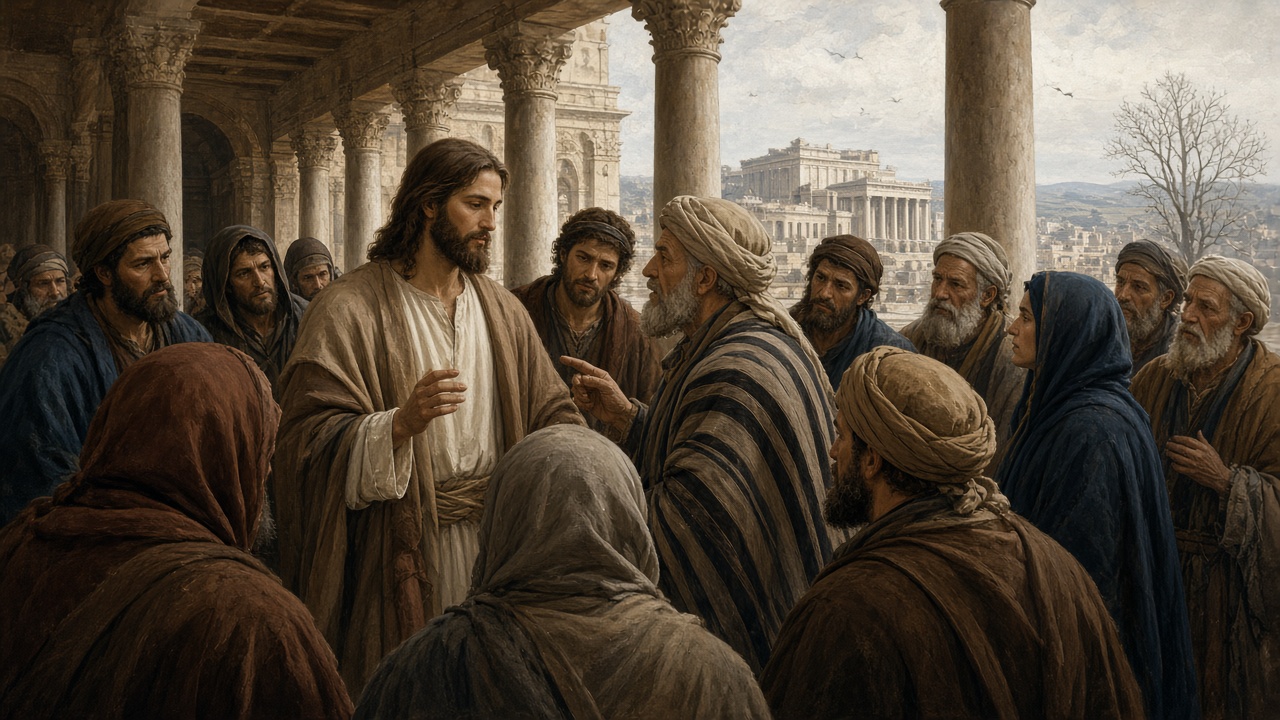
¿Sabías que…?
El Buen Pastor
- En la Fiesta de la Dedicación, en Jerusalén, era invierno, y Jesús caminaba por los atrios del templo, en el Pórtico de Salomón. El nombre Jerusalén, en forma dual, significa "posesión de la paz" o "fundación de la paz"; esa forma probablemente se refiere a los montes Sión y Moriah o, como algunos suponen, a la ciudad alta y la ciudad baja. El nombre hebreo de Salomón, Shelomoh, significa "pacífico".Fuentes: el propio texto bíblico · Jerusalem · Solomon
- Una cronología de los episodios evangélicos sitúa la enseñanza del Buen Pastor en el año 29 d.C. y un tiempo de enseñanza y curación, de Perea a Jerusalén, en el año 30 d.C.Fuentes: The Good Shepherd Teaching · Teaching and Healing in Perea to Jerusalem
- Jesús volvió entonces al otro lado del Jordán, al lugar donde Juan había comenzado a bautizar, y muchas personas allí creyeron en él. Juan era de linaje sacerdotal: su padre, Zacarías, era sacerdote del turno de Abías, y su madre, Elisabet, era de las hijas de Aarón. Su nacimiento, seis meses antes que el de Jesús, fue anunciado por un ángel; quienes acudían decían que Juan nunca hizo ninguna señal, pero que todo lo que había dicho acerca de Jesús era verdad.Fuentes: el propio texto bíblico · John the Baptist
Notas escritas con ayuda de IA a partir de fuentes abiertas (Theographic Bible Metadata, CC BY-SA 4.0; Easton’s Bible Dictionary, dominio público) y revisadas antes de publicarse.
Lugares de este capítulo
- Jerusalem · 31.777, 35.234 · versículo 22
- Solomon’s Portico · Hoy: in Jerusalem · 31.777, 35.234 · versículo 23
- Jordan · Hoy: Jordan River · 31.761, 35.558 · versículo 40
Solo aparecen lugares identificados con alta confianza (90 % o más según las fuentes académicas reunidas por OpenBible). Mapa de la época: DARE (Digital Atlas of the Roman Empire), CC BY 4.0; mapa actual: © colaboradores de OpenStreetMap; lugares: OpenBible.info (CC BY 4.0).
Créditos y licencia de esta traducción
Nǫ̀htsı̨̨ Nı̨̨htł'è
Dogrib: Dogrib Genesis & New Testament New Testament & Portions of Old Testament
copyright © 2009 Canadian Bible Society
Language: Dogrib
Translation by: Canadian Bible Society
Tłı̨chǫ Genesis and New Testament
About Tłı̨chǫ
Tłı̨chǫ (Dogrib) is a Na-Dene (Athabaskan) language. It is spoken by the First Nations Tłı̨chǫ people in the Northwest Territories in Canada. It has the largest number of speakers of any of the Aboriginal language communities in the NWT, and is one of the official languages of the Northwest Territories.
About This Translation
This translation includes the book of Genesis and the New Testament in Tłı̨chǫ. The first edition of the Tłı̨chǫ New Testament was published in 2003. It was a historic event, as it was the first time in more than a hundred years that a complete New Testament was published for one of the Dene First Nations in the Territories. The first edition was well received and quickly sold out. In the meantime the book of Genesis had been completed. Consequently, the 2008 reprint of the Tłı̨chǫ New Testament included Genesis.
Though this translation of the New Testament and Genesis took a total of ten years, the people who worked on it built on years of labor invested by the Tłı̨chǫ people, elders, priests and missionaries, translators, educators, and linguists. The material contained in this book was checked and approved by consultants from Wycliffe Bible Translators and the Canadian Bible Society.
If you are interested in obtaining a printed copy of this Bible, please contact the Canadian Bible Society at http://www.biblescanada.com .
Copyright Information
Dogrib Genesis and New Testament © 2003, 2008 Canadian Bible Society
The text of the Bible in Tłı̨chǫ that appears in this electronic format or website is for personal use only.
Up to five hundred (500) verses of the Bible text in any form (written, visual, electronic or audio) may be quoted without permission. The quoted verses may not be more than 50% of a complete book of the Bible, or more than 25% of the total text of the work in which they are quoted. Prior written permission must be obtained for any other use of the text. Copyright acknowledgement must in all cases appear on the title or copyright page.
For more information on copyright conditions or to apply, visit http://www.biblesociety.ca/copyright .
This translation is made available to you under the terms of the
Creative Commons Attribution-Noncommercial-No Derivatives license 4.0.
You may share and redistribute this Bible translation or extracts from it in any format, provided that:
You include the above copyright and source information.
You do not sell this work for a profit.
You do not change any of the words or punctuation of the Scriptures.
Pictures included with Scriptures and other documents on this site are licensed just for use with those Scriptures and documents.
For other uses, please contact the respective copyright owners.
2014-04-22
Fuente: http://ebible.org/dgrDOGNT/ · eBible.org