Génesis 24
Nǫ̀htsı̨̨ Nı̨̨htł'è · Toca un versículo para ver sus referencias cruzadas.
Rebekah Isaac wets'èkeè elı̨ gha wììchì
1Abraham hòt'a weghoò łǫǫ̀ ajà t'à sıì eneèko whelı̨, eyıts'ǫ gots'ǫ̀ K'àowo t'asìı hazǫǫ̀ t'à wexè sìghà hòɂǫǫ̀ ayį̀į̀là ı̨lè. 2Abraham wecheekeèdeè, yegha t'asìı hazǫǫ̀ k'èdìı elı̨ı̨ sìı ts'ǫ̀ hadı, “Nılà sedzaà tł'a nìı̨chı. 3Gots'ǫ̀ K'àowo, yak'e eyıts'ǫ dıı nek'e gha Nǫ̀htsı̨ elı̨ı̨ sìı wıızì t'à yatı nàtsoo sexè nehtsı̨. Jǫ Kanan got'ı̨į̀ gını nàhdèe sìı gıta gots'ǫ seza wegha ts'èko į̀hchı ha-le. 4Senèk'e segǫ̀hłı̨ı̨ sìı nàątła. Ekǫ xàè sèot'ı̨ gıta gots'ǫ seza Isaac wegha ts'èko į̀hchı,” Abraham yèhdı.
5Wecheekeè hayèhdı, “Ekò eyı t'eeko jǫ nèk'e ts'ǫ̀ sexè naetła ha nıwǫ-le nı̨dè dànì-elì? Neza nenèk'e ts'ǫ̀ naweehchı ha neewǫ nì?” yèhdı. 6“Į̀le, seza ekǫ nawı̨ı̨chì ha nıìle,” Abraham yèhdı.
7“Gots'ǫ̀ K'àowo, yak'e gots'ǫ Nǫ̀htsı̨, setà wekǫ̀ gots'ǫ eyıts'ǫ senèè gots'ǫ xàseèhchìı sìı dıı hanì yatı nàtsoo sexè whehtsı̨ ı̨lè: ‘Nets'ıhɂǫ̀ǫ-dǫǫ̀ sìı dıı dèè gıghàehɂà ha,’ sèhdıı sìı, edeyak'eet'ı̨į̀ nenakweè sıìgogeleè ayele ha. Hanì-ı̨dè ekǫ gots'ǫ seza wegha ts'èko gǫ̀hɂà ha. 8Eyı t'eeko nexè anade ha nıwǫ-le nı̨dè dıı yatı nàtsoo sexè wheęhtsı̨ı̨ sìı t'à nek'enìdahoet'à ha-le. Hanìkò seza ekǫ nawı̨ı̨chì ha nıìle,” yèhdı. 9Eyıt'à wecheekeè Abraham weyatıì k'ę̀ę̀ eghàlaeda gha edılà Abraham wedzaà tł'a whehdì t'à yexè yatı nàtsoo whehtsı̨.
10Eyı tł'axǫǫ̀ wecheekeè Abraham wets'ǫ tıts'aàdìıcho hoònǫ k'enaɂı̨wa gà naèhtła, t'asìı nezı̨ı̨ łǫ edexè ayį̀į̀là. Aram-Naharayım nèk'e ts'ǫ̀ dèhtła, eyı tł'axǫǫ̀ ekǫ nèk'e kǫ̀ta Nahor ts'ǫ̀ ajà. 11Kǫ̀ta gà nıwà-lea nììtła ekò tıts'aàdìıcho tık'è gòɂǫǫ gà dèè k'e nàgògı̨ı̨hgè agǫ̀ǫ̀là. Xèhts'ǫ̀ agodaadee ekìıyeè k'e ts'èko tı gìhchı ha nìkw'o.
12Eyıt'à Abraham wecheekeè hadıì yahtı, “Gots'ǫ̀ K'àowo, Abraham Wenǫ̀htsı̨ anet'e. Dıı dzęę̀ sets'ǫ̀ hoedıì anele, sets'ǫ̀ k'àowo Abraham wets'ǫ̀ nedzeè eteèɂı̨ welè. 13Jǫ tık'è gà nàhwho hǫt'e, eyıts'ǫ kǫ̀ta gots'ǫ t'eeko tı gìhchı gha jǫ nìgıdè ha. 14T'eeko ı̨łè wets'ǫ̀ dıı haehsı̨ı̨ sìı, ‘Netıtǫǫ̀ gots'ǫ tı wehts'è,’ wèehsı̨ nı̨dè, ‘Hęɂę, tı nets'è,’ sèhdı xè, ‘Nets'ǫ tıts'aàdìıcho hazǫǫ̀ tı gıghàehdı ha,’ hadıı sìı eyı t'eeko, Isaac wegha ts'èko neehchì hǫt'e welè. Eyı weghàà sets'ǫ̀ k'àowo etewenèeɂı̨ wek'èehsǫ ha,” hadıì yaı̨htı.
15Yahtı ghǫ nǫǫt'e-le et'ıì t'eeko Rebekah, tıtǫǫ̀ edeehgò ka dayèhtǫ xè eyı nììtła. Eyı t'eeko Betuyel wetì hǫt'e. Wetà Betuyel, Mılkah weza hǫt'e, Mılkah, Abraham wechı Nahor wets'èkeè hǫt'e. 16T'eeko sıì wèdaat'ı̨ xè t'eekogòò hǫt'e, dǫzhìı yet'àı̨tè whìle. Tık'è gòɂǫǫ ts'ǫ̀ èhtła, edetıtǫǫ̀ dàgoòɂǫǫ̀ ayį̀į̀là tł'axǫǫ̀ naetła ha ı̨lè.
17Hanìkò Abraham wecheekeè ı̨whąą̀ yenìhdǫǫ̀ èhtła, yets'ǫ̀ hadı, “Netıtǫǫ̀ gots'ǫ tı łǫ-lea sàı̨dı,” yèhdı.
18“K'àowo, tı nets'è,” t'eeko yèhdı. Hanì-t'ıì edetıtǫǫ̀ yets'ǫ̀ ayį̀į̀là gà tı yeghàı̨dì.
19Tı yeghàı̨dì tł'axǫǫ̀, t'eeko hadı, “Nets'ǫ tıts'aàdìıcho sı gıgha hòt'a ts'ǫ̀ tı gıghàehdı ha,” yèhdı. 20Eyıt'à edetıtǫǫ̀ yìı gots'ǫ tıts'aàdìı tı-gedǫǫ-k'è ı̨whąą̀ tı deyìı̨htł'ı gà k'achı̨ tı ìhchı gha tık'è ts'ǫ̀ tı̨mǫèhza. Tıts'aàdìıcho hazǫǫ̀ gıgha hòt'a ts'ǫ̀ gogha tı eghǫèla. 21Abraham wecheekeè t'asadı-le ekìı yeghàeda. Asį̀į̀ Nǫ̀htsı̨ wets'ǫ̀ hoedıì ayį̀į̀là lì gha hotıì yeghàeda.
22Tıts'aàdìıcho hòt'a tı gıadǫ tł'axǫǫ̀, Abraham wecheekeè goı̨ghǫ̀-lamǫ̀ǫ eyıts'ǫ golachı̨į̀ k'e whelaa nedà xè sǫǫ̀mbaekwo dètìı t'à hòèlı̨ı̨ yeghàı̨la. 23Eyı tł'axǫǫ̀ dayeehke, “Amìı wetì anet'e? Asį̀į̀ netà wekǫ̀ to ts'eetè ha gogha gòɂǫ?” yèhdı.
24T'eeko yets'ǫ̀ hadı, “Betuyel wetì aht'e, setà wemǫ Mılkah wìyeh, eyıts'ǫ wetà Nahor wìyeh,” yèhdı. 25Eyıts'ǫ hanaedı, “Tıts'aàdìıcho gıgha tł'oh eyıts'ǫ gıghǫ shèzhee łǫ gots'ǫ ne, eyıts'ǫ gogà daahtè ha naxıgha gòɂǫ ne,” yèhdı.
26T'eeko hadı t'à Abraham wecheekeè nàgòı̨hgè xè Nǫ̀htsı̨ ts'ǫ̀ yahtı, 27hadı, “Gots'ǫ̀ K'àowo, sets'ǫ̀ k'àowo Abraham Wenǫ̀htsı̨ weghàsǫhoedı welè. T'aats'ǫǫ̀ k'àowo Abraham ts'ǫ̀ wedzeè eteèɂı̨ xè t'aats'ǫǫ̀ yets'ǫ̀ ehkw'ı eghàlaeda hǫt'e. Ekò sı̨ sìı gots'ǫ̀ K'àowo, Abraham wèot'ı̨ gıkǫ̀ ts'ǫ̀ segha ehkw'ı goòɂà ayį̀į̀là,” hadıì yaı̨htı.
28T'eeko edemǫ kǫ̀ ts'ǫ̀ tı̨mǫèhza gà eyı dàgòjàa sìı gots'ǫ̀ hadı. 29T'eeko Rebekah wı̨ı̨de Laban wìyeh ı̨whąą̀ Abraham wecheekeè tık'è gà nàwo ts'ǫ̀ xàèhtła. 30Goı̨ghǫ̀-lamǫ̀ǫ eyıts'ǫ wedè welachı̨į̀ k'e whelaa yaɂı̨ ts'ǫ̀et'ıì eyıts'ǫ eyı dǫ dàyèhdıı yıìkw'o ts'ǫ̀et'ıì yets'ǫ̀ xàèhtła. Abraham wecheekeè tık'è ts'ǫ̀ nıwà-lea tıts'aàdìıcho gà nàwo yaɂı̨. 31“Gots'ǫ̀ K'àowo nexè sìghà agǫ̀ǫ̀là t'à sek'èątła,” yèhdı. “Ayìıha jǫ nàąwoò anet'ı̨? Kǫ̀ goyìı negha gòɂǫǫ̀ agòhłà eyıts'ǫ tıts'aàdìıcho sı gıgha gòɂǫ,” yèhdı.
32Eyıt'à Abraham wecheekeè eyı kǫ̀ ts'ǫ̀ ajà, tıts'aàdìıcho k'e xàɂı̨ı̨wa. Tł'oh tıts'aàdìı gha nègı̨ı̨wa eyıts'ǫ gıghǫ shèzhee tıts'aàdìı ghàgı̨ı̨dì, eyıts'ǫ edekè k'enagehtse gha tı goghàgı̨ı̨dì. 33Eyı tł'axǫǫ̀ weghǫ shèts'ezhee dǫ gha nègı̨ı̨la, hanìkò Abraham wecheekeè hadı, “Shèhtı̨ ha-le. Ayìı dàehsı̨ ha sìı naxıts'ǫ̀ haehsı̨ tł'axǫǫ̀ nı̨dè zǫ shèhtı̨ ha,” gòhdı.
“Tł'anǫǫ̀ goı̨de,” Laban yèhdı.
34Eyıt'à hadı, “Abraham wecheekeè aht'e. 35Gots'ǫ̀ K'àowo sìı sets'ǫ̀ k'àowo Abraham xè sìghà hòɂǫǫ̀ ayį̀į̀là t'à dǫ ahxee whelı̨. Sahzǫ̀ą, ejıe, sǫǫ̀mba degoo, eyıts'ǫ sǫǫ̀mbaekwo yeghàı̨la. Eyıts'ǫ eghàlageedaa-dǫǫ̀, dǫzhìı sı, ts'èko sı, tıts'aàdìıcho, eyıts'ǫ tłı̨tsoa yeghàı̨la hǫt'e. 36Sets'ǫ̀ k'àowo wets'èkeè Sarah ts'ǫǫ̀ko whelı̨ tł'axǫǫ̀ yeza nìı̨htı̨, eyıts'ǫ t'asìı hazǫǫ̀ wets'ǫ sìı edeza ghàı̨la. 37Sets'ǫ̀ k'àowo wexè yatı nàtsoo whıhtsı̨į̀ asį̀į̀là. Dıı hasèhdı, ‘Jǫ Kanan got'ı̨į̀ gını nàhdèe sìı gıta gots'ǫ seza wegha ts'èko į̀hchı ha-le. 38Setà wèot'ı̨ gıts'ǫ̀ aąde, xàè sèot'ı̨ gıta gots'ǫ seza wegha ts'èko į̀hchı,’ sèhdı.
39“Eyıt'à dıı hawèehsı̨, ‘Eyı t'eeko sek'èè naetła ha nıwǫ-le nı̨dè dànì ha?’ wèehsı̨ ı̨lè.
40“Eyıt'à dıı hasèhdı, ‘Gots'ǫ̀ K'àowo wenàowoò k'ę̀ę̀ ehdaa sìı edets'ǫ yak'eet'ı̨į̀ nexè ayele ha, eyıts'ǫ ayìı gha ekǫ naątła ha sìı nets'ǫ̀ hoedıì ayele ha. Hanì-ı̨dè setà wèot'ı̨ gots'ǫ seza wegha ts'èko į̀hchı ha. 41Sèot'ı̨ gıts'àwheętła kò ts'èko neghàgıhtè-le nı̨dè yatı nàtsoo sexè wheęhtsı̨ı̨ sìı t'à nek'enìdahoet'à ha-le,’ sèhdı ı̨lè.
42“Dıı dzęę̀ k'e tık'è ts'ǫ̀ nèehtła ekò dıı haehsı̨ ı̨lè, ‘Gots'ǫ̀ K'àowo, Abraham Wenǫ̀htsı̨ anet'e. Ayìı gha jǫ nèehtłaa sìı sets'ǫ̀ hoedıì anele. 43Jǫ tık'è gà nàhwho. T'eeko ı̨łè tı ìhchı ha jǫ nììtła nı̨dè dıı hawèehsı̨ ha, “Netıtǫǫ̀ ts'ǫ tı sàı̨dı,” wèehsı̨ t'à, 44“Tı nedǫ, nets'ǫ tıts'aàdìıcho sı tı gıghàehdı ha,” sèhdı nı̨dè gots'ǫ̀ K'àowo sets'ǫ̀ k'àowo weza gha eyı t'eeko yį̀į̀hchì hǫt'e welè,’ dehsı̨į̀ xàyaehtı ı̨lè.
45“Sedzeè t'à yaehtı ghǫ naht'e-le et'ıì t'eeko Rebekah edeehgò ka tıtǫǫ̀ dayèhtǫ xè eyı nììtła. Tık'è ts'ǫ̀ ı̨zhıì hodàèhtła gà tı ı̨į̀xè ekò wets'ǫ̀ dıı haehsı̨, ‘Tı sàı̨dı,’ wèehsı̨.
46“Ekò et'ıì edetıtǫǫ̀ sets'ǫ̀ hodàyı̨į̀xè, hadı, ‘Tı nedǫ, eyıts'ǫ nets'ǫ tıts'aàdìıcho sı tı gıghàehdı ha,’ hadı. Eyıt'à tı ehts'e, ededı̨ t'aa tıts'aàdìıcho ghàtını̨ı̨dì.
47“Eyı tł'axǫǫ̀ daweehke, ‘Amìı wetì anet'e?’ wèehsı̨.
“ ‘Betuyel wetì aht'e. Wetà Nahor wìyeh, eyıts'ǫ wemǫ Mılkah wìyeh,’ sèhdı.
“Eyıt'à goı̨ghǫ̀-lamǫ̀ǫ eyıts'ǫ golachı̨į̀ k'e whelaa wek'e nìıhwha. 48Eyı tł'axǫǫ̀ nàgòıhgè, gots'ǫ̀ K'àowo weghàtsį̀ehdı. Sets'ǫ̀ k'àowo Abraham Wenǫ̀htsı̨ ts'ǫ̀ sǫehdı. Sets'ǫ̀ k'àowo wèot'ı̨ ts'ǫ̀ ehkw'ıì asį̀į̀là, weza gha ts'èko èhchı ha t'à. 49Eyıt'à sets'ǫ̀ k'àowo Abraham wets'ǫ̀ naxıdzeè nezı̨ xè wets'ǫ̀ ehkw'ı eghàlaahda welè, hanì-le-ı̨dè sets'ǫ̀ haahdı. Hanì-ı̨dè ayìı dàhłe ha sìı wek'èehsǫ ha,” gòhdı.
50Laban eyıts'ǫ Betuyel į̀łah hagedı, “Dıı sìı gots'ǫ̀ K'àowo wedahxà agot'ı̨ hǫt'e. Dànèts'edı welì? 51Jǫ Rebekah wheda, nexè awede. Gots'ǫ̀ K'àowo wınì k'ę̀ę̀ nets'ǫ̀ k'àowo weza ts'èkeè welè,” gedı.
52Dàgedıı sìı Abraham wecheekeè goìkw'o ekò (masì nıwǫ t'à) gots'ǫ̀ K'àowo ts'ǫ̀ nàgòı̨hgè. 53Eyı tł'axǫǫ̀ sǫǫ̀mbaekwo eyıts'ǫ sǫǫ̀mba degoo t'à t'asìı hòèlı̨ı̨, eyıts'ǫ goht'ǫ dètìı Rebekah ghàı̨la. Eyıts'ǫ Rebekah wı̨ı̨de eyıts'ǫ wemǫ sı t'asìı dètìı goghàı̨la. 54Eyı tł'axǫǫ̀ Abraham wecheekeè eyıts'ǫ dǫ yexè aget'ı̨ı̨ sìı shègıazhe tł'axǫǫ̀ eyı geète.
Satsǫ k'omǫǫ̀dǫǫ̀ negı̨į̀de ekò Abraham wecheekeè hagòhdı, “Sets'ǫ̀ k'àowo wets'ǫ̀ anaseahłe,” gòhdı.
55Hanìkò Rebekah wı̨ı̨de eyıts'ǫ wemǫ hagedı, “T'eeko łatsaa gogà wedà, eyı tł'axǫǫ̀-ı̨dè naahdè ha dìì-le,” gıìhdı.
56Hanìkò gots'ǫ̀ hadı, “Gots'ǫ̀ K'àowo jǫ nèehtła gha sets'ǫ̀ hoedıì ayį̀į̀là t'à whaà naxıgà whıhda ha dìì. Sets'ǫ̀ k'àowo wets'ǫ̀ anahde ha t'à wets'ǫ̀ anaseahłe,” gòhdı.
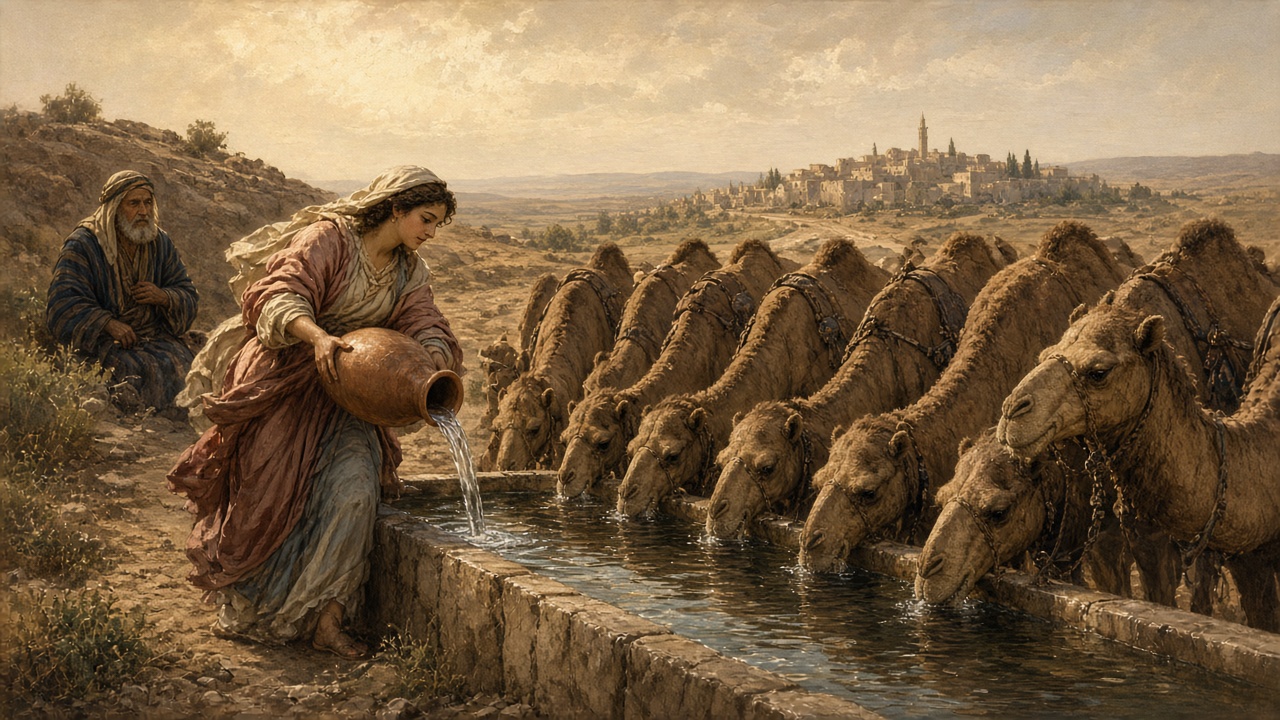
57Eyıt'à hagedı, “T'eeko wets'ǫ̀ gots'ııde gà dawets'ııhke,” gedı. 58Rebekah eyı nììtła tł'axǫǫ̀ dagı̨ı̨hke, “Dıı dǫ wexè aąde ha newǫ nì?” gıìhdı.
“Hęɂę, wexè ahde ha,” t'eeko gòhdı.
59Eyıt'à ededè Rebekah goxè naèhtłaà agı̨į̀là. Ts'èko yek'èdìı elı̨ı̨ sı yexè ajà. 60Naetła kwe yatı nezı̨ı̨ Rebekah ghàgı̨ı̨ɂǫ, hagedı, “Godè, nets'ıhɂǫ̀ǫ-dǫǫ̀ łǫ t'à łǫ welè. Dǫ godzagı̨ı̨hwhǫǫ sìı gonahk'e gı̨ı̨lı̨ welè,” gedı.
61Hagedı tł'axǫǫ̀ Rebekah eyıts'ǫ ts'èko yegha eghàlageedaa gı̨ı̨lı̨ı̨ sìı sınìgı̨ı̨de, tıts'aàdìıcho k'e dageèhkw'e gà dǫ xè nageèhde. Hanì t'aa Abraham wecheekeè Rebekah edexè naèhchì. 62Ekìıyeè k'e Isaac, Negev nèk'e nàde t'à Ber-Lahaı-Roı gots'ǫ naetłe ı̨lè.
63Įłàà xèhts'ǫ̀ whatsǫǫ̀ dèè k'e k'eda, ı̨daà k'eet'į̀ là tıts'aàdìıcho nagıadè goghàeda. 64Rebekah ededı̨ sı ı̨daà k'eet'į̀ là Isaac eɂı̨. Tıts'aàdìıcho k'e gots'ǫ hodàèhtła, 65Abraham wecheekeè daehke, hayèhdı, “Yeè dǫ naetłee amìı at'ı̨?” yèhdı.
“Eyı sets'ǫ̀ k'àowo at'ı̨,” yèhdı. Eyıt'à Rebekah edek'oòhchìı edınì k'e whehchì ayį̀į̀là.
66Nègı̨ı̨de tł'axǫǫ̀ Abraham wecheekeè wexè dàgòjàa sìı hazǫǫ̀ Isaac ts'ǫ̀ hadı. 67Isaac, Rebekah edemǫ nı̨hbàa yìı goyayeèhchì, eyıts'ǫ yexè honìdza. Eyıt'à Rebekah yets'èkeè whelı̨, eyıts'ǫ Isaac yeghǫneètǫ. Isaac wemǫ ełaı̨wo t'à wegha dìì ı̨lè, hanìkò dıì wegha t'asagǫ̀ht'e-le agòjà.
¿Sabías que…?
Una esposa para Isaac, del parentesco de Abraham
- Abraham no quiso tomar para su hijo una esposa entre las cananeas, así que envió al siervo principal de su casa a su propia parentela. Su hermano Nacor había permanecido al este del Éufrates, en Harán, y el siervo partió hacia la ciudad natal de Nacor en Aram-naharaim: Mesopotamia, la tierra entre el Éufrates y el Tigris, llamada también Padan-aram en el Antiguo Testamento.Fuentes: el propio texto bíblico · Nahor (brother of Abraham) · Mesopotamia
- La joven del pozo era Rebeca, hija de Betuel y nieta de Nacor y de su esposa Milca. Un diccionario bíblico señala que Betuel aparece en persona solo una vez, en este capítulo, cuando él y Labán, el hermano de Rebeca, aceptan el matrimonio; Labán, que vivía en Harán, corrió al manantial en cuanto vio el anillo de oro en la nariz y los brazaletes que le habían dado a su hermana.Fuentes: el propio texto bíblico · Bethuel · Laban · Nahor (brother of Abraham)
- El Easton's Bible Dictionary (1897) afirma que Rebeca fue elegida para Isaac cuando él tenía cuarenta años. En este capítulo vive en el Neguev, la región árida al sur de Palestina, y acaba de regresar de Beer-lahai-roi, nombre que se traduce como "el pozo del que vive y me ve" o, como algunos lo vierten, "el pozo de la visión de la vida".Fuentes: Isaac · el propio texto bíblico · Negeb · Beer-lahai-roi
Notas escritas con ayuda de IA a partir de fuentes abiertas (Theographic Bible Metadata, CC BY-SA 4.0; Easton’s Bible Dictionary, dominio público) y revisadas antes de publicarse.
Lugares de este capítulo
- Mesopotamia · Hoy: Aram-naharaim · 36.864, 39.033 · versículo 10
- Negeb · 31.245, 34.841 · versículo 62
Solo aparecen lugares identificados con alta confianza (90 % o más según las fuentes académicas reunidas por OpenBible). Mapa de la época: DARE (Digital Atlas of the Roman Empire), CC BY 4.0; mapa actual: © colaboradores de OpenStreetMap; lugares: OpenBible.info (CC BY 4.0).
Créditos y licencia de esta traducción
Nǫ̀htsı̨̨ Nı̨̨htł'è
Dogrib: Dogrib Genesis & New Testament New Testament & Portions of Old Testament
copyright © 2009 Canadian Bible Society
Language: Dogrib
Translation by: Canadian Bible Society
Tłı̨chǫ Genesis and New Testament
About Tłı̨chǫ
Tłı̨chǫ (Dogrib) is a Na-Dene (Athabaskan) language. It is spoken by the First Nations Tłı̨chǫ people in the Northwest Territories in Canada. It has the largest number of speakers of any of the Aboriginal language communities in the NWT, and is one of the official languages of the Northwest Territories.
About This Translation
This translation includes the book of Genesis and the New Testament in Tłı̨chǫ. The first edition of the Tłı̨chǫ New Testament was published in 2003. It was a historic event, as it was the first time in more than a hundred years that a complete New Testament was published for one of the Dene First Nations in the Territories. The first edition was well received and quickly sold out. In the meantime the book of Genesis had been completed. Consequently, the 2008 reprint of the Tłı̨chǫ New Testament included Genesis.
Though this translation of the New Testament and Genesis took a total of ten years, the people who worked on it built on years of labor invested by the Tłı̨chǫ people, elders, priests and missionaries, translators, educators, and linguists. The material contained in this book was checked and approved by consultants from Wycliffe Bible Translators and the Canadian Bible Society.
If you are interested in obtaining a printed copy of this Bible, please contact the Canadian Bible Society at http://www.biblescanada.com .
Copyright Information
Dogrib Genesis and New Testament © 2003, 2008 Canadian Bible Society
The text of the Bible in Tłı̨chǫ that appears in this electronic format or website is for personal use only.
Up to five hundred (500) verses of the Bible text in any form (written, visual, electronic or audio) may be quoted without permission. The quoted verses may not be more than 50% of a complete book of the Bible, or more than 25% of the total text of the work in which they are quoted. Prior written permission must be obtained for any other use of the text. Copyright acknowledgement must in all cases appear on the title or copyright page.
For more information on copyright conditions or to apply, visit http://www.biblesociety.ca/copyright .
This translation is made available to you under the terms of the
Creative Commons Attribution-Noncommercial-No Derivatives license 4.0.
You may share and redistribute this Bible translation or extracts from it in any format, provided that:
You include the above copyright and source information.
You do not sell this work for a profit.
You do not change any of the words or punctuation of the Scriptures.
Pictures included with Scriptures and other documents on this site are licensed just for use with those Scriptures and documents.
For other uses, please contact the respective copyright owners.
2014-04-22
Fuente: http://ebible.org/dgrDOGNT/ · eBible.org