Génesis 23
Nǫ̀htsı̨̨ Nı̨̨htł'è · Toca un versículo para ver sus referencias cruzadas.
Sarah ełaı̨wo
1Sarah ı̨łèakw'eènǫ-daats'ǫ̀-naènǫ-daats'ǫ̀-łǫ̀hdı̨ (127) xo ts'ǫ̀ ı̨ı̨dà. 2Kanan nèk'e kǫ̀ta Kırat-Arba ekǫ ełaı̨wo (eyı kǫ̀ta dıì Hebron gòyeh). Abraham sıì wegha dìì t'à yeghǫ ı̨ı̨tsè.
3Eyı tł'axǫǫ̀ Abraham wets'èkeè wekw'ǫǫ̀ gà gots'ǫ nıìtła. Het got'ı̨į̀ eyı nàgedèe ts'ǫ̀ gode ha gots'ǫ̀ èhtła, 4hagòhdı, “Xàhtǫ lanì naxıta nàhdè hǫt'e. Dèè mǫ̀hdaa naxıghǫ nàıhdì, sets'èkeè ełaı̨woo sìı wekw'ǫǫ̀ nèehtį̀ ha t'à,” gòhdı.
5Het got'ı̨į̀ Abraham ts'ǫ̀ hagedı, 6“K'àowo, goį̀kw'o. Nı̨ sìı k'àowodeè gota nàdèe anet'e. Kwe yìı dǫkw'ǫǫ̀ k'è gòlaa denahk'e nezı̨ı̨ sìı yìı nets'èkeè wekw'ǫǫ̀ nìı̨htį̀. Gots'ǫ dǫkw'ǫǫ̀ whelaa k'è neewǫ nı̨dè į̀le nèts'edı ha nıìle,” gedı.
7Eyıt'à Abraham nıìtła gà Het got'ı̨į̀ gots'ǫ̀ edenı ts'ǫ̀ ı̨zhıì adììdlà, 8hagòhdı, “Sets'èkeè jǫ wekw'ǫǫ̀ nèehtį̀ ha seahwhǫ nı̨dè seàhkw'ǫ. Zohar weza Efron segha wets'ǫ̀ goahde. 9Kwe yìı gòɂǫǫ Makpelah gòyeh sìı wedèè welǫ wheɂǫ hǫt'e. Eyı weghǫ naehdì ha dehwhǫ. Sèot'ı̨ eyı gıkw'ǫǫ̀ whela ha dehwhǫ t'à eyı dèè weghǫ naehdì ha segha weahkè,” Abraham gòhdı.
10Ekìıyeè k'e Efron dǫ nı wheda ı̨lè. Het got'ı̨į̀ kǫ̀ta goyagoòɂàa-k'è ełègehdè gha eyı nègı̨ı̨dee sìı hazǫǫ̀ gıdaà Abraham ts'ǫ̀ hadı, 11“K'àowo, seı̨hkw'ǫ. Eyı dèè neghàehɂà ha, eyıts'ǫ kwe weyìı gòɂǫǫ sı neghàehɂà ha. Sèot'ı̨ hazǫǫ̀ gıdaà eyı neghàehɂà ha. Nets'èkeè ełaı̨woo sìı wekw'ǫǫ̀ nìı̨tį̀,” yèhdı.
12K'achı̨ Abraham ekǫ got'ı̨į̀ gots'ǫ̀ edenı ts'ǫ̀ ı̨zhıì adììdlà. 13Hazǫǫ̀ godaà Efron ts'ǫ̀ hadı, “Seı̨hkw'ǫ ha sìghà. Dèè dàtłǫ sǫǫ̀mba elı̨ı̨ sìı k'èxa neghǫ nàehdì ha. Wek'èxa sesǫǫ̀mbaà į̀hchı, hanì-ı̨dè ekǫ sets'èkeè wekw'ǫǫ̀ nèehtį̀ ha,” Abraham yèhdı.
14Efron, Abraham ts'ǫ̀ hadı, 15“K'àowo, seę̀hkw'ǫ. Eyı dèè dı̨akw'eènǫ (400) sǫǫ̀mba degoo elı̨ hǫt'e, hanìkò į̀łah gogha eyı ayìı welè? Nets'èkeè wekw'ǫǫ̀ nìı̨htį̀,” Efron yèhdı.
16Abraham, Efron dàtłǫ sǫǫ̀mba dıı sìı k'ę̀ę̀ ayį̀į̀là. Dàtłǫ sǫǫ̀mba elı̨ı̨ sìı dǫ hazǫǫ̀ godaà yets'àɂeèhdì. Nàedìı-dǫǫ̀ gık'ę̀ę̀ t'asìı wedaedaa sìı k'ę̀ę̀ dı̨akw'eènǫ (400) sǫǫ̀mba degoo yets'àɂeèhdì.
17Eyıt'à kǫ̀ta goyagoòɂàa k'è Het got'ı̨į̀ hazǫǫ̀ gınadąą̀ dèè Makpelah gòyeh Mamer nèk'e gà gòɂǫǫ Efron wedèè ı̨lèe sìı enı̨htł'è k'e Abraham wets'ǫ hǫt'e dek'enègı̨ı̨tł'è. Eyı dèè, kwe yìı gòɂǫǫ, eyıts'ǫ ts'ı dehshee hazǫǫ̀ Abraham wets'ǫ elı̨į̀ adlà. 19Eyı tł'axǫǫ̀ Abraham eyı kwe yìı gòɂǫǫ yìı edets'èkeè Sarah wekw'ǫǫ̀ nìı̨htǫ. Kanan nèk'e dèè Makpelah gòyeh k'e gòɂǫ, Mamer nèk'e gà nıwà-le (kǫ̀ta Hebron gà nıwà-le). 20Eyıt'à Het got'ı̨į̀ eyı dèè eyıts'ǫ kwe yìı gòɂǫǫ sìı Abraham wets'ǫ dǫkw'ǫǫ̀ whelaa k'è gòɂǫǫ dek'enègı̨ı̨tł'è.
¿Sabías que…?
La muerte de Sara y la cueva de Macpela
- Sara murió a los 127 años en Quiriat-arba, es decir, Hebrón, en la tierra de Canaán. El Easton's Bible Dictionary (1897) señala que este es el único lugar de las Escrituras donde se registra la edad de una mujer, y que su muerte llevó a Abraham a comprar la cueva de Macpela como sepulcro familiar.Fuentes: el propio texto bíblico · Sarah
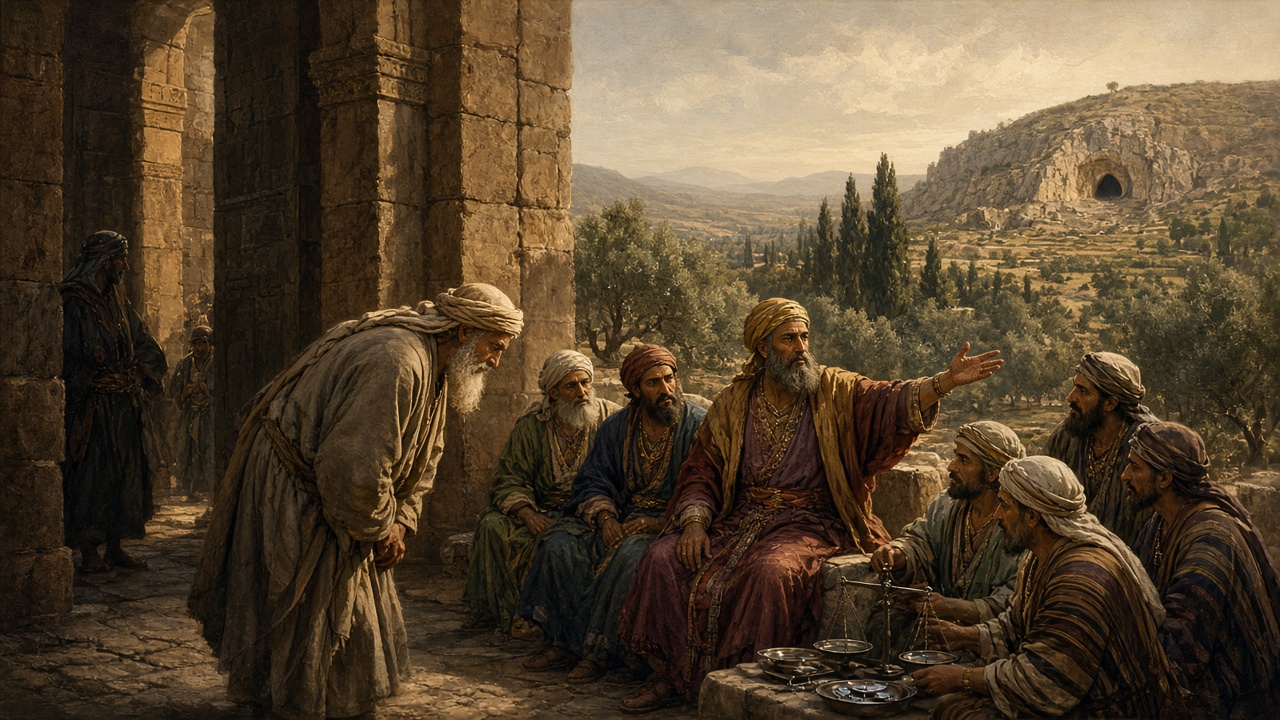
- Abraham dijo a los hijos de Het —los hititas, descendientes de Canaán por medio de Het y habitantes de las cercanías de Hebrón— que era un extranjero entre ellos y necesitaba un lugar de sepultura. A la puerta de la ciudad, ante los hititas reunidos allí, compró el campo y la cueva de Efrón, hijo de Zohar, por cuatrocientos siclos de plata, pesados según el patrón de los mercaderes.Fuentes: el propio texto bíblico · Heth · Ephron
- El nombre Macpela se explica como “porción” o “cueva doble”. La cueva que Abraham compró estaba en el campo de Efrón, cerca de Mamre, en la ladera de un monte al este de Hebrón, y en ese mismo lugar fueron depositados después los cuerpos de Abraham y Sara, Isaac y Rebeca, y Jacob y Lea.Fuentes: Machpelah · el propio texto bíblico
Notas escritas con ayuda de IA a partir de fuentes abiertas (Theographic Bible Metadata, CC BY-SA 4.0; Easton’s Bible Dictionary, dominio público) y revisadas antes de publicarse.
Lugares de este capítulo
- Canaan · 32.767, 35.333 · versículos 2, 19
- Hebron · Hoy: Tel Rumeida · 31.525, 35.102 · versículos 2, 19
- Machpelah · Hoy: Cave of the Patriarchs · 31.525, 35.111 · versículos 9, 17, 19
Solo aparecen lugares identificados con alta confianza (90 % o más según las fuentes académicas reunidas por OpenBible). Mapa de la época: DARE (Digital Atlas of the Roman Empire), CC BY 4.0; mapa actual: © colaboradores de OpenStreetMap; lugares: OpenBible.info (CC BY 4.0).
Créditos y licencia de esta traducción
Nǫ̀htsı̨̨ Nı̨̨htł'è
Dogrib: Dogrib Genesis & New Testament New Testament & Portions of Old Testament
copyright © 2009 Canadian Bible Society
Language: Dogrib
Translation by: Canadian Bible Society
Tłı̨chǫ Genesis and New Testament
About Tłı̨chǫ
Tłı̨chǫ (Dogrib) is a Na-Dene (Athabaskan) language. It is spoken by the First Nations Tłı̨chǫ people in the Northwest Territories in Canada. It has the largest number of speakers of any of the Aboriginal language communities in the NWT, and is one of the official languages of the Northwest Territories.
About This Translation
This translation includes the book of Genesis and the New Testament in Tłı̨chǫ. The first edition of the Tłı̨chǫ New Testament was published in 2003. It was a historic event, as it was the first time in more than a hundred years that a complete New Testament was published for one of the Dene First Nations in the Territories. The first edition was well received and quickly sold out. In the meantime the book of Genesis had been completed. Consequently, the 2008 reprint of the Tłı̨chǫ New Testament included Genesis.
Though this translation of the New Testament and Genesis took a total of ten years, the people who worked on it built on years of labor invested by the Tłı̨chǫ people, elders, priests and missionaries, translators, educators, and linguists. The material contained in this book was checked and approved by consultants from Wycliffe Bible Translators and the Canadian Bible Society.
If you are interested in obtaining a printed copy of this Bible, please contact the Canadian Bible Society at http://www.biblescanada.com .
Copyright Information
Dogrib Genesis and New Testament © 2003, 2008 Canadian Bible Society
The text of the Bible in Tłı̨chǫ that appears in this electronic format or website is for personal use only.
Up to five hundred (500) verses of the Bible text in any form (written, visual, electronic or audio) may be quoted without permission. The quoted verses may not be more than 50% of a complete book of the Bible, or more than 25% of the total text of the work in which they are quoted. Prior written permission must be obtained for any other use of the text. Copyright acknowledgement must in all cases appear on the title or copyright page.
For more information on copyright conditions or to apply, visit http://www.biblesociety.ca/copyright .
This translation is made available to you under the terms of the
Creative Commons Attribution-Noncommercial-No Derivatives license 4.0.
You may share and redistribute this Bible translation or extracts from it in any format, provided that:
You include the above copyright and source information.
You do not sell this work for a profit.
You do not change any of the words or punctuation of the Scriptures.
Pictures included with Scriptures and other documents on this site are licensed just for use with those Scriptures and documents.
For other uses, please contact the respective copyright owners.
2014-04-22
Fuente: http://ebible.org/dgrDOGNT/ · eBible.org