Hechos 19
Nǫ̀htsı̨̨ Nı̨̨htł'è · Toca un versículo para ver sus referencias cruzadas.
Paul kǫ̀ta Ephesus nììtła
1Apollos kǫ̀ta Corınth wheda ekò Paul tı̨lı k'èè kǫ̀ta Ephesus ts'ǫ̀ naèhtła. Ekǫ Nǫ̀htsı̨ wecheekeè mǫ̀hdaa goaɂı̨. 2Eyıt'à dagoehke, “Naxıgha ehkw'ı-ahodıì ajà gots'ǫ Yedàyeh Nezı̨ı̨ naxık'e ajà nì?” Paul gòhdı.
“Į̀le, Yedàyeh Nezı̨ı̨ weghǫ ts'ıìkw'o whìle,” gedı.
3Paul gots'ǫ̀ hadı, “Hanì-ı̨dè ayìı t'à naxık'ètaìdzǫ nǫǫ̀?” gòhdı.
“John-Baptıst wenàowoò k'ę̀ę̀ gok'ètaìdzǫ,” gedı.
4Paul gots'ǫ̀ hadı, “John-Baptıst wenàowoò k'ę̀ę̀ gok'ètaìdzǫǫ sìı edek'ets'ı̨ı̨lı̨ gha hǫt'e. Dǫ yek'èè nììtła ha sìı ehkw'ı adı weahwhǫ ha hǫt'e gòhdı ı̨lè. Eyı sìı Zezì hǫt'e,” Paul gòhdı. 5Nǫ̀htsı̨ wecheekeè Paul hadı gıìkw'o t'à Zezì wıızì t'à gık'ètaìdzǫǫ̀ agejà. 6Paul edılà gok'e ayį̀į̀là t'à Yedàyeh Nezı̨ı̨ gık'e ajà. Yatı ładı̨ı̨ t'à gogedeè agejà eyıts'ǫ Yedàyeh Nezı̨ı̨ dahxà xàyagı̨ı̨htı. 7Hazǫǫ̀ t'à dǫzhìı hoònǫ-daats'ǫ̀-nàke gıxè hagòjà.
8Paul, ekǫ Israel got'ı̨į̀ gıts'ǫ ełègehdèe-kǫ̀ gòɂǫǫ goyaèhtła. Taı sa haı̨wa gots'ǫ̀ edèdaedı-le xè Nǫ̀htsı̨ wenàowoò ghǫ gots'ǫ̀ goı̨de t'à, dǫ gıgha ehkw'ı-ahodıì agejà. 9Hanìkò dǫ mǫ̀hdaa Paul k'èch'a agı̨ı̨wǫ, gıgha ehkw'ı-ahodı ha gı̨ı̨wǫ-le eyıts'ǫ eyı nàowo k'èch'a dǫ ts'ǫ̀ gogede. Eyıt'à Paul Israel got'ı̨į̀ gots'ǫǫ̀ xàèhtła. Nǫ̀htsı̨ wecheekeè edexè goòwa. Eyı tł'axǫǫ̀ dzę taàt'eè Tyrannus wekǫ̀ gocho goyìı dǫ ts'ǫ̀ gode. 10Nàke xo ts'ǫ̀ hanì Paul dǫ ts'ǫ̀ goı̨de. Eyı ts'ıhɂǫ̀ Israel got'ı̨į̀ eyıts'ǫ Greece got'ı̨į̀ hazǫǫ̀ Asıa nèk'e nàgedèe sìı gots'ǫ̀ K'àowo weyatıì gıìkw'oò agejà.
11Nǫ̀htsı̨, Paul ts'àdı t'à enıìyah deè łǫ hòèhtsı̨. 12Paul k'oòhchìa eyıts'ǫ jǫhtè t'à-at'ı̨ı̨ sìı eyı kò dǫ-eyaelı̨ı̨ ts'ǫ̀ agehɂı̨ nı̨dè k'aàt'ıì aget'į̀ eyıts'ǫ ı̨nìłı̨ı̨ gots'ǫǫ̀ xàgeedè.
13Israel got'ı̨į̀ mǫ̀hdaa ı̨nìłı̨ı̨ xàdegeezhı ha dǫ ta k'egedè. Zezì wıızì t'à ı̨nìłı̨ı̨ xàdegeezhı ha hogeèhdzà, hagedı, “Paul, Zezì wıızì t'à godee sìı wedahxà xàahdè,” gedı. 14Dǫ ı̨łè Sceva wìyeh, yahtıı-gha-k'àowo elı̨, eyı weza łǫ̀hdı̨ ededı̨ aget'ı̨. 15Hanìkò ı̨łàà ı̨nìłı̨ı̨ gots'ǫ̀ hadı, “Zezì wek'èehsǫ eyıts'ǫ Paul sı wek'èehsǫ, hanìkò naxı̨ amìı aaht'e?” gòhdı. 16Dǫ ı̨nìłı̨ı̨ wets'ǫ̀-èlı̨ı̨ sìı gok'e nıìko eyıts'ǫ sıì gokwǫ̀ǫyaà-gǫǫ̀là t'à hazǫǫ̀ godaèht'è, ı̨ht'edę eyıts'ǫ gıdoò at'ı̨ xè xàtı̨mǫgeède.
17Israel got'ı̨į̀ eyıts'ǫ Greece got'ı̨į̀ kǫ̀ta Ephesus nàgedèe sìı eyı hagòjà ghǫ gıìkw'o t'à sıì geèhyeh. Gots'ǫ̀ K'àowo Zezì wıızì t'asìı nechàa awèts'edı nǫǫ̀, gı̨ı̨wǫǫ̀ agejà. 18Dǫ gıgha ehkw'ı-ahodı łǫ dǫ hazǫǫ̀ gonadąą̀ edenàowołı̨ı̨ ghǫ hǫdegeedè. 19Dǫ mǫ̀hdaa ı̨k'ǫǫ̀ k'alagı̨ı̨dèe sìı edenı̨htł'è łą̀ą nègı̨ı̨la gà dǫ gonadąą̀ gık'enı̨hk'ǫ. Eyı enı̨htł'è wesǫǫ̀mbaà nagıhtà nı̨dè hazǫǫ̀ t'à sı̨laènǫ-lemì (50,000) sǫǫ̀mba degoo haàtłǫ elı̨. 20Eyı gıxè hagòjà ts'ıhɂǫ̀ gots'ǫ̀ K'àowo weyatıì hazǫǫ̀ nèk'e ts'ǫ̀ ajà eyıts'ǫ weyatıì dǫ xè nàtsoò agodaade.
21Eyı hazǫǫ̀ hagòjà tł'axǫǫ̀ Paul kǫ̀ta Jerusalem ts'ǫ̀ anade ha nıwǫ. Eyıt'à Macedonıa nèk'e eyıts'ǫ Achaıa nèk'e gok'ıìtła. Paul hadı, “Jerusalem nàwhıhtła tł'axǫǫ̀-ı̨dè Rome sı nàhtła ha,” hadı. 22Tımothy eyıts'ǫ Erastus, eyı nàke geet'eè Paul ts'àgedıı sìı Macedonıa nèk'e ts'ǫ̀ goèhɂà, ededı̨ t'aa Asıa nèk'e whaà-lea ts'ǫ̀ ekǫ aı̨t'è.
Kǫ̀ta Ephesus nàdahoowo
23Ekìıyeè k'e Zezì wenàowoò ts'ıhɂǫ̀ dǫ łǫ gıxè nàdahoowo. 24Dǫ ı̨łè Demetrıus wìyeh satsǫ̀ degoo t'à nǫ̀htsı̨ą yàèhtsı̨. Gıts'ǫ nǫ̀htsı̨ Artemıs wìyeh wek'ę̀ę̀ wègaat'ı̨ı̨ nǫ̀htsı̨ą łǫ whehtsı̨. Dǫ hanì gehtsı̨ı̨ sìı gıt'à sǫǫ̀mba łǫ gehtsı̨. 25Dǫ gıxèht'eè eghàlageedaa sìı hazǫǫ̀ gokàehɂà, hagòhdı, “Goxı̨, goılaà t'à sǫǫ̀mba łǫ ts'ehtsı̨ wek'èahsǫ hǫt'e. 26Eyı dǫ Paul wìyeh sìı dǫ łǫ gha ehkw'ı adı t'à goghǫ daèhnǫ wek'èts'eezǫ. Wets'ıhɂǫ̀ dǫ łǫ eładı̨ ts'ǫ̀ agejà, jǫ kǫ̀ta Ephesus zǫǫ̀-le, yeè Asıa nèk'e sı k'àhdzǫ dǫ hazǫǫ̀ ghǫ daèhnǫ hǫt'e. Dıı goılà t'à t'asìı hòèlı̨ı̨ sìı nǫ̀htsı̨ agı̨ı̨t'e nıìle, gòhdı. 27Goılaà sìı dǫ gıgha wet'àaɂà-le ade ha sǫnı. Eyı zǫǫ̀-le, Artemıs wets'ǫ yahtıı-kǫ̀-gocho gòɂǫǫ sìı dǫ gıgha wet'àaɂà-le agode ha. Asıa nèk'e dǫ hazǫǫ̀ eyıts'ǫ dıı nèk'e hazǫǫ̀ ts'ǫ̀ Artemıs ts'ǫ̀ yagehtı hǫt'e, hanìkò eyı hagot'ı̨ ts'ıhɂǫ̀ t'asìı deè elı̨-le gı̨ı̨hwhǫ ha,” gòhdı.
28Dǫ hazǫǫ̀ egıìkw'o ekò gìch'è t'à yagìzeh, “Artemıs, Ephesus got'ı̨į̀ gha nǫ̀htsı̨ deè elı̨ ne,” gedıì yagìzeh. 29Whaà-le-t'ıì kǫ̀ta hazǫǫ̀ dǫ nìdahogı̨į̀hdè. Dǫ nàke Gaıus eyıts'ǫ Arıstarchus, Paul xè Macedonıa nàgedè ı̨lèe sìı dagogıachì. Ełegeèhdìı-k'è gǫchàa ts'ǫ̀ gogeèwa. 30Paul ekǫ dǫ hazǫǫ̀ ts'ǫ̀ gode ha nıwǫ hanìkò dǫ yexè aget'ı̨ı̨ sìı ekǫ nàtła ha gı̨ı̨hwhǫ-le. 31Eyı nèk'e gha k'aodèe mǫ̀hdaa Paul weàgı̨ą agı̨ı̨t'ee sìı ededı̨ kò yatı gıdanìı̨ɂǫ, hagıìhdı, “Neghǫ hoejı̨ t'à, ełegeèhdìı-k'è nàwı̨ı̨tła-le,” gedı gıghǫnàdaetì.
32Ekǫ dǫ hazǫǫ̀ gıxè nàdahoowo t'à gıgha hok'èedzǫ-le hòɂǫǫ̀ agòjà. Dǫ mǫ̀hdaa t'asìı ghǫ gezeh, mǫ̀hdaa t'asìı eyıì-le ghǫ gezeh. Ayìı gha eyı nègı̨ı̨dee sìı gık'èezǫ-le. 33Israel got'ı̨į̀ gı̨ı̨lı̨ı̨ sìı dǫ ı̨łè Alexander wìyeh dǫ hazǫǫ̀ nadąą̀ nàwoò agį̀į̀là. Dǫ mǫ̀hdaa gıts'ǫ̀ gezeh, dànì gode ha sìı gıts'ǫ̀ hadı. Alexander edèot'ı̨ gha gode ha nıwǫ t'à dǫ ts'èwhı̨į̀ agı̨ı̨t'e ha edılà t'à gogha nàɂeetsį̀. 34Hanìkò ededı̨ Israel got'ı̨į̀ hǫt'e gık'èhoèhzà ekò nàke sadzeè haı̨wa ts'ǫ̀ dǫ hazǫǫ̀ ehghàà yagìzeh, hagedı, “Artemıs, Ephesus got'ı̨į̀ gha nǫ̀htsı̨ deè elı̨!” gedıì yagìzeh.
35Nǫǫde kǫ̀ta gha k'àowo dǫ xè ts'èwhı̨į̀ hòɂǫǫ̀ ayį̀į̀là. Dǫ ts'ǫ̀ hadı, “Ephesus got'ı̨į̀, jǫ kǫ̀ta dǫ nàgedèe sìı Artemıs, nǫ̀htsı̨ deè, wets'ǫ yahtıı-kǫ̀-gocho k'ègedì agı̨ı̨t'e, dıı nèk'e dǫ hazǫǫ̀ gık'èezǫ hǫt'e. Eyıts'ǫ kwe wek'ę̀ę̀ wègaat'ı̨ı̨ sìı yak'e gots'ǫ hodàèhkw'o, eyı sı gık'èezǫ hǫt'e. 36Ehkw'ı ats'edı-le gògedı ha dìì t'à ts'èwhı̨į̀ aaht'e eyıts'ǫ nàdahoahdè-le. 37Dıı dǫ nàke naxıts'ǫ yahtıı-kǫ̀-gocho gots'ǫ egeèɂı̨-le eyıts'ǫ Artemıs k'èch'a xàyagı̨ı̨htı-le kò, jǫ nègıahła. 38Demetrıus eyıts'ǫ dǫ wexèht'eè la gıts'ǫ sìı t'asìı ghǫ dǫ k'èch'a agı̨ı̨wǫ nı̨dè gıghǫ nàyaetıì agogııle. Ekǫ dǫ-sınìyaehtıı-dǫǫ̀ dèhkw'e hǫt'e, ekǫ dǫ k'e nìdahogeeɂà ha dìì-le. 39Eyı wedę t'asìı eyıì-le ghǫ goahde ha dahwhǫ nı̨dè, dèe-ts'ǫ̀-k'àowo nàowoò k'ę̀ę̀ weghàlats'eeda ha hǫt'e. 40Ekò dıı dzęę̀ k'e nàdahoowo ts'ıhɂǫ̀ dèe-ts'ǫ̀-k'àowo hoìla hots'ehtsı̨ gı̨ı̨wǫ ha sǫnı. T'asìı wet'àaɂà-le ghǫ agot'ı̨ ts'ıhɂǫ̀ edek'edats'eedı ha dìì,” k'àowo hadıì dǫ ts'ǫ̀ goı̨de. 41Hadı tł'axǫǫ̀ dǫ hazǫǫ̀ nagoèhɂà.
¿Sabías que…?
Pablo, el Camino y Artemisa en Éfeso
- Éfeso era la capital del Asia proconsular, la provincia romana que abarcaba la parte occidental de Asia Menor, y en tiempos romanos llevaba el título de primera y más grande metrópoli de Asia. La ciudad se distinguía por el templo de Artemisa, a quien los romanos llamaban Diana, construido fuera de las murallas y contado entre las siete maravillas del mundo antiguo. En el centro había una imagen antigua de la diosa, de la que se decía que había caído del cielo.Fuentes: Ephesus · Diana · Asia
- Demetrio, un platero de Éfeso, hacía santuarios de plata de Artemisa, modelos del templo o de la estatua de la diosa, que se vendían con facilidad a los visitantes llegados de toda Asia Menor. Hechos dice que ese oficio era la fuente de prosperidad de los artesanos y que Demetrio les advirtió del peligro para el negocio y para el honor del templo de Artemisa, la diosa que, según él, era adorada en toda la provincia de Asia y en el mundo entero.Fuentes: Demetrius · el propio texto bíblico
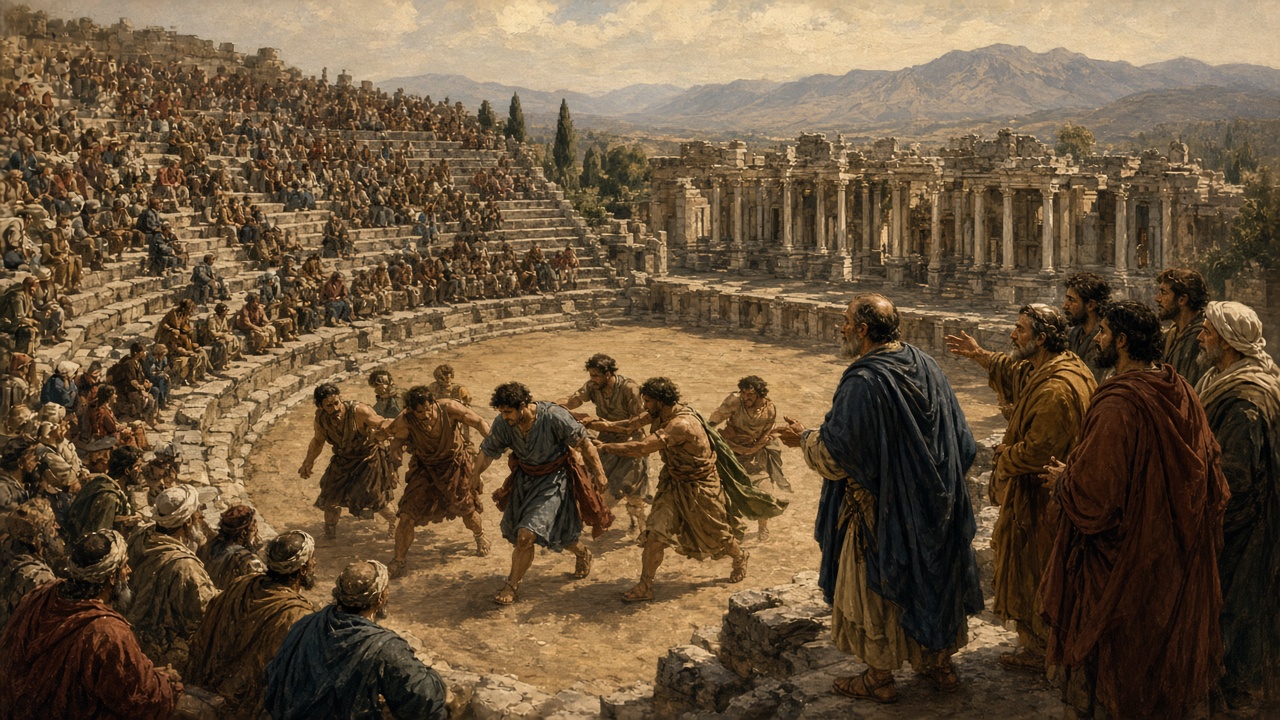
- La multitud se lanzó al teatro de Éfeso, que el Diccionario Bíblico de Easton (1897) describe como el más grande del mundo, a cielo abierto y capaz de albergar a 50.000 espectadores. Amigos de Pablo entre los jefes de Asia, ciudadanos ricos elegidos cada año para presidir los juegos y las fiestas religiosas de sus ciudades, le rogaron que no entrara. El secretario de la ciudad recordó entonces a la asamblea que Éfeso era guardiana del templo de la gran Artemisa y de su imagen, de la que se decía que había caído del cielo.Fuentes: Ephesus · Asia · el propio texto bíblico
Notas escritas con ayuda de IA a partir de fuentes abiertas (Theographic Bible Metadata, CC BY-SA 4.0; Easton’s Bible Dictionary, dominio público) y revisadas antes de publicarse.
Lugares de este capítulo
- Corinth · 37.906, 22.879 · versículo 1
- Ephesus · 37.939, 27.341 · versículos 1, 17, 23, 26, 35
- Asia · 38.400, 28.300 · versículos 10, 22, 26, 27, 31
- Achaia · 38.720, 22.540 · versículo 21
- Jerusalem · 31.777, 35.234 · versículo 21
- Macedonia · 41.600, 22.540 · versículos 21, 22, 29
- Rome · 41.892, 12.485 · versículos 21, 40
Solo aparecen lugares identificados con alta confianza (90 % o más según las fuentes académicas reunidas por OpenBible). Mapa de la época: DARE (Digital Atlas of the Roman Empire), CC BY 4.0; mapa actual: © colaboradores de OpenStreetMap; lugares: OpenBible.info (CC BY 4.0).
Créditos y licencia de esta traducción
Nǫ̀htsı̨̨ Nı̨̨htł'è
Dogrib: Dogrib Genesis & New Testament New Testament & Portions of Old Testament
copyright © 2009 Canadian Bible Society
Language: Dogrib
Translation by: Canadian Bible Society
Tłı̨chǫ Genesis and New Testament
About Tłı̨chǫ
Tłı̨chǫ (Dogrib) is a Na-Dene (Athabaskan) language. It is spoken by the First Nations Tłı̨chǫ people in the Northwest Territories in Canada. It has the largest number of speakers of any of the Aboriginal language communities in the NWT, and is one of the official languages of the Northwest Territories.
About This Translation
This translation includes the book of Genesis and the New Testament in Tłı̨chǫ. The first edition of the Tłı̨chǫ New Testament was published in 2003. It was a historic event, as it was the first time in more than a hundred years that a complete New Testament was published for one of the Dene First Nations in the Territories. The first edition was well received and quickly sold out. In the meantime the book of Genesis had been completed. Consequently, the 2008 reprint of the Tłı̨chǫ New Testament included Genesis.
Though this translation of the New Testament and Genesis took a total of ten years, the people who worked on it built on years of labor invested by the Tłı̨chǫ people, elders, priests and missionaries, translators, educators, and linguists. The material contained in this book was checked and approved by consultants from Wycliffe Bible Translators and the Canadian Bible Society.
If you are interested in obtaining a printed copy of this Bible, please contact the Canadian Bible Society at http://www.biblescanada.com .
Copyright Information
Dogrib Genesis and New Testament © 2003, 2008 Canadian Bible Society
The text of the Bible in Tłı̨chǫ that appears in this electronic format or website is for personal use only.
Up to five hundred (500) verses of the Bible text in any form (written, visual, electronic or audio) may be quoted without permission. The quoted verses may not be more than 50% of a complete book of the Bible, or more than 25% of the total text of the work in which they are quoted. Prior written permission must be obtained for any other use of the text. Copyright acknowledgement must in all cases appear on the title or copyright page.
For more information on copyright conditions or to apply, visit http://www.biblesociety.ca/copyright .
This translation is made available to you under the terms of the
Creative Commons Attribution-Noncommercial-No Derivatives license 4.0.
You may share and redistribute this Bible translation or extracts from it in any format, provided that:
You include the above copyright and source information.
You do not sell this work for a profit.
You do not change any of the words or punctuation of the Scriptures.
Pictures included with Scriptures and other documents on this site are licensed just for use with those Scriptures and documents.
For other uses, please contact the respective copyright owners.
2014-04-22
Fuente: http://ebible.org/dgrDOGNT/ · eBible.org