Hechos 18
Nǫ̀htsı̨̨ Nı̨̨htł'è · Toca un versículo para ver sus referencias cruzadas.
Paul kǫ̀godeè Corınth nììtła
1Eyı hagòjà tł'axǫǫ̀ Paul kǫ̀ta Athens gots'ǫ kǫ̀ta Corınth ts'ǫ̀ ajà. 2Ekǫ Israel got'ı̨į̀, Aquıla wìyeh, kǫ̀ta Pontus wegǫ̀hłı̨ı̨ sìı, yeghaetła. K'àowodeè Claudıus, weyatıì k'e Israel got'ı̨į̀ hazǫǫ̀ kǫ̀godeè Rome gots'ǫǫ̀ xàgeedè ha gòhdı. Eyıt'à Aquıla, edets'èkeè Prıscılla xè Italy nèk'e gots'ǫ eyı nègı̨ı̨de. Paul gots'àèhtła. 3Paul, goxèht'eè nı̨hbàa-ehtsı̨ı̨-dǫǫ̀ elı̨ t'à goxè nàı̨dè eyıts'ǫ goxè eghàlaı̨dà. 4Nǫ̀htsı̨ Dzęę̀ taàt'eè ełègehdèe-kǫ̀ dǫ ts'ǫ̀ gode, yatı t'à Israel got'ı̨į̀ eyıts'ǫ Greece got'ı̨į̀ goghǫdaehnè ha dahoèhdzà.
5Sılas eyıts'ǫ Tımothy Macedonıa nèk'e gots'ǫ eyı nègı̨ı̨de ekò Paul dǫ hoghàehtǫǫ zǫ ts'ǫ̀-èlı̨ adììdlà. Israel got'ı̨į̀ ts'ǫ̀ gode, hadı, “Zezì Chrıst hǫt'e,” gòhdı. 6Hanìkò Israel got'ı̨į̀ Paul k'èch'a gogede. Paul ehkw'ı aget'ı̨-le gık'èezǫ ha nıwǫ t'à edegoht'ǫǫ̀ yèhxo xè hagòhdı, “Naxı̨ edaxàahdè-le nı̨dè naxıt'à ha ne. Hòt'a sı̨ sets'ǫ̀ hoèlı̨ nıìle. Jǫ gots'ǫ ı̨daà dǫ eyıì-le xàɂaa gıts'ǫ̀ ahde ha,” gòhdı.
7Eyıt'à Paul ełègehdèe-kǫ̀ gots'ǫǫ̀ xàèhtła. Įɂǫ̀ǫ̀ Tıtus-Justus, Nǫ̀htsı̨-ghàtsį̀edıı-dǫǫ̀ wekǫ̀ gòɂǫǫ ts'ǫ̀ ajà. 8Crıspus, ełègehdèe-kǫ̀ gha k'àowo elı̨, eyıts'ǫ wekǫ̀ nàgedèe sìı hazǫǫ̀ Zezì gıgha ehkw'ı-ahodıì agejà. Eyıts'ǫ kǫ̀ta Corınth gots'ǫ dǫ łǫ gıìkw'oo sìı gıgha ehkw'ı-ahodı t'à gık'ètaìdzǫ.
9Įłàà, to Paul wenazhıı xègoèht'į̀ t'à gots'ǫ̀ K'àowo yets'ǫ̀ gode, hayèhdı, “Nı̨ı̨jı̨-le, ı̨łaà dǫ gıts'ǫ̀ goı̨de ghǫ naąt'e-le. 10Nexè aht'ı̨ ne. Sets'ǫ dǫ łǫ jǫ kǫ̀godeè nàgedè ne t'à dǫ wı̨ı̨zìı t'asanele ha nıìle,” yèhdı. 11Eyıt'à Paul ı̨łè xo-daà-tanı ts'ǫ̀ eyı nàı̨dè. Nǫ̀htsı̨ weyatıì dǫ hoghàehtǫ.
12Achaıa nèk'e Gallıyo k'àowo elı̨ ekò Israel got'ı̨į̀ ełets'àdageedı t'à Paul wesınìyaetıì agı̨į̀là. 13Dǫ-sınìyaehtıı-dǫǫ̀ ts'ǫ̀ hagedı, “Dıı dǫ sìı, gonàowoò k'èch'a dǫ hoghàehtǫ. Nàowo eładı̨ı̨ k'ę̀ę̀ Nǫ̀htsı̨ ghàsǫgeedı ha, gòhdı,” gedı.
14Paul gode ha nìkw'o ekò k'àowo Gallıyo, Israel got'ı̨į̀ ts'ǫ̀ hadı, “Israel got'ı̨į̀, dıı dǫ hoìla hòèhtsı̨ hanì-le-ı̨dè gonàowoò k'eı̨zhì nı̨dè naxeèhkw'ǫ ha ı̨lè. 15Hanìkò naxınàowoò ghǫ aahdı nı̨dè naxı̨ edexè sıìgoahłe. Sı̨ hanıı nàowo wesınìyahtı ha nıìle,” gòhdı. 16Nàyaetıı-kǫ̀ gots'ǫ xàgodeèzhì. 17Eyıt'à dǫ hazǫǫ̀ Sostenes, ełègehdèe-kǫ̀ gha k'àowo elı̨ı̨ sìı, nàyaetıı-kǫ̀ gà dagıachì eyıts'ǫ gıkwǫ̀ǫyaà-gı̨į̀là. Hagòjà kò k'àowo Gallıyo gots'ǫ̀ nıɂà-le.
Prıscılla, Aquıla eyıts'ǫ Apollos
18Paul whaà hoògǫ gots'ǫ̀ kǫ̀ta Corınth nàı̨dè. Eyı tł'axǫǫ̀ Nǫ̀htsı̨ wecheekeè gots'ǫǫ̀ naèhtła. Elàcho t'à Syrıa nèk'e ts'ǫ̀ ajà. Prıscılla eyıts'ǫ Aquıla gıxè ajà. Naeɂè kwe kǫ̀ta Cenchrea Nǫ̀htsı̨ ts'ǫ̀ yatı nàtsoo whehtsı̨ ı̨lè t'à, edekwìghà k'ı̨ı̨hwho. Elàcho|src="HK072D.tif" size="span" ref="18.18" 19Kǫ̀ta Ephesus nègı̨ı̨de ekò Paul, Prıscılla eyıts'ǫ Aquıla ekǫ gots'ǫǫ̀ naèhtła. Ededı̨ t'aa ełègehdèe-kǫ̀ ts'ǫ̀ ajà, ekǫ Israel got'ı̨į̀ ts'ǫ̀ goı̨de. 20Paul ı̨łaà goxè wheda ha gı̨ı̨wǫ, hanìkò į̀le gòhdı. 21Paul naetła kwe, hagòhdı, “Nǫ̀htsı̨ hanıwǫ nı̨dè k'achı̨ jǫ ts'ǫ anahde ha,” gòhdı. Eyı tł'axǫǫ̀ elàcho t'à kǫ̀ta Ephesus gots'ǫǫ̀ naèhɂe. 22Kǫ̀ta Caesarea, ekǫ dàèhtła. Nǫ̀htsı̨ wecheekeè gots'àèhtła xè gots'ǫ̀ goı̨de, eyı tł'axǫǫ̀ kǫ̀ta Antıoch ts'ǫ̀ ajà.
23Whaà-lea ts'ǫ̀ eyı nàı̨dè. Eyı tł'axǫǫ̀ eyı nèk'e gota k'eeda, Galatıa nèk'e eyıts'ǫ Phrygıa nèk'e hazǫǫ̀ nàhtła. Nǫ̀htsı̨ wecheekeè hazǫǫ̀ gınì nàtsoò agǫ̀ǫ̀là.
24Ekìıyeè k'e Israel got'ı̨į̀ Apollos wìyeh, Alexandrıa gots'ǫ dǫ, kǫ̀ta Ephesus nììtła. Dǫ t'asìı k'èezǫǫ deè elı̨ eyıts'ǫ Nǫ̀htsı̨ Nı̨htł'è sı deghàà yek'èezǫ. 25Gots'ǫ̀ K'àowo wegodıì nezı̨ı̨ hoghàweètǫ hǫt'e. Ededzeè t'à sıì dǫ ts'ǫ̀ goı̨de eyıts'ǫ Zezì wegodıì hotıì nezı̨į̀ dǫ hoghàgoèhtǫ. Hanìkò John-Baptıst dànì dǫ hoghàgoehtǫǫ sìı eyı zǫ k'èezǫ. 26Apollos ełègehdèe-kǫ̀ edèdaedı-le xè dǫ ts'ǫ̀ goı̨de. Prıscılla eyıts'ǫ Aquıla gıìkw'o tł'axǫǫ̀ edekǫ̀ ts'ǫ̀ gok'èehtłaà agı̨į̀là. Nǫ̀htsı̨ wegodıì t'à deghàà gıts'ǫ̀ xàyaı̨htı.
27Apollos, kǫ̀ta Achaıa ts'ǫ̀ ade ha nıwǫ t'à Nǫ̀htsı̨ wecheekeè gogha sìghà adı. Eyıt'à ekǫ Nǫ̀htsı̨ wecheekeè ts'ǫ̀ wegha egı̨ı̨tł'è, hagedı, “Dıı dǫ naxıxè at'ı̨į̀ aweahłe,” hagedı gı̨ı̨tł'è. Apollos ekǫ nììtła ekò Nǫ̀htsı̨ wesǫnıwǫ t'à gıgha ehkw'ı-ahodıì agejàa sìı hòtł'ò gots'àı̨dì hǫt'e. 28Israel got'ı̨į̀ ełegeèhdì ekò, Apollos gonı ts'ǫ̀ hòtł'ò xàyaı̨htı. Nǫ̀htsı̨ Nı̨htł'è ghàà Zezì Chrıst hǫt'e hadıì gots'ǫ̀ goı̨de.
¿Sabías que…?
La estancia de Pablo en Corinto
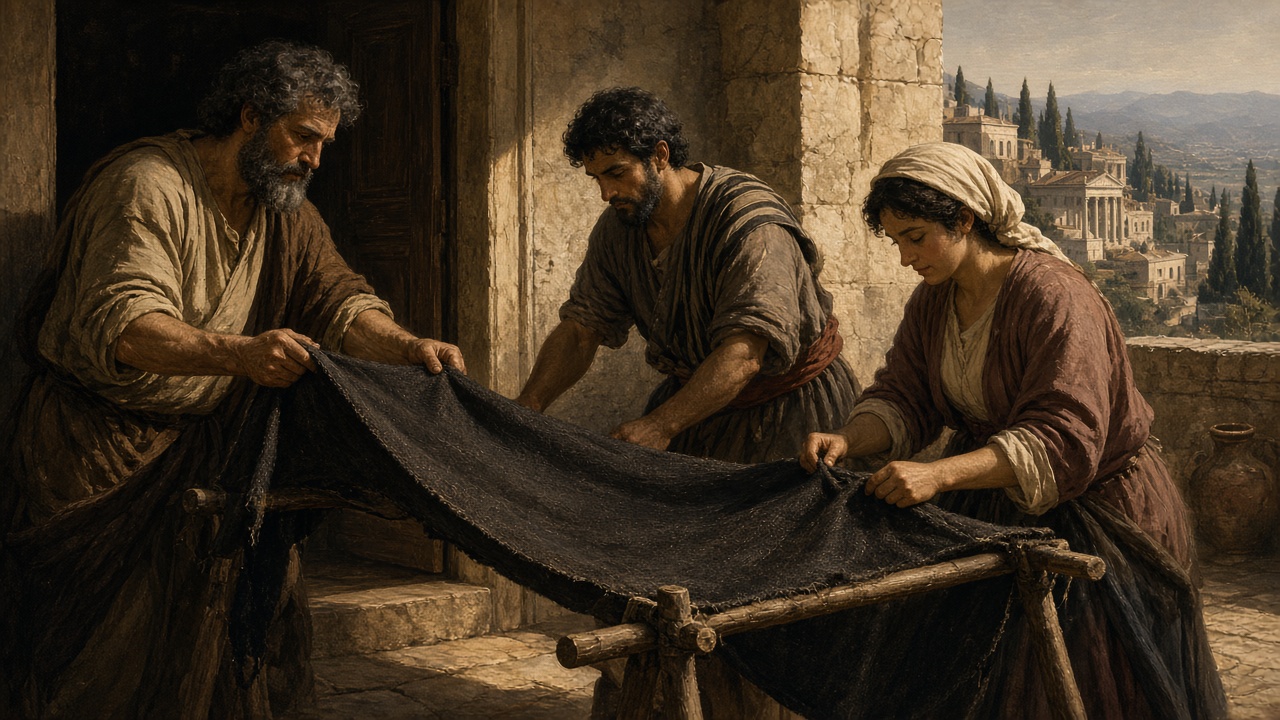
- Aquila, natural del Ponto, y su esposa Priscila habían salido de Italia porque el emperador Claudio ordenó que todos los judíos dejaran Roma. El Easton's Bible Dictionary (1897) fecha ese decreto en el 49 d.C. en la entrada de Claudio y en el 50 d.C. en la de Aquila. Pablo se quedó con ellos en Corinto y trabajó en el mismo oficio, haciendo tela de pelo de Cilicia para tiendas.Fuentes: Aquila · Claudius (4th Roman Emperor) · el propio texto bíblico
- La Corinto de este capítulo no era la antigua ciudad griega, destruida por los romanos en el 146 a.C., sino una ciudad reconstruida cerca de un siglo después y poblada por una colonia de libertos venidos de Roma. Estaba en el istmo, a unas 48 millas al oeste de Atenas, y era la sede romana del gobierno de Acaya, en el sur de Grecia. Se la conocía por su riqueza y por los hábitos lujosos, inmorales y viciosos de su gente.Fuentes: Corinth · Achaia
- Galión, hermano mayor del filósofo Séneca, era procónsul de Acaya bajo Claudio cuando los judíos llevaron a Pablo ante el tribunal. Acaya era una provincia senatorial, y el gobernador de una provincia así se llamaba procónsul, título usado en este capítulo. Galión se negó a juzgar una disputa sobre palabras, nombres y la ley judía, y echó a los acusadores del tribunal.Fuentes: Gallio · el propio texto bíblico
Notas escritas con ayuda de IA a partir de fuentes abiertas (Theographic Bible Metadata, CC BY-SA 4.0; Easton’s Bible Dictionary, dominio público) y revisadas antes de publicarse.
Lugares de este capítulo
- Athens · 37.972, 23.727 · versículo 1
- Corinth · 37.906, 22.879 · versículos 1, 8, 11, 12, 18
- Italy · 41.892, 12.485 · versículo 2
- Pontus · 40.680, 37.830 · versículo 2
- Rome · 41.892, 12.485 · versículo 2
- Macedonia · 41.600, 22.540 · versículo 5
- Achaia · 38.720, 22.540 · versículos 12, 27
- Cenchreae · Hoy: Kechries · 37.884, 22.997 · versículo 18
- Syria · Hoy: Syria 2 · 33.511, 36.306 · versículo 18
- Ephesus · 37.939, 27.341 · versículos 19, 21, 24, 27
- Jerusalem · 31.777, 35.234 · versículos 21, 22
- Antioch · Hoy: Antioch on the Orontes · 36.227, 36.172 · versículos 22, 23
- Caesarea · Hoy: Caesarea Maritima · 32.500, 34.892 · versículo 22
- Galatia · 39.267, 32.983 · versículo 23
- Phrygia · 39.000, 31.000 · versículo 23
- Alexandria · 31.183, 29.896 · versículo 24
- Egypt · 30.129, 31.308 · versículo 24
Solo aparecen lugares identificados con alta confianza (90 % o más según las fuentes académicas reunidas por OpenBible). Mapa de la época: DARE (Digital Atlas of the Roman Empire), CC BY 4.0; mapa actual: © colaboradores de OpenStreetMap; lugares: OpenBible.info (CC BY 4.0).
Créditos y licencia de esta traducción
Nǫ̀htsı̨̨ Nı̨̨htł'è
Dogrib: Dogrib Genesis & New Testament New Testament & Portions of Old Testament
copyright © 2009 Canadian Bible Society
Language: Dogrib
Translation by: Canadian Bible Society
Tłı̨chǫ Genesis and New Testament
About Tłı̨chǫ
Tłı̨chǫ (Dogrib) is a Na-Dene (Athabaskan) language. It is spoken by the First Nations Tłı̨chǫ people in the Northwest Territories in Canada. It has the largest number of speakers of any of the Aboriginal language communities in the NWT, and is one of the official languages of the Northwest Territories.
About This Translation
This translation includes the book of Genesis and the New Testament in Tłı̨chǫ. The first edition of the Tłı̨chǫ New Testament was published in 2003. It was a historic event, as it was the first time in more than a hundred years that a complete New Testament was published for one of the Dene First Nations in the Territories. The first edition was well received and quickly sold out. In the meantime the book of Genesis had been completed. Consequently, the 2008 reprint of the Tłı̨chǫ New Testament included Genesis.
Though this translation of the New Testament and Genesis took a total of ten years, the people who worked on it built on years of labor invested by the Tłı̨chǫ people, elders, priests and missionaries, translators, educators, and linguists. The material contained in this book was checked and approved by consultants from Wycliffe Bible Translators and the Canadian Bible Society.
If you are interested in obtaining a printed copy of this Bible, please contact the Canadian Bible Society at http://www.biblescanada.com .
Copyright Information
Dogrib Genesis and New Testament © 2003, 2008 Canadian Bible Society
The text of the Bible in Tłı̨chǫ that appears in this electronic format or website is for personal use only.
Up to five hundred (500) verses of the Bible text in any form (written, visual, electronic or audio) may be quoted without permission. The quoted verses may not be more than 50% of a complete book of the Bible, or more than 25% of the total text of the work in which they are quoted. Prior written permission must be obtained for any other use of the text. Copyright acknowledgement must in all cases appear on the title or copyright page.
For more information on copyright conditions or to apply, visit http://www.biblesociety.ca/copyright .
This translation is made available to you under the terms of the
Creative Commons Attribution-Noncommercial-No Derivatives license 4.0.
You may share and redistribute this Bible translation or extracts from it in any format, provided that:
You include the above copyright and source information.
You do not sell this work for a profit.
You do not change any of the words or punctuation of the Scriptures.
Pictures included with Scriptures and other documents on this site are licensed just for use with those Scriptures and documents.
For other uses, please contact the respective copyright owners.
2014-04-22
Fuente: http://ebible.org/dgrDOGNT/ · eBible.org