Génesis 26
Yak'usda Ooghuni · Toca un versículo para ver sus referencias cruzadas.
Isaac 'ink'ez Abimelech
1'Et nyo keyoh dai dinzut, whutso da' Abraham khuna whe 'et cha dai dinzut inle' 'ink'ez Isaac, Abimelech huyulhni, Philistine whut'enne buba lerwe, Gerar whut'i, 'en buts'un whenya.
2'Et Moodihti (Yahweh) yunalhts'et hainya 'ink'ez 'uyulhni, “'Aw Egypt ts'u tonya' junih. Ndet la yun nyudutasnelh-un 'et sih hont'e'.
3Ndi yun 'i k'ut hont'e 'ink'ez nyulh 'utistelh, 'ink'ez mba soo hoonzoo-i ubooselh. Nyun cha 'ink'ez nts'u haindene cha ndi yun bugha inus'ai, ndet la mbá Abraham oots'u nahizusya-i, 'i lhadutisleh 'et huwa.
4'Ink'ez nts'u haindene, 'enne yak'uz whusum k'un'a lhk'uz te huldlai hubutilhtselh. 'Ink'ez nts'u hainde 'en ts'iyawh njan yun k'ut bugha óotas'alh. 'Ink'ez nts'u haindene, 'enne bugha ndi yun k'ut dune ts'iyawh huba soo hoonzoo-i 'i butilhtselh.
5Abraham 'en sghuni oontun 'ink'ez sk'oh ts'e ant'e, sghuni 'i yuk'une'ust'en, dadusni, 'et cha hont'un, 'ink'ez nts'en'a ba newhunin'ai, 'et huwa.”
6'Et Isaac nyo keyoh Gerar howhutni-un 'et hoot'e'.
7'Et nyoonne dune 'et whudune'ne hi'at ka huyoodulhkut 'ink'ez 'ubulhni, “Sulhtus 'unt'oh.” “S'at 'unt'oh” hubulhni de, doo ka la sozoolhghelh ninzun 'awhuz ndun Rebekah ts'eke zoo' 'et huwa.
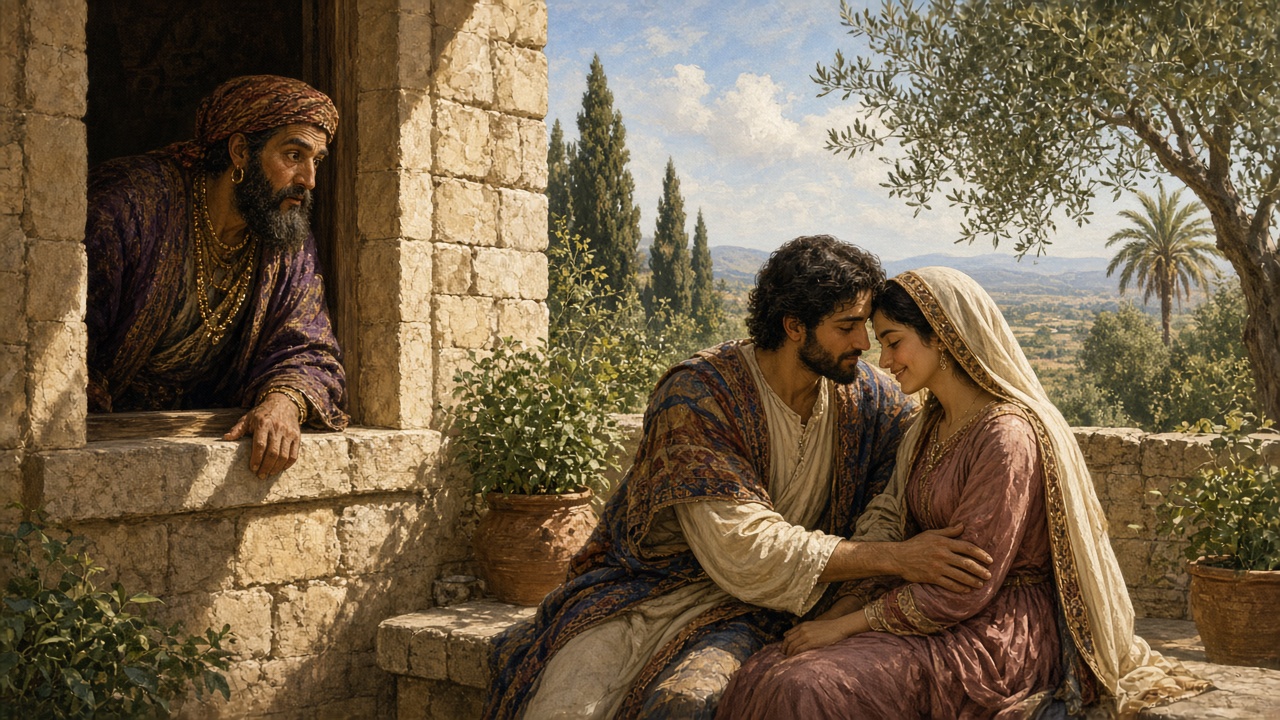
8'Et 'uhooja sa' nyo 'et keyoh hoot'e' whe Abimelech, Philistinene bulerwe, dadint'az k'et 'az whunilh'en whe Isaac, Rebekah yughu dzedzi' whe yunulh'en.
9'Et Abimelech Isaac, “'Anih!” yudani', “'Alha 'uhoont'oh whe ndun ts'eke n'at 'unt'oh 'ink'ez nts'en'a 'udini ‘Sulhtus 'unt'oh,’ dini?” 'Ink'ez Isaac 'uyulhni, “Doo ka sih ook'uz daoosah 'inka 'udusni.”
10'Ink'ez Abimelech 'utni, “'Et dane'inla whe ne'inla? Nyoonne dune 'ilhoghun te da', nyoon n'at yuchan t'eoote' oole'! Njan lhe'hoont'oh-un 'et da' nek'eholts'it oole'.”
11'Et Abimelech mbene la dudune'ne 'ubulhni, “Ndun dune k'us oo'at te oot'aizahnai de, datihtsah.”
12'Et Isaac nyo yun k'ut 'a' nanla 'ink'ez yus k'ut ha'nanla. Lhai ha'nanla, 100 'et 'uwhultsuk, 'ink'ez Moodihti (Yahweh) soo hoonzoo-un yuba whulhtsi.
13'Et ndun dune 'awet hoonzoo wheninle' 'ink'ez lhk'uz te whe tube hoonzoo suli'.
14'Usbai 'i yulh lhai suli', musdoos 'i cha lhai whe yut'i suli', 'ink'ez hinatne'ut'en 'enne cha huldlai. 'Et whe Philistine whut'enne highe 'oolnih huzli'.
15'Et nyoonne Philistinene nyo too dizdla-un 'uhuhoonla-un, ts'iyawh lhez buch'a 'ananuhulhkat, Abraham yuba 'ut'enne, 'enne hahuhonkai, Abraham khuna whe, 'ink'ez nyoonne sai dizbun whe 'ananulhkat.
16'Ink'ez Abimelech, Isaac 'uyulhni, “Nech'a naindalh! Neanus 'ilhtus whe 'int'oh.”
17'Et Isaac nyo huwu natisja 'ink'ez dzulh eguz, Gerar, 'et nimbali nenin'ai 'ink'ez 'et whut'i.
18'Ink'ez Isaac doo cha nyo too k'et na'hoonla, mbe la oobá 'ulhuhoonla-un inle'-un. 'Oh da' ts'iyawh nyoonne Philistinene ts'iyawh lhez 'anunahulhkat inle'. 'Ink'ez ndai la nyo too dizdla-un oobá ye honzi'-un, whuz un'a hoozi' nawhulhtsi.
19'Ink'ez Isaac yuba 'ut'enne nyo dzulh eguz ha huhonkai, 'et doo cha too unzoo hoonli-un 'et nahuhoon'ai.
20'Et hoonts'i nyoonne Gerar whut'enne khuna ghunline, Isaac khuna' ghunline tube hube hududulh. Nyoonne Gerar whut'enne hutni, “Ndi too nech'e' 'unt'oh!” hutni, 'et nyo too k'et, 'et Esek yoozi', hiye dindil 'et huwa.
21'Et doo cha 'udun too diz'ai-un 'uhuhoonla. 'Et nyo 'et cha hukwa lhehudindil, 'et cha hoozi' whulhtsi, Sitnah whulhni.
22'Et nyo tizna 'ink'ez doo cha 'udun too k'et 'uhuhoonla. 'Et 'aw hukwa lhelhdulhyoh lhe'huditnelh 'et huwa, Rehoboth whulhni. 'Et 'utni, “'Andit njan Moodihti (Yahweh) hooncha neba whulhtsi, soo lhai cho la 'uts'ooleh ndi yun k'ut.”
23'Ink'ez 'et whedinya ndo Beersheba ts'un whenya.
24'Et 'ulhdzis za Moodihti (Yahweh) yunalhts'et hainya 'ink'ez 'utni, “Mbá Abraham ooYak'usda (Elohim) 'ust'oh. Whenilhjut iloh, nyulh 'ust'en 'ink'ez soo hoonzoo-un mba whutiselh 'ink'ez nts'u haindene cha lhane hutileh, ndun sba 'ut'en-un Abraham 'en gha.
25'Et nyo loodel 'inla 'ink'ez Moodihti (Yahweh) yukahuyih 'ink'ez 'et nimbali nenin'ai. 'Et doo cha Isaac yuba 'ut'enne too k'et hahonkai.
26'Et Abimelech yughu ninya keyoh Gerar ts'e hainya, ook'eke 'ilhoghun Ahuzzah huyulhi, 'ink'ez Phichol lhuganne bumoodih 'en tubulh.
27'Ink'ez Isaac 'ubulhni, “'Et di ha sghu nuhdil, sts'u duhni 'ink'ez whenasuniyoot inle'?”
28'Et hoonts'i uhuyulhni, “Soo ts'ih'un 'alha t'ets'onanzin Moodihti (Yahweh) nyulh 'unt'oh. 'Et' uts'utni, ‘Nats'uhooyeh nyun 'ink'ez wheni tubulh nats'uhooyeh,’ huyulhni.
29'Aw hoonli hoontsi' hukw'un'a ne'onleh ait'oh, 'aw nt'alhts'inalh 'et huwa. Hoonzoo-un te za ne'unts'uyulh'en, dalhts'inelh whe za whenants'uyalh'a'. Moodihti (Yahweh) soo hoozoo-un ngha óonin'ai inli.”
30'Et bughu nusuya 'ink'ez 'uhan'alh 'ink'ez tahitnai'.
31'Et bunda' 'uda' duhudindil 'ink'ez lhts'unahuhisda whe Isaac 'un whenabalh'a 'ink'ez budzi dizghel whe whenahidil.
32'Et nyoonne 'et dzin za Isaac yuba 'ut'enne, doo cha za too hoonli hahonkai 'ink'ez highu nindil 'ink'ez 'uhuyulhni, “Too k'et 'et 'uts'uhoonla!”
33'Et nyo too k'et 'et Shibah whulhni, 'et huwa nyo keyoh whuti 'andit dzin whuts'un Beersheba huwhutni.
34'Et Esau dit whinizyat (40) be yus k'ut whe ts'ekoo nane 'enne bughusda. 'Ilhoghun Judith, Beeri ootse', Hitt whut'en-un 'unt'oh, 'ink'ez Basemath, Elon, Hitt whut'en-un, 'en ootse' bulh.
35'Ink'ez nyoonne ts'ekoo, Isaac 'ink'ez Rebekah bulh budzi hundulhda.
¿Sabías que…?
Isaac en Gerar
- Durante una hambruna, Isaac buscó refugio junto a Abimelec, rey de Gerar, una antigua ciudad y distrito en la frontera sur de Palestina. El Easton's Bible Dictionary (1897) señala que Isaac actuó con su esposa Rebeca de manera muy parecida a como su padre Abraham había actuado con Sara allí: dijo que ella era su hermana. Abimelec después lo reprendió, cuando se descubrió el engaño.Fuentes: Abimelech (King of Gerar) · Gerar · el propio texto bíblico
- Los nombres de los pozos en el valle de Gerar recuerdan las disputas por ellos. Esek significa “contienda”, porque los pastores de Gerar reclamaron el agua, y Sitna significa “conflicto”. Isaac también reabrió pozos que los siervos de su padre Abraham habían cavado y que los filisteos habían tapado, y les dio los mismos nombres que su padre les había dado.Fuentes: Esek · Sitnah · el propio texto bíblico
- Beerseba significa “pozo del juramento” o “pozo de los siete”. Según el Easton's Bible Dictionary (1897), Abraham cavó allí un pozo y le puso ese nombre tras un pacto con Abimelec, e Isaac le dio el mismo nombre al reabrirlo. El diccionario también identifica a Ficol —“grande”— como capitán jefe del ejército de Abimelec y dice que participó en la alianza de Abraham acerca de ese pozo.Fuentes: Beersheba · Phichol · el propio texto bíblico
Notas escritas con ayuda de IA a partir de fuentes abiertas (Theographic Bible Metadata, CC BY-SA 4.0; Easton’s Bible Dictionary, dominio público) y revisadas antes de publicarse.
Lugares de este capítulo
- Egypt · 30.129, 31.308 · versículo 2
- Valley of Gerar · Hoy: about 3 km around Tel Haror · 31.382, 34.606 · versículos 17, 19
Solo aparecen lugares identificados con alta confianza (90 % o más según las fuentes académicas reunidas por OpenBible). Mapa de la época: DARE (Digital Atlas of the Roman Empire), CC BY 4.0; mapa actual: © colaboradores de OpenStreetMap; lugares: OpenBible.info (CC BY 4.0).
Créditos y licencia de esta traducción
Yak'usda Ooghuni
New Testament in Carrier (CA:crx:Carrier)
copyright © 2011 Wycliffe Bible Translators, Inc.
Language: Carrier
Translation by: Wycliffe Bible Translators, Inc.
Carrier
crx
Canada
Copyright Information
© 2011, Wycliffe Bible Translators, Inc. All rights reserved.
This translation text is made available to you under the
terms of the Creative Commons License: Attribution-Noncommercial-No Derivative Works.
( http://creativecommons.org/licenses/by-nc-nd/3.0/ )
In addition, you have permission to port the text to different file formats, as long as you
do not change any of the text or punctuation of the Bible.
You may share, copy, distribute, transmit, and extract portions
or quotations from this work, provided that you include the above copyright
information:
You must give Attribution to the work.
You do not sell this work for a profit.
You do not make any derivative works that change any of the actual words or punctuation of the Scriptures.
Permissions beyond the scope of this license may be
available if you contact
us with your request.
The New Testament
in Carrier
© 2011, Wycliffe Bible Translators, Inc. All rights reserved.
This translation is made available to you under the terms of the
Creative Commons Attribution-Noncommercial-No Derivatives license 4.0.
You may share and redistribute this Bible translation or extracts from it in any format, provided that:
You include the above copyright and source information.
You do not sell this work for a profit.
You do not change any of the words or punctuation of the Scriptures.
Pictures included with Scriptures and other documents on this site are licensed just for use with those Scriptures and documents.
For other uses, please contact the respective copyright owners.
2014-04-22
Fuente: http://ebible.org/crxNTpo/ · eBible.org