Genesis 26
Yak'usda Ooghuni · Tap a verse to see its cross-references.
Isaac 'ink'ez Abimelech
1'Et nyo keyoh dai dinzut, whutso da' Abraham khuna whe 'et cha dai dinzut inle' 'ink'ez Isaac, Abimelech huyulhni, Philistine whut'enne buba lerwe, Gerar whut'i, 'en buts'un whenya.
2'Et Moodihti (Yahweh) yunalhts'et hainya 'ink'ez 'uyulhni, “'Aw Egypt ts'u tonya' junih. Ndet la yun nyudutasnelh-un 'et sih hont'e'.
3Ndi yun 'i k'ut hont'e 'ink'ez nyulh 'utistelh, 'ink'ez mba soo hoonzoo-i ubooselh. Nyun cha 'ink'ez nts'u haindene cha ndi yun bugha inus'ai, ndet la mbá Abraham oots'u nahizusya-i, 'i lhadutisleh 'et huwa.
4'Ink'ez nts'u haindene, 'enne yak'uz whusum k'un'a lhk'uz te huldlai hubutilhtselh. 'Ink'ez nts'u hainde 'en ts'iyawh njan yun k'ut bugha óotas'alh. 'Ink'ez nts'u haindene, 'enne bugha ndi yun k'ut dune ts'iyawh huba soo hoonzoo-i 'i butilhtselh.
5Abraham 'en sghuni oontun 'ink'ez sk'oh ts'e ant'e, sghuni 'i yuk'une'ust'en, dadusni, 'et cha hont'un, 'ink'ez nts'en'a ba newhunin'ai, 'et huwa.”
6'Et Isaac nyo keyoh Gerar howhutni-un 'et hoot'e'.
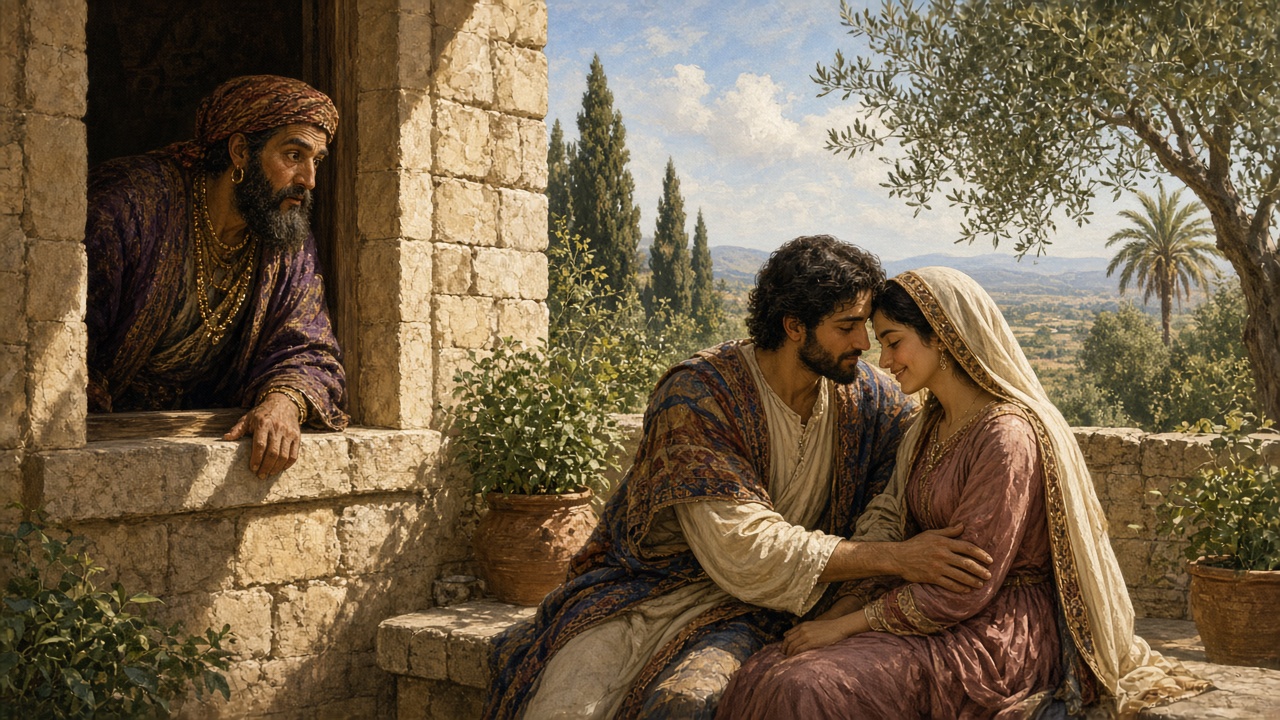
7'Et nyoonne dune 'et whudune'ne hi'at ka huyoodulhkut 'ink'ez 'ubulhni, “Sulhtus 'unt'oh.” “S'at 'unt'oh” hubulhni de, doo ka la sozoolhghelh ninzun 'awhuz ndun Rebekah ts'eke zoo' 'et huwa.
8'Et 'uhooja sa' nyo 'et keyoh hoot'e' whe Abimelech, Philistinene bulerwe, dadint'az k'et 'az whunilh'en whe Isaac, Rebekah yughu dzedzi' whe yunulh'en.
9'Et Abimelech Isaac, “'Anih!” yudani', “'Alha 'uhoont'oh whe ndun ts'eke n'at 'unt'oh 'ink'ez nts'en'a 'udini ‘Sulhtus 'unt'oh,’ dini?” 'Ink'ez Isaac 'uyulhni, “Doo ka sih ook'uz daoosah 'inka 'udusni.”
10'Ink'ez Abimelech 'utni, “'Et dane'inla whe ne'inla? Nyoonne dune 'ilhoghun te da', nyoon n'at yuchan t'eoote' oole'! Njan lhe'hoont'oh-un 'et da' nek'eholts'it oole'.”
11'Et Abimelech mbene la dudune'ne 'ubulhni, “Ndun dune k'us oo'at te oot'aizahnai de, datihtsah.”
12'Et Isaac nyo yun k'ut 'a' nanla 'ink'ez yus k'ut ha'nanla. Lhai ha'nanla, 100 'et 'uwhultsuk, 'ink'ez Moodihti (Yahweh) soo hoonzoo-un yuba whulhtsi.
13'Et ndun dune 'awet hoonzoo wheninle' 'ink'ez lhk'uz te whe tube hoonzoo suli'.
14'Usbai 'i yulh lhai suli', musdoos 'i cha lhai whe yut'i suli', 'ink'ez hinatne'ut'en 'enne cha huldlai. 'Et whe Philistine whut'enne highe 'oolnih huzli'.
15'Et nyoonne Philistinene nyo too dizdla-un 'uhuhoonla-un, ts'iyawh lhez buch'a 'ananuhulhkat, Abraham yuba 'ut'enne, 'enne hahuhonkai, Abraham khuna whe, 'ink'ez nyoonne sai dizbun whe 'ananulhkat.
16'Ink'ez Abimelech, Isaac 'uyulhni, “Nech'a naindalh! Neanus 'ilhtus whe 'int'oh.”
17'Et Isaac nyo huwu natisja 'ink'ez dzulh eguz, Gerar, 'et nimbali nenin'ai 'ink'ez 'et whut'i.
18'Ink'ez Isaac doo cha nyo too k'et na'hoonla, mbe la oobá 'ulhuhoonla-un inle'-un. 'Oh da' ts'iyawh nyoonne Philistinene ts'iyawh lhez 'anunahulhkat inle'. 'Ink'ez ndai la nyo too dizdla-un oobá ye honzi'-un, whuz un'a hoozi' nawhulhtsi.
19'Ink'ez Isaac yuba 'ut'enne nyo dzulh eguz ha huhonkai, 'et doo cha too unzoo hoonli-un 'et nahuhoon'ai.
20'Et hoonts'i nyoonne Gerar whut'enne khuna ghunline, Isaac khuna' ghunline tube hube hududulh. Nyoonne Gerar whut'enne hutni, “Ndi too nech'e' 'unt'oh!” hutni, 'et nyo too k'et, 'et Esek yoozi', hiye dindil 'et huwa.
21'Et doo cha 'udun too diz'ai-un 'uhuhoonla. 'Et nyo 'et cha hukwa lhehudindil, 'et cha hoozi' whulhtsi, Sitnah whulhni.
22'Et nyo tizna 'ink'ez doo cha 'udun too k'et 'uhuhoonla. 'Et 'aw hukwa lhelhdulhyoh lhe'huditnelh 'et huwa, Rehoboth whulhni. 'Et 'utni, “'Andit njan Moodihti (Yahweh) hooncha neba whulhtsi, soo lhai cho la 'uts'ooleh ndi yun k'ut.”
23'Ink'ez 'et whedinya ndo Beersheba ts'un whenya.
24'Et 'ulhdzis za Moodihti (Yahweh) yunalhts'et hainya 'ink'ez 'utni, “Mbá Abraham ooYak'usda (Elohim) 'ust'oh. Whenilhjut iloh, nyulh 'ust'en 'ink'ez soo hoonzoo-un mba whutiselh 'ink'ez nts'u haindene cha lhane hutileh, ndun sba 'ut'en-un Abraham 'en gha.
25'Et nyo loodel 'inla 'ink'ez Moodihti (Yahweh) yukahuyih 'ink'ez 'et nimbali nenin'ai. 'Et doo cha Isaac yuba 'ut'enne too k'et hahonkai.
26'Et Abimelech yughu ninya keyoh Gerar ts'e hainya, ook'eke 'ilhoghun Ahuzzah huyulhi, 'ink'ez Phichol lhuganne bumoodih 'en tubulh.
27'Ink'ez Isaac 'ubulhni, “'Et di ha sghu nuhdil, sts'u duhni 'ink'ez whenasuniyoot inle'?”
28'Et hoonts'i uhuyulhni, “Soo ts'ih'un 'alha t'ets'onanzin Moodihti (Yahweh) nyulh 'unt'oh. 'Et' uts'utni, ‘Nats'uhooyeh nyun 'ink'ez wheni tubulh nats'uhooyeh,’ huyulhni.
29'Aw hoonli hoontsi' hukw'un'a ne'onleh ait'oh, 'aw nt'alhts'inalh 'et huwa. Hoonzoo-un te za ne'unts'uyulh'en, dalhts'inelh whe za whenants'uyalh'a'. Moodihti (Yahweh) soo hoozoo-un ngha óonin'ai inli.”
30'Et bughu nusuya 'ink'ez 'uhan'alh 'ink'ez tahitnai'.
31'Et bunda' 'uda' duhudindil 'ink'ez lhts'unahuhisda whe Isaac 'un whenabalh'a 'ink'ez budzi dizghel whe whenahidil.
32'Et nyoonne 'et dzin za Isaac yuba 'ut'enne, doo cha za too hoonli hahonkai 'ink'ez highu nindil 'ink'ez 'uhuyulhni, “Too k'et 'et 'uts'uhoonla!”
33'Et nyo too k'et 'et Shibah whulhni, 'et huwa nyo keyoh whuti 'andit dzin whuts'un Beersheba huwhutni.
34'Et Esau dit whinizyat (40) be yus k'ut whe ts'ekoo nane 'enne bughusda. 'Ilhoghun Judith, Beeri ootse', Hitt whut'en-un 'unt'oh, 'ink'ez Basemath, Elon, Hitt whut'en-un, 'en ootse' bulh.
35'Ink'ez nyoonne ts'ekoo, Isaac 'ink'ez Rebekah bulh budzi hundulhda.
Did you know?
Isaac in Gerar
- During a famine, Isaac sought refuge with Abimelech, king of Gerar, an ancient town and district on the southern border of Palestine. Easton's Bible Dictionary (1897) notes that Isaac acted toward his wife Rebekah much as his father Abraham had acted toward Sarah there: he said she was his sister. Abimelech later rebuked him when the deception was discovered.Sources: Abimelech (King of Gerar) · Gerar · the Bible text itself
- The names of wells in the Valley of Gerar recall the disputes over them. Esek means “quarrel,” because the herdsmen of Gerar claimed the water, and Sitnah means “strife.” Isaac also reopened wells that his father Abraham’s servants had dug and that the Philistines had stopped up, and he gave them the same names his father had given them.Sources: Esek · Sitnah · the Bible text itself
- Beersheba means “well of the oath” or “well of seven.” According to Easton's Bible Dictionary (1897), Abraham dug a well there and named it after a compact with Abimelech, and Isaac gave it the same name when he reopened it. The dictionary also identifies Phicol—“great”—as chief captain of Abimelech’s army, and says he took part in Abraham’s alliance over that well.Sources: Beersheba · Phichol · the Bible text itself
Notes written with AI assistance from open sources (Theographic Bible Metadata, CC BY-SA 4.0; Easton’s Bible Dictionary, public domain) and reviewed before publishing.
Places in this chapter
- Egypt · 30.129, 31.308 · verse 2
- Valley of Gerar · Today: about 3 km around Tel Haror · 31.382, 34.606 · verses 17, 19
Only places identified with high confidence are shown (90% or more according to the scholarly sources compiled by OpenBible). Period map: DARE (Digital Atlas of the Roman Empire), CC BY 4.0; modern map: © OpenStreetMap contributors; places: OpenBible.info (CC BY 4.0).
Credits and license for this translation
Yak'usda Ooghuni
New Testament in Carrier (CA:crx:Carrier)
copyright © 2011 Wycliffe Bible Translators, Inc.
Language: Carrier
Translation by: Wycliffe Bible Translators, Inc.
Carrier
crx
Canada
Copyright Information
© 2011, Wycliffe Bible Translators, Inc. All rights reserved.
This translation text is made available to you under the
terms of the Creative Commons License: Attribution-Noncommercial-No Derivative Works.
( http://creativecommons.org/licenses/by-nc-nd/3.0/ )
In addition, you have permission to port the text to different file formats, as long as you
do not change any of the text or punctuation of the Bible.
You may share, copy, distribute, transmit, and extract portions
or quotations from this work, provided that you include the above copyright
information:
You must give Attribution to the work.
You do not sell this work for a profit.
You do not make any derivative works that change any of the actual words or punctuation of the Scriptures.
Permissions beyond the scope of this license may be
available if you contact
us with your request.
The New Testament
in Carrier
© 2011, Wycliffe Bible Translators, Inc. All rights reserved.
This translation is made available to you under the terms of the
Creative Commons Attribution-Noncommercial-No Derivatives license 4.0.
You may share and redistribute this Bible translation or extracts from it in any format, provided that:
You include the above copyright and source information.
You do not sell this work for a profit.
You do not change any of the words or punctuation of the Scriptures.
Pictures included with Scriptures and other documents on this site are licensed just for use with those Scriptures and documents.
For other uses, please contact the respective copyright owners.
2014-04-22
Source: http://ebible.org/crxNTpo/ · eBible.org