Juan 11
Sahidica - طبعة جديدة من العهد الجديد باللغة القبطية الصعيدية · Toca un versículo para ver sus referencias cruzadas.
1ⲚⲈⲨⲚ ⲞⲨⲀ ⲆⲈ ϢⲰⲚⲈ ϪⲈ ⲖⲀⲌⲀⲢⲞⲤ ⲈⲂⲞⲖ ϨⲚ ⲂⲎⲐⲀⲚⲒⲀ ⲠϮⲘⲈ ⲘⲘⲀⲢⲒⲀ ⲚⲘ ⲘⲀⲢⲐⲀ ⲦⲈⲤⲤⲰⲚⲈ. 2ⲦⲀⲒ ⲆⲈ ⲦⲈ ⲘⲀⲢⲒⲀ ⲦⲈⲚⲦⲀⲤⲦⲈϨⲤ ⲠϪⲞⲈⲒⲤ ⲚⲤⲞϬⲚ ⲀⲨⲰ ⲀⲤϤⲈⲦ ⲚⲈϤⲞⲨⲈⲢⲎⲦⲈ ϨⲘ ⲠⲈⲤϤⲰ ⲦⲀⲒ ⲈⲚⲈⲢⲈ ⲠⲈⲤⲤⲞⲚ ⲖⲀⲌⲀⲢⲞⲤ ϢⲰⲚⲈ. 3ⲀⲨϪⲞⲞⲨ ϬⲈ ϢⲀⲢⲞϤ ⲚϬⲒ ⲚⲈϤⲤⲰⲚⲈ ⲈⲨϪⲰ ⲘⲘⲞⲤ ϪⲈ ⲠϪⲞⲈⲒⲤ ⲈⲒⲤ ϨⲎⲎⲦⲈ ϤϢⲰⲚⲈ ⲚϬⲒ ⲠⲈⲦⲔⲘⲈ ⲘⲘⲞϤ. 4ⲚⲦⲈⲢⲈϤⲤⲰⲦⲘ ⲆⲈ ⲚϬⲒ ⲒⲎⲤⲞⲨⲤ ⲠⲈϪⲀϤ. ϪⲈ ⲠⲈⲒϢⲰⲚⲈ ⲚⲚⲈϤϢⲞⲞⲠ ⲀⲚ ⲈⲠⲘⲞⲨ. ⲀⲖⲖⲀ ⲈⲦⲂⲈ ⲠⲈⲞⲞⲨ ⲘⲠⲚⲞⲨⲦⲈ ϪⲈⲔⲀⲀⲤ ⲈⲢⲈ ⲠⲈϤϢⲎⲢⲈ ϪⲒⲈⲞⲞⲨ ⲈⲂⲞⲖ ϨⲒⲦⲞⲞⲦϤ. 5ⲚⲈⲢⲈ ⲒⲎⲤⲞⲨⲤ ⲆⲈ ⲘⲈ ⲘⲘⲀⲢⲐⲀ ⲚⲘ ⲘⲀⲢⲒⲀ ⲦⲈⲤⲤⲰⲚⲈ ⲚⲘ ⲖⲀⲌⲀⲢⲞⲤ. 6ⲚⲦⲈⲢⲈϤⲤⲰⲦⲘ ϬⲈ ϪⲈ ϤϢⲰⲚⲈ. ⲦⲞⲦⲈ ⲀϤϬⲰ ⲚϨⲞⲞⲨ ⲤⲚⲀⲨ ϨⲘ ⲠⲘⲀ ⲈⲚⲈϤⲚϨⲎⲦϤ. 7ⲘⲚⲚⲤⲰⲤ ⲆⲈ ⲠⲈϪⲀϤ ⲚⲚⲈϤⲘⲀⲐⲎⲦⲎⲤ. ϪⲈ ⲘⲀⲢⲞⲚ ⲞⲚ ⲈϮⲞⲨⲆⲀⲒⲀ. 8ⲠⲈϪⲀⲨ ⲚⲀϤ ⲚϬⲒ ⲘⲘⲀⲐⲎⲦⲎⲤ. ϪⲈ ϨⲢⲀⲂⲂⲈⲒ. ⲦⲈⲚⲞⲨ ⲚⲈⲢⲈ ⲚⲒⲞⲨⲆⲀⲒ ϢⲒⲚⲈ ⲚⲤⲀ ϨⲒ ⲰⲚⲈ ⲈⲢⲞⲔ ⲀⲨⲰ ⲞⲚ ⲔⲚⲀⲂⲰⲔ ⲈⲘⲀⲨ. 9ⲀϤⲞⲨⲰϢⲂ ⲚϬⲒ ⲒⲎⲤⲞⲨⲤ ⲠⲈϪⲀϤ. ϪⲈ ⲘⲎ ⲘⲚ ⲘⲚⲦⲤⲚⲞⲞⲨⲤ ⲚⲞⲨⲚⲞⲨ ϨⲘ ⲠⲈϨⲞⲞⲨ. ⲈⲢϢⲀ ⲞⲨⲀ ⲘⲞⲞϢⲈ ϨⲘ ⲠⲈϨⲞⲞⲨ ⲘⲈϤϪⲒϪⲢⲞⲠ ϪⲈ ϤⲚⲀⲨ ⲈⲠⲞⲨⲞⲒⲚ ⲘⲠⲈⲒⲔⲞⲤⲘⲞⲤ. 10ⲈⲢϢⲀ ⲞⲨⲀ ⲘⲞⲞϢⲈ ϨⲚ ⲦⲈⲨϢⲎ. ϢⲀϤϪⲒ ϪⲢⲞⲠ ϪⲈ ⲘⲠⲞⲨⲞⲒⲚ ϢⲞⲞⲠ ⲀⲚ ϨⲢⲀⲒ ⲚϨⲎⲦϤ. 11ⲚⲀⲒ ⲀϤϪⲞⲞⲨ ⲘⲚⲚⲤⲰⲤ ⲠⲈϪⲀϤ ⲚⲀⲨ ϪⲈ ⲖⲀⲌⲀⲢⲞⲤ ⲠⲈⲚϢⲂⲎⲢ ⲀϤⲚⲔⲞⲦⲔ. ⲀⲖⲖⲀ ϮⲚⲀⲂⲰⲔ ϪⲈⲔⲀⲀⲤ ⲈⲈⲒⲈⲦⲞⲨⲚⲞⲤϤ. 12ⲠⲈϪⲀⲨ ϬⲈ ⲚⲀϤ ⲚϬⲒ ⲘⲘⲀⲐⲎⲦⲎⲤ. ϪⲈ ⲠϪⲞⲈⲒⲤ ⲈϢϪⲈ ⲚⲦⲀϤⲚⲔⲞⲦⲔ. ϤⲚⲀⲦⲰⲞⲨⲚ. 13ⲚⲦⲀ ⲒⲎⲤⲞⲨⲤ ⲆⲈ ϪⲞⲞⲤ ⲠⲈ ⲈⲦⲂⲈ ⲠⲈϤⲘⲞⲨ. ⲚⲎ ⲆⲈ ⲀⲨⲘⲈⲨⲈ ϪⲈ ⲈϤϪⲈ ⲠⲈⲚⲔⲞⲦⲔ ⲘⲠⲰⲂϢ. 14ⲦⲞⲦⲈ ϬⲈ ⲀⲒⲎⲤⲞⲨⲤ ϪⲞⲞⲤ ⲚⲀⲨ ϨⲚ ⲞⲨⲠⲀⲢⲢⲎⲤⲒⲀ. ϪⲈ ⲖⲀⲌⲀⲢⲞⲤ ⲀϤⲘⲞⲨ 15ⲀⲨⲰ ϮⲢⲀϢⲈ ⲈⲦⲂⲈ ⲦⲎⲨⲦⲚ ϪⲈⲔⲀⲀⲤ ⲈⲦⲈⲦⲚⲈⲠⲒⲤⲦⲈⲨⲈ ϪⲈ ⲚⲈⲒⲘⲘⲀⲨ ⲀⲚ ⲠⲈ. ⲀⲖⲖⲀ ⲘⲀⲢⲞⲚ ϢⲀⲢⲞϤ. 16ⲠⲈϪⲈ ⲐⲰⲘⲀⲤ ⲠⲈϢⲀⲨⲘⲞⲨⲦⲈ ⲈⲢⲞϤ ϪⲈ ⲆⲒⲆⲨⲘⲞⲤ ⲚⲚⲈϤϢⲂⲢ ⲘⲀⲐⲎⲦⲎⲤ. ϪⲈ ⲘⲀⲢⲞⲚ ϨⲰⲰⲚ ϪⲈ ⲈⲚⲈⲘⲞⲨ ⲚⲘⲘⲀϤ 17ⲚⲦⲈⲢⲈϤⲈⲒ ϬⲈ ⲚϬⲒ ⲒⲎⲤⲞⲨⲤ ⲀϤϨⲈ ⲈⲢⲞϤ ⲈⲠⲈϤϤⲦⲞⲞⲨ ⲠⲈ ⲈϤϨⲘ ⲠⲦⲀⲪⲞⲤ. 18ⲂⲎⲐⲀⲚⲒⲀ ⲆⲈ ⲚⲈⲤϨⲎⲚ ⲈϨⲞⲨⲚ ⲈⲐⲒⲈⲢⲞⲤⲞⲖⲨⲘⲀ ⲚⲀⲘⲚⲦⲎ ⲚⲤⲦⲀⲆⲒⲞⲚ. 19ⲞⲨⲘⲎⲎϢⲈ ⲆⲈ ⲈⲂⲞⲖ ϨⲚ ⲒⲞⲨⲆⲀⲒ ⲚⲈ ⲀⲨⲈⲒ ⲠⲈ ϢⲀ ⲘⲀⲢⲐⲀ ⲚⲘ ⲘⲀⲢⲒⲀ ϪⲈ ⲈⲨⲈⲤⲖⲤⲰⲖⲞⲨ ⲈⲦⲂⲈ ⲠⲈⲨⲤⲞⲚ. 20ⲘⲀⲢⲐⲀ ϬⲈ ⲚⲦⲈⲢⲈⲤⲤⲰⲦⲘ ϪⲈ ⲒⲎⲤⲞⲨⲤ ⲚⲎⲨ. ⲀⲤⲈⲒ ⲈⲂⲞⲖ ϨⲎⲦϤ. ⲘⲀⲢⲒⲀ ⲆⲈ ⲚⲈⲤϨⲘⲞⲞⲤ ⲠⲈ ϨⲘ ⲠⲎⲈⲒ. 21ⲠⲈϪⲈ ⲘⲀⲢⲐⲀ ϬⲈ ⲚⲒⲎⲤⲞⲨⲤ ϪⲈ ⲠϪⲞⲈⲒⲤ ⲈⲚⲈⲔⲘⲠⲈⲒⲘⲀ ⲚⲈⲢⲈ ⲠⲀⲤⲞⲚ ⲚⲀⲘⲞⲨ ⲀⲚ ⲠⲈ. 22ⲀⲖⲖⲀ ⲦⲈⲚⲞⲨ ⲞⲚ ϮⲤⲞⲞⲨⲚ ϪⲈ ϨⲰⲂ ⲚⲒⲘ ⲈⲦⲔⲚⲀⲀⲒⲦⲒ ⲘⲘⲞⲞⲨ ⲚⲦⲘ ⲠⲚⲞⲨⲦⲈ. ⲠⲚⲞⲨⲦⲈ ⲚⲀⲦⲀⲀⲨ ⲚⲀⲔ. 23ⲠⲈϪⲈ ⲒⲎⲤⲞⲨⲤ ⲚⲀⲤ. ϪⲈ ⲠⲞⲨⲤⲞⲚ ⲚⲀⲦⲰⲞⲨⲚϤ. 24ⲠⲈϪⲈ ⲘⲀⲢⲐⲀ ⲚⲀϤ. ϪⲈ ϮⲤⲞⲞⲨⲚ ϪⲈ ϤⲚⲀⲦⲰⲞⲨⲚ ϨⲚ ⲦⲀⲚⲀⲤⲦⲀⲤⲒⲤ ϨⲘ ⲠϨⲀⲈ ⲚϨⲞⲞⲨ. 25ⲠⲈϪⲈ ⲒⲎⲤⲞⲨⲤ ⲚⲀⲤ ϪⲈ ⲀⲚⲞⲔ ⲠⲈ ⲦⲀⲚⲀⲤⲦⲀⲤⲒⲤ ⲀⲨⲰ ⲠⲰⲚϨ ⲠⲈⲦⲠⲒⲤⲦⲈⲨⲈ ⲈⲢⲞⲈⲒ ⲔⲀⲚ ⲈϤϢⲀⲚⲘⲞⲨ ϤⲚⲀⲰⲚϨ. 26ⲀⲨⲰ ⲞⲨⲞⲚ ⲚⲒⲘ ⲈⲦⲞⲚϨ ⲈⲦⲠⲒⲤⲦⲈⲨⲈ ⲈⲢⲞⲈⲒ. ⲚϤⲚⲀⲘⲞⲨ ⲀⲚ ϢⲀ ⲈⲚⲈϨ. ⲦⲈⲠⲒⲤⲦⲈⲨⲈ ⲈⲠⲀⲒ. 27ⲠⲈϪⲀⲤ ⲚⲀϤ. ϪⲈ ⲤⲈ ⲠϪⲞⲈⲒⲤ. ⲀⲚⲞⲔ ϮⲠⲒⲤⲦⲈⲨⲈ ϪⲈ ⲚⲦⲞⲔ ⲠⲈ ⲠⲈⲬⲢⲒⲤⲦⲞⲤ ⲠϢⲎⲢⲈ ⲘⲠⲚⲞⲨⲦⲈ ⲠⲈⲦⲚⲎⲨ ⲈⲠⲔⲞⲤⲘⲞⲤ. 28ⲀⲨⲰ ⲚⲦⲈⲢⲈⲤϪⲈ ⲚⲀⲒ ⲀⲤⲂⲰⲔ ⲀⲤⲘⲞⲨⲦⲈ ⲈⲘⲀⲢⲒⲀ ⲦⲈⲤⲤⲰⲚⲈ ⲈⲤϪⲰ ⲘⲘⲞⲤ ⲚⲀⲤ ⲚϪⲒⲞⲨⲈ ϪⲈ ⲀⲠⲤⲀϨ ⲈⲒ ⲀⲨⲰ ϤⲘⲞⲨⲦⲈ ⲈⲢⲞ. 29ⲚⲦⲞⲤ ⲆⲈ ⲚⲦⲈⲢⲈⲤⲤⲰⲦⲘ. ⲀⲤⲦⲰⲞⲨⲚⲤ ϨⲚ ⲞⲨϬⲈⲠⲎ ⲀⲤⲈⲒ ⲈⲂⲞⲖ ϢⲀⲢⲞϤ. 30ⲒⲎⲤⲞⲨⲤ ⲆⲈ ⲚⲈ ⲘⲠⲀⲦϤⲈⲒ ⲈϨⲞⲨⲚ ⲈⲠϮⲘⲈ ⲀⲖⲖⲀ ⲈⲦⲒ ⲚⲈϤϨⲘ ⲠⲘⲀ ⲈⲚⲦⲀ ⲘⲀⲢⲐⲀ ⲦⲰⲘⲚⲦ ⲈⲢⲞϤ ⲚϨⲎⲦϤ. 31ⲚⲒⲞⲨⲆⲀⲒ ϬⲈ ⲈⲦϨⲘ ⲠⲎⲒ ⲚⲘⲘⲀⲤ ⲀⲨⲰ ⲈⲦⲤⲞⲖⲤⲖ ⲘⲘⲞⲤ ⲚⲦⲈⲢⲞⲨⲚⲀⲨ ⲈⲘⲀⲢⲒⲀ ϪⲈ ⲀⲤⲦⲰⲞⲨⲚⲤ ϨⲚ ⲞⲨϬⲈⲠⲎ ⲀⲤⲈⲒ ⲈⲂⲞⲖ. ⲀⲨⲞⲨⲀϨⲞⲨ ⲚⲤⲰⲤ ⲈⲨϪⲰ ⲘⲘⲞⲤ ϪⲈ ⲈⲤⲚⲀⲂⲰⲔ ⲈⲂⲞⲖ ⲈⲠⲦⲀⲪⲞⲤ ϪⲈ ⲈⲤⲈⲢⲒⲘⲈ ⲘⲘⲀⲨ. 32ⲘⲀⲢⲒⲀ ϬⲈ ⲚⲦⲈⲢⲈⲤⲈⲒ ⲈⲂⲞⲖ ⲈⲠⲘⲀ ⲈⲚⲈⲢⲈ ⲒⲎⲤⲞⲨⲤ ⲚϨⲎⲦϤ. ⲀⲤⲚⲞϪⲤ ϨⲀ ⲚⲈϤⲞⲨⲈⲢⲎⲦⲈ ⲈⲤϪⲰ ⲘⲘⲞⲤ ⲚⲀϤ ϪⲈ ⲠϪⲞⲈⲒⲤ ⲈⲚⲈⲔⲘⲠⲈⲈⲒⲘⲀ. ⲚⲈⲢⲈ ⲠⲀⲤⲞⲚ ⲚⲀⲘⲞⲨ ⲀⲚ ⲠⲈ. 33ⲒⲎⲤⲞⲨⲤ ϬⲈ ⲚⲦⲈⲢⲈϤⲚⲀⲨ ⲈⲢⲞⲤ ⲈⲤⲢⲒⲘⲈ ⲀⲨⲰ ⲚⲒⲞⲨⲆⲀⲒ ⲈⲚⲦⲀⲨⲈⲒ ⲚⲘⲘⲀⲤ ⲈⲨⲢⲒⲘⲈ. ⲀϤϢⲦⲞⲢⲦⲢ ϨⲘ ⲠⲈⲠⲚⲈⲨⲘⲀ ⲚⲐⲈ ⲚⲚⲈⲦⲞⲞⲦ 34ⲀⲨⲰ ⲠⲈϪⲀϤ ϪⲈ ⲚⲦⲀⲦⲈⲦⲚⲔⲀⲀϤ ⲦⲰⲚ. ⲠⲈϪⲀⲨ ⲚⲀϤ ϪⲈ ⲠϪⲞⲈⲒⲤ ⲀⲘⲞⲨ ⲚⲄⲚⲀⲨ. 35ⲀϤⲢⲒⲘⲈ ⲚϬⲒ ⲒⲎⲤⲞⲨⲤ. 36ⲚⲈⲨϪⲰ ϬⲈ ⲘⲘⲞⲤ ⲚϬⲒ ⲚⲒⲞⲨⲆⲀⲒ. ϪⲈ ⲀⲚⲀⲨ ⲈⲐⲈ ⲈⲦϤⲘⲈ ⲘⲘⲞϤ. 37ϨⲞⲒⲚⲈ ⲆⲈ ⲚϨⲎⲦⲞⲨ ⲠⲈϪⲀⲨ. ϪⲈ ⲠⲀⲒ ⲈⲚⲦⲀϤⲞⲨⲰⲚ ⲚⲂⲂⲀⲖ ⲘⲠⲂⲖⲖⲈ ⲈⲒⲈ ⲚⲈⲘⲘⲚ ϬⲞⲘ ⲘⲘⲞϤ ⲞⲚ ⲠⲈ ⲈⲦⲘⲦⲢⲈ ⲠⲀⲒ ⲘⲞⲨ. 38ⲒⲎⲤⲞⲨⲤ ϬⲈ ⲞⲚ ⲈϤⲞⲞⲦ ϨⲢⲀⲒ ⲚϨⲎⲦϤ ⲀϤⲈⲒ ⲈⲠⲦⲀⲪⲞⲤ. ⲚⲈ ⲞⲨⲤⲠⲎⲖⲀⲒⲞⲚ ⲆⲈ ⲠⲈ ⲈⲢⲈ ⲞⲨⲰⲚⲈ ϨⲒ ⲢⲰϤ. 39ⲠⲈϪⲈ ⲒⲎⲤⲞⲨⲤ ϪⲈ ϤⲒ ⲠⲰⲚⲈ ⲘⲘⲀⲨ. ⲠⲈϪⲈ ⲘⲀⲢⲐⲀ ⲚⲀϤ ⲦⲤⲰⲚⲈ ⲘⲠⲈⲚⲦⲀϤⲘⲞⲨ. ϪⲈ ⲠϪⲞⲈⲒⲤ ⲎⲆⲎ ⲀϤⲢⲤⲦⲞⲒ ⲠⲈϤϤⲦⲞⲞⲨ ⲄⲀⲢ ⲠⲈ. 40ⲠⲈϪⲈ ⲒⲎⲤⲞⲨⲤ ⲚⲀⲤ. ϪⲈ ⲘⲠⲒϪⲞⲞⲤ ⲚⲈ ϪⲈ ⲈⲢϢⲀⲚⲠⲒⲤⲦⲈⲨⲈ ⲦⲈⲚⲀⲚⲀⲨ ⲈⲠⲈⲞⲞⲨ ⲘⲠⲚⲞⲨⲦⲈ. 41ⲀⲨϤⲒ ⲠⲰⲚⲈ ϬⲈ ⲘⲘⲀⲨ. ⲒⲎⲤⲞⲨⲤ ⲆⲈ ⲀϤϤⲒ ⲚⲈϤⲂⲀⲖ ⲈϨⲢⲀⲒ ⲈⲦⲠⲈ ⲈϤϪⲰ ⲘⲘⲞⲤ ϪⲈ ⲠⲀⲒⲰⲦ ϮϢⲠϨⲘⲞⲦ ⲚⲦⲞⲞⲦⲔ ϪⲈ ⲀⲔⲤⲰⲦⲘ ⲈⲢⲞⲈⲒ. 42ⲀⲚⲞⲔ ⲆⲈ ⲚⲈⲒⲤⲞⲞⲨⲚ ϪⲈ ⲔⲤⲰⲦⲘ ⲈⲢⲞⲈⲒ ⲚⲞⲨⲞⲒϢ ⲚⲒⲘ. ⲀⲖⲖⲀ ⲚⲦⲀⲒϪⲞⲞⲤ ⲈⲦⲂⲈ ⲠⲘⲎⲎϢⲈ ⲈⲦⲀϨⲈⲢⲀⲦϤ ϪⲈⲔⲀⲀⲤ ⲈⲨⲈⲠⲒⲤⲦⲈⲨⲈ ϪⲈ ⲚⲦⲞⲔ ⲠⲈ ⲚⲦⲀⲔⲦⲚⲚⲞⲞⲨⲦ. 43ⲀⲨⲰ ⲚⲦⲈⲢⲈϤϪⲈ ⲚⲀⲒ ⲀϤⲀϢⲔⲀⲔ ⲈⲂⲞⲖ ϨⲚ ⲞⲨⲚⲞϬ ⲚⲤⲘⲎ ϪⲈ ⲖⲀⲌⲀⲢⲈ ⲀⲘⲞⲨ ⲈⲂⲞⲖ. 44ⲀϤⲈⲒ ⲈⲂⲞⲖ ⲚϬⲒ ⲠⲈⲚⲦⲀϤⲘⲞⲨ ⲈϤⲘⲎⲢ ⲚⲚⲈϤⲞⲨⲈⲢⲎⲦⲈ ⲘⲚ ⲚⲈϤϬⲒϪ ϨⲚ ϨⲈⲚⲔⲈⲢⲈⲀ ⲀⲨⲰ ⲈⲢⲈ ⲠⲈϤϨⲞ ⲘⲎⲢ ϨⲚ ⲞⲨⲤⲞⲨⲆⲀⲢⲒⲞⲚ. ⲠⲈϪⲈ ⲒⲎⲤⲞⲨⲤ ⲚⲀⲨ. ϪⲈ ⲂⲞⲖϤ ⲈⲂⲞⲖ ⲚⲦⲈⲦⲚ ⲔⲀⲀϤ ⲚϤⲂⲰⲔ. 45ⲞⲨⲘⲎⲎϢⲈ ⲆⲈ ⲈⲂⲞⲖ ϨⲚ ⲒⲞⲨⲆⲀⲒ ⲈⲚⲦⲀⲨⲈⲒ ϢⲀ ⲘⲀⲢⲒⲀ ⲚⲦⲈⲢⲞⲨⲚⲀⲨ ⲈⲠⲈⲚⲦⲀϤⲀⲀϤ. ⲀⲨⲠⲒⲤⲦⲈⲨⲈ ⲈⲢⲞϤ. 46ϨⲞⲒⲚⲈ ⲆⲈ ⲈⲂⲞⲖ ⲚϨⲎⲦⲞⲨ ⲀⲨⲂⲰⲔ ϢⲀ ⲚⲈⲪⲀⲢⲒⲤⲤⲀⲒⲞⲤ ⲀⲨⲦⲀⲘⲞⲞⲨ ⲈⲚⲈⲚⲦⲀ ⲒⲎⲤⲞⲨⲤ ⲀⲀⲨ. 47ⲚⲀⲢⲬⲒⲈⲢⲈⲨⲤ ϬⲈ ⲘⲚ ⲚⲈⲪⲀⲢⲒⲤⲤⲀⲒⲞⲤ ⲀⲨⲤⲰⲞⲨϨ ⲈϨⲞⲨⲚ ⲘⲠⲤⲨⲚϨⲈⲆⲢⲒⲞⲚ ⲀⲨⲰ ⲠⲈϪⲀⲨ. ϪⲈ ⲞⲨ ⲠⲈⲦⲚⲚⲀⲀⲀϤ ϪⲈ ⲠⲈⲒⲢⲰⲘⲈ ⲢϨⲀϨ ⲘⲘⲀⲒⲚ. 48ⲈⲚϢⲀⲚⲔⲀⲀϤ ⲚⲦⲈⲒϨⲈ. ⲞⲨⲞⲚ ⲚⲒⲘ ⲚⲀⲠⲒⲤⲦⲈⲨⲈ ⲈⲢⲞϤ ⲀⲨⲰ ⲚⲤⲈⲈⲒ ⲚϬⲒ ⲚⲈϨⲢⲰⲘⲀⲒⲞⲤ ⲚⲤⲈϤⲒ ⲚⲦⲞⲞⲦⲚ ⲘⲠⲈⲚⲘⲀ ⲀⲨⲰ ⲠⲈⲚϨⲈⲐⲚⲞⲤ. 49ⲞⲨⲀ ⲆⲈ ⲈⲂⲞⲖ ⲚϨⲎⲦⲞⲨ ϪⲈ ⲔⲀⲒⲪⲀⲤ ⲈⲠⲀⲢⲬⲒⲈⲢⲈⲨⲤ ⲠⲈ ⲚⲦⲈⲢⲞⲘⲠⲈ ⲈⲦⲘⲘⲀⲨ ⲠⲈϪⲀϤ ⲚⲀⲨ ϪⲈ ⲚⲦⲰⲦⲚ ⲚⲦⲈⲦⲚ ⲤⲞⲞⲨⲚ ⲀⲚ ⲚⲖⲀⲀⲨ. 50ⲞⲨⲆⲈ ⲚⲦⲈⲦⲚ ⲖⲞⲄⲒⲌⲈ ⲀⲚ ϪⲈ ⲤⲢⲚⲞϤⲢⲈ ⲚⲀⲚ ϪⲈⲔⲀⲀⲤ ⲈⲢⲈ ⲞⲨⲢⲰⲘⲈ ⲚⲞⲨⲰⲦ ⲘⲞⲨ ϨⲀ ⲠⲖⲀⲞⲤ ⲀⲨⲰ ⲚⲦⲈⲦⲘ ⲠϨⲈⲐⲚⲞⲤ ⲦⲎⲢϤ ϨⲈ ⲈⲂⲞⲖ. 51ⲚⲦⲀϤϪⲈ ⲠⲀⲒ ⲆⲈ ⲀⲚ ϨⲀⲢⲞϤ ⲘⲘⲀⲨ ⲀⲀϤ ⲀⲖⲖⲀ ⲈⲠⲀⲢⲬⲒⲈⲢⲈⲨⲤ ⲠⲈ ⲚⲦⲈⲢⲞⲘⲠⲈ ⲈⲦⲘⲘⲀⲨ ⲀϤⲠⲢⲞⲪⲎⲦⲈⲨⲈ ϪⲈ ⲚⲈⲢⲈ ⲒⲎⲤⲞⲨⲤ ⲚⲀⲘⲞⲨ ϨⲀ ⲠϨⲈⲐⲚⲞⲤ 52ⲀⲨⲰ ϨⲀ ⲠϨⲈⲐⲚⲞⲤ ⲀⲚ ⲘⲘⲀⲦⲈ. ⲀⲖⲖⲀ ϪⲈⲔⲀⲀⲤ ⲞⲚ ⲚϢⲎⲢⲈ ⲚⲦⲈ ⲠⲚⲞⲨⲦⲈ ⲈⲦϪⲞⲞⲢⲈ ⲈⲂⲞⲖ ⲈϤⲈⲤⲞⲞⲨϨⲞⲨ ⲈⲨⲘⲀ ⲚⲞⲨⲰⲦ. 53ϪⲒⲚ ⲠⲈϨⲞⲞⲨ ϬⲈ ⲈⲦⲘⲘⲀⲨ ⲀⲨϪⲒϢⲞϪⲚⲈ ϪⲈⲔⲀⲀⲤ ⲈⲨⲈⲘⲞⲨⲞⲨⲦ ⲘⲘⲞϤ. 54ⲒⲎⲤⲞⲨⲤ ⲆⲈ ⲚⲈϤⲘⲞⲞϢⲈ ϬⲈ ⲀⲚ ⲠⲈ ⲠⲀⲢⲢⲎⲤⲒⲀ ϨⲚ ⲒⲞⲨⲆⲀⲒ ⲀⲖⲖⲀ ⲀϤⲂⲰⲔ ⲈⲂⲞⲖ ϨⲘ ⲠⲘⲀ ⲈⲦⲘⲘⲀⲨ ⲈⲦⲈⲬⲰⲢⲀ ⲈⲦϨⲎⲚ ⲈⲦⲈⲢⲎⲘⲞⲤ ⲈⲨⲠⲞⲖⲒⲤ ⲈⲨⲘⲞⲨⲦⲈ ⲈⲢⲞⲤ ϪⲈ ⲈⲪⲢⲀⲒⲘ ⲀϤϢⲰⲠⲈ ⲘⲘⲀⲨ ⲘⲚ ⲚⲈϤⲘⲀⲐⲎⲦⲎⲤ. 55ⲚⲈϤϨⲎⲚ ⲆⲈ ⲈϨⲞⲨⲚ ⲠⲈ ⲚϬⲒ ⲠⲠⲀⲤⲬⲀ ⲚⲒⲞⲨⲆⲀⲒ ⲀⲨⲰ ⲀⲨⲘⲎⲎϢⲈ ⲂⲰⲔ ⲈϨⲢⲀⲒ ⲈⲐⲒⲈⲢⲞⲤⲞⲖⲨⲘⲀ ⲈⲂⲞⲖ ϨⲚ ⲦⲈⲬⲰⲢⲀ ϨⲀ ⲐⲎ ⲘⲠⲠⲀⲤⲬⲀ ϪⲈⲔⲀⲀⲤ ⲈⲨⲈⲦⲂⲂⲞⲞⲨ. 56ⲚⲈⲨϢⲒⲚⲈ ϬⲈ ⲠⲈ ⲚⲤⲀ ⲒⲎⲤⲞⲨⲤ ⲀⲨⲰ ⲚⲈⲨϪⲰ ⲘⲘⲞⲤ ⲚⲚⲈⲨⲈⲢⲎⲨ ⲈⲨⲀϨⲈⲢⲀⲦⲞⲨ ϨⲘ ⲠⲈⲢⲠⲈ. ϪⲈ ⲞⲨ ⲠⲈⲦⲤⲚⲆⲞ ϬⲒ ⲚⲎⲦⲚ. ϪⲈ ⲚϤⲚⲎⲨ ⲀⲚ ⲈϨⲢⲀⲒ ⲈⲠϢⲀ. 57ⲚⲀⲢⲬⲒⲈⲢⲈⲨⲤ ⲆⲈ ⲘⲚ ⲚⲈⲪⲀⲢⲒⲤⲤⲀⲒⲞⲤ ⲚⲈⲀⲨϮ ⲚⲞⲨⲈⲚⲦⲞⲖⲎ ⲠⲈ ϪⲈⲔⲀⲀⲤ ⲈⲢϢⲀ ⲞⲨⲀ ⲈⲒⲘⲈ ϪⲈ ⲈϤⲦⲰⲚ. ⲈϤⲈⲦⲀⲘⲞⲞⲨ ϪⲈⲔⲀⲀⲤ ⲈⲨⲈϬⲞⲠϤ.
¿Sabías que…?
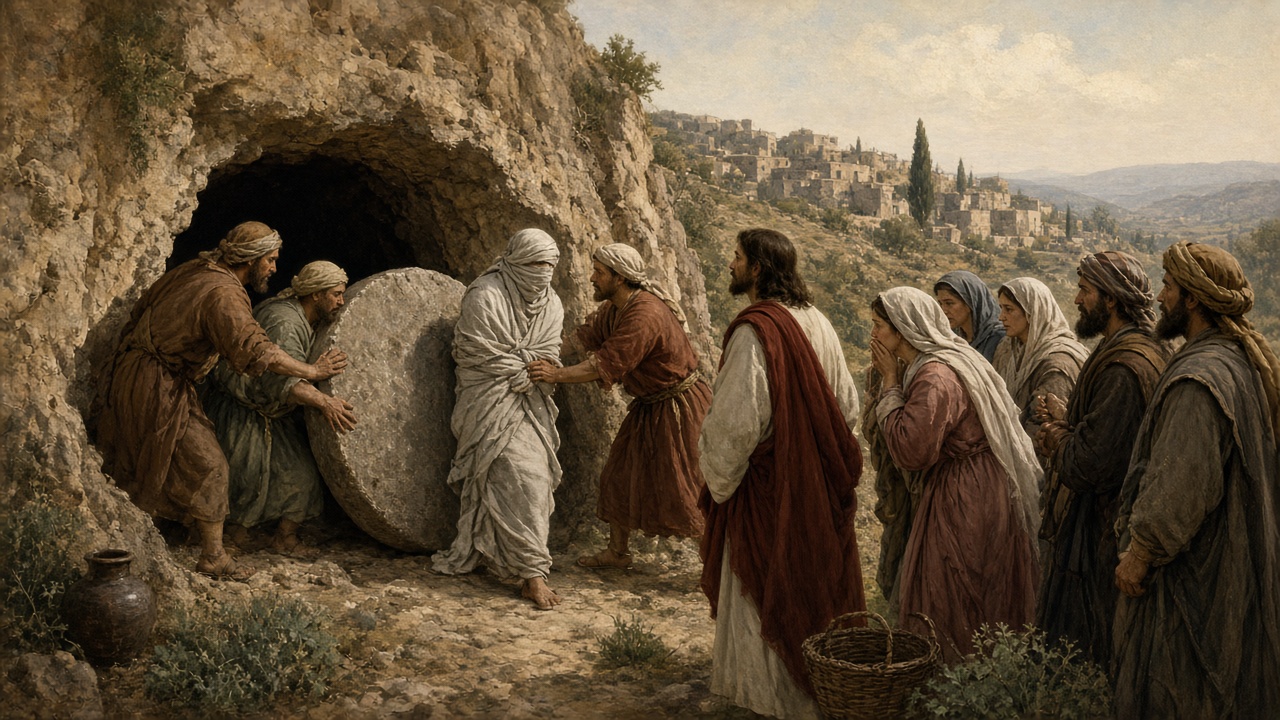
Lázaro resucitado en Betania
- Juan sitúa Betania, la aldea de Lázaro y de sus hermanas María y Marta, a poco menos de dos millas de Jerusalén. El diccionario bíblico de Easton (1897) la ubica en la ladera sureste del monte de los Olivos, en el camino a Jericó, y dice que el nombre venía de las palmeras que crecían allí y que la aldea era conocida como el-Azariyeh, “lugar de Lázaro”.Fuentes: Bethany · el propio texto bíblico
- Tomás, uno de los doce, también era llamado Dídimo, el equivalente griego de su nombre, que significa “gemelo”. Cuando Jesús decidió volver a Judea, donde poco antes habían intentado apedrearlo, Tomás dijo a los otros discípulos: “Vayamos también nosotros, para morir con él”.Fuentes: Thomas · el propio texto bíblico
- Después de que algunos contaron lo que Jesús había hecho, los principales sacerdotes y los fariseos reunieron al Sanedrín, temiendo que, si todos creían en Jesús, los romanos les quitaran su lugar y su nación. Caifás, sumo sacerdote aquel año y, según el diccionario bíblico de Easton (1897), un saduceo que ocupó el cargo del 27 al 36 d.C., dijo que era mejor que un hombre muriera por el pueblo a que pereciera toda la nación. Juan dice que, como sumo sacerdote aquel año, profetizaba que Jesús moriría por la nación, y desde ese día tramaron matarlo.Fuentes: Caiaphas · el propio texto bíblico
Notas escritas con ayuda de IA a partir de fuentes abiertas (Theographic Bible Metadata, CC BY-SA 4.0; Easton’s Bible Dictionary, dominio público) y revisadas antes de publicarse.
Lugares de este capítulo
- Judea · Hoy: Judea 1 · 31.777, 35.234 · versículos 7, 8, 54
- Jerusalem · 31.777, 35.234 · versículos 18, 54, 55
- Ephraim · Hoy: Taybeh · 31.954, 35.300 · versículo 54
Solo aparecen lugares identificados con alta confianza (90 % o más según las fuentes académicas reunidas por OpenBible). Mapa de la época: DARE (Digital Atlas of the Roman Empire), CC BY 4.0; mapa actual: © colaboradores de OpenStreetMap; lugares: OpenBible.info (CC BY 4.0).
Créditos y licencia de esta traducción
Sahidica - طبعة جديدة من العهد الجديد باللغة القبطية الصعيدية
Sahidica - A New Edition of the New Testament in Sahidic Coptic
copyright © 2000-2006 J Warren Wells
Language: ⲘⲉⲧⲢⲉⲙ̀ⲛⲭⲏⲙⲓ (Coptic)
Dialect: Sahidic
Translation by: J Warren Wells
Coptic: Sahidic NT "Sahidica - A New Edition of the New Testament in Sahidic Coptic"
Copyright (c)2000-2006 by J Warren Wells. All rights reserved.
For more information visit www.sahidica.org .
This edition is available free of charge for use in free electronic
editions of the New Testament as long as the full title and copyright
information are included and credited. For written permission to use
all or any part of this document in print editions, contact the editor
at www.sahidica.org .
This edition is primarily meant for use by teachers and students of
Sahidic Coptic, and to a lesser degree by Coptologists involved in
scholarly research, textual criticism, or New Testament translation.
PURPOSE
Please note: This text is a work in progress. As such, there
is an ongoing effort to standardize the spelling of words in
the text. Be aware that version updates periodically appear.
The primary purpose is to produce a standardized edition of
the Sahidic NT similar to standard Greek editions.
An additional purpose of this text is to allow side-by-side
comparison with the Greek New Testament. To facilitate this
effort, a new version of the Greek text has been developed,
which is meant to better represent the Greek text upon which
the Sahidic was based. This text is entitled "The New Testament
According to the Egyptian Greek Text" [NTAEG]
This text does not include representation of either accents or
supralinear strokes, since these are used inconsistently in the
original texts. There is also a higher degree of standardization
in spelling and punctuation; like today's standard Greek master
texts, but unlike both the original Sahidic texts, and the PHI
and Coptic Society texts. Moreover, as in standard Greek texts,
instances of the Nomina Sacra have been expanded to their full
forms. This is again a departure from earlier versions of the
Sahidic, including the PHI and Coptic Society texts, which are
Both inconsistent in their usage.
Special thanks to David Brakke of Indiana University Bloomington,
Brigitte Comparini of the Packard Humanities Institute, and
Michael Heiser, Academic Editor, at Logos Research Systems; for
their assistance in making this edition possible.
BASIS
Sahidica was initially based (by permission) on the Coptic New Testament,
which is an electronic publication, which was edited by David Brakke.
(PHI-CD 5.3 dated 7/2/91. Los Altos. Packard Humanities Institute. 1991).
During later development, Sahidica was electronically collated against
the Coptic CD I by the St. Shenouda The Archmandrite Coptic Society.
Los Angeles, CA dated April, 1998.
These two editions were reduced to a raw electronic form, which allowed both
to be compared electronically letter by letter with Sahidica in order to
accurately detect and report every single variation and input error in any
of the texts. Though errors are inevitable, the collators of three seperate
editions are highly unlikely to make the same errors. Therefore, this method
helps to insure the integrity of the Sahidica edition.
Throughout the project, Sahidica was also collated against printed editions
of the following coptic manuscripts, which manuscripts date from the third
century and later.
Matt: Pierpont Morgan Library M-569 collated against Bodmer XIX papyrus
Mark:* PPalau Rib. Inv.Nr.182 collated against Pierpont Morgan Library M-569
Luke: PPalau Rib. Inv.Nr.181 collated against Pierpont Morgan Library M-569
John: PPalau Rib. Inv.Nr.183 collated against Pierpont Morgan Library M-569
Acts: Chester Beatty B (Copt.Ms.814) collated against Berlin P.15926 and British Museum MS Or.7594
Paul: Chester Beatty A (Copt.Ms.813) collated against Pierpont Morgan Library M-570 and M-571
James-Jude:** Pierpont Morgan Library M-572 collated against the Pierpont Morgan Library M-573 and M-601***
Revelation: Berlin MS Or.408 ( British Museum Ms Or.3518) collated against British Museum MS Or.6803
* Note: The longer and shorter endings of Mark are based on Horner; cf Kahle (JTS.1951.p49-57)
** Note: 1st Peter was also collated against the Crosby-Schøyen Ms.193.
*** Note: Portions of James and Jude were reconstructed from M-573, M-601, and four other mss.
Note on Interpolations
The short and long endings of Mark are ommited from the PPalau ms 182, but they do appear in most mss.
To better represent the overall Sahidic tradition, both endings are included, but in double brackets.
The pericope of the adultress (John 7:53-8:11) does not appear in any Sahidic ms. Herein it is omitted.
2014-09-16
Fuente: http://ebible.org/copshc/ · eBible.org