Salmos 125
Paipel · Toca un versículo para ver sus referencias cruzadas.
Kot a nom pwelin ünükün nöün aramas
Echö kölün feitä.
1Chokewe mi apilükülükü ewe Samol mi Lapalap ra usun chök ewe chuk Sion,
esap tongeni mwökütüküt,
nge epwe chök nonom tori feilfeilachök.
2Usun ekewe chuk ra nom pwelin ünükün Jerusalem,
iei usun ewe Samol mi Lapalap a nom pwelin ünükün nöün aramas
seni ei fansoun tori feilfeilachök.
3Än ekewe aramasangau nemenem esap nonomopos won ewe fanü mi inet ngeni ekewe chon pwüng,
pun mürin, ekewe chon pwüng repwe pwal föri mine a ngau.
4Ai Samol mi Lapalap, kopwe föri mine a mürina ngeni chokewe mi föri mine a mürina,
pwal ngeni chokewe mi wenechar lon leluker.
5Nge chokewe mi rikila ngeni ekewe al mi pwor
kopwe asechirela fiti ekewe chon föföringau.
Kinamwe epwe nom lon Israel.
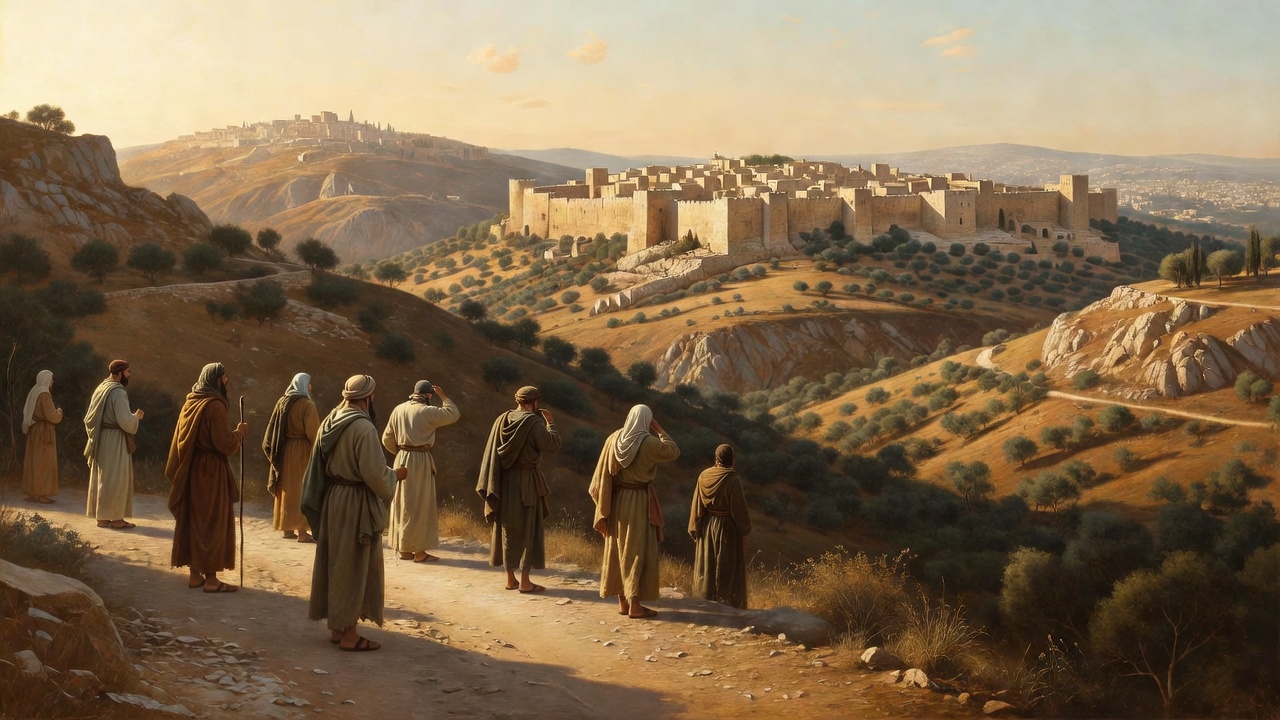
¿Sabías que…?
La seguridad inquebrantable en Jerusalén
- El Salmo 125 es uno de los Cánticos de las Subidas y compara a los que confían en Dios con el monte Sion. El monte Sion era una colina naturalmente fortificada en Jerusalén, rodeada por valles profundos en casi todos sus lados, lo que lo convertía en un símbolo de estabilidad duradera.Fuentes: el propio texto bíblico · Mount Zion
- El salmista recurre a la geografía local al destacar cómo los montes rodean a Jerusalén. Establecida como una fortaleza montañosa rodeada de alturas contiguas, la ciudad ofrecía una elocuente ilustración física de la protección divina alrededor de su pueblo.Fuentes: el propio texto bíblico · Jerusalem
- El salmo concluye con una súplica de paz para Israel, lo cual guarda armonía con la interpretación tradicional del nombre de Jerusalén como posesión o cimiento de paz.Fuentes: el propio texto bíblico · Jerusalem
Notas escritas con ayuda de IA a partir de fuentes abiertas (Theographic Bible Metadata, CC BY-SA 4.0; Easton’s Bible Dictionary, dominio público) y revisadas antes de publicarse.
Lugares de este capítulo
Solo aparecen lugares identificados con alta confianza (90 % o más según las fuentes académicas reunidas por OpenBible). Mapa de la época: DARE (Digital Atlas of the Roman Empire), CC BY 4.0; mapa actual: © colaboradores de OpenStreetMap; lugares: OpenBible.info (CC BY 4.0).
Créditos y licencia de esta traducción
Paipel
The Holy Bible in the Chuukese language of the Federated States of Micronesia
copyright © 1984, 1989, 1991, 2001 Liebenzel Mission
Language: Chuukese
Translation by: Liebenzell Mission
Old Testament © 1989, 2001 Liebenzel Mission
New Testament © 1984, 1991 Liebenzel Mission
This translation is made available to you under the terms of the
Creative Commons Attribution-No Derivatives license 4.0.
You may share and redistribute this Bible translation or extracts from it in any format, provided that:
You include the above copyright and source information.
You do not make any derivative works that change any of the actual words or punctuation of the Scriptures.
Pictures included with Scriptures and other documents on this site are licensed just for use with those Scriptures and documents.
For other uses, please contact the respective copyright owners.
2024-01-24
Fuente: http://ebible.org/chk/ · eBible.org