Psalms 125
Paipel · Tap a verse to see its cross-references.
Kot a nom pwelin ünükün nöün aramas
Echö kölün feitä.
1Chokewe mi apilükülükü ewe Samol mi Lapalap ra usun chök ewe chuk Sion,
esap tongeni mwökütüküt,
nge epwe chök nonom tori feilfeilachök.
2Usun ekewe chuk ra nom pwelin ünükün Jerusalem,
iei usun ewe Samol mi Lapalap a nom pwelin ünükün nöün aramas
seni ei fansoun tori feilfeilachök.
3Än ekewe aramasangau nemenem esap nonomopos won ewe fanü mi inet ngeni ekewe chon pwüng,
pun mürin, ekewe chon pwüng repwe pwal föri mine a ngau.
4Ai Samol mi Lapalap, kopwe föri mine a mürina ngeni chokewe mi föri mine a mürina,
pwal ngeni chokewe mi wenechar lon leluker.
5Nge chokewe mi rikila ngeni ekewe al mi pwor
kopwe asechirela fiti ekewe chon föföringau.
Kinamwe epwe nom lon Israel.
Did you know?
Unshakable Security in Jerusalem
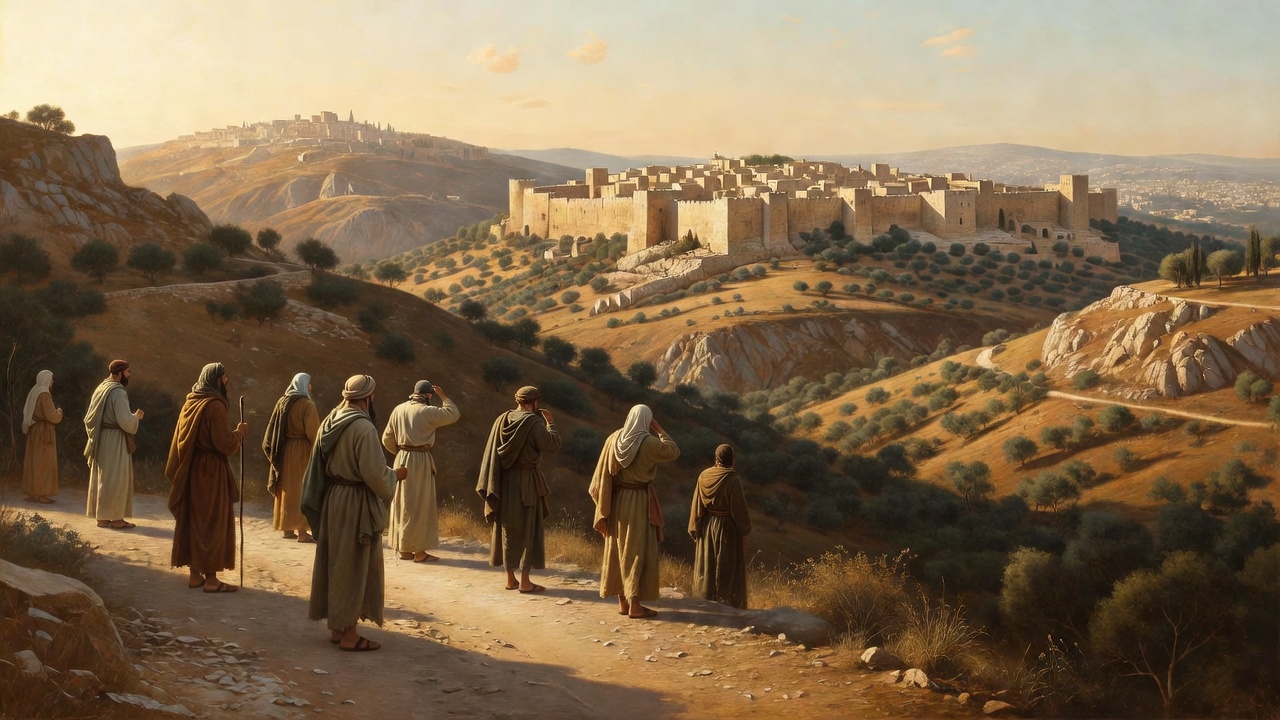
- Psalm 125 is one of the Songs of Ascents, comparing those who trust in God to Mount Zion. Mount Zion was a naturally fortified hill in Jerusalem, surrounded by deep valleys on nearly all sides, making it a fitting symbol of permanence and stability.Sources: the Bible text itself · Mount Zion
- The psalmist draws on local geography by noting how mountains encircle Jerusalem. Built as a mountain fortress among neighboring heights, the city provided an evocative physical illustration of divine protection surrounding the community.Sources: the Bible text itself · Jerusalem
- The psalm concludes with a prayer for peace upon Israel, which resonates with the traditional interpretation of Jerusalem's Hebrew name as a foundation or possession of peace.Sources: the Bible text itself · Jerusalem
Notes written with AI assistance from open sources (Theographic Bible Metadata, CC BY-SA 4.0; Easton’s Bible Dictionary, public domain) and reviewed before publishing.
Places in this chapter
Only places identified with high confidence are shown (90% or more according to the scholarly sources compiled by OpenBible). Period map: DARE (Digital Atlas of the Roman Empire), CC BY 4.0; modern map: © OpenStreetMap contributors; places: OpenBible.info (CC BY 4.0).
Credits and license for this translation
Paipel
The Holy Bible in the Chuukese language of the Federated States of Micronesia
copyright © 1984, 1989, 1991, 2001 Liebenzel Mission
Language: Chuukese
Translation by: Liebenzell Mission
Old Testament © 1989, 2001 Liebenzel Mission
New Testament © 1984, 1991 Liebenzel Mission
This translation is made available to you under the terms of the
Creative Commons Attribution-No Derivatives license 4.0.
You may share and redistribute this Bible translation or extracts from it in any format, provided that:
You include the above copyright and source information.
You do not make any derivative works that change any of the actual words or punctuation of the Scriptures.
Pictures included with Scriptures and other documents on this site are licensed just for use with those Scriptures and documents.
For other uses, please contact the respective copyright owners.
2024-01-24
Source: http://ebible.org/chk/ · eBible.org