Isaías 5
Candoshi-Shapra · Toca un versículo para ver sus referencias cruzadas.
Utaáchich kizarun tatsumim tamapari ashirusin taakanaya
1Nuw Isáysi kizarunaa tatsumma yasichima.
Nuw amikuri yuw kizpur taaku an wamin yasichima.
Nuw amikuri kizarunaa tatsumma ksutarangiya.
Mázarush kizarun kizpur wanasir tatsumarangiya.
2Wanasir puyayaru,
Maachtaa patumbchee ichingaru kapeetarangiya.
Kizarunaa ipus ipus sheeru, wanasirimsheetsimari tatsumarangiya.
Mázarish apusanand torre napamaam kayatarangiya.
Sheeru, Vinoo wayar waapi átu, kamiyamaam wayarangitamta.
Iwaparangu, wanuseemsha kutarangiya.
Kam waapi, tárangitaa,
waaj, kizarunsha kizpur kapiz yusirangiya.
3Anumandsha amikuri Apanll, Yutaritischa, siy Irusarinshuchis.
Na pindanaru k'kuz mangeetsis p'tsimaam kamanchintspa, tárangiya.
Utaáchchis, na nuwaa mangiptis kamaningandama.
¿Chakamandaja chayarini mzats mantsir yusirang?
¿Antaati nuwamand ashirang?
¿Ndush mzats waanamandari ashirang?
4¿Mayaaja mzatseem pishtarang wanasir yanungamaama?
Nuw siyaa, Kam yusichpa aturi,
itaru, siysa nuwaa tamapingarangus, kapizsha yusirangsa.
5Ashiriya, nuwaa kuki mazinangtsa.
Yuw nuw mangishi chinaki anoo kamanchintspa.
Mzareetsi watandpun kapeetkachuri,
waani arapich tputs, Mzatsee kachingpana, atina.
Ashkachuri, watspat kat, kat ashchinllinaya.
6Nuw mzareetsi ndusha pakchiyam ktsutchima.
¿Chakaja karutaa púyach?
Kpanandarishaparee kxuneeru, karutamunaam kinachiya.
Msaseetssha, Amb sinatpa, táchima.
Pakchiyam mzarimuni sinacheeja.
7Nuwamari kasiruri, siyaa Utaáchcheetsis atashina.
Nuw mzari watacha siyaya.
Nuw tatsumareetspazi ashiruri kizpur siyaa chinarangina.
Siy Israelchichis nuwpaz mzari ashirus taaksa.
Itaru, nuw siyaa, Nuwaa kuki payuchinllinpa, tárangitaati,
Siysa pachampaneemarisha kinarangsa.
Waanpatatin wanasir napchinllinpa; itsinsaru chinachinllinpa, tárangitaati,
itaru, siysa tputsee kiyung yachakus,
siyamun tputs kiyung kachiykusin,
wasureemun, Ay átangat ashkanaya.
Amb ashirangus, kizarun wanus kapiz tamaparee ashirangsa.
Ashirucha, anumand siyaa zurampatari kasachintspa,
nuw atashina, Apanll siyaa Utaáchcheetsis tárangiya.
Utaáchich kizarun tatsumim tamapari ashirusin taakanaya, atiya.
¿Sabías que…?
El cántico de la viña y los seis ayes
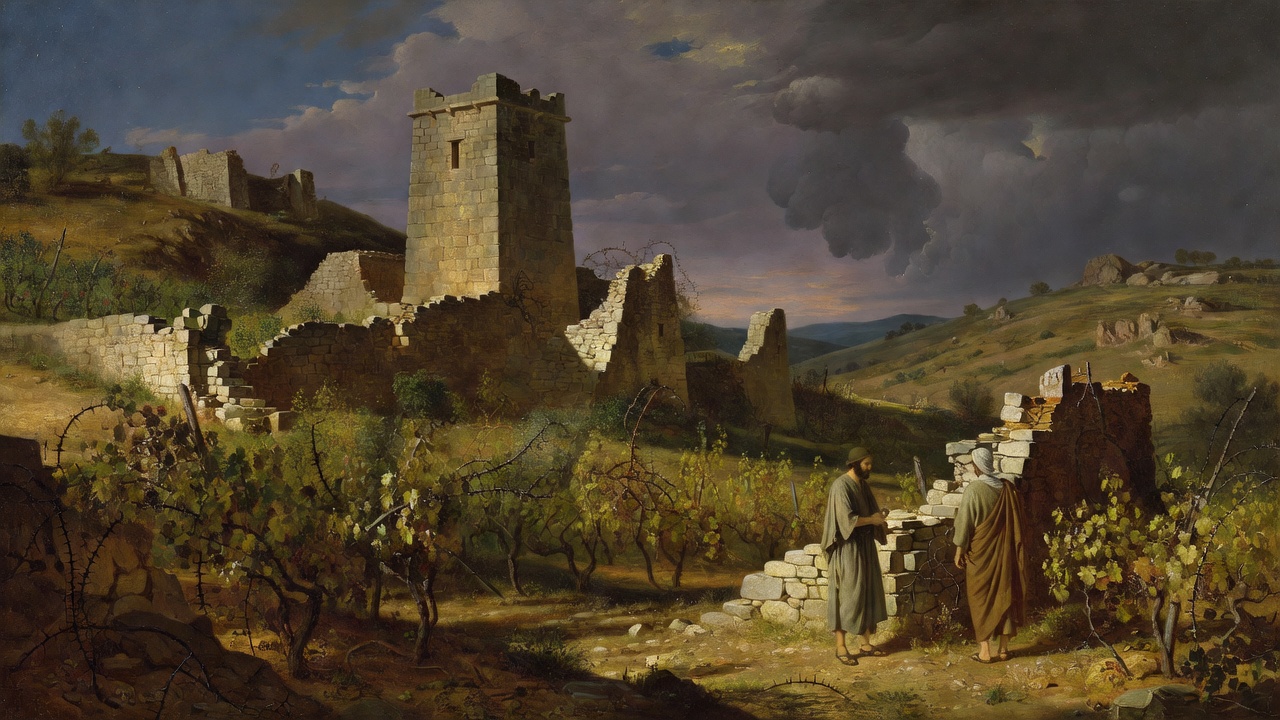
- El cántico que abre Isaías 5 describe el meticuloso trabajo de la viticultura en la antigua Judea: despedregar laderas fértiles, levantar una torre de vigilancia de piedra, excavar un lagar en la roca y plantar cepas escogidas protegidas por un vallado y un muro. El poema se convierte en una parábola judicial donde la viña representa a la casa de Israel y a los hombres de Judá, de quienes se esperaba justicia en lugar de derramamiento de sangre.Fuentes: el propio texto bíblico
- El capítulo presenta una serie de seis ayes proféticos que denuncian abusos sociales y morales específicos en Judá. Entre ellos destacan los terratenientes que acumulaban propiedades juntando casa a casa y campo a campo, los jueces que aceptaban sobornos para absolver a culpables privando de justicia al inocente, y los gobernantes entregados a banquetes mientras desoían la instrucción divina.Fuentes: el propio texto bíblico
- El ministerio profético de Isaías en Jerusalén se dirigió al pueblo de Judá durante un prolongado período que comenzó a mediados del siglo VIII a.C. El capítulo concluye advirtiendo que el Señor daría una señal a ejércitos extranjeros distantes y disciplinados, equipados con carros, arcos y veloces caballos, para ejecutar juicio sobre la tierra.Fuentes: Jerusalem · Prophecies of Isaiah · el propio texto bíblico
Notas escritas con ayuda de IA a partir de fuentes abiertas (Theographic Bible Metadata, CC BY-SA 4.0; Easton’s Bible Dictionary, dominio público) y revisadas antes de publicarse.
Lugares de este capítulo
Solo aparecen lugares identificados con alta confianza (90 % o más según las fuentes académicas reunidas por OpenBible). Mapa de la época: DARE (Digital Atlas of the Roman Empire), CC BY 4.0; mapa actual: © colaboradores de OpenStreetMap; lugares: OpenBible.info (CC BY 4.0).
Créditos y licencia de esta traducción
Candoshi-Shapra
New Testament in Candoshi-Shapra (PE:cbu:Candoshi-Shapra)
copyright © 2010 Wycliffe Bible Translators, Inc.
Language: Candoshi-Shapra
Translation by: Wycliffe Bible Translators, Inc.
Candoshi-Shapra
cbu
Peru
Copyright Information
© 2010, Wycliffe Bible Translators, Inc. All rights reserved.
This translation text is made available to you under the
terms of the Creative Commons License: Attribution-Noncommercial-No Derivative Works.
( http://creativecommons.org/licenses/by-nc-nd/3.0/ )
In addition, you have permission to port the text to different file formats, as long as you
do not change any of the text or punctuation of the Bible.
You may share, copy, distribute, transmit, and extract portions
or quotations from this work, provided that you include the above copyright
information:
You must give Attribution to the work.
You do not sell this work for a profit.
You do not make any derivative works that change any of the actual words or punctuation of the Scriptures.
Permissions beyond the scope of this license may be
available if you contact
us with your request.
The New Testament
in Candoshi-Shapra
© 2010, Wycliffe Bible Translators, Inc. All rights reserved.
This translation is made available to you under the terms of the
Creative Commons Attribution-Noncommercial-No Derivatives license 4.0.
You may share and redistribute this Bible translation or extracts from it in any format, provided that:
You include the above copyright and source information.
You do not sell this work for a profit.
You do not change any of the words or punctuation of the Scriptures.
Pictures included with Scriptures and other documents on this site are licensed just for use with those Scriptures and documents.
For other uses, please contact the respective copyright owners.
2025-04-30
Fuente: http://ebible.org/cbuNT/ · eBible.org