Isaiah 5
Candoshi-Shapra · Tap a verse to see its cross-references.
Utaáchich kizarun tatsumim tamapari ashirusin taakanaya
1Nuw Isáysi kizarunaa tatsumma yasichima.
Nuw amikuri yuw kizpur taaku an wamin yasichima.
Nuw amikuri kizarunaa tatsumma ksutarangiya.
Mázarush kizarun kizpur wanasir tatsumarangiya.
2Wanasir puyayaru,
Maachtaa patumbchee ichingaru kapeetarangiya.
Kizarunaa ipus ipus sheeru, wanasirimsheetsimari tatsumarangiya.
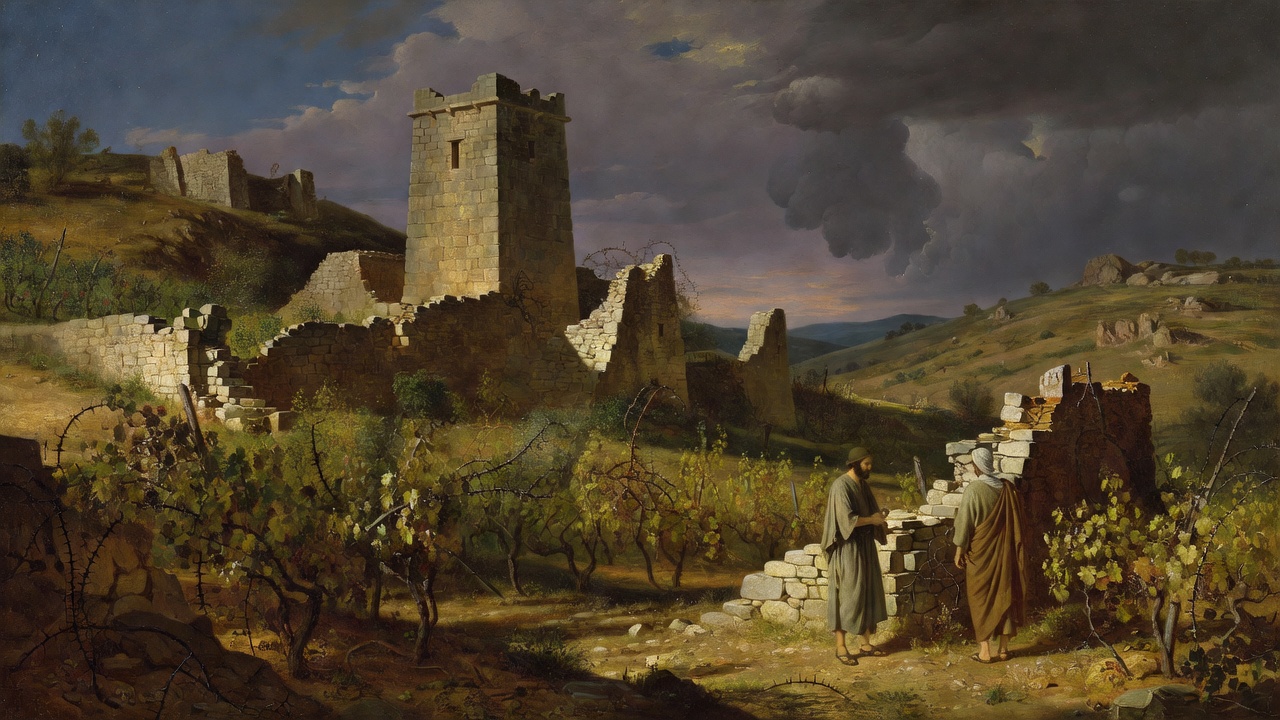
Mázarish apusanand torre napamaam kayatarangiya.
Sheeru, Vinoo wayar waapi átu, kamiyamaam wayarangitamta.
Iwaparangu, wanuseemsha kutarangiya.
Kam waapi, tárangitaa,
waaj, kizarunsha kizpur kapiz yusirangiya.
3Anumandsha amikuri Apanll, Yutaritischa, siy Irusarinshuchis.
Na pindanaru k'kuz mangeetsis p'tsimaam kamanchintspa, tárangiya.
Utaáchchis, na nuwaa mangiptis kamaningandama.
¿Chakamandaja chayarini mzats mantsir yusirang?
¿Antaati nuwamand ashirang?
¿Ndush mzats waanamandari ashirang?
4¿Mayaaja mzatseem pishtarang wanasir yanungamaama?
Nuw siyaa, Kam yusichpa aturi,
itaru, siysa nuwaa tamapingarangus, kapizsha yusirangsa.
5Ashiriya, nuwaa kuki mazinangtsa.
Yuw nuw mangishi chinaki anoo kamanchintspa.
Mzareetsi watandpun kapeetkachuri,
waani arapich tputs, Mzatsee kachingpana, atina.
Ashkachuri, watspat kat, kat ashchinllinaya.
6Nuw mzareetsi ndusha pakchiyam ktsutchima.
¿Chakaja karutaa púyach?
Kpanandarishaparee kxuneeru, karutamunaam kinachiya.
Msaseetssha, Amb sinatpa, táchima.
Pakchiyam mzarimuni sinacheeja.
7Nuwamari kasiruri, siyaa Utaáchcheetsis atashina.
Nuw mzari watacha siyaya.
Nuw tatsumareetspazi ashiruri kizpur siyaa chinarangina.
Siy Israelchichis nuwpaz mzari ashirus taaksa.
Itaru, nuw siyaa, Nuwaa kuki payuchinllinpa, tárangitaati,
Siysa pachampaneemarisha kinarangsa.
Waanpatatin wanasir napchinllinpa; itsinsaru chinachinllinpa, tárangitaati,
itaru, siysa tputsee kiyung yachakus,
siyamun tputs kiyung kachiykusin,
wasureemun, Ay átangat ashkanaya.
Amb ashirangus, kizarun wanus kapiz tamaparee ashirangsa.
Ashirucha, anumand siyaa zurampatari kasachintspa,
nuw atashina, Apanll siyaa Utaáchcheetsis tárangiya.
Utaáchich kizarun tatsumim tamapari ashirusin taakanaya, atiya.
Did you know?
The Song of the Vineyard and the Six Woes
- The opening song in Isaiah 5 describes the elaborate labor of ancient Judean viticulture: clearing rocky hillsides of stones, building a protective stone watchtower, digging out a winepress in the bedrock, and planting prime vines surrounded by a protective hedge and wall. The poem turns into a legal parable where the vineyard represents the house of Israel and the people of Judah, from whom justice was expected instead of bloodshed.Sources: the Bible text itself
- The chapter delivers a series of six prophetic laments or woes, condemning specific social and moral abuses in Judah. These include wealthy landowners consolidating real estate by adding house to house and field to field, judges taking bribes to acquit the guilty while denying justice to the innocent, and leaders indulging in lavish feasting while ignoring divine instruction.Sources: the Bible text itself
- Isaiah's prophetic ministry in Jerusalem addressed the people of Judah over an extended period beginning in the mid-eighth century BC. The chapter concludes with a warning that the Lord would signal distant, disciplined foreign armies equipped with chariots, bows, and swift horses to execute judgment on the land.Sources: Jerusalem · Prophecies of Isaiah · the Bible text itself
Notes written with AI assistance from open sources (Theographic Bible Metadata, CC BY-SA 4.0; Easton’s Bible Dictionary, public domain) and reviewed before publishing.
Places in this chapter
Only places identified with high confidence are shown (90% or more according to the scholarly sources compiled by OpenBible). Period map: DARE (Digital Atlas of the Roman Empire), CC BY 4.0; modern map: © OpenStreetMap contributors; places: OpenBible.info (CC BY 4.0).
Credits and license for this translation
Candoshi-Shapra
New Testament in Candoshi-Shapra (PE:cbu:Candoshi-Shapra)
copyright © 2010 Wycliffe Bible Translators, Inc.
Language: Candoshi-Shapra
Translation by: Wycliffe Bible Translators, Inc.
Candoshi-Shapra
cbu
Peru
Copyright Information
© 2010, Wycliffe Bible Translators, Inc. All rights reserved.
This translation text is made available to you under the
terms of the Creative Commons License: Attribution-Noncommercial-No Derivative Works.
( http://creativecommons.org/licenses/by-nc-nd/3.0/ )
In addition, you have permission to port the text to different file formats, as long as you
do not change any of the text or punctuation of the Bible.
You may share, copy, distribute, transmit, and extract portions
or quotations from this work, provided that you include the above copyright
information:
You must give Attribution to the work.
You do not sell this work for a profit.
You do not make any derivative works that change any of the actual words or punctuation of the Scriptures.
Permissions beyond the scope of this license may be
available if you contact
us with your request.
The New Testament
in Candoshi-Shapra
© 2010, Wycliffe Bible Translators, Inc. All rights reserved.
This translation is made available to you under the terms of the
Creative Commons Attribution-Noncommercial-No Derivatives license 4.0.
You may share and redistribute this Bible translation or extracts from it in any format, provided that:
You include the above copyright and source information.
You do not sell this work for a profit.
You do not change any of the words or punctuation of the Scriptures.
Pictures included with Scriptures and other documents on this site are licensed just for use with those Scriptures and documents.
For other uses, please contact the respective copyright owners.
2025-04-30
Source: http://ebible.org/cbuNT/ · eBible.org