Génesis 3
Candoshi-Shapra · Toca un versículo para ver sus referencias cruzadas.
Ashiriya, na kamanchintspa yuwaa tputs Apanllee kuk kapeetarangana anootsi
1Apanll maacheetsi ichingaru tinaramchu, anshutam maak kizpur tamapingampan taarangiya. Ashiriya, maaksha kizaa mang masharangiya: ¿Apanll shiyaa amaranga? ¿Mzatsshuchee wanus ktungintspa, ndusha tárang? tárangu, 2Kizshat: Nda, ¿nitaati Apanll amb ateeja? Dancha. Wanusee ichingaru ktungangtsa, tárangcha. 3Itaru, minam apusanand mzatsish xiyaru anootsimari ktunginllpa; misha ayamtaatiya ptatinllpa. Patatkachinaareesa ashiru, uru tsipatssa, Apanll tárangcha, kiz mkaa tárangiya.
4Maaksha: Nda, uru katungkachitaateesa nda tsipatssa. 5Siyaa Apanll pachindkucha atasha. Watam nee wanusee katungkachus uru kizpur yasatssa. Waana Apanll tamapari ashiritamtis taatssa. Chinashis wanasirimshee yasatssa. Mishat, yutaritamasheetstam yasachitamsa, maak tárangiya.
6Ashirucha, kizsha wanusee napeeru, Kizpurcha wanasiriya, tárangiya. ¿Tamareeja? Katungachuri, kizpurshapari yasachina, mangush chinaku kiz tárangiya. Naantachu, wanusee pusayaru, katungkarangiya. Wazaranlleemshat, Na shiysha káchangancha. ¡Kischa! tárangiya. Wazaranllshat anuritam ayu táyaru, katungkarangitamta. 7Katungam iwatsparamchusin, mangush chinakataraa ashiranganaya. Waanaatstisin nap ashkusin, Zapeerniwa, mang tárangusin, kizpur paziranganaya. Ashirucha, masharpasha k'tayarusin, anpa maxaranganaya.
8Mang pukamatsha zar kchizataramchu, Apanll mzatsish káyashinu naantachu, anoo mazinanataranll ashiranganaya. Papcha, Apanll naanllpa. Tapisheeni yasinshu, táranganaya. 9Apanllshat kuruzurangiya. ¿Yapshasa? ¿Tamaksa? tárangiya. 10Kamuzsha: Shiyap kusamaam paziktanicha; watam zapeeraniwa. Ashirucha tapisheerini, táranganaya. 11Apanllshat; ¿Chaksha siyaa, Zapeetischa átu, Zapeetanicha átssa? tárangiya. ¿Ndusha nuw yuwaa ktunginllpa tárangi anoo katungeeris? tárangiya. 12Kamuzsha; Yuw shiy kizaa ipunsheemi panarangish ancha nuwaam martayranda. Ashirucha, nuwsha katungeeri, kamuz tárangiya.
13Apanllshat kizaa masharangiya; ¿Mayaamsha amb ashirangsha? tárangiya. Kizshat; Maakcha nuwaa tamapingayranda, tárangiya.
14Apanll mkaatsshat; Yuwamand tputsee tamapingarangish anumand kizpur kiyung kachiyachsha. Shiyamari maacheetsi kasiru mantsirimish taakush, kiyung kachiykush taachsha. Uru nimun titkurpatish pshiyrapshiyrtansha. Tsapumun chishish ipuxpuxtar ashkush, tsapuri katungkush taachsha. 15Shiyaatsimari ichingarusin tputs kundartaksin taachinllinaya. Ayamtaati kiz nllurnur shiyaatsimari kundartaksin taachinllinaya. Itaru, minam tputs shiyaa kasichiya. Yuwamand shiy wanashiree kapuxkachish anumand uwsha shiyaa mucheetsish tsaritsartachiya, Apanll tárangiya mkaatsi.
16Apanll kizaatsshat tárangiya; Watam shiy nuwaa kuki kapeeteerush katungkarangshawa. Urutamari shiy iparinakush, wasuree kiyung kachiychitanllsha. Mishat, zaranllimaritish shiyaa kasiku taaratartanllsha. Shiysha uru zaranllingazish zandkush, chinakush tachitaa kizarush ashichsha, Apanll kizaa tárangiya.
17Apanll kamuzaatssha tárangiya; Shiysha izanlleetsish kuk payuyarush, wanusee katungkarangsha. Yuwamand nuwaa kuki kapeetarangish anumanda na nimun arang urutamari tarawaztayarush, kchitakush taaratartansha. 18Mzakush, urutamari kpaa kiyung kachiychiytansha. Mzarshish karut urutamari karutaku puptanlliya; kiyung kachiyachsha. 19Mzatsee tarawaztakchush, msastatansha. Ambiri ashkush, anpa katungkush kchitachsha. Anuri ashkush tsipachsha. Tsipakchush, yusur wapitam tsapoomatam kinachsha, watam nuw shiyaam tsapuptatam tinaranginawa, Apanlli kamuzaatssha tárangiya.
20Mang kamuz suru Ataga. Wizanlleetssha sur Epa ísamarangiya. Watam ichingarusin Epamand tputs pzapanichinllinaya, tárangiya Ataga.
21Ashiriya, Apanllshat kamuzaa misha kizaa ashiru maachi tas tumaxtarangiya yuwaam zapeerna anooma. Apanllsha tárangiya; Ashiriya, kamuz, kiz ashirusin yaana tamapari ashiritamsin zapan chinaksin taakanawa. Yutaritamashee mishat wanasirimshee yasakusin, ashirusin taakanaya. Ashiriya, tputsee Edengash mzatsi tashitungchima. Tashitungayaruri, arap wayachima nda wanusee wanasirimshee taarashipanee katungamaama; watam katungkusin urutamari taachinllinaya, tárangiya. Táyaru, tputsee tashitungayaru, piyamsha zanganirangiya. Ambirisha tarawaztakush taangcha, tárangiya. Táyaru, anumunshat Edengash yap zar yaku amb wasundururee ksutamapaneem wayarangiya. Nda tputs anush wanusee wanasirimshee patatamaama, átu wayarangiya. Anumunsha, mchit wazuran sumas tamapari ashiru kurakurtaru anush wayarangitamta. Anshat, mchit piyam naanataraa piyam naanataraa ashirangu, ngootsee kámanarangiya. Nda tputs nish mzatsish pshtumaama átu, ashirangiya Apanlli.
Ashiriya, na kamaneena yuwaa Atagarini Apanllee kuk kapeetarangana anootsi.
¿Sabías que…?
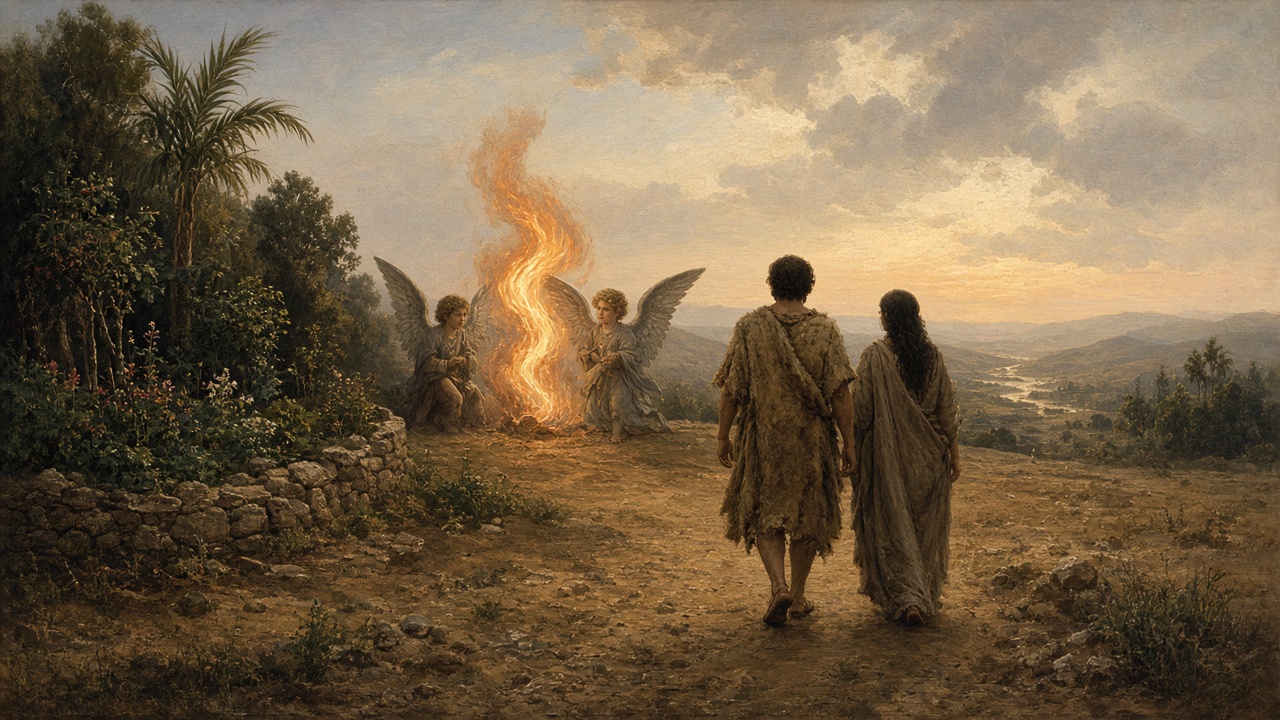
La caída y el exilio del Edén
- Una referencia tradicional explica Adán como “rojo”, palabra babilónica usada como nombre genérico del hombre, con el mismo sentido en hebreo y en asirio, y relaciona el nombre con el hecho de que fue formado del polvo de la tierra. En este capítulo ese origen reaparece en el juicio: trabajará por su alimento hasta volver al suelo, porque es polvo y al polvo volverá, y es enviado a labrar la tierra de la que fue tomado.Fuentes: Adam · el propio texto bíblico
- En este capítulo Adán da a su mujer el nombre Eva, que significa “vida” o “viviente”, porque ella sería la madre de todos los vivientes.Fuentes: Eve · el propio texto bíblico
- La ubicación del jardín de Edén, del que el hombre es expulsado en este capítulo, se ha discutido mucho: se ha situado en Armenia, al oeste del mar Caspio, en Media, cerca de Damasco, en Palestina, en el sur de Arabia y en Babilonia. Una nota geográfica tradicional lo busca a lo largo del Tigris y el Éufrates, en la tierra de Sinar, o Babilonia.Fuentes: Eden · el propio texto bíblico
Notas escritas con ayuda de IA a partir de fuentes abiertas (Theographic Bible Metadata, CC BY-SA 4.0; Easton’s Bible Dictionary, dominio público) y revisadas antes de publicarse.
Créditos y licencia de esta traducción
Candoshi-Shapra
New Testament in Candoshi-Shapra (PE:cbu:Candoshi-Shapra)
copyright © 2010 Wycliffe Bible Translators, Inc.
Language: Candoshi-Shapra
Translation by: Wycliffe Bible Translators, Inc.
Candoshi-Shapra
cbu
Peru
Copyright Information
© 2010, Wycliffe Bible Translators, Inc. All rights reserved.
This translation text is made available to you under the
terms of the Creative Commons License: Attribution-Noncommercial-No Derivative Works.
( http://creativecommons.org/licenses/by-nc-nd/3.0/ )
In addition, you have permission to port the text to different file formats, as long as you
do not change any of the text or punctuation of the Bible.
You may share, copy, distribute, transmit, and extract portions
or quotations from this work, provided that you include the above copyright
information:
You must give Attribution to the work.
You do not sell this work for a profit.
You do not make any derivative works that change any of the actual words or punctuation of the Scriptures.
Permissions beyond the scope of this license may be
available if you contact
us with your request.
The New Testament
in Candoshi-Shapra
© 2010, Wycliffe Bible Translators, Inc. All rights reserved.
This translation is made available to you under the terms of the
Creative Commons Attribution-Noncommercial-No Derivatives license 4.0.
You may share and redistribute this Bible translation or extracts from it in any format, provided that:
You include the above copyright and source information.
You do not sell this work for a profit.
You do not change any of the words or punctuation of the Scriptures.
Pictures included with Scriptures and other documents on this site are licensed just for use with those Scriptures and documents.
For other uses, please contact the respective copyright owners.
2025-04-30
Fuente: http://ebible.org/cbuNT/ · eBible.org