Genesis 3
Candoshi-Shapra · Tap a verse to see its cross-references.
Ashiriya, na kamanchintspa yuwaa tputs Apanllee kuk kapeetarangana anootsi
1Apanll maacheetsi ichingaru tinaramchu, anshutam maak kizpur tamapingampan taarangiya. Ashiriya, maaksha kizaa mang masharangiya: ¿Apanll shiyaa amaranga? ¿Mzatsshuchee wanus ktungintspa, ndusha tárang? tárangu, 2Kizshat: Nda, ¿nitaati Apanll amb ateeja? Dancha. Wanusee ichingaru ktungangtsa, tárangcha. 3Itaru, minam apusanand mzatsish xiyaru anootsimari ktunginllpa; misha ayamtaatiya ptatinllpa. Patatkachinaareesa ashiru, uru tsipatssa, Apanll tárangcha, kiz mkaa tárangiya.
4Maaksha: Nda, uru katungkachitaateesa nda tsipatssa. 5Siyaa Apanll pachindkucha atasha. Watam nee wanusee katungkachus uru kizpur yasatssa. Waana Apanll tamapari ashiritamtis taatssa. Chinashis wanasirimshee yasatssa. Mishat, yutaritamasheetstam yasachitamsa, maak tárangiya.
6Ashirucha, kizsha wanusee napeeru, Kizpurcha wanasiriya, tárangiya. ¿Tamareeja? Katungachuri, kizpurshapari yasachina, mangush chinaku kiz tárangiya. Naantachu, wanusee pusayaru, katungkarangiya. Wazaranlleemshat, Na shiysha káchangancha. ¡Kischa! tárangiya. Wazaranllshat anuritam ayu táyaru, katungkarangitamta. 7Katungam iwatsparamchusin, mangush chinakataraa ashiranganaya. Waanaatstisin nap ashkusin, Zapeerniwa, mang tárangusin, kizpur paziranganaya. Ashirucha, masharpasha k'tayarusin, anpa maxaranganaya.
8Mang pukamatsha zar kchizataramchu, Apanll mzatsish káyashinu naantachu, anoo mazinanataranll ashiranganaya. Papcha, Apanll naanllpa. Tapisheeni yasinshu, táranganaya. 9Apanllshat kuruzurangiya. ¿Yapshasa? ¿Tamaksa? tárangiya. 10Kamuzsha: Shiyap kusamaam paziktanicha; watam zapeeraniwa. Ashirucha tapisheerini, táranganaya. 11Apanllshat; ¿Chaksha siyaa, Zapeetischa átu, Zapeetanicha átssa? tárangiya. ¿Ndusha nuw yuwaa ktunginllpa tárangi anoo katungeeris? tárangiya. 12Kamuzsha; Yuw shiy kizaa ipunsheemi panarangish ancha nuwaam martayranda. Ashirucha, nuwsha katungeeri, kamuz tárangiya.
13Apanllshat kizaa masharangiya; ¿Mayaamsha amb ashirangsha? tárangiya. Kizshat; Maakcha nuwaa tamapingayranda, tárangiya.
14Apanll mkaatsshat; Yuwamand tputsee tamapingarangish anumand kizpur kiyung kachiyachsha. Shiyamari maacheetsi kasiru mantsirimish taakush, kiyung kachiykush taachsha. Uru nimun titkurpatish pshiyrapshiyrtansha. Tsapumun chishish ipuxpuxtar ashkush, tsapuri katungkush taachsha. 15Shiyaatsimari ichingarusin tputs kundartaksin taachinllinaya. Ayamtaati kiz nllurnur shiyaatsimari kundartaksin taachinllinaya. Itaru, minam tputs shiyaa kasichiya. Yuwamand shiy wanashiree kapuxkachish anumand uwsha shiyaa mucheetsish tsaritsartachiya, Apanll tárangiya mkaatsi.
16Apanll kizaatsshat tárangiya; Watam shiy nuwaa kuki kapeeteerush katungkarangshawa. Urutamari shiy iparinakush, wasuree kiyung kachiychitanllsha. Mishat, zaranllimaritish shiyaa kasiku taaratartanllsha. Shiysha uru zaranllingazish zandkush, chinakush tachitaa kizarush ashichsha, Apanll kizaa tárangiya.
17Apanll kamuzaatssha tárangiya; Shiysha izanlleetsish kuk payuyarush, wanusee katungkarangsha. Yuwamand nuwaa kuki kapeetarangish anumanda na nimun arang urutamari tarawaztayarush, kchitakush taaratartansha. 18Mzakush, urutamari kpaa kiyung kachiychiytansha. Mzarshish karut urutamari karutaku puptanlliya; kiyung kachiyachsha. 19Mzatsee tarawaztakchush, msastatansha. Ambiri ashkush, anpa katungkush kchitachsha. Anuri ashkush tsipachsha. Tsipakchush, yusur wapitam tsapoomatam kinachsha, watam nuw shiyaam tsapuptatam tinaranginawa, Apanlli kamuzaatssha tárangiya.
20Mang kamuz suru Ataga. Wizanlleetssha sur Epa ísamarangiya. Watam ichingarusin Epamand tputs pzapanichinllinaya, tárangiya Ataga.
21Ashiriya, Apanllshat kamuzaa misha kizaa ashiru maachi tas tumaxtarangiya yuwaam zapeerna anooma. Apanllsha tárangiya; Ashiriya, kamuz, kiz ashirusin yaana tamapari ashiritamsin zapan chinaksin taakanawa. Yutaritamashee mishat wanasirimshee yasakusin, ashirusin taakanaya. Ashiriya, tputsee Edengash mzatsi tashitungchima. Tashitungayaruri, arap wayachima nda wanusee wanasirimshee taarashipanee katungamaama; watam katungkusin urutamari taachinllinaya, tárangiya. Táyaru, tputsee tashitungayaru, piyamsha zanganirangiya. Ambirisha tarawaztakush taangcha, tárangiya. Táyaru, anumunshat Edengash yap zar yaku amb wasundururee ksutamapaneem wayarangiya. Nda tputs anush wanusee wanasirimshee patatamaama, átu wayarangiya. Anumunsha, mchit wazuran sumas tamapari ashiru kurakurtaru anush wayarangitamta. Anshat, mchit piyam naanataraa piyam naanataraa ashirangu, ngootsee kámanarangiya. Nda tputs nish mzatsish pshtumaama átu, ashirangiya Apanlli.
Ashiriya, na kamaneena yuwaa Atagarini Apanllee kuk kapeetarangana anootsi.
Did you know?
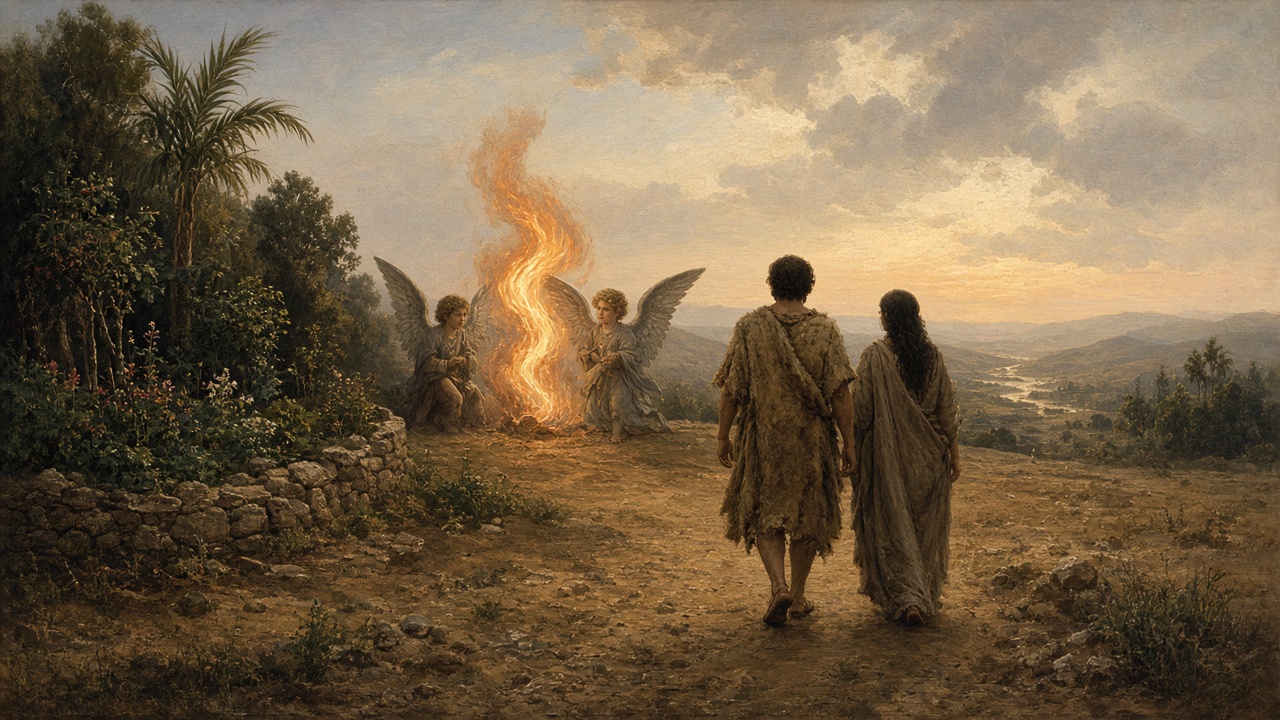
The Fall and Exile from Eden
- A traditional reference explains Adam as “red,” a Babylonian word used as the generic name for man, with the same meaning in Hebrew and Assyrian, and links the name to his being formed from the dust of the earth. In this chapter that origin returns in the judgment: he will toil for his food until he returns to the ground, for he is dust and to dust he will return, and he is sent to work the soil from which he was taken.Sources: Adam · the Bible text itself
- In this chapter Adam gives his wife the name Eve, meaning “life” or “living,” because she would be the mother of all the living.Sources: Eve · the Bible text itself
- The site of the garden of Eden, from which the man is driven in this chapter, has been much discussed and placed in Armenia, west of the Caspian Sea, in Media, near Damascus, in Palestine, in southern Arabia, and in Babylonia. A traditional geographical note looks for it along the Tigris and the Euphrates, in the land of Shinar, or Babylonia.Sources: Eden · the Bible text itself
Notes written with AI assistance from open sources (Theographic Bible Metadata, CC BY-SA 4.0; Easton’s Bible Dictionary, public domain) and reviewed before publishing.
Credits and license for this translation
Candoshi-Shapra
New Testament in Candoshi-Shapra (PE:cbu:Candoshi-Shapra)
copyright © 2010 Wycliffe Bible Translators, Inc.
Language: Candoshi-Shapra
Translation by: Wycliffe Bible Translators, Inc.
Candoshi-Shapra
cbu
Peru
Copyright Information
© 2010, Wycliffe Bible Translators, Inc. All rights reserved.
This translation text is made available to you under the
terms of the Creative Commons License: Attribution-Noncommercial-No Derivative Works.
( http://creativecommons.org/licenses/by-nc-nd/3.0/ )
In addition, you have permission to port the text to different file formats, as long as you
do not change any of the text or punctuation of the Bible.
You may share, copy, distribute, transmit, and extract portions
or quotations from this work, provided that you include the above copyright
information:
You must give Attribution to the work.
You do not sell this work for a profit.
You do not make any derivative works that change any of the actual words or punctuation of the Scriptures.
Permissions beyond the scope of this license may be
available if you contact
us with your request.
The New Testament
in Candoshi-Shapra
© 2010, Wycliffe Bible Translators, Inc. All rights reserved.
This translation is made available to you under the terms of the
Creative Commons Attribution-Noncommercial-No Derivatives license 4.0.
You may share and redistribute this Bible translation or extracts from it in any format, provided that:
You include the above copyright and source information.
You do not sell this work for a profit.
You do not change any of the words or punctuation of the Scriptures.
Pictures included with Scriptures and other documents on this site are licensed just for use with those Scriptures and documents.
For other uses, please contact the respective copyright owners.
2025-04-30
Source: http://ebible.org/cbuNT/ · eBible.org