Éxodo 5
Tte Pa̱'a̱li̱ Me' Skëköl tö Se' a̱ · Toca un versículo para ver sus referencias cruzadas.
Moisés ena Aarón tté Egipto blú ta̱
1E' ukuöki̱ ta̱ Moisés ena Aarón míyal Egipto blú ska' ta̱ ichéitö ia̱:
—Jehová dör Israel aleripa e' Këköl, e' tö iché be' a̱ tö e'pa dör ie' icha. Ie'pa ö́mi a̱s imi'yal wé̱ kë̀ yi se̱rku̱' ee̱ ka̱wö tkö'u̱k ie' dalöioie.
2Erë Egipto blú tö iiu̱té:
—¿Yi dör Jehová? Ye' kë̀ wa̱ ie' su̱ule. Ye' kë̀ ka̱wöta̱ ie' ttö̀ iu̱tök. Ye' kë̀ ka̱wöta̱ Israel aleripa ökmi. E' kue̱ki̱ kë̀ ye' tö Israel aleripa epami.
3Eta̱ ie'pa tö iché:
—Hebreowak Këköl e' dë'bitu̱ sa' wöki̱. E' kue̱ki̱ sa' ö́mi ká̱ mañat shkar ekkë wé̱ kë̀ yi ku̱' ese ska' iyiwak ña'u̱k sa' Këköl Jehová e' a̱ idalöioie dö' ie' tö sa' wömèttsa̱ duökwa̱ duè a̱ ö tabè a̱.
4Erë Egipto blú tö iiu̱té:
—A Moisés. A Aarón. ¿Iö́k a' ki̱ ie'pa kiane wöklö'wè̱ ikanè a̱? ¡A' ena a' yamipa yúshka kaneblök!
5Ñies Egipto blú tö iché ie'pa a̱:
—I̱'ñe ta̱ Israel aleripa tso' tai̱ë ká̱ i' ki̱, eta̱ ¿we̱s a' ki̱ ikiane tö ie'pa kë̀ kaneblö̀ia̱?
6E' diwö wa Egipto blú tö iché ikanè wökirpa a̱:
7—Tala'chka kösi e' kë̀ tsa̱rbitu̱ia̱ Israel aleripa a̱ ska̱u̱chka shtrót shtrót yuoie we̱s se' tö ikanewè̱rö es. A̱s ie'pa wákpa mi' itsu̱k. 8Erë ikö́rak iyuök ko̱s ke̱kraë iyuekerakitö ekkë, kë̀ wöarwa yës. Ie'pa bikënak ë̀ tai̱ë, e' kue̱ki̱ ie'pa a̱rkerak: ‘¡Mishka iyiwak ña'u̱k se' Këköl a̱!’ 9Ie'pa kí̱ kö́ kaneblök darërëë. Kanè mú ie'pa a̱ tai̱ë a̱s kë̀ itö ka̱chè iu̱tö̀.
10Eta̱ ikanè wökirpa míyal ta̱ ichéitörak Israel aleripa a̱: —Egipto blu' tö ka̱wö mé tö kë̀ a' a̱ tala'chka kösi tsa̱rbitu̱ia̱. 11I̱'ñe ta̱ a' wakpa ka̱wöta̱ iyulök wé̱ a' ikué̱, e̱'ma ee̱ itsú̱bitu̱. Erë a' ka̱wöta̱ iyuök ko̱s a' iyueke ke̱net ekkë, kë̀ wöarwa.
12Eta̱ Israel aleripa mía̱ Egipto ká̱ wa'ñe ka̱chka ëse yulök tala'chka skéie. 13Kanè wökirpa tö ikérak kaneblök kësik wa ta̱ ichekerakitö ie'pa a̱ ke̱kraë: “A' tö iyuö́ ko̱s a' tö iyueke ke̱net mik sa' tö tala'chka mekeia̱ a' a̱ ekkë.” 14Egiptowak tö Israel aleripa we̱lepa me'ka̱ ñì wökirie. E'pa ppeke egiptowak tö ttsa' bata wa ta̱ ichekerakitö ie'pa a̱:
—¿Ì kue̱ki̱ a' kë̀ wa̱ iyöne chkì ena i̱'ñe we̱s ke̱net es?
15Eta̱ Israel aleripa kanè wökirpa míyal kköchök Egipto blú wöa̱. Ie'pa tö iché ia̱:
—A këkëpa. ¿Ì kue̱ki̱ be' tö be' kanè mésopa we'ikè es? 16Tala'chka kë̀ mèneia̱ sa' a̱, erë ie'pa ki̱ ikiane tö sa' tö iyuè ko̱s sa' a̱ tala'chka merkeia̱ ta̱ iyörke ekkë. Ie'pa tö sa' ké kaneblök kësik wa. Ñies sa' ppekeitö sia̱rë. ¡A këkëpa, be' wakpa iane iwiie!
17Egipto blú tö ie'pa iu̱té:
—¡A' dör bikëwakpa wöchka! E' kue̱ki̱ a' icheke ke̱kraë: “¡Mishka ká̱ bánet iyiwak ña'u̱k Jehová a̱!” 18¡A' yúshka kaneblök! Erë́ kë̀ tala'chka kösi merku̱'ia̱ a' a̱, erë a' ka̱wöta̱ iyuök ko̱s ke̱net a' tö iyueke ekkë.
19Mik Israel aleripa kanè wökirpa a̱ iyëne tö ie'pa ka̱wöta̱ iyuök ke̱kraë ko̱s iyuekerakitö ke̱net ekkë, eta̱ ie'pa e̱riane tai̱ë. 20Ie'pa e̱' yélur Egipto blú ska' de wé̱ Moisés ena Aarón tso' ie'pa panuk ee̱. 21Ie'pa tö iché ia̱rak:
—Ì wamblé a' tö sa' ki̱ e' kue̱ki̱ a̱s Jehová tö a' we'ikö̀. Egipto blú ena ikue̱blupa e'pa é̱na sa' a̱r suluë. A' iane iwiie. E' dör we̱s a' wakpa tö tabè mé ie'pa a̱ a̱s sa' ttö̀wa̱ ie'pa tö es.
Moisés kköché Skëköl a̱
22Eta̱ Moisés tö iché Jehová a̱:
—A Jehová. ¿Iö́k be' tö Israel aleripa we'ikeke sia̱rë? ¿Iö́k be' tö ye' patkë'bitu̱ í̱e̱? 23Mik ye' dë'bitu̱ ttök Egipto blú ta̱' be' ttö̀ wa, eta̱ ie' tö wé̱pa dör be' icha e'pa kí̱ we'iké sia̱rë. Dö̀ ikkë ta̱ iweirkeia̱ iwák su̱ë. Erë be' kë̀ wa̱ ì o̱ne yës ie'pa tsa̱tkoie.
¿Sabías que…?
Trabajo más duro tras la negativa del faraón
- El Easton's Bible Dictionary (1897) dice que el faraón del Éxodo fue probablemente Menephtah I, el decimocuarto y mayor hijo sobreviviente de Ramsés II, pero trata la identificación como una cuestión aún abierta: algunos eruditos, señala la obra, se inclinan por Seti II, cuyo reinado describe como iniciado en paz y terminado en un desastre repentino. La entrada dice que residía en Zoán, donde recibió a Moisés y a Aarón en las audiencias registradas en Éxodo.Fuentes: Pharaoh (of the Exodus) · el propio texto bíblico
- El Easton's Bible Dictionary (1897) sitúa la llegada de Jacob a Egipto probablemente unos 350 años antes del nacimiento de Moisés. Dice que un rey hicso, de un pueblo semita pastoril de Asia y llamado rey pastor, recibió a la familia con favor y les asignó Gosén, la mejor tierra; en este capítulo el faraón trata al pueblo de Israel, ya numeroso, como trabajadores a los que no dejará ir.Fuentes: Moses · el propio texto bíblico
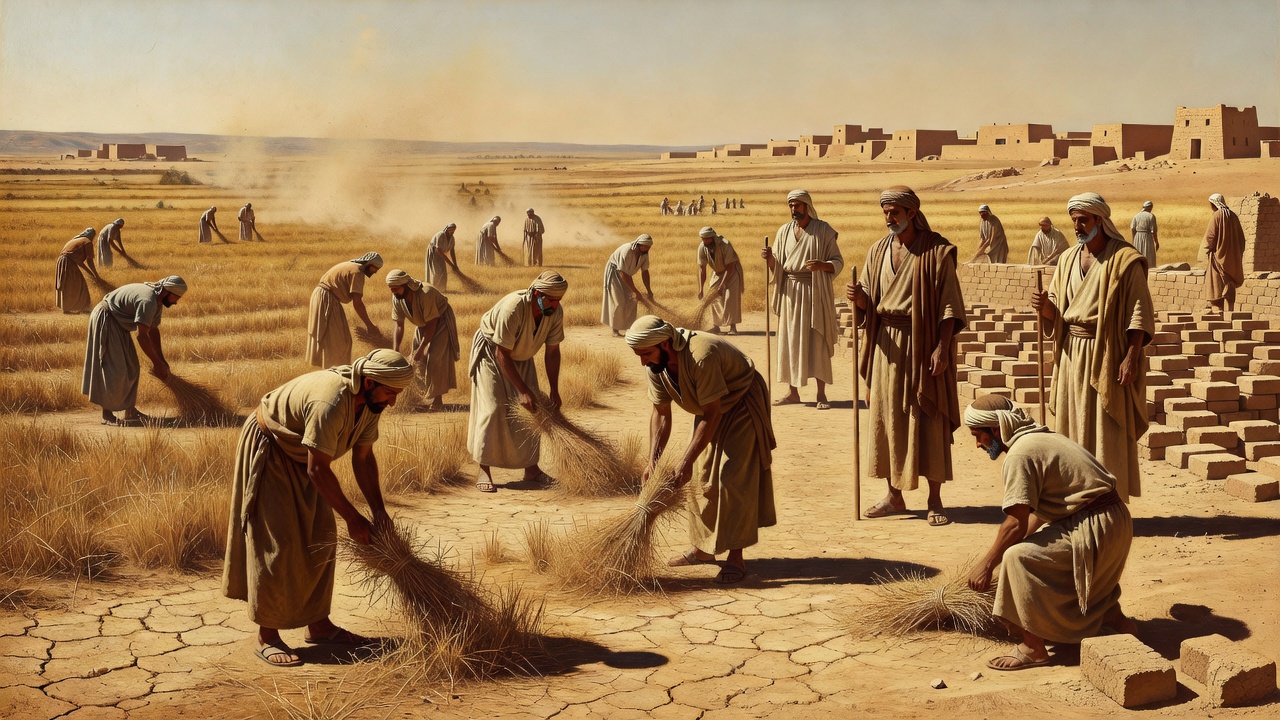
- El faraón responde a la petición de celebrar una fiesta en el desierto dejando de suministrar la paja para los ladrillos, pero exigiendo todavía la misma cuota diaria. El pueblo se dispersa por toda la tierra de Egipto para recoger rastrojo, y los oficiales israelitas que los capataces del faraón habían puesto sobre ellos son golpeados cuando esa cuota no se cumple.Fuentes: el propio texto bíblico
Notas escritas con ayuda de IA a partir de fuentes abiertas (Theographic Bible Metadata, CC BY-SA 4.0; Easton’s Bible Dictionary, dominio público) y revisadas antes de publicarse.
Lugares de este capítulo
Solo aparecen lugares identificados con alta confianza (90 % o más según las fuentes académicas reunidas por OpenBible). Mapa de la época: DARE (Digital Atlas of the Roman Empire), CC BY 4.0; mapa actual: © colaboradores de OpenStreetMap; lugares: OpenBible.info (CC BY 4.0).
Créditos y licencia de esta traducción
Tte Pa̱'a̱li̱ Me' Skëköl tö Se' a̱
New Testament and Shorter Old Testament in Bribri (CS:bzd:Bribri)
copyright © 2010 Wycliffe Bible Translators, Inc.
Language: Bribri
Translation by: Wycliffe Bible Translators, Inc.
Bribri
bzd
Costa Rica
Copyright Information
© 2010, Wycliffe Bible Translators, Inc. All rights reserved.
This translation text is made available to you under the
terms of the Creative Commons License: Attribution-Noncommercial-No Derivative Works.
( http://creativecommons.org/licenses/by-nc-nd/3.0/ )
In addition, you have permission to port the text to different file formats, as long as you
do not change any of the text or punctuation of the Bible.
You may share, copy, distribute, transmit, and extract portions
or quotations from this work, provided that you include the above copyright
information:
You must give Attribution to the work.
You do not sell this work for a profit.
You do not make any derivative works that change any of the actual words or punctuation of the Scriptures.
Permissions beyond the scope of this license may be
available if you contact
us with your request.
The New Testament and Shorter Old Testament
in Bribri
© 2010, Wycliffe Bible Translators, Inc. All rights reserved.
This translation is made available to you under the terms of the
Creative Commons Attribution-Noncommercial-No Derivatives license 4.0.
You may share and redistribute this Bible translation or extracts from it in any format, provided that:
You include the above copyright and source information.
You do not sell this work for a profit.
You do not change any of the words or punctuation of the Scriptures.
Pictures included with Scriptures and other documents on this site are licensed just for use with those Scriptures and documents.
For other uses, please contact the respective copyright owners.
2014-04-22
Fuente: http://ebible.org/bzdNTpo/ · eBible.org