Éxodo 9
Kitabu ka Kanu · Toca un versículo para ver sus referencias cruzadas.
Pəcuy pa kəcamət: Docu da yɔcɔl
1Kɔ MARIKI oloku Musa: «Məkɔ məbəp firawona, məkɔ məloku kɔ: ‹Ntɛ tɔ MARIKI, Kanu ka aHebəre kəloku: Məsak afum em ŋakɔ ntɛ tɔŋsɔŋɛ ŋakɔ ŋasalɛn'em mɔ.› 2Kɔ məfati kəsak ŋa ŋakɔ, məwon sɔ kəsumpər ŋa sɔ-ɛ, 3MARIKI oŋsutɛ yɔcɔl yam kəca nyɛ yeyi dəkulum mɔ, kəyɛfɛ ka fəlɛs kəbəp ka sɔfale, yɔkɔmɛ kəkɔ ka nde cəna kɔ ŋkesiya yeyi mɔ, yendesɔtɔ arom ŋɛlɛc. 4Mba MARIKI endegbɛy yɔcɔl ya aka Yisrayel nnɔ yɔcɔl ya aka Misira yeyi mɔ, ali pɔcɔl pin pɔfɔdefi yɔcɔl ya aka Yisrayel dacɔ. 5MARIKI ombonc dɔsɔk ndɛ toncop mɔ, oloku a alna ɔŋyɔ ti atɔf ŋa Misira disrɛ.»
6Kɔ MARIKI ɔyɔ ti dɔckɔsɔk. Kɔ yɔcɔl ya aka Misira yefi, ali pɔcɔl pa aka Yisrayel pin pɛnafi fɛ. 7Kɔ firawona osom pakɔ patɛn mes mamɔkɔ. K'aŋkɔ pabəp ali pɔcɔl pa aka Yisrayel pin pɛnafi fɛ. Mba haŋ tɛm tantɛ firawona ɛntaŋ aləŋəs, ɛsak fɛ aka Yisrayel ŋakɔ.
Pəcuy pa camət-tin: Bɛcɛ
8Kɔ MARIKI oloku Musa kɔ Aruna: «Nəwɛt asum ŋa karɔrɔ kəca pet, Musa pələm ŋi darenc fɔr ya firawona kiriŋ. 9Asum ŋaŋɔkɔ ŋendetəŋkəlɛ kəfəl atɔf ŋa Misira fəp kəroŋ. Kəfəl kaŋkɔ kəndesɔŋ atɔf ŋa Misira fəp kəyɛfɛ afum kəbəp ka yɔcɔl pəkəfər-kəfər mpɛ pendeyɔnɛ ŋa bɛcɛ mɔ.» 10Musa kɔ Aruna ŋawɛt asum ŋa karɔrɔ kɔ ŋaŋkɔ ŋabəp firawona, kɔ Musa ɛləm asum ŋaŋɔkɔ darenc, kɔ ŋɔsɔŋ afum kɔ yɔcɔl bɛcɛ ya arom. 11Dure aMisira ŋanctam fɛ kəcəmɛ Musa fɔr kiriŋ, teta bɛcɛ nyɛ yɛnawur ŋa pəmɔ tɔkɔ yɛnawur aka Misira fəp mɔ. 12Kɔ MARIKI ɔncɔŋəs sɔ firawona kəyeŋk domp, ɛncəŋkəl fɛ ŋa sɔ pəmɔ tɔkɔ MARIKI ɛnaloku ti Musa mɔ.
Pəcuy pa camət-mɛrəŋ: Letər
13Kɔ MARIKI oloku Musa: «Məde məyɛfɛ bətbət suy, məkɔ məmentərnɛ firawona kiriŋ. Məloku kɔ: ‹Ntɛ tɔ MARIKI, Kanu ka aHebəre kəloku: Məsak afum em ŋakɔ, ŋasalɛn'em. 14Bawo tantɛ taŋ mən'indesɔŋ pucuy pem fəp, kəyɛfɛ ka amarəs am kəbəp ka afum am fəp, ntɛ tɔŋsɔŋɛ məcərɛ a paka mpɛ o mpɛ powurɛnɛ fɛ kɔ ina doru dandɛ. 15Inacenc kəca isut am arom, məna kɔ afum am-ɛ, kɔ məməlkɛ ntɛ doru dandɛ. 16Mba isak əm kɔ məyi doru ntɛ tɔsɔŋɛ imentər əm fənɔntər fem, tɔsɔŋɛ sɔ tewe tem tɛsamsər doru fəp mɔ. 17Kɔ məmpətəs sɔ afum em, məsak fɛ ŋa ŋakɔ-ɛ, 18intufər aka Misira alna dec dandɛ letər dɛlarəm ndɛ dɛntatɔtuf Misira kəyɛfɛ dɔsɔk ndɛ moncop mɔ haŋ ndɛkəl. 19Ndɛkəl oŋ, məsom nde dalɛ pakɛrɛ pɔcɔl mpɛ o mpɛ kɔ daka ndɛ o ndɛ dɔyɔnɛ dam mɔ, letər dendetorər afum kɔ yɔcɔl fəp kəroŋ nyɛ yeyi dalɛ ta aloŋka yi dəkəlɔ mɔ, yendefi.›»
20Amarəs a firawona aŋɛ ŋananesɛ toloku ta MARIKI mɔ, ŋambɛrsɛ acar aŋan kɔ yɔcɔl yaŋan dəcəkɛr katəna. 21Mba aŋɛ ŋanatɔbɛr moloku ma MARIKI dɛbəkəc mɔ, ŋasak acar aŋan kɔ yɔcɔl yaŋan dalɛ disrɛ.
22Kɔ MARIKI oloku Musa: «Məpɛnɛ kəca kam darenc, letər dotor atɔf ŋa Misira disrɛ fəp, afum kəroŋ, yɔcɔl kəroŋ kɔ yika ya dalɛ da Misira kəroŋ.» 23Kɔ Musa ɛmpɛnɛ kəgbo kɔn darenc, kɔ MARIKI owurɛ dim da pukulɛ-kulɛ, kɔ letər dontor, kɔ dɛwɛ dosut antɔf. Kɔ MARIKI ontorɛ letər dəntɔf pəpɔŋ. 24Kɔ letər dontor, nɛnc dɛccɛsəŋɛ letər dacɔ. Kəyɛfɛ ntɛ doru dɛnacop mɔ haŋ mɔkɔ, letər, afef kɔ dɛwɛ yɛntator fɛ Misira pəmɔ dɔsɔk dadɔkɔ. 25Kɔ letər dontorər ca yɔkɔ yɛnayi dalɛ mɔ fəp, antɔf ŋa Misira fəp kəyɛfɛ ka afum kəbəp ka yɔcɔl. Kɔ letər dosut sɔ yika ya dalɛ fəp, kɔ dentep-tepi sɔ tɔk ya dalɛ fəp. 26Atɔf ŋa Kosɛŋ gbəcərəm nde aka Yisrayel ŋanayi mɔ, ŋɔ letər dɛnatɔtor.
27Kɔ firawona osom pawenɛ kɔ Musa kɔ Aruna k'oloku ŋa: «Tantɛ taŋ, inciya. MARIKI olomp, ina kɔ afum em sən'eciya. 28Nətola MARIKI. Pukulɛ-kulɛ kɔ letər yɛcəmɛ! Iŋsak nu nəkɔ, afɔsɔcəmbərəs nu kəkɔ.» 29Kɔ Musa oloku firawona: «Kɔ indenawur dare-ɛ, indepɛnɛ waca wem nde MARIKI eyi mɔ. Pukulɛ-kulɛ pendenasakɛ, letər dɔfɔdenayi, tendesɔŋ'am kəcərɛ a doru dandɛ da MARIKI dɔ. 30Mba incərɛ a məna kɔ amarəs am, nəfɔdesɔnesɛ MARIKI Kanu.» 31Akotan ŋɛnalɛŋk, pundu pokom letər dɛnasɔŋɛ yi kəlɛcɛ. 32Mba mɛŋgbɛn mɔlɔma mɛnalɛcɛ fɛ, bawo mi moncwon kəkom, ti tɔ letər dɛnatɔləsərɛ mi. 33Kɔ Musa owur ndena firawona kɔ dare disrɛ, kɔ Musa encencər MARIKI waca. Pukulɛ-kulɛ pa darenc kɔ letər yɛsakɛ, kɔ wəcafən ɛsak kətuf.
34Ntɛ firawona ɛnəŋk wəcafən, kɔ letər yɛsak kətuf kɔ pukulɛ-kulɛ pa darenc pɛsakɛ mɔ, k'ɔŋgbɔkərɛ sɔ kəciya k'ɛntaŋ aləŋəs, nkɔn kɔ amarəs ɔn. 35Kɔ firawona eyeŋk domp, ɛsak fɛ aka Yisrayel ŋakɔ, pəmɔ tɔkɔ MARIKI ɛnasɔŋɛ ti Musa kəloku mɔ.
¿Sabías que…?
Ganado, úlceras y granizo
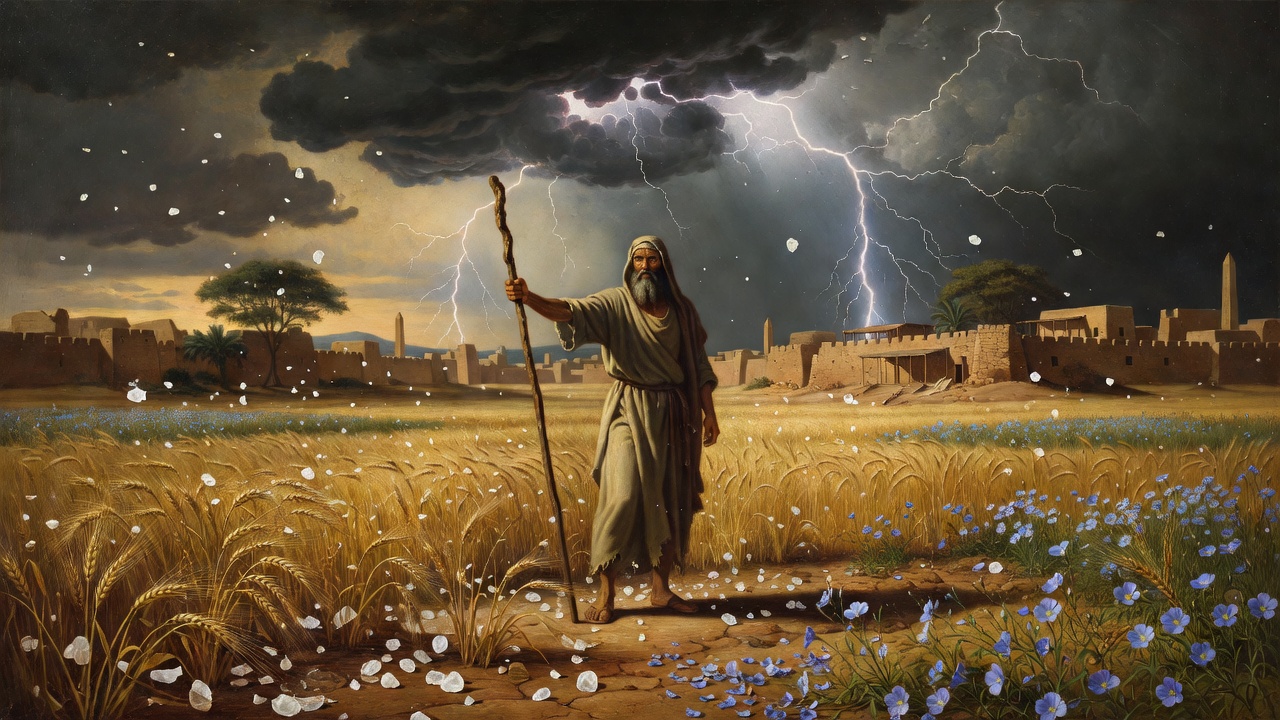
- Este capítulo traza una línea clara entre Egipto y los israelitas: muere todo el ganado de los egipcios, pero no muere ni un animal de los israelitas, y el granizo cae en toda la tierra de Egipto excepto en Gosén, donde vivían los israelitas. Gosén, llamada también tierra de Ramsés, quedaba al este del Nilo y, al parecer, no lejos de la residencia real, y había sido asignada a la familia de Jacob como la mejor parte de la tierra.Fuentes: el propio texto bíblico · Goshen · Moses
- El faraón ante quien se presentan Moisés y Aarón no es nombrado en el capítulo. El Diccionario Bíblico de Easton (1897) lo identifica como probablemente Menephtah I, hijo de Ramsés II, que vivía en Zoán, donde tuvieron lugar sus entrevistas con Moisés y Aarón, y señala que algunos prefieren a Seti II. Después del granizo, Moisés sale de la ciudad y extiende las manos al Señor hasta que cesan el trueno y el granizo.Fuentes: el propio texto bíblico · Pharaoh (of the Exodus)
- El granizo destruyó el lino y la cebada, pero no el trigo ni la espelta. El relato explica la diferencia: la cebada ya estaba madura y el lino en flor, mientras que el trigo y la espelta eran cultivos tardíos.Fuentes: el propio texto bíblico
Notas escritas con ayuda de IA a partir de fuentes abiertas (Theographic Bible Metadata, CC BY-SA 4.0; Easton’s Bible Dictionary, dominio público) y revisadas antes de publicarse.
Lugares de este capítulo
- Egypt · 30.129, 31.308 · versículos 4, 6, 9, 18, 22, 23, 24, 25
- Goshen · Hoy: Goshen 1 · 30.799, 31.834 · versículo 26
Solo aparecen lugares identificados con alta confianza (90 % o más según las fuentes académicas reunidas por OpenBible). Mapa de la época: DARE (Digital Atlas of the Roman Empire), CC BY 4.0; mapa actual: © colaboradores de OpenStreetMap; lugares: OpenBible.info (CC BY 4.0).
Créditos y licencia de esta traducción
Kitabu ka Kanu
Portions of the Holy Bible in the Baga Sitemu language of Guinea
Des portions de la Sainte Bible dans la langue Baga Sitemu de Guinée
copyright © 2015 Pioneer Bible Translators
Language: Baga Sitemu
Translation by: Traducteurs Pionniers de la Bible
Contributor: Pioneer Bible Translators
This translation is made available to you under the terms of the
Creative Commons Attribution Share-Alike license 4.0.
You have permission to share and redistribute this Bible translation in any format and to make reasonable revisions and adaptations of this translation, provided that:
You include the above copyright and source information.
If you make any changes to the text, you must indicate that you did so in a way that makes it clear that the original licensor is not necessarily endorsing your changes.
If you redistribute this text, you must distribute your contributions under the same license as the original.
Pictures included with Scriptures and other documents on this site are licensed just for use with those Scriptures and documents.
For other uses, please contact the respective copyright owners.
Note that in addition to the rules above, revising and adapting God's Word involves a great responsibility to be true to God's Word. See Revelation 22:18-19.
2025-04-29
Fuente: http://ebible.org/bsp/ · eBible.org