Hechos 4
Dios oca gotirituti · Toca un versículo para ver sus referencias cruzadas.
Pedrore, to yicõari, Juanre tubiberiavijʉ masa ʉjarã, ĩna tubibere queti
1To bajiri Pedro, Juan rãca, ado bajiro masare gotimasioñujarã ĩna:
—Jesús, sĩaecogʉ ñaboarine, quẽna tudicaticoasumi. To bajiri mani quẽne tudicatirʉarãja, yimasiaja mani —yiyujarã Pedro, Juan rãca.
To ĩna yiñarore paia, to yicõari, saduceo masa quẽne ejayujarã ĩna. Diore yirʉ̃cʉbʉoriavire coderimasa ʉjʉ quẽne ejayuju ĩ. Bʉto jũnisiniejayujarã ĩna, Pedro, Juan rãca to bajiro ĩna gotimasiosere ajicõari. 3To bajiri Pedrore, Juanre quẽne ĩnare ñejecõari, tubibe, vaveocoasujarã ĩna, rãiorijʉ ti ñajare. 4To bajiro ĩnare ĩna yiboajaquẽne, Jesús ocare ajicõari, jãjarã ajitirʉ̃nʉsʉoyujarã ĩna. To bajiri ʉ̃mʉa cinco mil ñañujarã ĩna.
5To bajiri busurijʉ tudirẽjañujarã ĩna quẽna, jud'io masa ʉjarã, Dios ĩ rotimasire gotimasiorimasa, to yicõari, bʉcʉrã quẽne. 6Paia ʉjʉ ñamasugʉ̃ Anás, to yicõari, ĩ yarã Caifás, Juan, Alejandro ñañujarã ĩna quẽne. 7To bajiri, Pedro, Juan rãca tubibe ecoriarãre, jirotiyuju Anás. To ĩ yijare, ĩ rĩjorojʉare ejarʉ̃gʉ̃ ejayujarã Pedro, Juan rãca. To ĩna ejaro, ado bajiro ĩnare sẽniĩañuju Anás:
—¿Ñimʉ masare mʉare gotimasiorotimasiri? ¿Ñimʉ ĩ masise rãca micagʉ̃re catiomasiri mʉa? —ĩnare yisẽniĩañuju Anás.
8To bajiro ĩ yisẽniĩaro, Dios ĩ cõagʉ̃ Esp'iritu Santo ĩ ejarẽmose rãca cojo vãme rʉyabeto quẽnaro cʉdiyuju Pedro:
—Yʉa ʉjarã, bʉcʉrã quẽne, quẽnaro yʉre ajiya. “¿Ñimʉ ĩ masise rãca micagʉ̃re catiomasiri mʉa?” yʉare mʉa yisẽniĩasere cʉdirʉcʉja yʉ. 10“Quẽnaro masiato” yirã, adi macana, to yicõari, “Israel sitana ñaro cõrone masiato” yirã, ñamasusere mʉare gotiaja yʉa. Jesucristo Nazaret macagʉ sʉorine micagʉ̃ ñaboar'i catimasimi. Jesús, yucʉ́tẽrojʉ mʉa sĩar'ine, Dios ĩ tudicatior'ine, micagʉ̃ ñaboagʉre ĩre catiomasimi. 11Tirʉ̃mʉjʉ David ñamasir'i ado bajiro ucamasiñumi: “Gʉ̃ta rãca vi quẽnorimasa coja gʉ̃tare rocarãma. Ĩna rocaria ñaboarine, gajea gʉ̃ta rẽtoro quẽnarica ñarʉaroja tia. Tia gʉ̃ta sʉorine quẽnarivi quẽnorʉcʉmi Dios. Tia manijama, quẽnomasibetibogʉmi”, yiucamasiñumi. “Ado bajiro bajiaja” yire ũni ñaja adi: Mʉa jud'io masa ʉjarã, Jesúre ĩre bojabesuja mʉa. To bajiboarine ñamasugʉ̃ ñaami. 12Jesús rĩne ñaami adi macarʉcʉroana masa, ĩna rijato berojʉ, rojose ĩna tãmʉoborotire ĩnare yirẽtobosarocʉ, Dios ĩ cõar'i. Gãji to bajiro manire yirẽtobosagʉ maami —yiyuju Pedro.
13To bajiri Pedro, Juan rãca quẽnaro masirãre bajiro ĩna ñagõsere ajimasicõañujarã ʉjarã. “Papera buebetiriarã ñaboarine, quẽnaro ñagõama ĩna. Jesúrãca ñarũgũriarãne ñaruyuama ĩna. To bajiri ĩre bajirone gotimasioama”, yitʉoĩañujarã ĩna, ʉjarã. 14To bajiri micagʉ̃ ñaboar'i, Pedro, Juan rãca ĩ ñajare, “Rojose yiyuja mʉa”, yimasibesujarã ʉjarã. 15To yi, budiarotiyujarã ʉjarã, Pedrore, to yicõari Juanre quẽne. To yicõari ado bajiro ĩna masune gãmerã ñagõñujarã ĩna:
—¿No yirãti mani ĩnare, Pedrore, Juanre quẽne? Jerusalén macana ĩna ñaro cõrone masiama micar'ire ĩna catiorere. To bajiri, “Socarã yama”, yimasiña maja. 17To bajiri ado bajiro ĩnare gotiroti ñaja: “Jesús yere quẽna mʉa ñagõrẽmojama, rojose tãmʉorã vana yaja mʉa”, ĩnare yiroti ñaja, “To cõrone Jesús yere gotibatobeticõato yuja” yirã —yitʉoĩañujarã ʉjarã. 18To yi, quẽna ĩnare jisõñujarã ĩna, Pedrore, to yicõari, Juanre quẽne. Ĩna sãjaejarone:
—Jesús yere masare gotimasiobesa mʉa —yiboayujarã ĩna, Pedrore, to yicõari, Juanre quẽne. 19To bajiro ʉjarã ĩna yisere ajicõari, ado bajiro cʉdiyujarã Pedro, Juan rãca:
—Mʉare yʉa cʉdijama, Diore cʉdimena yirãja yʉa. To bajiri, mʉa tʉoĩajama, mʉajʉare yʉa cʉdijama, ¿riojo yirã yirãjari yʉa? 20Jesúre yʉa ĩacati, yʉa ajicatire quẽne, tire gotitʉjamasimenaja —yiyujarã Pedro, Juan rãca.
21Tire ajicõari,
—Gotimasiobeticõaña, Jesús yere. Jesús yere mʉa gotijama, rojose tãmʉorʉarãja mʉa —yiyujarã ʉjarã quẽna.
Micagʉ̃ ĩ catisere ĩacõari, “Quẽnaro yigʉ ñaami Dios”, yiyujarã masa. To ĩna yisere ajirã ñari, Pedrore, to yicõari, Juanre quẽne rojose ĩnare yimasibesujarã ĩna. To bajiri ĩnare budiroticõañujarã ʉjarã. 22Micagʉ̃ ñaboar'i, Pedro, Juan rãca ĩna catior'i, cuarenta cʉ̃mari rẽtobʉsaro tʉsacʉ ñañuju ĩ.
“‘Jesús yere gotimasiocõa ñato ĩna’ yigʉ, yʉare ejarẽmoña”, Diore ĩna yisẽnire queti
23Budicoanajʉma, ĩna babarã tʉjʉ vacoasujarã Pedro, Juan rãca. Tojʉ ejacõari paia ʉjarã, to yicõari, bʉcʉrã quẽne, ĩnare ĩna yirere gotiyujarã ĩna. 24Tire ajicõari, sĩgʉ̃re bajirone tʉoĩacõari, ado bajiro Diore sẽniñujarã ĩna:
—Dios, yʉa jacʉ, mʉ rĩne ñajediro masirẽtogʉ̃ ñaja mʉ. Mʉne, ʉ̃mʉagaserore quẽnoñuja, sitare quẽne, riagarire quẽne jediro. Adi macarʉcʉroayere jediro rujeoyuja mʉ. 25Tirʉ̃mʉjʉ yʉa ñicʉ mʉ bojarore bajiro yimasir'i David ñamasir'i, Esp'iritu Santo ĩ ejarẽmose rãca ado bajiro ucamasiñumi:
“¿No yirã ‘Rotimʉorʉ̃gõrʉcʉmi’ yigʉ, Dios ĩ cõagʉ̃re jũnisiniati jud'io masa, to yicõari, jud'io masa me ñarã quẽne? ¿No yirã Diore rojose yirʉaboati ĩna?
26‘Rotimʉorʉ̃gõrʉcʉmi’ yigʉ, Dios ĩ cõagʉ̃re, to yicõari, Diore quẽne rojose yirʉarã, adi macarʉcʉroana ʉjarã rẽjacõari, ñayurʉarãma”, yiucamasiñumi David.
27Socʉ me yimasiñumi David. Ĩ gotimasiriarore bajirone bajicajʉ. Ʉjʉ Herodes, Poncio Pilato vãme cʉtigʉ quẽne, jud'io masa, to yicõari, jud'io masa me quẽne, rẽjacama ĩna. Mʉ bojase rĩne yigʉre, “Rotimʉorʉ̃gõrʉcʉmi” yigʉ, mʉ cõar'ire Jesúre rojose ĩre yirʉarã rẽjacama ĩna. 28“Ado bajirone bajirʉaroja” mʉ yiriarore bajiro yirã, to bajiro yicama ĩna. 29To bajiri Dios yʉa jacʉ, yʉare ajiya. “Rojose tãmʉorʉarãja mʉa” yʉare ĩna yisere masiritibesa mʉ. Mʉ yirore bajiro mʉre cʉdirʉaja yʉa. To bajiri yʉare yirẽmoña mʉ, “Ñie güimenane Jesús ĩ goticatire quẽnaro gotiato ĩna” yigʉ. 30Mʉ masise rãca masa rijarãre catioya mʉ. Ĩaĩañamanire quẽne yiya mʉ, “‘Jesús, Dios ĩ bojase rĩne yigʉ, ĩ macʉ sʉorine to bajiaja ti’ yato ĩna masa” yigʉ —yiyujarã ĩna, Diore sẽnirã.
31Diore ĩna sẽnigajanoro, sita nʉrʉañuju. Tirĩmarone, Dios ĩ cõagʉ̃ Esp'iritu Santo, ĩ masisere ĩnare ĩsiñuju. To ĩ yijare, cojo vãme rʉyabeto Dios ĩ bojarore bajirone güimenane, Dios ocare masare gotiyujarã ĩna.
Jesúre ajitirʉ̃nʉrã ĩna gãmerã yirẽmore queti
32Jesúre ajitirʉ̃nʉrã sĩgʉ̃re bajiro tʉoĩarã ñañujarã ĩna. Ĩna cʉosere, “Yʉ sĩgʉ̃ ye ñaja”, yibesujarã ĩna. Ñajedirore, “Mani ye ñaja” yirã, ĩna babarãre ĩsiñujarã ĩna. 33Jesús ĩ bajireayere gotimasio tʉjabesujarã Jesús ĩ gotiroticõasʉoriarã. “Jesús, rijacoaboarine, tudicaticõari ñaami quẽna”, yigotiyujarã ĩna, masare. To bajiro quẽnaro ĩnare yigoticõari, ĩaĩañamanire ĩnare yiĩoñujarã. “To bajirone quẽnaro yiñato ĩna” yigʉ, Jesúre ajitirʉ̃nʉrã ĩna ñaro cõrone quẽnaro ĩnare yirẽmoñuju Dios. 34Sita cʉorã, viri cʉorã, gãjerãre ĩsiñujarã ĩna. To yicõari, gãjoa bʉjayujarã. Gãjoa bʉjacõari, Jesús ĩ gotiroticõasʉoriarãre ĩsiñujarã ĩna, “Maioro bajirãre ĩnare ĩsiato” yirã. To bajiri ĩna rãcana nijʉa maioro bajigʉ mañujarã yuja. 36To bajiro Jesúre ajitirʉ̃nʉrã vatoare, sĩgʉ̃ jud'io masʉ levita jũnagʉ ñañuju ĩ. José vãme cʉtigʉ ñañuju. Chipre vãme cʉtiyoajʉ ruyuar'i ñañuju ĩ. Jesús ĩ gotiroticõasʉoriarã, Josére gajeye ĩre vãme yiyujarã, Bernabé. Griego ocama, “Quẽnase gãjerãre oca cʉtigʉ” yire ũni ñañuju ti vãme. 37Sita cʉoyuju José. Tire gãjire ĩsiñuju ĩ. Ti vajane gãjoa bʉjacõari, Jesús ĩ gotiroticõasʉoriarãre ĩsiñuju, “Maioro bajirãre ĩsiato” yigʉ. Quẽnaro yigʉ ñañuju José.
¿Sabías que…?
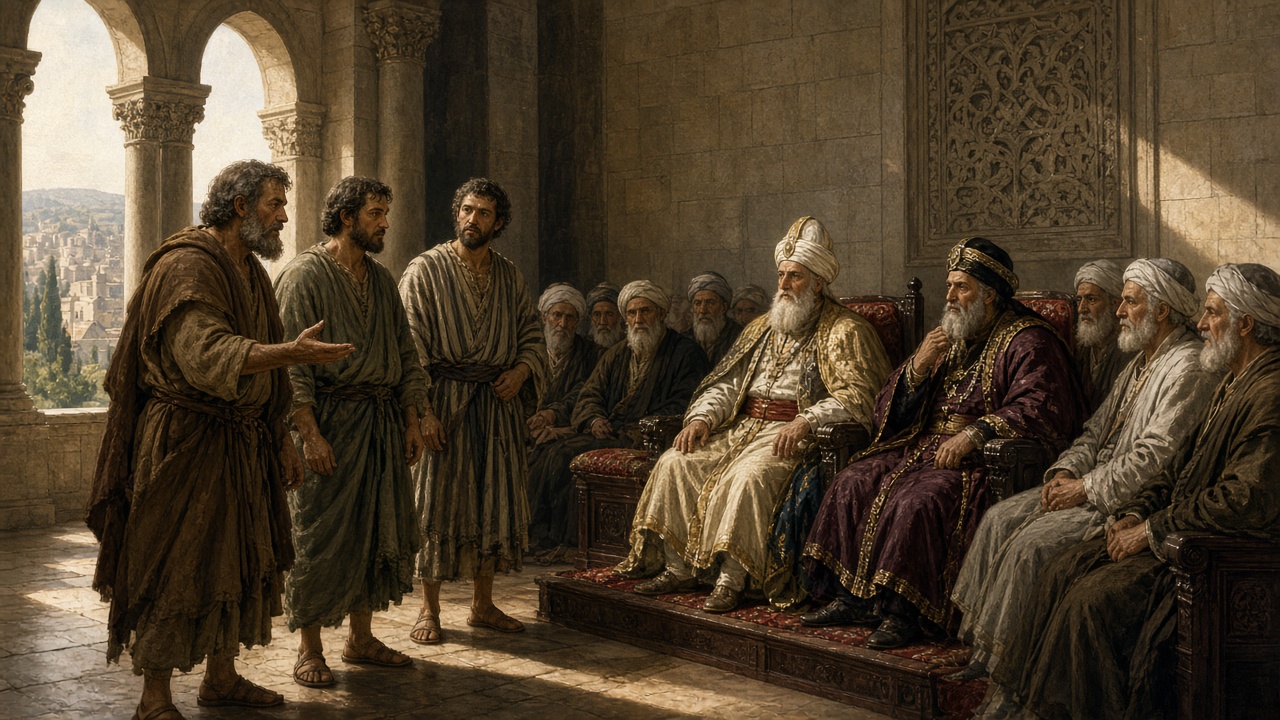
Pedro y Juan ante el Sanedrín
- Los sacerdotes, el capitán de la guardia del templo y los saduceos prendieron a Pedro y a Juan porque enseñaban al pueblo y proclamaban en Jesús la resurrección de los muertos. Caifás, que participó en la asamblea al día siguiente, pertenecía a los saduceos.Fuentes: el propio texto bíblico · Caiaphas
- Anás, llamado aquí sumo sacerdote, ocupó ese cargo del año 7 al 14 d.C., hasta que un procurador romano lo depuso. Caifás, que se había casado con la hija de Anás, fue elevado al cargo en el año 25 d.C.; aun así, algunos judíos podían seguir considerando a Anás el sumo sacerdote legal, pues la ley mosaica trataba el oficio como vitalicio, y Anás probablemente era presidente o auxiliar del Sanedrín. Juan y Alejandro, parientes del sumo sacerdote y por lo demás desconocidos, estaban sentados con ellos.Fuentes: el propio texto bíblico · Annas · John (Relative of the High Priest) · Alexander (Son of Simon)
- Pedro, pescador de Betsaida, y Juan, también pescador e hijo de Zebedeo, fueron llevados ante los gobernantes, los ancianos y los escribas. El concilio se maravilló de su valentía al darse cuenta de que eran hombres sin estudios y comunes, y notó que habían estado con Jesús.Fuentes: el propio texto bíblico · Simon Peter · John the Apostle
Notas escritas con ayuda de IA a partir de fuentes abiertas (Theographic Bible Metadata, CC BY-SA 4.0; Easton’s Bible Dictionary, dominio público) y revisadas antes de publicarse.
Lugares de este capítulo
- Jerusalem · 31.777, 35.234 · versículos 5, 16
- Nazareth · 32.702, 35.298 · versículo 10
- Cyprus · 35.000, 33.000 · versículo 36
Solo aparecen lugares identificados con alta confianza (90 % o más según las fuentes académicas reunidas por OpenBible). Mapa de la época: DARE (Digital Atlas of the Roman Empire), CC BY 4.0; mapa actual: © colaboradores de OpenStreetMap; lugares: OpenBible.info (CC BY 4.0).
Créditos y licencia de esta traducción
Dios oca gotirituti
New Testament in Barasana-Eduria (CO:bsn:Barasana-Eduria)
copyright © 2010 Wycliffe Bible Translators, Inc.
Language: Barasana-Eduria
Translation by: Wycliffe Bible Translators, Inc.
Copyright Information
© 2010, Wycliffe Bible Translators, Inc. All rights reserved.
This translation text is made available to you under the
terms of the Creative Commons License: Attribution-Noncommercial-No Derivative Works.
( http://creativecommons.org/licenses/by-nc-nd/3.0/ )
In addition, you have permission to port the text to different file formats, as long as you
do not change any of the text or punctuation of the Bible.
You may share, copy, distribute, transmit, and extract portions
or quotations from this work, provided that you include the above copyright
information:
You must give Attribution to the work.
You do not sell this work for a profit.
You do not make any derivative works that change any of the actual words or punctuation of the Scriptures.
Permissions beyond the scope of this license may be
available if you contact
us with your request.
The New Testament
in Barasana-Eduria
© 2010, Wycliffe Bible Translators, Inc. All rights reserved.
This translation is made available to you under the terms of the
Creative Commons Attribution-Noncommercial-No Derivatives license 4.0.
You may share and redistribute this Bible translation or extracts from it in any format, provided that:
You include the above copyright and source information.
You do not sell this work for a profit.
You do not change any of the words or punctuation of the Scriptures.
Pictures included with Scriptures and other documents on this site are licensed just for use with those Scriptures and documents.
For other uses, please contact the respective copyright owners.
2014-04-22
Fuente: http://ebible.org/bsnNT/ · eBible.org