Éxodo 5
I tnalù dwata · Toca un versículo para ver sus referencias cruzadas.
I ksite Mosis na Aron i harì di Idyif
1Kafnge i kastulenla di dad tua di dad bel Israél, Mosis na Aron salu di ku Faraon, harì di Idyif, na manla, “Tabyà di ge, ani i man Dwata i Amu, i Dwata fnangamfù dad bel Israél, manan, ‘Faloham i dad togu salu di banwe gulandè to, du damsù na mangamfù ale di deg.’ ” 2Na tmimel i harì, manan, “Simto kè Dwata i Amu manyu ani? Na kan ku nimengu kenen na falohgu i dad bel Israél salu ditù? Làgu dilè Dwata i Amu, na toogu là faloh i dad bel Israél fsalu ditù.” 3Na tmimel ale Mosis, manla, “I Dwata fnangamfù dad to Hibru tamsut di gami. Tabyà, faloham gami magu tlu butang, salu di banwe gulandè to, du beg gami damsù di Dwata i Amu, i Dwatami. Du ku làmi nimò ani, fanlayaman gami fagu i dad tduk demen fnatin gami.”
4Kabay lêman talù i harì di dale, manan, “Simto gamu kè, du fakayyu fafanak i dad to di dad nimòla? Samfulê gamu di nimòyu! 5I dad toyu, i bel Israél, too dee ale fa di dad to Idyif, na kayèyu kè fatlag i nimòla? Là fakay!” Én man i harì.
6Di duh én, dek i harì i dad to Idyif, gal magot i dad lifan, na i dademe dad Hibru fagotla i dademela bel Israél di nimòla, manan, 7“Nangyu banlé i dad to Hibru lami fali galla bol fitak imò dad brik. Ale fafwèyu i lami. 8Kabay fimòyu dale i salngad kdee dad brik di muna nimòla. Nangyu nsud i kdeen. Là kè gablà i nimòla, du mbal ale di deg lamwà dini, du fye fakay ale damsù di Dwatala. 9Tananùyu fa baling i nimò i dad lagi, du fye fadlug ale mimò, na làla gaflinge i dad kakakéng tulen Mosis.” Én man Faraon.
10Taman i dad magot i dad lifan, lamwà ale di muna i harì na manla di dad bel Israél, manla, “Man i harì là gami nan mlé gamu lami. 11Gamu i mngabal lami balù nè i gumngabalyu, bay làmi sa nsud i nimòyu. I kdee nimòyu di muna di kablémi gamu lami, én i kdee nimòyu ani.” 12Taman tì lamngab dad to di klamang Idyif, du mngabal ale lami. 13Na too ale gnaga i dad to Idyif, i magot i dad lifan na galla man, “Nimòyu ani, salngad kdee di galyu nimò di klit i duh di muna fa, di kablémi gamu lami.” 14Na i dad to Idyif, i magot i dad lifan, bnadasla i dad to Hibru, i fagotla i dademela bel Israél di nimòla. Snalekla ale, manla, “Kan ku talà gmagan i dad lifan ani mimò dee brik salngad di galla nimò?”
15Na i dad to Hibru, i fagotla i dademela bel Israél, salu di ku Faraon, du fakdo ale di kenen, manla, “Gumdatahmi, kan ku tananuam i nimò i dad lifanam? 16Dekam gami mimò brik, bay landè lami blé di gami dad lifanam. Na ani, too gami fa bnadas na landè sa salàmi, bay gsalà i dad to Idyif, i dad magot i dad lifanam.”
17Tmimel i harì, manan, “Tay, too gamu mataka, taman fakdo gamu fye falohgu gamu lamwà di banwe ani, du fye damsù gamu di Amuyu Dwata. 18Na samfulê gamu di nimòyu. Landè lami blé gamu, bay balù én tooyu nimò i kdee brik salngad i nimòyu di muna di kablémi gamu lami.” Én man i harì.
19Di kaklinge i dad Hibru fagotla i dademela bel Israél, i gman i harì, gadèla too sasè kalima i kdeela, du là ale gmagan mimò i dek i harì. 20Di kdàla di muna Faraon, teenla Mosis na Aron fatan dale. 21Na manla di dale Mosis, manla, “Teen sa i Dwata i Amu, i mgimòyu ani, na fanlayaman gamu. Hae, du mdà di gamu i duen i harì na i dad ganlalan too knangla gami. Na fagu di nimòyu ani banléyu ale dalanla mati gami.”
I kfakang Dwata ku Mosis
22Na lêman talù Mosis di Dwata i Amu, manan, “E, Amugu Dwata, kan dé ku fanlayamam dad tom ani? Na kan kè i duenam mdek deg dini ku ani kiboam dale? 23Hae, du mdà di kastulengu di harì, du tulengu kenen i gmanam, too baling matnù i kafsasean i dad tom, na balù ani i kagkahla landè tabengam dale.” Én man Mosis di Dwata.
¿Sabías que…?
Trabajo más duro tras la negativa del faraón
- El Easton's Bible Dictionary (1897) dice que el faraón del Éxodo fue probablemente Menephtah I, el decimocuarto y mayor hijo sobreviviente de Ramsés II, pero trata la identificación como una cuestión aún abierta: algunos eruditos, señala la obra, se inclinan por Seti II, cuyo reinado describe como iniciado en paz y terminado en un desastre repentino. La entrada dice que residía en Zoán, donde recibió a Moisés y a Aarón en las audiencias registradas en Éxodo.Fuentes: Pharaoh (of the Exodus) · el propio texto bíblico
- El Easton's Bible Dictionary (1897) sitúa la llegada de Jacob a Egipto probablemente unos 350 años antes del nacimiento de Moisés. Dice que un rey hicso, de un pueblo semita pastoril de Asia y llamado rey pastor, recibió a la familia con favor y les asignó Gosén, la mejor tierra; en este capítulo el faraón trata al pueblo de Israel, ya numeroso, como trabajadores a los que no dejará ir.Fuentes: Moses · el propio texto bíblico
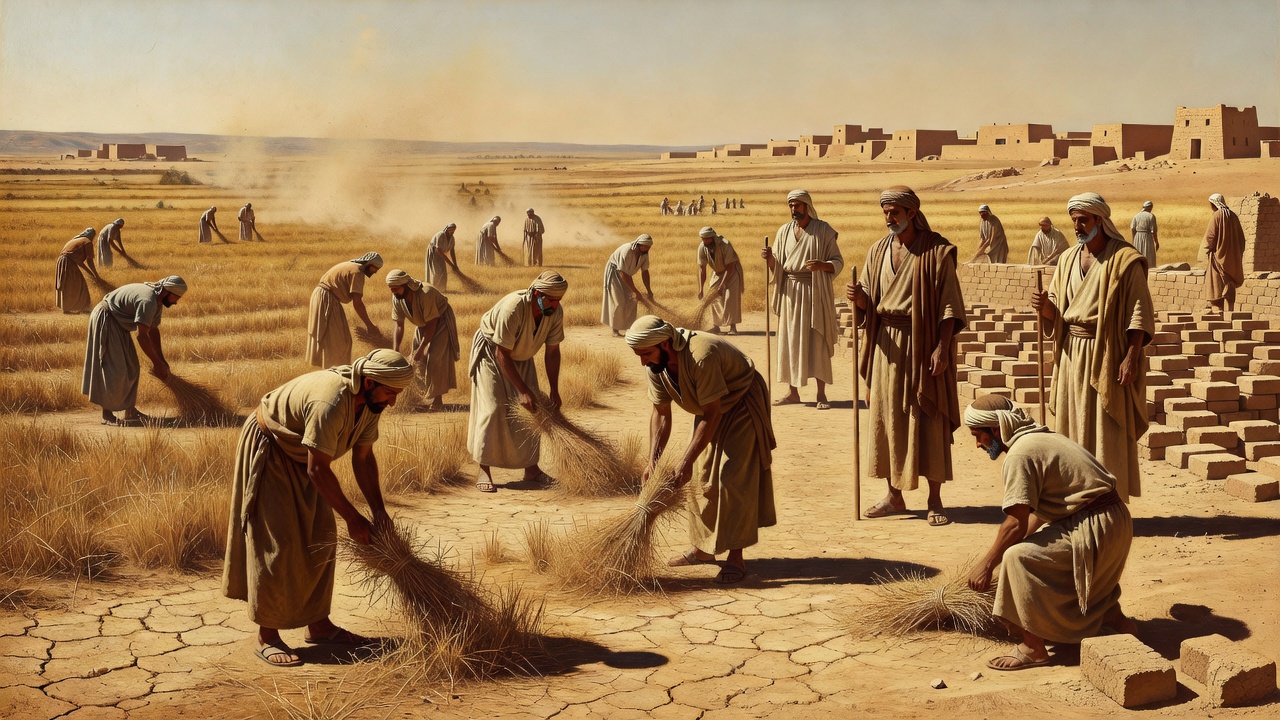
- El faraón responde a la petición de celebrar una fiesta en el desierto dejando de suministrar la paja para los ladrillos, pero exigiendo todavía la misma cuota diaria. El pueblo se dispersa por toda la tierra de Egipto para recoger rastrojo, y los oficiales israelitas que los capataces del faraón habían puesto sobre ellos son golpeados cuando esa cuota no se cumple.Fuentes: el propio texto bíblico
Notas escritas con ayuda de IA a partir de fuentes abiertas (Theographic Bible Metadata, CC BY-SA 4.0; Easton’s Bible Dictionary, dominio público) y revisadas antes de publicarse.
Lugares de este capítulo
Solo aparecen lugares identificados con alta confianza (90 % o más según las fuentes académicas reunidas por OpenBible). Mapa de la época: DARE (Digital Atlas of the Roman Empire), CC BY 4.0; mapa actual: © colaboradores de OpenStreetMap; lugares: OpenBible.info (CC BY 4.0).
Créditos y licencia de esta traducción
I tnalù dwata
New Testament in Blaan, Sarangani
copyright © 1998 Wycliffe Bible Translators, Inc.
Language: Sarangani Blaan (Blaan, Sarangani)
Translation by: Wycliffe Bible Translators
Contributor: Wycliffe Bible Translators, Inc.
Copyright Information
© 1998, Wycliffe Bible Translators, Inc. All rights reserved.
This translation text is made available to you under the
terms of the Creative Commons License: Attribution-Noncommercial-No Derivative Works.
( http://creativecommons.org/licenses/by-nc-nd/3.0/ )
In addition, you have permission to port the text to different file formats, as long as you
do not change any of the text or punctuation of the Bible.
You may share, copy, distribute, transmit, and extract portions
or quotations from this work, provided that you include the above copyright
information:
You must give Attribution to the work.
You do not sell this work for a profit.
You do not make any derivative works that change any of the actual words or punctuation of the Scriptures.
Permissions beyond the scope of this license may be
available if you contact
us with your request.
The New Testament
in Blaan, Sarangani
© 1998, Wycliffe Bible Translators, Inc. All rights reserved.
This translation is made available to you under the terms of the
Creative Commons Attribution-Noncommercial-No Derivatives license 4.0.
You may share and redistribute this Bible translation or extracts from it in any format, provided that:
You include the above copyright and source information.
You do not sell this work for a profit.
You do not change any of the words or punctuation of the Scriptures.
Pictures included with Scriptures and other documents on this site are licensed just for use with those Scriptures and documents.
For other uses, please contact the respective copyright owners.
2015-03-17
Fuente: http://ebible.org/bps/ · eBible.org