Apocalipsis 7
Iwo Surua Mua Wie Pha Bible · Toca un versículo para ver sus referencias cruzadas.
144,000 Israel pha bran
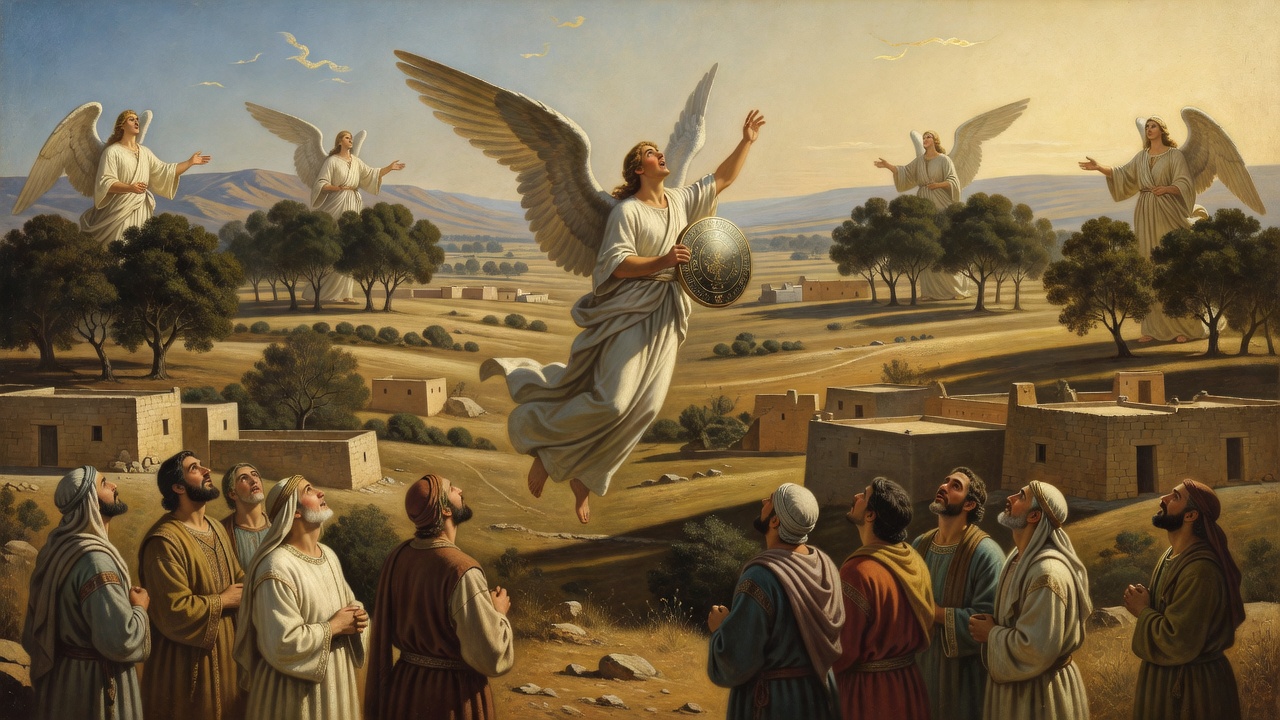
1Ji pha iidoh shii hamangkhliiethek wi yi sohnyiak pha iring hà riu pha doh, nyieliieshii hasam yi sohnyiak dinne khamuii dinne hingmuii shii hasam asam yi pha hasamthek wi iidoh shii khoh. 2Chiih-è gu riig shii gai hamangkhliie yi isieng Hamangkhung-aphuii ro nab rog shii bichiu è wuii ruii pha doh. Hamangkhung-aphuii è hanyie shii sohnyiak nane khamuiiboh mua yi pha riichai phi ne ruii pha hamangkhliiethek wi shii ai è goh gang è ho. 3Hamangkhliie è yao, gathek è gathek ro Hamangkhung-aphuii ro khiaothek rone ithek khuwuangthek nab ne cheb arek sapho shii ne, “Sohnyiak, khamuiiboh, dinne hingmuiithek shii amua bi rabo.” 4Chiih-è gu shii yao pha branthek hanyie shii Hamangkhung-aphuii cheb è ithek khrug shii nab pha jine 144,000 hì thek ro. Ithek ne Israel pha snanyi jadthek è ro, 5zab pha jad re-è ne itham snanyi ro: Juda, Reuben, Gad, Asher, Naphthali, Manase, Simeon, Lewi, Isakkhar, Zebulun, Joseph, chiih-è Benjamin.
Boh iphiing
9Ji pha iidoh shii gu è riig, chiih-è thiisa ne bajo iphiing ro—Hanyie è de zab pha bran shii atham mua ro! Ithek ne zab pha iiriing, jad, zab pha soh, nane nyuakthek pha ro, chiih-è ithek ne biang nane shiishaiduii moe shii riu ne, yungthek imo guii ne ithek wadthek shii chiong idiphakthek khoh ro. 10Ithek è goh gang è yao: “Giawo ne hanyie yi biang hà dug pha gathek ro Hamangkhung-aphuii nane, shiishaiduii è thog ro!” 11Zab pha Hamangkhliiethek, dukhothek, chiih-è wi Isieng miseypho ne biang shii shan ne riu. Chiihphado ithek ne biang pha ibi awaithek mizia yi miemua srane Hamangkhung-aphuii shii misiasia ne, 12yao, “Amen! Chiong, biisiie, khani, lasophi, ilab, blu, nane bajoboh ne Idang pha Idang gathek Hamangkhung-aphuii pha rey ro! Amen!”
13Dukhothek jia è gu shii sai, “yung imothek guii pha branthek ne hanyie lei, chiih-è ithek ne khi è wuii phlei?”
14Gu è chang, masdo. “Gu ne athieg ro,” nawai ne thieg.
Ai è gu shii yao, “Hì ne hanyie è bajo buii diigchiao shii re-è ragia rey pha bran ro. Ithek ne awaithek yung yi shiishaiduii ifai cham srane imo rabjong ro.” 15Ji pha chiang è ithek ne Hamangkhung-aphuii ro biang pha ibi riu srane airo Jewthek misiahò shii hanai habiu blia rek ro. Hanyie biang shii dug pha ji ai ne awai um pha ji re-è ithek ragia rey ruii phro. 16Ithek ne dinne khuchung de chi-iy a-iy dinne gahang-ahang phro; chiih-è hasiang è de chiih-è ichieg phiang pha ji de ithek shii asid mua phro, 17Nyieliieshii shiishaiduii hanyie yi biang pha duchoi shii um pha ji ne, ithek ro brogpho rey ruii ne, ithek shii chai phi pha kho gasuang shii noh ne lua ruii phro. Chiih-è Hamangkhung-aphuii è ithek ro mieg è miegkho sud ruii phro.
¿Sabías que…?
Las tribus selladas y la gran multitud
- Apocalipsis 7 presenta el número de los sellados como 144,000, doce mil de cada una de las tribus de Israel nombradas en el capítulo. Israel era otro nombre de Jacob, el segundo de los hijos gemelos de Isaac y Rebeca; el Easton's Bible Dictionary (1897) explica el nombre de Jacob como alguien que sigue los talones de otro, o un suplantador.Fuentes: el propio texto bíblico · Jacob (Israel)
- Aunque Rubén era el hijo mayor de Jacob y Lea, la lista de los sellados comienza con Judá y luego nombra a Rubén. La lista incluye también tanto a José como a Manasés; Manasés era el hijo mayor de José, y Jacob lo adoptó a él y a su hermano Efraín como hijos propios.Fuentes: el propio texto bíblico · Reuben · Manasseh (son of Joseph)
- Después del sellado, la visión muestra una multitud demasiado grande para contarse, de toda nación, tribu, pueblo y lengua, de pie ante el trono y el Cordero, con vestiduras blancas y ramas de palma en las manos. Uno de los ancianos dice que han salido de la gran tribulación y han lavado sus vestiduras, dejándolas blancas en la sangre del Cordero.Fuentes: el propio texto bíblico
Notas escritas con ayuda de IA a partir de fuentes abiertas (Theographic Bible Metadata, CC BY-SA 4.0; Easton’s Bible Dictionary, dominio público) y revisadas antes de publicarse.
Créditos y licencia de esta traducción
Iwo Surua Mua Wie Pha Bible
The Holy Bible in the Bugun language of India, first Bible translation
copyright © 2023 The Word for the World International
Language: Kho (Bugun)
Contributor: The Word for the World Southeast Asia
The New Testament in Bugun
published as
IWO SURUA
Mua Wie Pha Bible
The Word For The World International
This translation is made available to you under the terms of the
Creative Commons Attribution license 4.0.
You may share and redistribute this Bible translation or extracts from it in any format, provided that:
You include the above copyright and source information.
If you make any changes to the text, you must indicate that you did so in a way that makes it clear that the original licensor is not necessarily endorsing your changes.
Pictures included with Scriptures and other documents on this site are licensed just for use with those Scriptures and documents.
For other uses, please contact the respective copyright owners.
Note that in addition to the rules above, revising and adapting God's Word involves a great responsibility to be true to God's Word. See Revelation 22:18-19.
2023-08-31
Fuente: http://ebible.org/bgg/ · eBible.org