Salmos 28
Azərbaycan dilində Müqəddəs Kitab · Toca un versículo para ver sus referencias cruzadas.
Məzmur 28
Davudun məzmuru.
1Ya Rəbb, Səni səsləyirəm,
Ey Qayam, qulağını tıxama.
Əgər cavab verməsən,
Qəbirə düşənlərə bənzəyərəm.
2Səni yardıma çağırarkən,
Məbədinin ən müqəddəs yerinə tərəf əllərimi qaldırarkən,
Yalvarış səsimi eşit.
3Pislərlə, şər iş görənlərlə birgə
Məni dartıb aparma.
Onlar qonşuları ilə dost kimi danışır,
Lakin qəlblərində şər dolaşır.
4Əməllərinə, pis işlərinə görə
Onların əvəzini ver,
Əllərindən gələn bu işlər nəyə layiqdirsə,
Onlar üçün ödə.
5Rəbbin əməllərinə əhəmiyyət vermədiklərinə görə,
Onun əllərinin əməllərinə fikir vermədiklərinə görə
Rəbb onları yerə vuracaq,
Bir daha qaldırmayacaq.
6Alqış olsun Rəbbə,
Yalvarış səsimi eşitdi!
7Rəbb qalam, sipərimdir!
Qəlbim Ona güvənəndə köməyimə çatır.
Sevincdən qəlbim cuşa gəlir,
İlahilərimlə Ona şükür edirəm.
8Rəbb Öz xalqının gücüdür,
Məsh etdiyi insanın nicat qalasıdır.
9Öz xalqını qurtar,
Seçdiklərinə xeyir-dua ver.
Öz sürünü otar,
Xalqının əbədilik qayğısına qal!
¿Sabías que…?
Un Clamor por Misericordia y un Cántico de Confianza
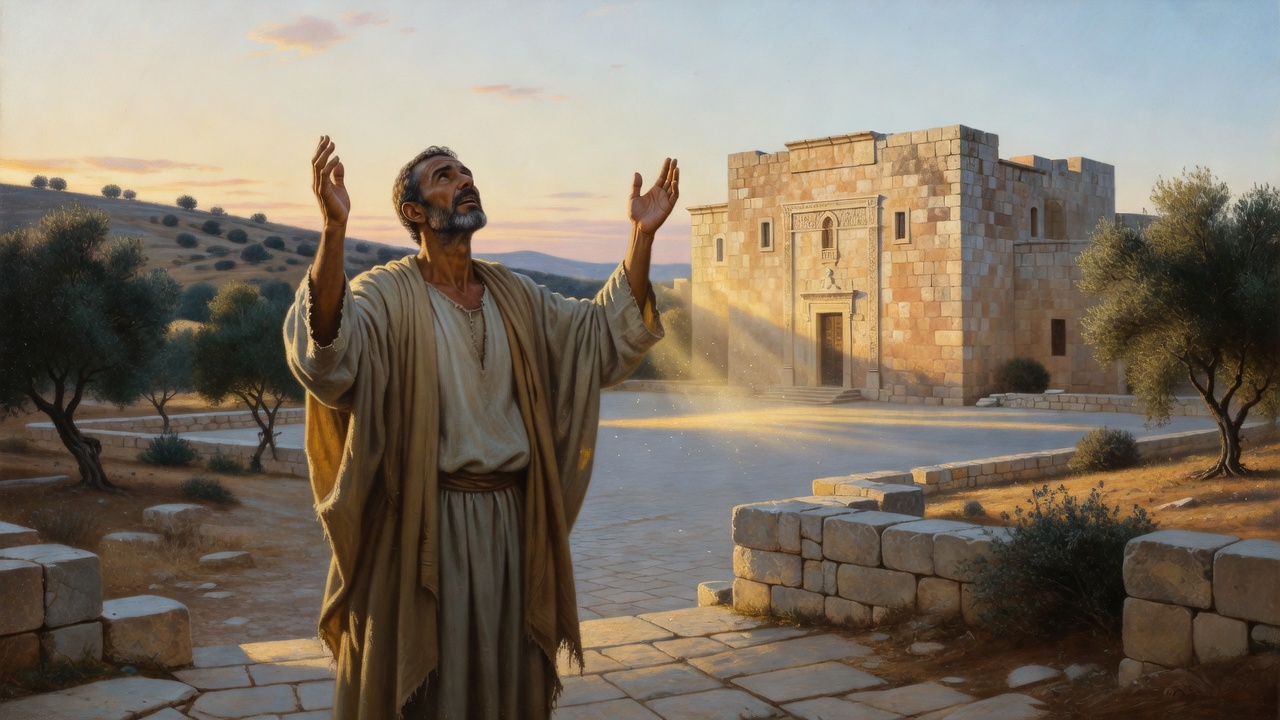
- Alzar las manos hacia el santuario era una postura habitual de oración fervorosa en el antiguo Israel, reflejando visiblemente súplica, humildad y total dependencia de Dios.Fuentes: el propio texto bíblico
- El salmo pasa de manera notable de una súplica desesperada para no perecer junto a los malvados a una gozosa acción de gracias, concluyendo con una imagen pastoral donde se pide a Dios que pastoree y sostenga a Su pueblo para siempre.Fuentes: el propio texto bíblico
Notas escritas con ayuda de IA a partir de fuentes abiertas (Theographic Bible Metadata, CC BY-SA 4.0; Easton’s Bible Dictionary, dominio público) y revisadas antes de publicarse.
Lugares de este capítulo
- Most Holy Place · Hoy: on Mount Moriah · 31.778, 35.236 · versículo 2
Solo aparecen lugares identificados con alta confianza (90 % o más según las fuentes académicas reunidas por OpenBible). Mapa de la época: DARE (Digital Atlas of the Roman Empire), CC BY 4.0; mapa actual: © colaboradores de OpenStreetMap; lugares: OpenBible.info (CC BY 4.0).
Créditos y licencia de esta traducción
Azərbaycan dilində Müqəddəs Kitab
The Holy Bible in the Azerbaijani language, also known as the Azeri language, of Azerbaijan, Iran, Iraq, Syria, and Turkey
Copyright © 2008 Müqəddəs Kitab Sirkəti
Language: Azeri (Azerbaijani, South)
Translation by: Institute for Bible Translation
Contributor: Bible Society of Azerbaijan
This translation text is made available to you under the
terms of the Creative Commons License: Attribution-Noncommercial-No Derivative Works.
( http://creativecommons.org/licenses/by-nc-nd/3.0/ )
In addition, you have permission to port the text to different file formats, as long as you
do not change any of the text or punctuation of the Bible.
You may share, copy, distribute, transmit, and extract portions
or quotations from this work, provided that you include the above copyright
information:
You must give Attribution to the work.
You do not sell this work for a profit.
You do not make any derivative works that change any of the actual words or punctuation of the Scriptures.
Permissions beyond the scope of this license may be
available if you contact
us with your request.
This translation is made available to you under the terms of the
Creative Commons Attribution-Noncommercial-No Derivatives license 4.0.
You may share and redistribute this Bible translation or extracts from it in any format, provided that:
You include the above copyright and source information.
You do not sell this work for a profit.
You do not change any of the words or punctuation of the Scriptures.
Pictures included with Scriptures and other documents on this site are licensed just for use with those Scriptures and documents.
For other uses, please contact the respective copyright owners.
2018-11-09
Fuente: http://ebible.org/azb/ · eBible.org