Psalms 28
Azərbaycan dilində Müqəddəs Kitab · Tap a verse to see its cross-references.
Məzmur 28
Davudun məzmuru.
1Ya Rəbb, Səni səsləyirəm,
Ey Qayam, qulağını tıxama.
Əgər cavab verməsən,
Qəbirə düşənlərə bənzəyərəm.
2Səni yardıma çağırarkən,
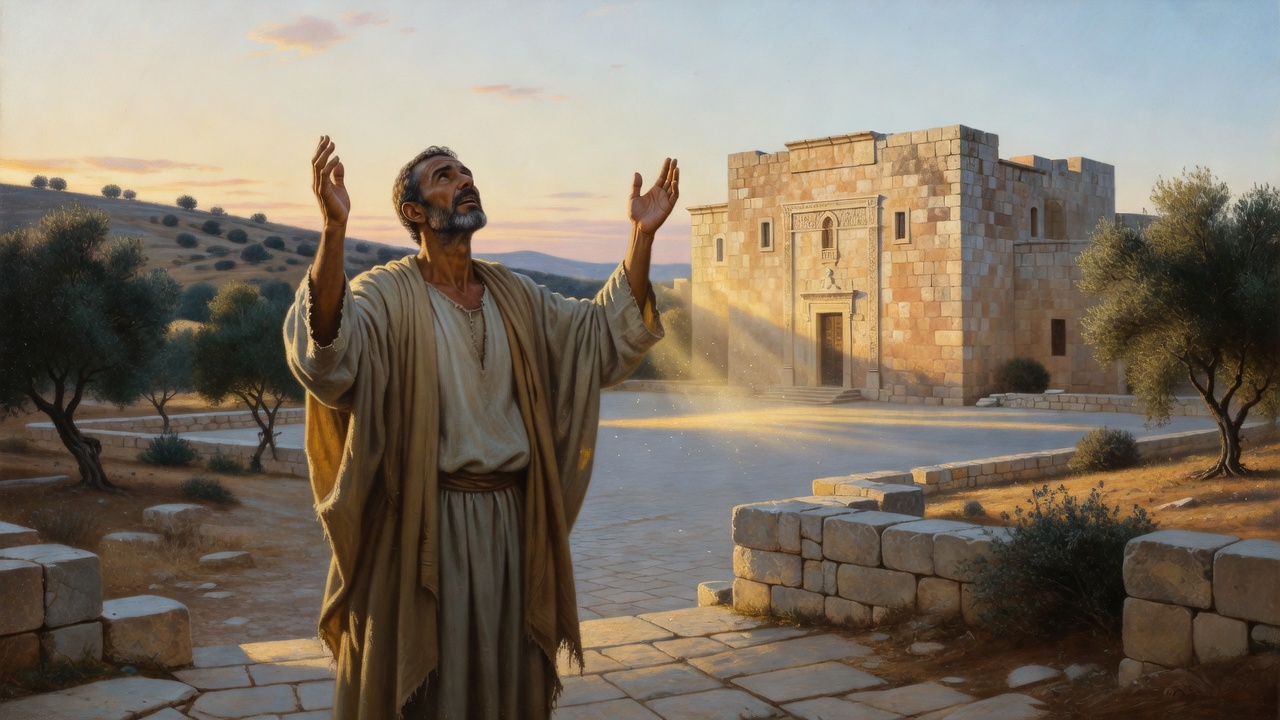
Məbədinin ən müqəddəs yerinə tərəf əllərimi qaldırarkən,
Yalvarış səsimi eşit.
3Pislərlə, şər iş görənlərlə birgə
Məni dartıb aparma.
Onlar qonşuları ilə dost kimi danışır,
Lakin qəlblərində şər dolaşır.
4Əməllərinə, pis işlərinə görə
Onların əvəzini ver,
Əllərindən gələn bu işlər nəyə layiqdirsə,
Onlar üçün ödə.
5Rəbbin əməllərinə əhəmiyyət vermədiklərinə görə,
Onun əllərinin əməllərinə fikir vermədiklərinə görə
Rəbb onları yerə vuracaq,
Bir daha qaldırmayacaq.
6Alqış olsun Rəbbə,
Yalvarış səsimi eşitdi!
7Rəbb qalam, sipərimdir!
Qəlbim Ona güvənəndə köməyimə çatır.
Sevincdən qəlbim cuşa gəlir,
İlahilərimlə Ona şükür edirəm.
8Rəbb Öz xalqının gücüdür,
Məsh etdiyi insanın nicat qalasıdır.
9Öz xalqını qurtar,
Seçdiklərinə xeyir-dua ver.
Öz sürünü otar,
Xalqının əbədilik qayğısına qal!
Did you know?
A Plea for Mercy and a Song of Trust
- Lifting up hands toward the sanctuary was a customary ancient posture of earnest prayer in Israel, visibly demonstrating supplication, humility, and full dependence on God.Sources: the Bible text itself
- The psalm transitions dramatically from a desperate plea for deliverance from death and judgment alongside the wicked to joyful thanksgiving, concluding with pastoral imagery where God is asked to shepherd and carry His people forever.Sources: the Bible text itself
Notes written with AI assistance from open sources (Theographic Bible Metadata, CC BY-SA 4.0; Easton’s Bible Dictionary, public domain) and reviewed before publishing.
Places in this chapter
- Most Holy Place · Today: on Mount Moriah · 31.778, 35.236 · verse 2
Only places identified with high confidence are shown (90% or more according to the scholarly sources compiled by OpenBible). Period map: DARE (Digital Atlas of the Roman Empire), CC BY 4.0; modern map: © OpenStreetMap contributors; places: OpenBible.info (CC BY 4.0).
Credits and license for this translation
Azərbaycan dilində Müqəddəs Kitab
The Holy Bible in the Azerbaijani language, also known as the Azeri language, of Azerbaijan, Iran, Iraq, Syria, and Turkey
Copyright © 2008 Müqəddəs Kitab Sirkəti
Language: Azeri (Azerbaijani, South)
Translation by: Institute for Bible Translation
Contributor: Bible Society of Azerbaijan
This translation text is made available to you under the
terms of the Creative Commons License: Attribution-Noncommercial-No Derivative Works.
( http://creativecommons.org/licenses/by-nc-nd/3.0/ )
In addition, you have permission to port the text to different file formats, as long as you
do not change any of the text or punctuation of the Bible.
You may share, copy, distribute, transmit, and extract portions
or quotations from this work, provided that you include the above copyright
information:
You must give Attribution to the work.
You do not sell this work for a profit.
You do not make any derivative works that change any of the actual words or punctuation of the Scriptures.
Permissions beyond the scope of this license may be
available if you contact
us with your request.
This translation is made available to you under the terms of the
Creative Commons Attribution-Noncommercial-No Derivatives license 4.0.
You may share and redistribute this Bible translation or extracts from it in any format, provided that:
You include the above copyright and source information.
You do not sell this work for a profit.
You do not change any of the words or punctuation of the Scriptures.
Pictures included with Scriptures and other documents on this site are licensed just for use with those Scriptures and documents.
For other uses, please contact the respective copyright owners.
2018-11-09
Source: http://ebible.org/azb/ · eBible.org