Josué 1
Yi Antiw Bible / Yi Ac'aj Testament · Toca un versículo para ver sus referencias cruzadas.
Acerca de este libro
Acerca de Josué
- El Diccionario Bíblico de Easton (1897) explica el nombre de Josué como "Jehová es su ayuda" o "Jehová el Salvador". Era hijo de Nun, de la tribu de Efraín, nacido en Egipto, y sucesor de Moisés como líder de Israel; las guerras de conquista que dirigió quedan registradas en el libro que lleva su nombre. Ese artículo no nombra al autor del libro ni da una fecha para su composición.Fuentes: Easton: Joshua · Joshua
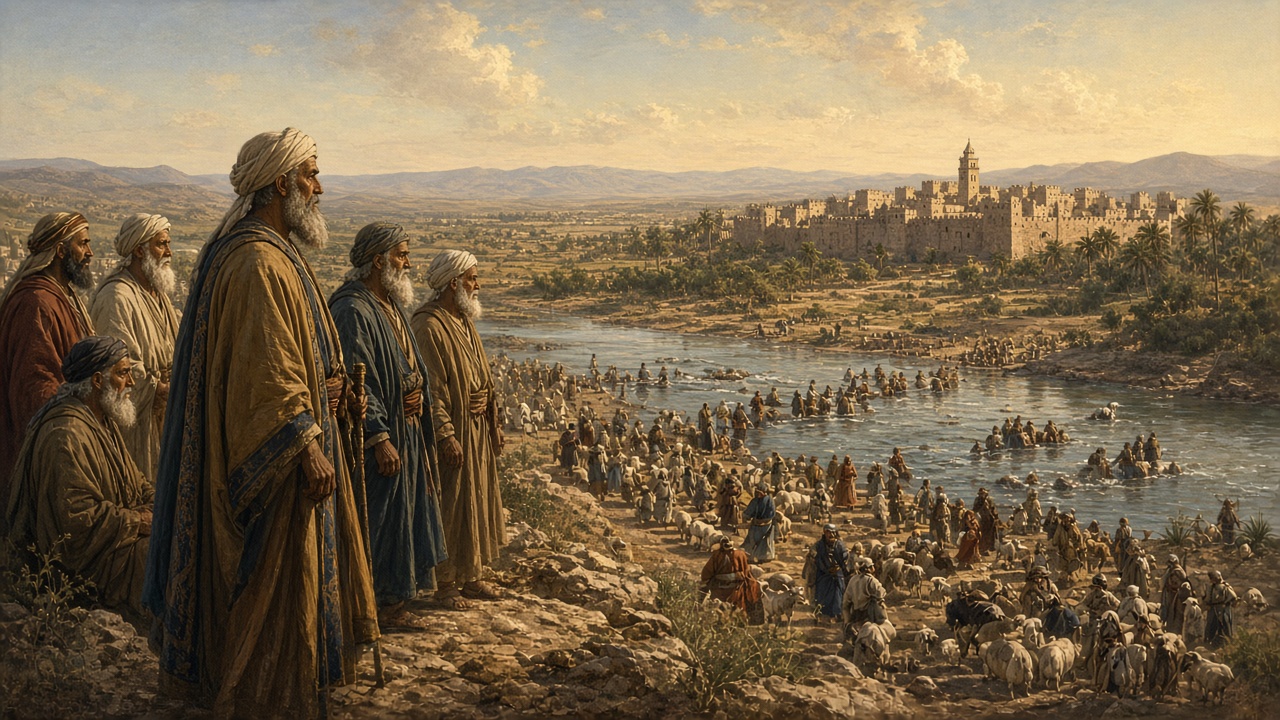
- Cuando Josué asumió el mando, el pueblo estaba acampado en Sitim. Cruzaron el Jordán y acamparon en Gilgal, donde, según Easton, circuncidó al pueblo y celebró la Pascua. Jericó, ciudad fortificada entre palmeras, a unas cinco millas al oeste del Jordán, se describe como la fortaleza más fuerte de Canaán y la llave de la Palestina occidental; Hai, al este de Betel, fue la segunda ciudad cananea tomada, después de una derrota inicial.Fuentes: Easton: Joshua · Jericho · Ai
- El Diccionario Bíblico de Easton (1897) dice que Josué conquistó seis naciones y treinta y un reyes, y luego repartió la tierra entre las tribus, quedándose Timnat-sera, en el monte Efraín, como herencia propia. Al este del Jordán, Galaad se describe como una región montañosa ocupada por las tribus de Gad y Rubén y por la parte sur de Manasés.Fuentes: Easton: Joshua · Gilead
- Citando a Edersheim, el diccionario dice que el nombre de Josué fue cambiado de Oshea, "ayuda", a Jehoshua, "Jehová es ayuda", y señala que se le llama Jesús en Hechos 7:45 y Hebreos 4:8. Afirma que murió a los ciento diez años, veinticinco años después de cruzar el Jordán, y que fue sepultado en su propia ciudad, Timnat-sera; de su padre, Nun, no se registra nada más que el hecho de que era el padre de Josué.Fuentes: Easton: Joshua · Joshua · Nun
- Antes de dirigir la conquista, Josué comandó el ejército de Israel contra los amalecitas en Refidim, sirvió como ministro de Moisés y fue uno de los doce enviados a explorar Canaán; solo él y Caleb trajeron un informe alentador. Tal como Easton describe el libro, este va desde el cruce del Jordán y la toma de Jericó, a través de años de guerra, hasta el reparto de la tierra y el último discurso de Josué.Fuentes: Easton: Joshua
Notas escritas con ayuda de IA a partir de fuentes abiertas (Theographic Bible Metadata, CC BY-SA 4.0; Easton’s Bible Dictionary, dominio público) y revisadas antes de publicarse.
Yi bixewe'n Josué tetz xel Moisés
1Itzun bantz, te yi nsken quim Moisés, yi ẍchakum Ryos, nintzun jilon Kataj Ryos tetz Josué. Yi Josuéja'tz i' cy'ajl Nun, nin i' ẍch'eyum Moisés banak.
2Itzun tal Kataj tetz: “Ma jalu' Josué, ja quim Moisés, yi inchakum. Cha'stzun te tajwe'n tan abajxe'n cy'en ẍchiwutz cyakil yi e' mas atanum, yi e' xonl Israel, wi yi a' Jordán, bantz itopone'n swutz yi ama'l yi swak'e' tzitetz.
3”Suki'nt cyakil yi e'chk ama'la'tz wa'n tzitetz, chi walnak tetz Moisés. Cyakil yi ama'l kale cxicy'e'twok, itetz sbne'. 4Suki'nt yi e'chk ama'la'tz tzitetz, yi na xe'tnin te yi ama'l tz'inunin tu' jalen te yi wi'wtz Líbano. Ma tele'n tzi'n, cho'n na xe't tzaj tzi yi jun chin wutzile'n tzanla' Eufrates, nin na opon jalen te yi mar Mediterráneo, kale na cwe't yi k'ej. Nin na jop cyakil yi chi'ama'l yi e' hitita.
5”Cya'l jun xcye' tzawe'j Josué te yi cobox k'ej yi atiẍ tzone'j wuxtx'otx', na chinxomok tzawe'j, chi banakin te'j Moisés. Quil ẍwil cyen achuc, na ilenin chinxomok tzawe'j. 6Benk awukan ttx'otx' nin quil cxob, na aẍ cẍocopon tan jatxle'n cu'n chi'ama'l yi e' intanume'j. Yi ama'la'tz, ya'stzun yi suki'nt wa'n scyetz imam ite'. 7Ntin na taj yi benk awukan ttx'otx', nin yi quil cxob. Nque'n il tan banle'n tane'n cyakil yi ley yi talnak yi inchakum Moisés tzatz. Xomen te'j, quib yi na tal, bantz penin sk'il sban cyakil yi e'chk takle'n yil tzaban.
8”Ntin na taj yi quil tz'el te ac'u'l, yi mbi na tal yi liwr kale atit yi wetz inca'wl. Sk'ejl nin lak'bal na taj yil tzatxum yi mbi na tal. Nin kol cxom te'j, penin sk'il sbne' cyakil yi tzabne'.
9”Qui bin cxob. Benk awukan ttx'otx'. ¡Quiwit! Quil tzacabej ac'u'l, na in awAjcawil, nin in aRyosil, nin chinxomok tzawe'j alchok cẍa'jnint.”
Yi toque'n Josué tetz chibajxom yi e' xonl Israel
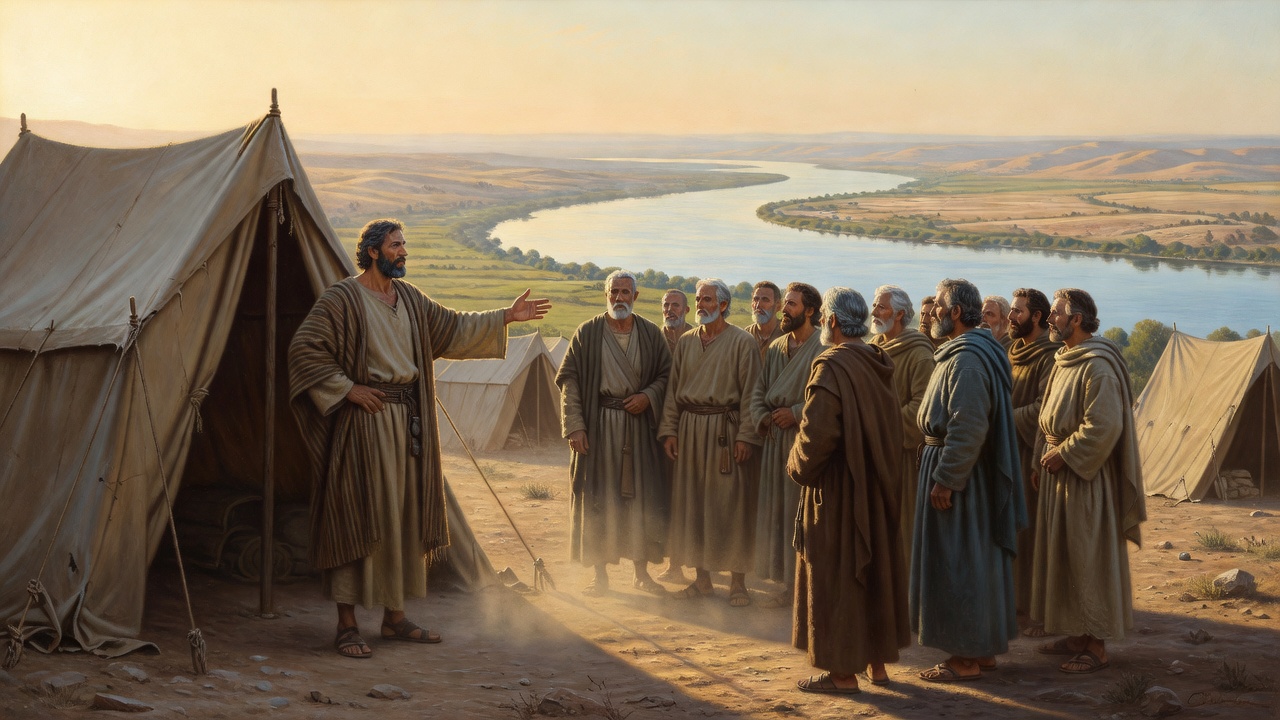
10Toque'n tzun Josué tan chicawe'n yi e' mas ajcaw yi ate' ẍchixo'l yi e' xonl Israel.
11Itzun taltz scyetz: “Chibenku' ẍchixo'l yi e' katanum, nin cyale'u' scyetz: ‘Banwok list iwa'. Na le oxt k'ej kicy'pon wi a' Jordán tan ketzal yi ama'l yi ja wi't suk Kataj yi kaRyosil sketz,’ che'chu' sban.”
12Ncha'tz jilon Josué scyetz yi e' xonl Rubén, scyuch' yi e' xonl Gad, scyuch' jun k'u'j scyeri e' xonl Manasés yi cob elnake'. 13Itzun taltz scyetz: “Ulk tx'akx yi yol Moisés, yi inchakum, ẍchic'u'lu'. Na je yol i'e'j: ‘Kataj, yi kaRyosil mmak'on yi ama'le'j tan cyetzalu' nin tan cya'te'nu' swutz,’ chij i' ban. 14Chicyajk cyen bin yi quixkelu' scyuch' chinitxajilu' tzone'j. Ncha'tz yi cyawunu' chicyajk cyen tzone'j. Na yi ama'le'j, yi at jalajicy' tzaj yi a' Jordán, ya'stzun yi cyeru' yi tak'nak Moisés. Poro cyakil yi e'u' yi chusij che'tu' tan oyintzi', yi e'u' yi qui na chixobu', ba'n chixomu' tu chima'clu' ske'j tan kuch'eye'n. 15Tajwe'n tan kuch'eye'n, jalen cu'n yil tak' Kataj ketz ka'ama'l tan kujewe'n swutz chi mban i' tan tak'le'n yi cyeru'. Yil ko'c tetz taw yi ama'l yi stk'e' Kataj sketz, kalena's tzun cha'jt tzaju' swutz chi'ama'lu' yi at tzone'j jalajicy' tzaj yi a' Jordán, yi ntak' Moisés yi ẍchakum Ryos scyeru',” stzun Josué bantz scyetz.
16“Ba'n ta', che'ch. Skabne' cyakil yi na talu', na list o' tan kabene'n kale na tajwitu'. 17Nin kocopon jak' ca'wlu' chi banako' te Moisés. Ntina'tz na kaj, yi nink xom Kataj Ryos te'ju' chi banak i' te Moisés. 18Ncha'tz, alchok scyetz yi quil tz'oc jak' ca'wlu', tajwe'n tan quime'n. Ntina'tz na kaj kal teru' ¡quiwit! Benk tkanu' ttx'otx',” che'ch bantz tetz Josué.
¿Sabías que…?
Josué asume el liderazgo
- Josué, hijo de Nun y de la tribu de Efraín, sirvió como asistente y comandante militar de Moisés antes de ser designado para sucederlo como líder de Israel. Su nombre significa "el Señor es su ayuda" o "el Señor el Salvador".Fuentes: Joshua · el propio texto bíblico
- El territorio descrito en el encargo a Josué abarcaba desde el desierto y la cordillera del Líbano, al norte, hasta el río Éufrates ("el gran río"), al este, y el mar Mediterráneo ("el gran mar"), al oeste.Fuentes: el propio texto bíblico · Lebanon · Euphrates · Great Sea
- Las tribos de Rubén, Gad y la media tribu de Manasés ya habían recibido tierras al este del río Jordán bajo el mando de Moisés. Aun así, sus hombres de guerra debían cruzar armados delante de las demás tribus para ayudarlas hasta asegurar toda la tierra.Fuentes: el propio texto bíblico · Manasseh (son of Joseph)
Notas escritas con ayuda de IA a partir de fuentes abiertas (Theographic Bible Metadata, CC BY-SA 4.0; Easton’s Bible Dictionary, dominio público) y revisadas antes de publicarse.
Lugares de este capítulo
- Jordan · Hoy: Jordan River · 31.761, 35.558 · versículos 2, 11, 14, 15
- Euphrates · Hoy: Euphrates River · 31.004, 47.442 · versículo 4
- Great Sea · Hoy: Mediterranean Sea · 31.805, 34.170 · versículo 4
- Lebanon · 33.540, 35.584 · versículo 4
- Negeb · 31.245, 34.841 · versículo 4
- Syria · Hoy: Aram · 33.511, 36.306 · versículo 4
Solo aparecen lugares identificados con alta confianza (90 % o más según las fuentes académicas reunidas por OpenBible). Mapa de la época: DARE (Digital Atlas of the Roman Empire), CC BY 4.0; mapa actual: © colaboradores de OpenStreetMap; lugares: OpenBible.info (CC BY 4.0).
Créditos y licencia de esta traducción
Yi Antiw Bible / Yi Ac'aj Testament
Bible in Aguacateco (GT:agu:Aguacateco)
copyright © 2011 Wycliffe Bible Translators, Inc.
Language: Aguacateco
Translation by: Wycliffe Bible Translators, Inc.
Copyright Information
© 2011-02-18, Wycliffe Bible Translators, Inc. All rights reserved.
This translation text is made available to you under the
terms of the Creative Commons License: Attribution-Noncommercial-No Derivative Works.
( http://creativecommons.org/licenses/by-nc-nd/3.0/ )
In addition, you have permission to port the text to different file formats, as long as you
do not change any of the text or punctuation of the Bible.
You may share, copy, distribute, transmit, and extract portions
or quotations from this work, provided that you include the above copyright
information:
You must give Attribution to the work.
You do not sell this work for a profit.
You do not make any derivative works that change any of the actual words or punctuation of the Scriptures.
Permissions beyond the scope of this license may be
available if you contact
us with your request.
The Bible
in Aguacateco
© 2011-02-18, Wycliffe Bible Translators, Inc. All rights reserved.
This translation is made available to you under the terms of the
Creative Commons Attribution-Noncommercial-No Derivatives license 4.0.
You may share and redistribute this Bible translation or extracts from it in any format, provided that:
You include the above copyright and source information.
You do not sell this work for a profit.
You do not change any of the words or punctuation of the Scriptures.
Pictures included with Scriptures and other documents on this site are licensed just for use with those Scriptures and documents.
For other uses, please contact the respective copyright owners.
2014-04-21
Fuente: http://ebible.org/aguBl/ · eBible.org