Joshua 1
Yi Antiw Bible / Yi Ac'aj Testament · Tap a verse to see its cross-references.
About this book
About Joshua
- Easton's Bible Dictionary (1897) explains Joshua's name as "Jehovah is his help" or "Jehovah the Saviour." He was the son of Nun, of the tribe of Ephraim, born in Egypt, and Moses' successor as leader of Israel; the wars of conquest he carried on are recorded in the book that bears his name. That entry does not name the book's author or give a date for its writing.Sources: Easton: Joshua · Joshua
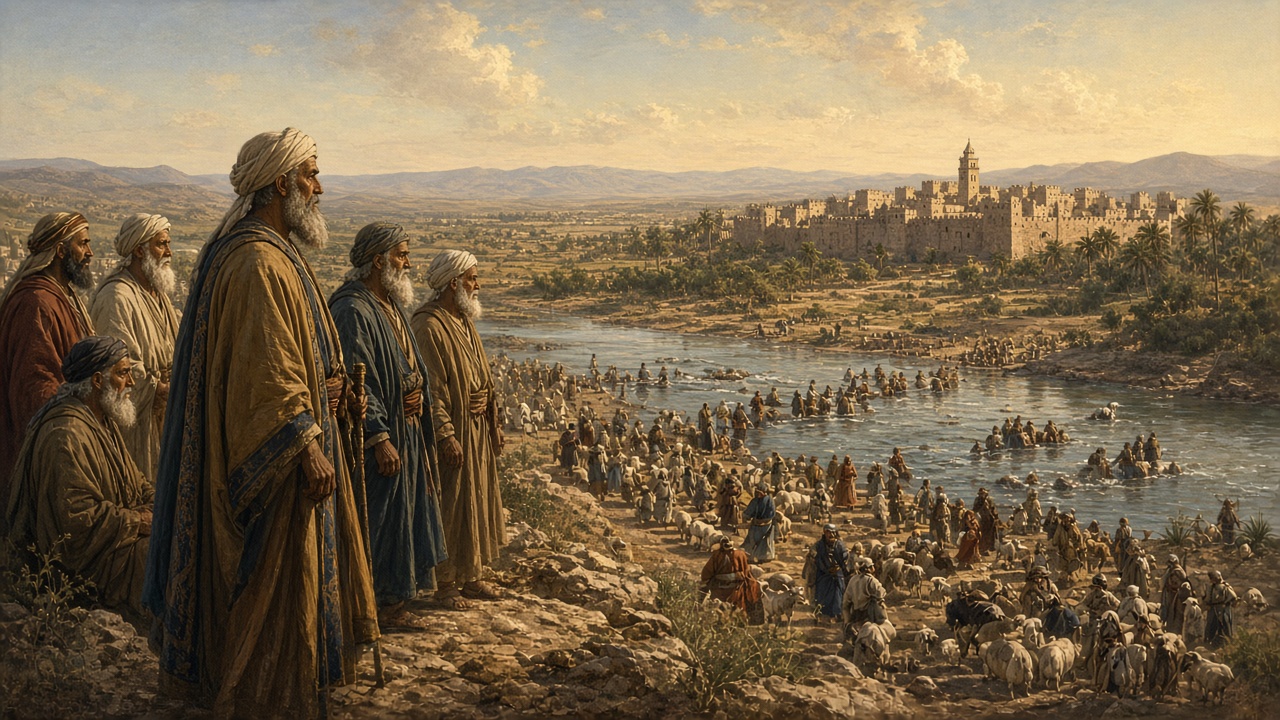
- When Joshua took command, the people were encamped at Shittim. They crossed the Jordan and camped at Gilgal, where, Easton says, he circumcised the people and kept the Passover. Jericho, a fortified city among palm trees about five miles west of the Jordan, is described as Canaan's strongest fortress and the key to western Palestine; Ai, east of Bethel, was the second Canaanite city taken, after an initial defeat.Sources: Easton: Joshua · Jericho · Ai
- Easton's Bible Dictionary (1897) says Joshua conquered six nations and thirty-one kings, then divided the land among the tribes, with Timnath-serah in Mount Ephraim assigned to himself. East of the Jordan, Gilead is described as a mountainous region held by the tribes of Gad and Reuben and the southern part of Manasseh.Sources: Easton: Joshua · Gilead
- Quoting Edersheim, the dictionary says Joshua's name was changed from Oshea, "help," to Jehoshua, "Jehovah is help," and notes that he is called Jesus in Acts 7:45 and Hebrews 4:8. It states that he died at the age of one hundred and ten, twenty-five years after crossing the Jordan, and was buried in his own city of Timnath-serah; of his father Nun, nothing more is recorded than that he was Joshua's father.Sources: Easton: Joshua · Joshua · Nun
- Before leading the conquest, Joshua commanded Israel's host against the Amalekites at Rephidim, served as Moses' minister, and was one of twelve sent to explore Canaan; only he and Caleb brought back an encouraging report. As Easton sketches the book, it runs from the crossing of the Jordan and the taking of Jericho through years of war to the division of the land and Joshua's last address.Sources: Easton: Joshua
Notes written with AI assistance from open sources (Theographic Bible Metadata, CC BY-SA 4.0; Easton’s Bible Dictionary, public domain) and reviewed before publishing.
Yi bixewe'n Josué tetz xel Moisés
1Itzun bantz, te yi nsken quim Moisés, yi ẍchakum Ryos, nintzun jilon Kataj Ryos tetz Josué. Yi Josuéja'tz i' cy'ajl Nun, nin i' ẍch'eyum Moisés banak.
2Itzun tal Kataj tetz: “Ma jalu' Josué, ja quim Moisés, yi inchakum. Cha'stzun te tajwe'n tan abajxe'n cy'en ẍchiwutz cyakil yi e' mas atanum, yi e' xonl Israel, wi yi a' Jordán, bantz itopone'n swutz yi ama'l yi swak'e' tzitetz.
3”Suki'nt cyakil yi e'chk ama'la'tz wa'n tzitetz, chi walnak tetz Moisés. Cyakil yi ama'l kale cxicy'e'twok, itetz sbne'. 4Suki'nt yi e'chk ama'la'tz tzitetz, yi na xe'tnin te yi ama'l tz'inunin tu' jalen te yi wi'wtz Líbano. Ma tele'n tzi'n, cho'n na xe't tzaj tzi yi jun chin wutzile'n tzanla' Eufrates, nin na opon jalen te yi mar Mediterráneo, kale na cwe't yi k'ej. Nin na jop cyakil yi chi'ama'l yi e' hitita.
5”Cya'l jun xcye' tzawe'j Josué te yi cobox k'ej yi atiẍ tzone'j wuxtx'otx', na chinxomok tzawe'j, chi banakin te'j Moisés. Quil ẍwil cyen achuc, na ilenin chinxomok tzawe'j. 6Benk awukan ttx'otx' nin quil cxob, na aẍ cẍocopon tan jatxle'n cu'n chi'ama'l yi e' intanume'j. Yi ama'la'tz, ya'stzun yi suki'nt wa'n scyetz imam ite'. 7Ntin na taj yi benk awukan ttx'otx', nin yi quil cxob. Nque'n il tan banle'n tane'n cyakil yi ley yi talnak yi inchakum Moisés tzatz. Xomen te'j, quib yi na tal, bantz penin sk'il sban cyakil yi e'chk takle'n yil tzaban.
8”Ntin na taj yi quil tz'el te ac'u'l, yi mbi na tal yi liwr kale atit yi wetz inca'wl. Sk'ejl nin lak'bal na taj yil tzatxum yi mbi na tal. Nin kol cxom te'j, penin sk'il sbne' cyakil yi tzabne'.
9”Qui bin cxob. Benk awukan ttx'otx'. ¡Quiwit! Quil tzacabej ac'u'l, na in awAjcawil, nin in aRyosil, nin chinxomok tzawe'j alchok cẍa'jnint.”
Yi toque'n Josué tetz chibajxom yi e' xonl Israel
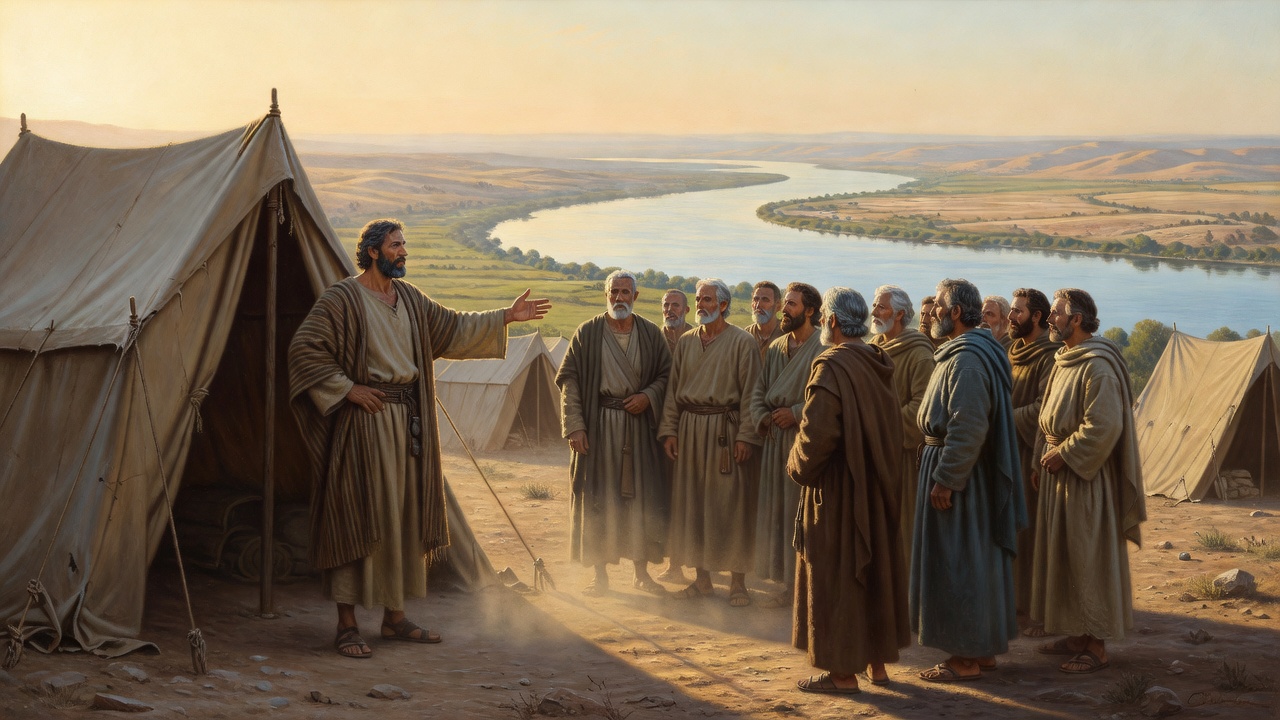
10Toque'n tzun Josué tan chicawe'n yi e' mas ajcaw yi ate' ẍchixo'l yi e' xonl Israel.
11Itzun taltz scyetz: “Chibenku' ẍchixo'l yi e' katanum, nin cyale'u' scyetz: ‘Banwok list iwa'. Na le oxt k'ej kicy'pon wi a' Jordán tan ketzal yi ama'l yi ja wi't suk Kataj yi kaRyosil sketz,’ che'chu' sban.”
12Ncha'tz jilon Josué scyetz yi e' xonl Rubén, scyuch' yi e' xonl Gad, scyuch' jun k'u'j scyeri e' xonl Manasés yi cob elnake'. 13Itzun taltz scyetz: “Ulk tx'akx yi yol Moisés, yi inchakum, ẍchic'u'lu'. Na je yol i'e'j: ‘Kataj, yi kaRyosil mmak'on yi ama'le'j tan cyetzalu' nin tan cya'te'nu' swutz,’ chij i' ban. 14Chicyajk cyen bin yi quixkelu' scyuch' chinitxajilu' tzone'j. Ncha'tz yi cyawunu' chicyajk cyen tzone'j. Na yi ama'le'j, yi at jalajicy' tzaj yi a' Jordán, ya'stzun yi cyeru' yi tak'nak Moisés. Poro cyakil yi e'u' yi chusij che'tu' tan oyintzi', yi e'u' yi qui na chixobu', ba'n chixomu' tu chima'clu' ske'j tan kuch'eye'n. 15Tajwe'n tan kuch'eye'n, jalen cu'n yil tak' Kataj ketz ka'ama'l tan kujewe'n swutz chi mban i' tan tak'le'n yi cyeru'. Yil ko'c tetz taw yi ama'l yi stk'e' Kataj sketz, kalena's tzun cha'jt tzaju' swutz chi'ama'lu' yi at tzone'j jalajicy' tzaj yi a' Jordán, yi ntak' Moisés yi ẍchakum Ryos scyeru',” stzun Josué bantz scyetz.
16“Ba'n ta', che'ch. Skabne' cyakil yi na talu', na list o' tan kabene'n kale na tajwitu'. 17Nin kocopon jak' ca'wlu' chi banako' te Moisés. Ntina'tz na kaj, yi nink xom Kataj Ryos te'ju' chi banak i' te Moisés. 18Ncha'tz, alchok scyetz yi quil tz'oc jak' ca'wlu', tajwe'n tan quime'n. Ntina'tz na kaj kal teru' ¡quiwit! Benk tkanu' ttx'otx',” che'ch bantz tetz Josué.
Did you know?
Joshua Assumes Leadership
- Joshua, the son of Nun from the tribe of Ephraim, served as Moses' assistant and military commander before being commissioned to succeed him as leader of Israel. His name means "Jehovah is his help" or "Jehovah the Saviour."Sources: Joshua · the Bible text itself
- The territory outlined in God's commission to Joshua stretches from the southern wilderness and the Lebanon mountain range in the north to the Euphrates (called "the great river") in the east and the Mediterranean ("the Great Sea") to the west.Sources: the Bible text itself · Lebanon · Euphrates · Great Sea
- The tribes of Reuben, Gad, and the half-tribe of Manasseh had already received territory east of the Jordan River under Moses. However, their armed warriors were required to cross over ahead of the other tribes to assist them until the entire land was secured.Sources: the Bible text itself · Manasseh (son of Joseph)
Notes written with AI assistance from open sources (Theographic Bible Metadata, CC BY-SA 4.0; Easton’s Bible Dictionary, public domain) and reviewed before publishing.
Places in this chapter
- Jordan · Today: Jordan River · 31.761, 35.558 · verses 2, 11, 14, 15
- Euphrates · Today: Euphrates River · 31.004, 47.442 · verse 4
- Great Sea · Today: Mediterranean Sea · 31.805, 34.170 · verse 4
- Lebanon · 33.540, 35.584 · verse 4
- Negeb · 31.245, 34.841 · verse 4
- Syria · Today: Aram · 33.511, 36.306 · verse 4
Only places identified with high confidence are shown (90% or more according to the scholarly sources compiled by OpenBible). Period map: DARE (Digital Atlas of the Roman Empire), CC BY 4.0; modern map: © OpenStreetMap contributors; places: OpenBible.info (CC BY 4.0).
Credits and license for this translation
Yi Antiw Bible / Yi Ac'aj Testament
Bible in Aguacateco (GT:agu:Aguacateco)
copyright © 2011 Wycliffe Bible Translators, Inc.
Language: Aguacateco
Translation by: Wycliffe Bible Translators, Inc.
Copyright Information
© 2011-02-18, Wycliffe Bible Translators, Inc. All rights reserved.
This translation text is made available to you under the
terms of the Creative Commons License: Attribution-Noncommercial-No Derivative Works.
( http://creativecommons.org/licenses/by-nc-nd/3.0/ )
In addition, you have permission to port the text to different file formats, as long as you
do not change any of the text or punctuation of the Bible.
You may share, copy, distribute, transmit, and extract portions
or quotations from this work, provided that you include the above copyright
information:
You must give Attribution to the work.
You do not sell this work for a profit.
You do not make any derivative works that change any of the actual words or punctuation of the Scriptures.
Permissions beyond the scope of this license may be
available if you contact
us with your request.
The Bible
in Aguacateco
© 2011-02-18, Wycliffe Bible Translators, Inc. All rights reserved.
This translation is made available to you under the terms of the
Creative Commons Attribution-Noncommercial-No Derivatives license 4.0.
You may share and redistribute this Bible translation or extracts from it in any format, provided that:
You include the above copyright and source information.
You do not sell this work for a profit.
You do not change any of the words or punctuation of the Scriptures.
Pictures included with Scriptures and other documents on this site are licensed just for use with those Scriptures and documents.
For other uses, please contact the respective copyright owners.
2014-04-21
Source: http://ebible.org/aguBl/ · eBible.org