Génesis 4
Yi Antiw Bible / Yi Ac'aj Testament · Toca un versículo para ver sus referencias cruzadas.
Caín tu Abel
1Itzun bantz yi chiwitbel quib Adán tu txkel, tekal tzun Eva pwokil jun ni'. Yi titz'e'n yi jun ni'a'tz nin oc bi' tetz Caín. Nintzun tal Eva: “Tan tu' banl talma' Ryos ja jal jun tal wal yi xicy,” stzun i' bantz. 2Ej nin yi tele'n tiemp nin jal junt tal Eva, yi na bi'aj Abel.
Itzun yi chich'uye'n yi cob tal Eva, pstor cne'r tzun ban tetz Abel, ma tetz Caín ak'unwil ban wi cojbil. 3Ma yi tele'n tiemp, nin ben tcy'al Caín jun oy swutz Kataj. Yi toy i' i'tz wutz tetz tujul. 4Ncha'tz Abel nin ben tcy'al jun oy swutz Kataj. Yi tetz toy yi ben tcy'al i'tz cobox scyeri e' bajx cyal e' cne'r, poro yi e' yi mas balaj. Ej wi'nin tzun stzatzine'n Kataj ban te Abel nin te yi tetz toy. 5Ma tetz Caín quinin tzatzin Ryos te'j, pyor te yi toy. Nintzun je' swutz Caín, nin wi'nin ẍchi'che'n c'u'l bantz. 6Bene'n tzun jakol Kataj tetz “¡Caín! ¿Mbi na chi'ch ac'u'l te'j? ¿Mbi'tz na chukin awutz te'j? 7Yi nink cxom te balaj xtxolbil, cẍtzatzink tzun. Poro tan paj yi qui na cxom te'j, list yi aya'bl tan toque'n tetz ajcaw tzawe'j. Poro nk'e'tz tajwe'n tan xcyewe'n tzawe'j. Tin tu' qui't tzawak' ama'l tetz,” stzun Ryos bantz tetz Caín.
8Itzun bantz nin ben moxol Caín yi Abel tan chibene'n tan xo'n xo'l wutz. Te yi na chixon, nintzun oc Caín tan biyle'n cu'n Abel yi titz'un.
9Itzun te yi nsken quim Abel tan Caín, nintzun jak Kataj tetz:
—¡Caín! ¿Na' tzun atite't Abel yi awitz'un?
—Cuquen Ta', qui na wil wetz. ¿Iẍkaj in tzunk q'uicy'lom te yi witz'un?
10—¡Yaj! chin juntlen nin yi awajtza'kl yi ncu' anuc'ul. Na yi ẍch'el yi awitz'un yi mme'l kojxuj wuxtx'otx', na tzan tan aẍochle'n tzinwutz. 11Cha'stzun te swak'e' acaws. Tajwe'n cẍe'l swutz yi tx'otx'e'j yi ntz'ubun yi ẍch'el awitz'un. 12Ej nin mpe lok cẍo'c tan cojle'n wutz tx'otx' qui't ltak' balaj cosech tzatz. Jalt xo'n tzabne' bene'n tzi'n wi munt, nin quil cẍuje', stzun Ryos tetz Caín.
13Stza'wel tzun Caín yol Kataj:
—¿Ẍe'n lwulej Ta'? Quil chinxcye' tan muc'le'n yi incaws yi ntak'u' swetz, na tajwe'n tan wele'n tul yi ama'le'j, nin qui'c rmeril tan wilolt wutzu'. 14Jalt xo'n tzimbne' bene'n tzi'n. Quil na'tij tul junt ama'l, nin awer nak tzimbne' kale na't cu'nt. Alchok scyetz yil chinnoj quen swutz chinquimok ta'n, stzun Caín bantz tetz Ryos.
15Saje'n tzun stza'wel Kataj:
—Alchok scyetz yil tz'oc tan abiyle'n cu'n swak'e' juk tir mas yi caws tzawutz, stzun Kataj bantz.
Toque'n tzun jun techl Caín tan Kataj, bantz cya'l jun tz'oc tan biyle'n cu'n. 16Tele'n tzun Caín tul yi ama'l kale e' jilone't tu Kataj. Cho'n tzun topone'n tan najewe'n tul yi ama'l yi na bi'aj Nod. Yi jun ama'la'tz cho'n at swutzlen Edén.
Yi e' xonl Caín
17Itzun bantz, nintzun chiwitbej quib Caín tu txkel. Tekal tzun yi txkel pwokil jun ni'. Yi tele'n tiemp nin itz'ij yi jun ni'a'tz, nin oc bi' tetz Enoc. Yi puc'une'n chiwutz yi e' xonl Caín nin bnix jun tnum ta'n. Enoc ban yi bi' yi tnuma'tz. I te'n bi' yi cy'ajl Caín ja oc tk'ol tetz bi' yi tnum. 18Enoc ya'stzun taj Irad, Irad ya'stzun taj Mehujael, Mehujael ya'stzun taj Metusael, nin Metusael ya'stzun taj Lamec. 19Cob txkel Lamec banak, Ada bi' jun, ma junt Zila bi'. 20Yi Ada ya'stzun xtxu' Jabal, ma yi jun Jabala'tz ya'stzun chimam chite' yi e' wunak yi mantial tu' chica'l, nin yi awuna'n wacẍ cya'n. 21Jal jun titz'un Jabal yi Jubal bi'. Yi Jubala'tz ya'stzun yi ntxumun tetz yi bajx kbetz. Cha'stzun te yi oc i' tetz chimam chite' tane'n cyakil yi e' aj kbetzum, chi tane'n yi e' yi na xconsan arpa tu e'chk jilwutz chirimiy. 22Ncha'tz Zila yi ca'p txkel Lamec, jal jun tal yi na bi'aj Tubal-caín. Yi Tubal-caína'tz i' jun txak'ol ch'ich' banak. Ja xcon hierro ta'n tu jun jilwutz ch'ich' yi k'an yubil, yi na bi'aj brons. Ej nin ncha'tz jal jun tanub Tubal-caín yi na bi'aj Naama.
23Inti Lamec nintzun ben tlol scyetz e' txkel: “I bin jalu', na waj chinjilon tzitetz. At jun yaj yi ja quim wa'n tan tu' yi nchinq'uixpij ta'n. Xicye't i', poro ja quim wa'n tan tu' yi nchinlo'on mu'ẍ tal ni' ta'n. 24Talnak Ryos yi tz'ak'lok juk tir chicaws yi e' yil biyon cu'n Caín. Poro pyor cu'n yi e' yil cho'c tan imbiyle'n wetz, na yi in wetz swak'e' oxc'al tu juklaj tir chicaws,” stzun Lamec bantz.
Yi titz'e'n yi toxi'n chinitxa' Adán tu Eva
25Itzun bantz nin chiwitbej quib Adán tu Eva. Tekal tzun pwokil Eva junt ni'. Yi titz'e'n yi ni' nin oc bi' i' tetz Set. Itzun tal yi xna'ntz, “Ryos mmak'on junt wale'j, tetz xel Abel yi quimnak tan Caín.”
26Itzun bantz, yi yajine'n Set nin jal jun cy'ajl yi na bi'aj Enós. Te yi at tzaj Enós wuxtx'otx', ya'stzun cyoque'n tan xconse'n yi bi' “Jehová” tan na'wse'n Kataj Ryos.
¿Sabías que…?
Caín, Abel y la vida al este del Edén
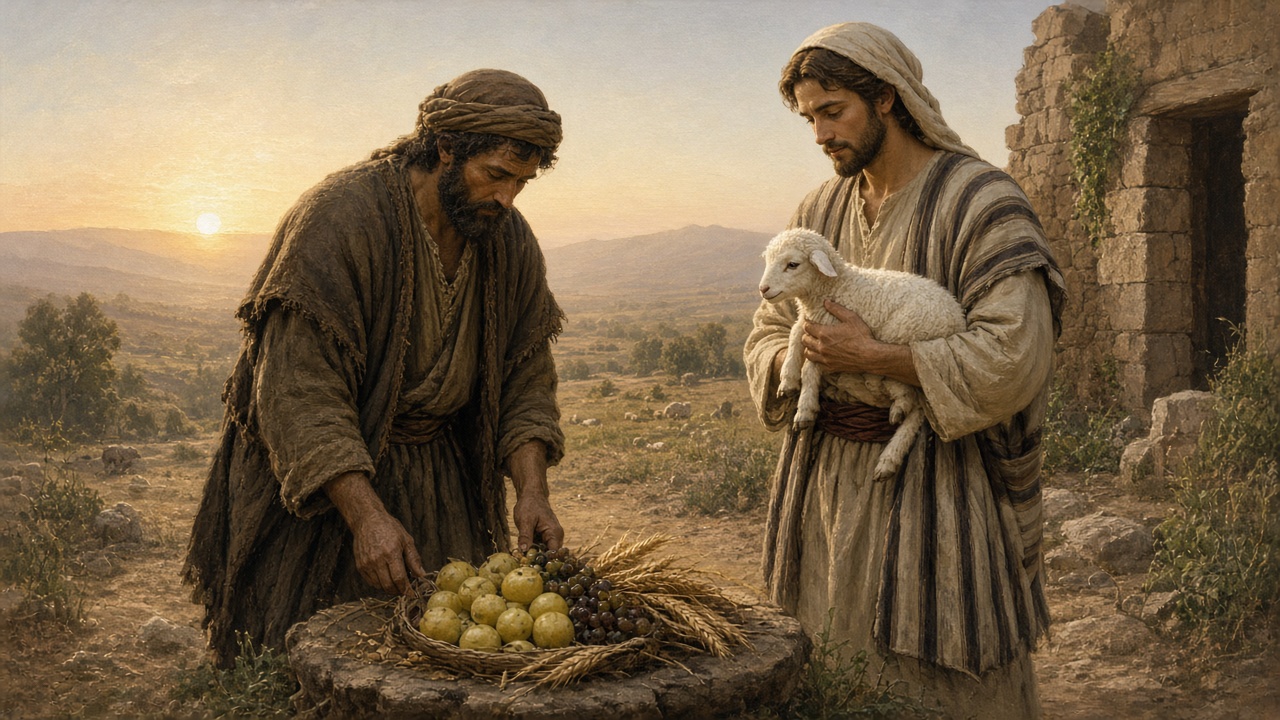
- El nombre hebreo de Abel significa “soplo” o “vanidad”. Él cuidaba ovejas, mientras su hermano Caín labraba el suelo: Abel llevó las mejores porciones de los primogénitos de su rebaño, y Caín llevó fruto del suelo. El Diccionario Bíblico de Easton (1897) lee la frase “en el transcurso del tiempo” (al margen, “al fin de los días”) como probable referencia al sábado.Fuentes: Abel · Cain · el propio texto bíblico
- Tras la muerte de Abel, Caín se estableció en la tierra de Nod, al este del Edén, nombre que significa exilio, vagabundeo o inquietud. Allí construyó una ciudad y la llamó como su hijo Enoc. El Diccionario Bíblico de Easton señala que esta es la primera ciudad mencionada en las Escrituras.Fuentes: Nod · Enoch (son of Cain) · el propio texto bíblico
- Lamec, quinto en la descendencia de Caín, se casó con dos mujeres, Ada y Zila. El Diccionario Bíblico de Easton llama a las palabras que les dirigió el único ejemplo conservado de poesía antediluviana, a veces conocido como “canto de la espada de Lamec”. Sus hijos se vinculan con modos de vida antiguos: Jabal, con las tiendas y el ganado; Jubal, con el arpa y la flauta; y Tubal-caín, con la forja del bronce y del hierro.Fuentes: Lamech (descendant of Cain) · Adah (wife of Lamech) · Zillah · el propio texto bíblico
Notas escritas con ayuda de IA a partir de fuentes abiertas (Theographic Bible Metadata, CC BY-SA 4.0; Easton’s Bible Dictionary, dominio público) y revisadas antes de publicarse.
Créditos y licencia de esta traducción
Yi Antiw Bible / Yi Ac'aj Testament
Bible in Aguacateco (GT:agu:Aguacateco)
copyright © 2011 Wycliffe Bible Translators, Inc.
Language: Aguacateco
Translation by: Wycliffe Bible Translators, Inc.
Copyright Information
© 2011-02-18, Wycliffe Bible Translators, Inc. All rights reserved.
This translation text is made available to you under the
terms of the Creative Commons License: Attribution-Noncommercial-No Derivative Works.
( http://creativecommons.org/licenses/by-nc-nd/3.0/ )
In addition, you have permission to port the text to different file formats, as long as you
do not change any of the text or punctuation of the Bible.
You may share, copy, distribute, transmit, and extract portions
or quotations from this work, provided that you include the above copyright
information:
You must give Attribution to the work.
You do not sell this work for a profit.
You do not make any derivative works that change any of the actual words or punctuation of the Scriptures.
Permissions beyond the scope of this license may be
available if you contact
us with your request.
The Bible
in Aguacateco
© 2011-02-18, Wycliffe Bible Translators, Inc. All rights reserved.
This translation is made available to you under the terms of the
Creative Commons Attribution-Noncommercial-No Derivatives license 4.0.
You may share and redistribute this Bible translation or extracts from it in any format, provided that:
You include the above copyright and source information.
You do not sell this work for a profit.
You do not change any of the words or punctuation of the Scriptures.
Pictures included with Scriptures and other documents on this site are licensed just for use with those Scriptures and documents.
For other uses, please contact the respective copyright owners.
2014-04-21
Fuente: http://ebible.org/aguBl/ · eBible.org