Génesis 3
Yi Antiw Bible / Yi Ac'aj Testament · Toca un versículo para ver sus referencias cruzadas.
Yi chipajol Adán tu Eva yi ca'wl Ryos
1Ẍchixo'l cyakil txuc yi bnix tan Kataj Ryos, at tzun jun lu'baj. Chin list nin i' ẍchiwutz cyakil smaron txuc. Nintzun opon yi jun lu'baja'tz te Eva, nintzun taltz:
—¿Bintzij pe' yi ko ja tal Ryos tzitetz yi qui'c cuj tan ibajsal jun scyeri e'chk jilwutz lo'baj te yi at tzone'j? stzun lu'baj tetz.
2Saje'n tzun tlol Eva tetz:
—Qui', at cuj tan kabajsal alchok jilwutz lo'baj. 3Poro ntina'tz jun yi qui'c cuj tan kabajsal wutz, i'tz yi jun wi' lo'baj yi at nicy'al yi cojbile'j. Na ja tal Ryos yi ntin yi kol kamacquen skaquimok tan i'.
4—Nk'e'tz bintzi. Quil xquimwok. 5Na je yi puntile'j, na na til Ryos yi kol baj ita'n sjalok itajtza'kl. Tz'elepon itxum tetz e'ch balaj ajtza'kl, nin tz'elepon itxum tetz e'ch ajtza'kl cachi'. Cho'n sbne' itxumu'n chi tane'n xtxumu'n Ryos. Cha'stzun te qui na taj i' yil baj yi jun lo'baja'tz ita'n, stzun Bayba'n ban tetz Eva.
6Toque'n tzun yi xna'n tan xmaye'n yi lo'baj. Chin elsbil alma' nin, na chin yube'n nin, nin ba'n na bajsij. Toque'n tzun tan xtxumle'n tan baje'n jun ta'n, tan jale'n yi tetz tajtza'kl. Saje'n tzun stzutul jun nin je bajsaltz, nin ben tk'ol jun tetz yi chmil. Nin ncha'tz yi chmil nin bajtz ta'n. 7Yi wi't baje'n yi lo'baj cya'n tele'n tzun pacxuj yi wutz yi cyajtza'kl. Chinachone'n tzuntz te'j yi tx'anl che' cuntu'. Cyoque'n tzuntz tan stz'isle'n xak ibẍ tan toque'n wutz quikan tan jople'n chiwankil.
8Itzun bantz yi cwe'n k'ej nin ben quibital yi na xon Kataj Ryos wi cojbil. Cyewal tzun quib xo'lak tze'. 9Jilone'n tzaj tzun Kataj Ryos scyetz itzun taltz:
—¡Adán! ¿Na' atiẍe't?
10Saje'n tzun stza'wel Adán:
—Ja ben wital yi na xonu' Ta'. Nin tantu' yi tx'anl chin cuntu' ja chinxob, cha'stzun te ja wew wib, chij Adán tetz Kataj.
11—¿Na' tzun chij tzatz yi tx'anl quiẍ cuntu'? ¿Ja pe' baj yi lo'baj awa'n, yi walnak yi qui'c cuj tan abajsal?
12—Ja Ta', na yi xna'n yi ntak'u' tetz wuxk'ajlab, i' nmak'on yi lo'baj swetz tan baje'n wa'n, stzun Adán bantz tetz Kataj Ryos.
13Bene'n tzun jakol Kataj Ryos tetz yi xna'n:
—¿Mbi tzun ncu' anuc'ul atz?
—“Bajse'n yi lo'baj,” chij lu'baj mban swetz. Ja tzun xcye' i' tan insuble'n, nin ja baj yi lo'baj wa'n, chij xna'n tetz Ryos.
14Bene'n tzun tlol Kataj Ryos tetz yi lu'baj:
—Tan yi awil yi ncu' ajuchul, swak'e' acaws. Nin swak'e' mas acaws ẍchiwutz cyakil yi e' mas txuc. Tajwe'n yil tzabiknin ac'u'l wuxtx'otx' sbne' opon tunintz. Nin ncha'tz sbajk tx'otx' awa'n. 15Nin je ẍwuleje'j: Icontr itib sbne' tu yi xna'n. Ej nin ncha'tz chicontr quib sbne' yi e' ara xonl scyuch' yi e' xonl yi xna'n. Nin yi awi', slo'onk tan yi xonl yi xna'n. Ma yi xonl yi xna'n ntin ẍchu's tkan slo'onk awa'n, chij Kataj Ryos bantz.
16Itzun ben tlol Kataj tetz xna'n:
—Ma aẍ atz, q'uixc'uj tzawalaj jun awal. Ej nin yi tajbil yi awankil tetz yi awuchmil sbne'. Ncha'tz ajcaw sbne' i' tzawe'j.
17Itzun ben tlol Kataj tetz yi yaj:
—Ma jalu', tan paj yi ja cxom te tajtza'kl yi awuxkel, nin tan paj yi ja baj yi lo'baj awa'n yi walnak yi qui'c cuj tan abajsal, spo'tok yi wuxtx'otx' wa'n. Tan awil yi ncu' ajuchul, sbne' opon tunintz chin q'uixc'ujnin ljale't awa' swutz yi tx'otx'. 18Tan apaj sjalok wi'nin tx'i'x nin xtze' wuxtx'otx'. Sbajk e'chk jilwutz xtze' awa'n tetz awa'. 19Ej nin tan tu' yi mapaj inca'wl, tajwe'n tz'el a' te awi' tan awane'n. Ya'stzun cẍwulej jalen yil cẍo'c junt tir tetz tx'otx'. Na tx'otx' tu' ncẍbnixe't, nin tx'otx'te'n nin cẍtzajpont, stzun Ryos bantz.
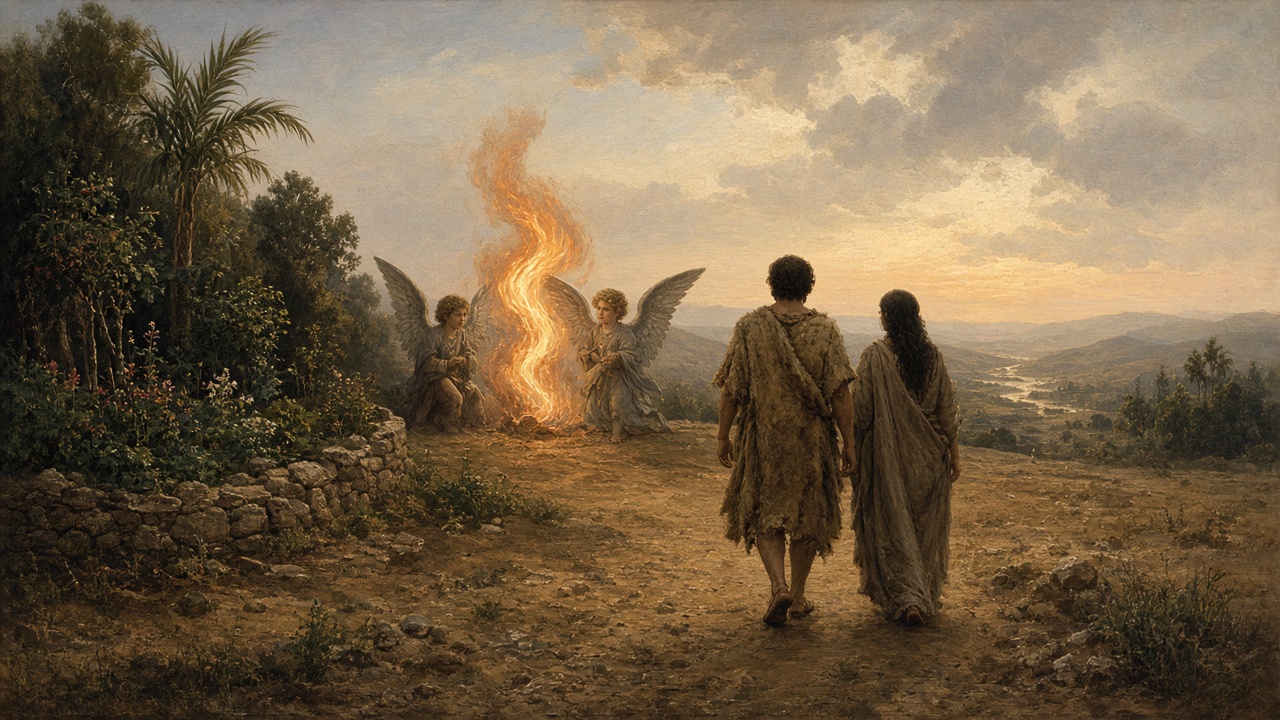
20Toque'n tzun bi' txkel Adán ta'n tetz Eva, na i' chitxu'cy'e'x cyakil jilwutz wunak bene'n tzi'n. 21Nintzun oc Kataj Ryos tan banle'n be'ch cyetz. Stz'uml txuc xcon ta'n. Yi bnixe'n ta'n nin octz tan chiwekle'n.
22Itzun tal Kataj Ryos: “Ni'cu'n cyajtza'kl jalu' chi kutane'n ketz, na na el chitxum tetz na'j scyetz e'chk ajtza'kl balaj, nin na el chitxum tetz na'j scyetz e'chk ajtza'kl cachi'. Lastum kol baj wutz yi tze' cya'n, yi tze' yi na tak' itz'ajbil tetz ben k'ej ben sak, na kol baj cya'n qui't chiquim sbne' pon tunintz,” stzun Ryos bantz.
23Cha'stzun te cyele'n lajul Kataj Ryos, le cojbila'tz, yi na bi'aj Edén. E' el lajul tan quicy'e'n tul junt ama'l, tan cyak'uje'n wi tx'otx', wech na tx'otx' te'n e'. 24Yi cyele'n lajul Ryos, nintzun cyaj tk'ol cobox querubim swutz yi jun balaj cojbila'tz. Ncha'tz cyaj tk'ol jun spar yi nternin na tzan k'a'kl, nin yi lajke'lnin na weltin tu'tz tan q'uicy'le'n yi jun wi' tze'a'tz, yi na tak' itz'ajbil. Ya'stzun tulejtz tan qui cyocompone'n te'j.
¿Sabías que…?
La caída y el exilio del Edén
- Una referencia tradicional explica Adán como “rojo”, palabra babilónica usada como nombre genérico del hombre, con el mismo sentido en hebreo y en asirio, y relaciona el nombre con el hecho de que fue formado del polvo de la tierra. En este capítulo ese origen reaparece en el juicio: trabajará por su alimento hasta volver al suelo, porque es polvo y al polvo volverá, y es enviado a labrar la tierra de la que fue tomado.Fuentes: Adam · el propio texto bíblico
- En este capítulo Adán da a su mujer el nombre Eva, que significa “vida” o “viviente”, porque ella sería la madre de todos los vivientes.Fuentes: Eve · el propio texto bíblico
- La ubicación del jardín de Edén, del que el hombre es expulsado en este capítulo, se ha discutido mucho: se ha situado en Armenia, al oeste del mar Caspio, en Media, cerca de Damasco, en Palestina, en el sur de Arabia y en Babilonia. Una nota geográfica tradicional lo busca a lo largo del Tigris y el Éufrates, en la tierra de Sinar, o Babilonia.Fuentes: Eden · el propio texto bíblico
Notas escritas con ayuda de IA a partir de fuentes abiertas (Theographic Bible Metadata, CC BY-SA 4.0; Easton’s Bible Dictionary, dominio público) y revisadas antes de publicarse.
Créditos y licencia de esta traducción
Yi Antiw Bible / Yi Ac'aj Testament
Bible in Aguacateco (GT:agu:Aguacateco)
copyright © 2011 Wycliffe Bible Translators, Inc.
Language: Aguacateco
Translation by: Wycliffe Bible Translators, Inc.
Copyright Information
© 2011-02-18, Wycliffe Bible Translators, Inc. All rights reserved.
This translation text is made available to you under the
terms of the Creative Commons License: Attribution-Noncommercial-No Derivative Works.
( http://creativecommons.org/licenses/by-nc-nd/3.0/ )
In addition, you have permission to port the text to different file formats, as long as you
do not change any of the text or punctuation of the Bible.
You may share, copy, distribute, transmit, and extract portions
or quotations from this work, provided that you include the above copyright
information:
You must give Attribution to the work.
You do not sell this work for a profit.
You do not make any derivative works that change any of the actual words or punctuation of the Scriptures.
Permissions beyond the scope of this license may be
available if you contact
us with your request.
The Bible
in Aguacateco
© 2011-02-18, Wycliffe Bible Translators, Inc. All rights reserved.
This translation is made available to you under the terms of the
Creative Commons Attribution-Noncommercial-No Derivatives license 4.0.
You may share and redistribute this Bible translation or extracts from it in any format, provided that:
You include the above copyright and source information.
You do not sell this work for a profit.
You do not change any of the words or punctuation of the Scriptures.
Pictures included with Scriptures and other documents on this site are licensed just for use with those Scriptures and documents.
For other uses, please contact the respective copyright owners.
2014-04-21
Fuente: http://ebible.org/aguBl/ · eBible.org