Hechos 17
I 'utz laj tzij re i dios · Toca un versículo para ver sus referencias cruzadas.
Wach i qui chʼujeric i winak pa Tesalónica
1I ma Páblo i ma Sílas, are xqui maj qui be, xe icʼaw pa tinimit Anfípolis, xak xe icʼaw pa tinimit Apolónia, teʼuri xe upon pa tinimit Tesalónica. Chila ʼo wi jun ja pa quiqui mol wi quib i aj Israel winak. 2I ma Páblo, ʼax coʼon wi, are ca cʼun i uxlambal ʼij, xa ʼe pa ja re i molbalʼib. Xak queje xu ʼan ile pa tinimit Tesalónica. Pa tak uxlambal ʼij xupon pa molbalʼib; oxmul xu ʼano man que u pixbaj i aj Israel winak. 3Xu ʼalijinsaj chique wach i cʼut-tal can chupam u wuj i Dios, chi i Tolque coyʼem, ʼo u chac cu tij ni uyej y ca cam na, teʼuri ca walij tan chic. Pa qʼuisbal-re xu bij chique:
—I Toliwe-le chi bital na, are i achi Jesus chi quin tijin chu bixquil chiwe —xu bij.
4Je ʼo jujun chique i aj Israel winak xqui cojo wach i xqui bij, y xqui ya qui wach cuʼ i ma Páblo i ma Sílas. Xak je qʼui i aj Griégo winak chi ʼax quiqui ʼan wi quiqui coj u ʼij i Dios, xak xqui ya qui wach cuʼ. Xak queje xqui ʼan je qʼui ixokib chi ʼo qui ʼij pa tinimit. 5Xui-ri, je ʼo juban aj Israel winak chi n-cacaj ta quiqui cojo; xpe coywal che chi xe oc i juban cuʼ. Rumal-i, xqui mol qui chiʼ jujun achiab chi ne te ʼutz, xak toʼ que percat pa tak be; xe qui cʼam bi cuʼ chi qui chʼujersaxic i winak y xe oc chu ʼanic chʼoʼoj pa tak be. Xe ʼe qui mina quib pa rachoch jun achi, ma Jason u bi, tzucbal que i ma Páblo i ma Sílas xqui ʼano. Cacaj ique que qui jach piquiʼab i winak. 6N-xe qui rik taj, rumal-i xqui charej bi i ma Jason, junam cuʼ juban chic creyent chi je ʼo ruʼ, y xe qui cʼam bi chuwach i ʼatbal tzij. Xe siqʼuin chu bixquil i tzij-i:
—I achiab-i que tijin chu cʼutic i n-ʼus taj chique i winak ronojel u wach i jyub taʼaj, y woʼor je cʼun-nak chu cʼutic waral. 7Xak i ma Jason-i je u cʼulam ruʼ chi rachoch. Conojel ique quiqui kel i ka ʼatol tzij, man quiqui bij chi ʼo chic jun chic ʼatol tzij, ma Jesus u bi, que cha. (Queje xqui bij i winak ile.)
8I winak, xak i aj patanib re i ʼatbal tzij, are xqui ta i tzij-le, pacha xe chʼujer rumal. 9Teʼuri i je aj patanib xqui bij che i ma Jason junam cuʼ i rachiʼil, chi que tojon na; ique xqui tojo, teʼuri xe oʼtax bic.
I winak aj Beréa lic xqui coj retalil che i u tzij i ma Páblo
10Are xoc aʼab, i creyent xqui ʼan pen chique i ma Páblo i ma Sílas chi que ʼel che i tinimit-le, que ʼe cʼa che i tinimit Beréa. Are xe upon chila xe ʼe pa molbalʼib que i aj Israel winak. 11I winak chila mas je ʼutz chiquiwach i je aj Tesalónica pa i je ʼanmajnak wi. Que quicotic, lic xqui coj retalil wach i xbix chique. N-xui ta la ile, ʼij ʼij cacajlaj u wuj i Dios, quiqui tabej-re we katzij wach i xu bij i ma Páblo. 12Je qʼui i aj Israel chila xqui cuba qui cʼux che i Jesus, xak je qʼui chique i aj Griégo. N-xui ti achiab xqui cojo, xak queje ixokib chi ʼo qui ʼij pa tinimit. 13Xui-ri, i je aj Israel winak pa Tesalónica, are xqui ta rason chi ma Páblo xak ca tijin chu cʼutic u tzij i Dios pa tinimit Beréa, ique xe ʼe cʼa chila y xe oc chic chi qui chʼujersaxic i winak. 14Rumal-i, i creyent aj Beréa juntir xqui tak bi i ma Páblo cʼa pa cósta; xui-ri i ma Sílas, ruʼ i a-Timotéo xe canaj pa Beréa. 15Je ʼo jujun xe ʼe ruʼ i ma Páblo cʼa pa tinimit Aténas. Teʼuri xe tzalij chic pa Beréa. I ma Páblo xu bij bi chique chi quiqui bij pan chique i ma Sílas i a-Timotéo chi weʼ que upon ruʼ.
I u cʼutunic i ma Páblo chique i aj Aténas
16I ma Páblo, tzʼakat je royʼem i ma Sílas i a-Timotéo pa Aténas, lic xcʼachir na man mas je qʼui i tiox je ʼo chupam i tinimit-le. 17Rumal-i, lic xe u pixbaj i winak pa qui molbalʼib i aj Israel, xak queje chique i ne te aj Israel chi quiqui coj u ʼij i Dios. Xak ʼij ʼij xa ʼe pa qʼuebal chi lapanic cuʼ i winak chila.
18I winak chi quiqui chap quib chi tzij ruʼ, je ʼo jujun chique je cachiʼil i je Epicúrios ca bixic, xak ʼo i je cachiʼil i je Estóicos 17.18 ca bixic. ʼO jujun chique xqui bij:
—¿Wach cu bij i achi-le chi toʼ ca loxowic y n-ta retaʼam? —xe cha.
Yʼo juban chic que binic:
—Caka bij yoj chi xa ajbil que juban chic tiox junwi —xe cha.
Queje ile xqui bij man i ma Páblo ca tijin chu paxsaxic rason i Jesus, xak i qui walijbal i camnak. (Quiqui bij ique chi je queb tiox: i Jesus y walijbal.) 19Teʼuri ique xqui bij che i ma Páblo chi ca ʼe cuʼ pa quiqui mol wi quib pa nucʼbal tʼisbal, chi Areópago u bi. Are xe uponic, xqui bij che:
—Cakaj caketamaj wach usucʼ i cʼacʼ laj cʼutunic-le ca ʼano. 20ʼO i tzij ca bij chi n-caka ta tu be yoj, y cakaj caketamaj wach usucʼ queʼelok —xe cha.
21Conojel i aj Aténas, xak conojel i winak aj naj chi je jekel chila, ique xui quiqui ya quib chu tayic i cʼacʼ laj tak tzij, xak chu lapic niʼpa tak i nojbal cʼacʼ.
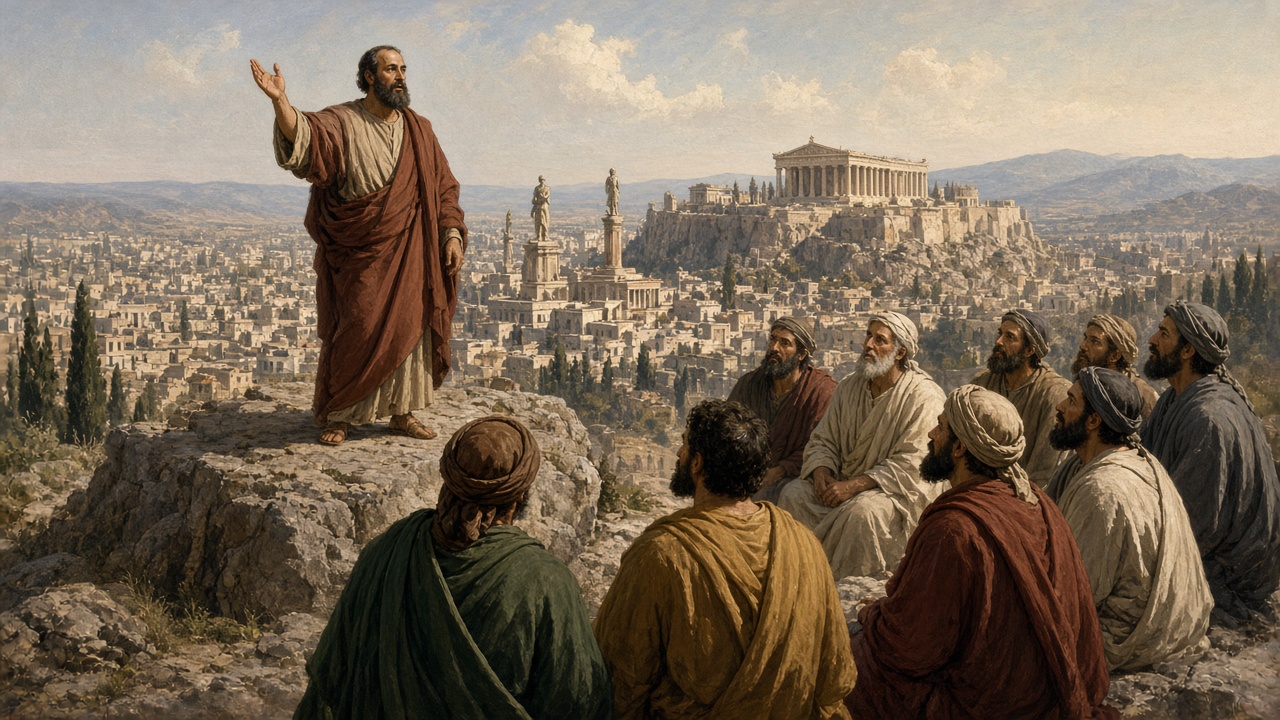
22Are ʼuri i ma Páblo xtaqʼui ʼan chiquixol ique pa je ʼo wi pa Areópago, y xu bij chique:
—Nimak tak winak aj Aténas, cwil yin chi lic qui coj qui ʼij i tiox, 23man yin, are xin malcat pi tinimit, xwilo chi mas je qʼui i cachoch i tiox pa qui coj wi i qui ʼij. Xak xin rik jun altar i yijbam, ʼo i tzʼib chuwach chi cu bij: “I altar-i, re i Dios chi n-ʼetamam tu wach,” cu bij. Are i Dios-le, chi qui coj u ʼij yix, tupu n-iwetaʼam tu wach, are i quin tijin yin chu bixquil chiwe. 24I Dios-le, chi yijbawnak i jyub taʼaj xak ronojel niʼpa i ʼo chuwach, ire n-ca qʼuiji ta chupam jun ja chi xa qui yijbam i winak. Ire are rajaw i ulew, rajaw i caj. 25Are ire yawnak i ka cʼaslemal, yawnak i kuxlab, yawnak ronojel wach i rajwaxic chake. N-ta rajwaxic che ire, wach tak quiqui ya i winak che.
26Niʼpa i oj winak chuwach i jyub taʼaj, are ire xoj u yijba, xa jun achi i ka xebal konojel, y xu ya chake coj jeki che ronojel u wach i jyub taʼaj. Are ire nucʼuwnak pa i coj qʼuiji wi; are ire nucʼuwnak niʼpa junab coj cʼasi chuwach i jyub taʼaj. 27Are ire xe u yijba i winak man quiqui tzucuj ire, quiqui ʼan pen u rikic. Queje ile caka tzucuj na, tupu ire n-naj ta ʼo wi chake, chaka jujunal. 28Katzij, i Dios n-naj ta ʼo wi, man xa rumal i Dios oj cʼaslic, xa rumal i Dios coj binic, xa rumal i Dios oj ʼo chuwach i jyub taʼaj. Katzij i tzij-i, chi cu bij i aj tzʼib iwe yix, chi u tzʼibam canok: “Oj u miʼal ralcʼwal i Dios,” cu bij. 29Bay, we oj u miʼal ralcʼwal i Dios, maka bij ʼuri chi Dios xa ril ʼantalic; n-piqui nojbal ti winak petnak wi. Ire n-queje taj pacha tak i tiox ʼantal che i óro, ʼantal che i pláta, ʼantal che abaj cumal i winak. 30Ujer, i Dios toʼ xril qui mac i winak, n-ta xu bij, man n-xqui ta tu be chi n-ʼus ti quiqui ʼano; xui-ri woʼor u bim chique conojel, ronojel u wach jyub taʼaj, ʼo u chac quiqui jalwachij i qui noʼoj chi n-ʼus taj. 31Lic ʼo u chac ile, man i Dios u chʼicom chic i ʼij chi cu ʼat ni tzij piquiwi i winak, wach i qui ʼanom. Lic pusucʼ cu ʼan na ile; ya u chom chic i Achi chi ca ʼanaw na. I Dios u ʼalijinsam chake yoj konojel chi queje ile cu ʼan na, man u walijsam chic i Achi-le chiquixol i camnak. (Queje ile xu bij i ma Páblo chique i winak pa molbalʼib.)
32Are xqui ta u cʼastajic qui wach i camnak, ʼo jujun xqui yoʼya, xui-ri je ʼo juban chic xqui bij:
—Cʼa te ca bij tan chic chake coʼon panok —xe cha.
33Rumal-i i ma Páblo xel chiquixol. 34Xui-ri, je ʼo jujun chique i xe tawic xqui cojo y xqui ya qui wach ruʼ. Jun chique ique, ma Dionísio u bi; ire jun chique i aj nucʼunel re i molbalʼib chi Areópago. Jun chic chi xu ya u wach cuʼ are i ati Dámaris. Xak je ʼo chic juban chic.
¿Sabías que…?
De la sinagoga al Areópago
- Tesalónica era una ciudad grande y populosa a orillas del golfo Termaico, capital de uno de los cuatro distritos romanos de Macedonia, gobernada por un pretor. Jasón hospedó allí a Pablo y a Silas; una multitud allanó su casa y, al no hallar a los dos, arrastraron a Jasón y a otros hermanos ante las autoridades de la ciudad. Los acusaron de acoger a hombres que desafiaban los decretos del César y hablaban de otro rey, Jesús, y las autoridades solo los soltaron después de tomar fianza.Fuentes: Thessalonica · Jason · el propio texto bíblico
- Atenas, capital del Ática, era celebrada como sede de la literatura y el arte griegos, y sus habitantes eran aficionados a la novedad y notables por su celo en el culto a los dioses. Un satírico romano decía que era más fácil encontrar un dios en Atenas que un hombre. El Areópago, una colina rocosa al noroeste de la Acrópolis, era el lugar donde funcionaban el tribunal supremo ateniense y el tribunal de las costumbres, y Pablo pronunció el discurso de este capítulo desde algún punto de esa colina.Fuentes: Athens · Areopagus · el propio texto bíblico
- Pablo y Silas llegaron a Tesalónica solo después de pasar por Anfípolis, ciudad macedonia y gran estación militar romana, a treinta y tres millas romanas de Filipos, y por Apolonia, a unas treinta y seis millas de Tesalónica. Cuando los disturbios los siguieron hasta Berea, otra ciudad de Macedonia, los hermanos enviaron a Pablo a la costa, y quienes lo escoltaron lo llevaron hasta Atenas. Silas y Timoteo se quedaron en Berea, con la instrucción de reunirse con Pablo tan pronto como pudieran.Fuentes: Amphipolis · Apollonia · Berea · el propio texto bíblico
Notas escritas con ayuda de IA a partir de fuentes abiertas (Theographic Bible Metadata, CC BY-SA 4.0; Easton’s Bible Dictionary, dominio público) y revisadas antes de publicarse.
Lugares de este capítulo
- Amphipolis · 40.820, 23.847 · versículo 1
- Apollonia · 40.624, 23.470 · versículo 1
- Thessalonica · Hoy: Thessaloniki · 40.638, 22.946 · versículos 1, 11, 13
- Berea · Hoy: Veria · 40.518, 22.200 · versículos 10, 11, 13, 14, 15
- Athens · 37.972, 23.727 · versículos 15, 16, 21, 22
- Areopagus · 37.972, 23.724 · versículos 19, 22, 33
Solo aparecen lugares identificados con alta confianza (90 % o más según las fuentes académicas reunidas por OpenBible). Mapa de la época: DARE (Digital Atlas of the Roman Empire), CC BY 4.0; mapa actual: © colaboradores de OpenStreetMap; lugares: OpenBible.info (CC BY 4.0).
Créditos y licencia de esta traducción
I 'utz laj tzij re i dios
New Testament in Achi (I 'utz laj tzij re i dios)
copyright © 2009 Wycliffe Bible Translators, Inc.
Language: Achi
Dialect: Cubulco
Translation by: Wycliffe Bible Translators, Inc.
Achi, Cubulco
Achi' is a Mayan language very
closely related to K'iche' (Quiché in the older orthography). It is spoken by the
Achi people, primarily in the area of Baja Verapaz in Guatemala. There are two Achi'
dialects. Cubulco Achi' is spoken by approximately 48,000 people in the Cubulco area
west of Rabinal area. Rabinal Achi' is spoken by approximately 37,000 people in the
Rabinal area.
El Nuevo Testamento
en el idioma Achí de Cubulco de
Guatemala
Ediciones anteriores
Segunda edición
©2009, Wycliffe Bible
Translators
Primera edición
Publicado por
©1984, Sociedad Bíblica
Internacional
Copyright Information
© 2009, Wycliffe Inc. All rights reserved.
This translation text is made available to you under the terms of the Creative
Commons License: Attribution-Noncommercial-No Derivative Works. ( http://creativecommons.org/licenses/by-nc-nd/3.0/ ) In addition, you have
permission to port the text to different file formats, as long as you do not change
any of the text or punctuation of the Bible.
You may share, copy, distribute, transmit, and extract portions or quotations from
this work, provided that you include the above copyright information:
You must give Attribution to the work.
You do not sell this work for a profit.
You do not make any derivative works that change any of the actual words or
punctuation of the Scriptures.
Permissions beyond the scope of this license may be available if you contact us
with your request. If you want to revise a translation, use a translation in an
adaptation, or use a translation commercially, we will consider your request.
NT:segunda edición
The New Testament
in Achi
© 2009, Wycliffe Inc. All rights reserved.
This translation is made available to you under the terms of the
Creative Commons Attribution-Noncommercial-No Derivatives license 4.0.
You may share and redistribute this Bible translation or extracts from it in any format, provided that:
You include the above copyright and source information.
You do not sell this work for a profit.
You do not change any of the words or punctuation of the Scriptures.
Pictures included with Scriptures and other documents on this site are licensed just for use with those Scriptures and documents.
For other uses, please contact the respective copyright owners.
2013-01-05
Fuente: http://ebible.org/acr-acc/ · eBible.org