2 Corintios 9
I 'utz laj tzij re i dios · Toca un versículo para ver sus referencias cruzadas.
Craj i Dios chi ronojel ka cʼux que ka to i nibaʼib
1I u molic i mer, tobal pan que i kachalal, n-ta kas u chac quin tzʼibaj bi chiwe, cʼunsabal-re pi cʼux. 2N-ta kas u chac man wetaʼam lic quiwaj qui toʼic i kachalal pa Jerusalen. ʼAx quin bij wi chique i kachalal pa jyub Macedónia chi yix, chi ix aj Acáya, junabir canok ix yij chic chu ʼonquil ile. Iwumal yix, laj conojel i kachalal pa Macedónia xak cacaj que qui to pan i kachalal pa Jerusalen. 3Woʼor quin tak bi ma Títo iwuʼ, junam cuʼ i queb kachalal, cʼunsabal-re chi cʼux chi qui mol ni mer. N-cwaj ti yin we n-sak laj tzij taj queʼelok pacha in bim, chi yix ix sicʼaj chi qui toʼic i nibaʼib; cwaj yin chi yij chic i mer pacha in bim. 4Are quin upon yin chi solixic, we je ʼo jujun kachalal aj Macedónia que ʼe na wuʼ, are coj uponic, we yix ni molom ti mer, lic qʼuixbal queʼel na chwe yin, man lic in cubam in cʼux chiwe chi qui ʼan na. Y n-xui ta chwe yin, xak qʼuixbal queʼel chiwe yix. 5Rumal-i, in chʼobom yin, ca nabeaj bi ma Títo cuʼ i juban kachalal, que qui bij na chiwe chi qui bisoj u molic i mer, pacha i bim te yix chi qui ʼano. We yij chic i mer are coj uponic, ca ʼalijin ʼuri chi ronojel i cʼux xi ʼano, n-are ta pacha xin ʼan pen yin chiwe.
6Iwetaʼam iri: jun, we xa jubiʼ cu tico, xak xa jubiʼ ni cu chʼac che. Jun, we nim i cu tico, xak nim ni cu chʼac che. 7Rumal-i, chi jujunal wi, chi chʼobo niʼpa i mer qui yaʼo; teʼuri chi ya ruʼ ronojel i cʼux; mi ʼan ile chi xa queb i cʼux chu yaʼic; mi ʼano pacha tak ʼo jun coʼon pen chiwe. Pachin i cu ya ruʼ ronojel u cʼux, cʼax ca naʼ ʼuri rumal i Dios. 8Wachalal, wach i rajwaxic chiwe, i Dios ca tiqui chu yaʼic chiwe, y n-xui ta la ile, xak cu ya mas puwi ile. Queje ile, yix xak quix tiqui chu ʼanic u qʼuial ʼutz chique i kachalal, man lic cu rik na rib wach i ʼo iwuʼ. 9Cha cʼun chi cʼux i tzij-i chi tzʼibtal can chupam u wuj i Dios:
I jun-le n-xu xuyaj taj, lic xu ya chique i nibaʼib;
niʼpa i ʼutz u ʼanom, n-ca sachsax tu wach ronojel ʼij sak.
(Queje ile tzʼibtal canok.) 10I que ticanic, are i Dios ca yaw i ija chique, teʼuri, xak cu ya chique wach i quiqui tijo. Xak are i Dios ca yaw chiwe yix wach i rajwaxic chiwe; ire xak cu qʼuiarsaj u wach niʼpa tak i qui tico, niʼpa tak i qui molo. (Queje ile, nim ni tonic quix tiqui chu ʼanic ruʼ, teʼuri niʼpa i ʼutz i ʼanom ruʼ, queʼel pacha jun nim laj cosech elnak che i ija chi u yom i Dios chiwe.) 11I Dios, nim cu ya chiwe; ʼis xa biruxic cu ya chiwe, man xak yix, nim ni tonic qui ʼano, ronojel i cʼux. Are queje ile caka ʼano, niʼpa i que ka to lic quiqui cʼamwaj quiqui tioxij che i Dios. 12I mer, chi caka jach nubic, cu rik ni u chac chique i kachalal, wach i rajwaxic chique, xak cu rik u chac che i Dios man je qʼui quiqui tioxij che rumal. 13Ique quiqui coj ni u ʼij i Dios, man i qui toʼic i ʼanom yix, cu ʼalijinsaj chique chi yix lic quix cojon che i ʼutz laj tzij re i Crísto, xak qui ʼano pacha i cu bij, man ix sicʼaj chi qui toʼic ique, xak chique conojel i kachalal. 14Teʼuri, lic quiqui tzʼonoj na che i Dios piwi, cutbal re i cʼaxnabal qui cʼux chiwe, xak quiqui tioxij che i Dios rumal i rutzil i cʼux u yom chiwe. 15Cʼamori che i Dios rumal i loʼlaj u sipon chake; lic n-caka rik taj wach u lapic u chomal caka ʼano.
¿Sabías que…?
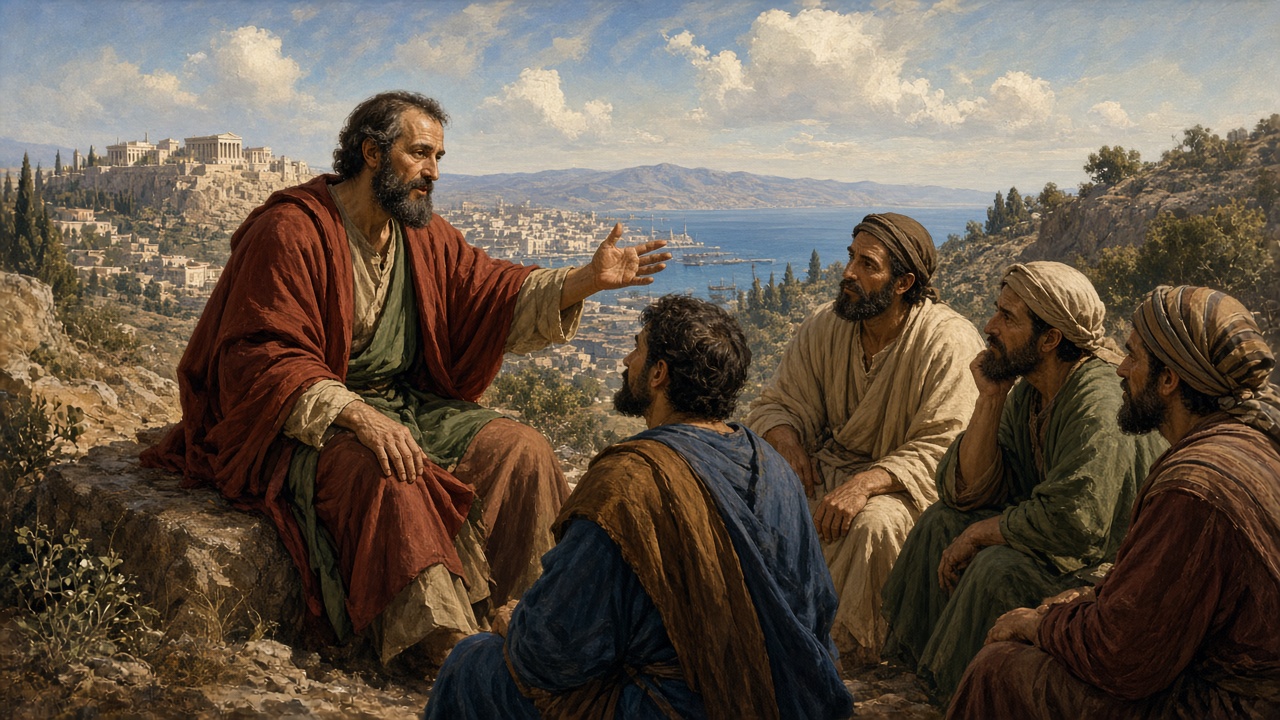
Generosidad entre Acaya y Macedonia
- Macedonia era una provincia romana situada al norte de Grecia, y Acaya era la otra de las dos provincias en que los romanos dividieron Grecia, aplicando ese nombre a todo el Peloponeso y al sur. Al escribir a los creyentes de Acaya, Pablo dice que se ha estado gloriando ante los macedonios de que ellos estaban listos para dar.Fuentes: Macedonia · Achaia · el propio texto bíblico
- Pablo dice que, desde el año anterior, la gente de Acaya estaba lista para dar, y que su celo había movido a la mayoría de los macedonios a hacer lo mismo. Está enviando a los hermanos por delante para que aquello de lo que se ha gloriado acerca de ellos no resulte vacío, si algunos macedonios vienen con él y los hallan sin preparación.Fuentes: el propio texto bíblico
- El nombre Acaya se refería al principio a una franja estrecha de territorio en Grecia, al noroeste del Peloponeso. En el Nuevo Testamento, el nombre se usa siempre en el sentido posterior y más amplio que le dieron los romanos, para la provincia del sur en su conjunto.Fuentes: Achaia
Notas escritas con ayuda de IA a partir de fuentes abiertas (Theographic Bible Metadata, CC BY-SA 4.0; Easton’s Bible Dictionary, dominio público) y revisadas antes de publicarse.
Lugares de este capítulo
- Jerusalem · 31.777, 35.234 · versículos 1, 12
- Achaia · 38.720, 22.540 · versículo 2
- Macedonia · 41.600, 22.540 · versículos 2, 4
Solo aparecen lugares identificados con alta confianza (90 % o más según las fuentes académicas reunidas por OpenBible). Mapa de la época: DARE (Digital Atlas of the Roman Empire), CC BY 4.0; mapa actual: © colaboradores de OpenStreetMap; lugares: OpenBible.info (CC BY 4.0).
Créditos y licencia de esta traducción
I 'utz laj tzij re i dios
New Testament in Achi (I 'utz laj tzij re i dios)
copyright © 2009 Wycliffe Bible Translators, Inc.
Language: Achi
Dialect: Cubulco
Translation by: Wycliffe Bible Translators, Inc.
Achi, Cubulco
Achi' is a Mayan language very
closely related to K'iche' (Quiché in the older orthography). It is spoken by the
Achi people, primarily in the area of Baja Verapaz in Guatemala. There are two Achi'
dialects. Cubulco Achi' is spoken by approximately 48,000 people in the Cubulco area
west of Rabinal area. Rabinal Achi' is spoken by approximately 37,000 people in the
Rabinal area.
El Nuevo Testamento
en el idioma Achí de Cubulco de
Guatemala
Ediciones anteriores
Segunda edición
©2009, Wycliffe Bible
Translators
Primera edición
Publicado por
©1984, Sociedad Bíblica
Internacional
Copyright Information
© 2009, Wycliffe Inc. All rights reserved.
This translation text is made available to you under the terms of the Creative
Commons License: Attribution-Noncommercial-No Derivative Works. ( http://creativecommons.org/licenses/by-nc-nd/3.0/ ) In addition, you have
permission to port the text to different file formats, as long as you do not change
any of the text or punctuation of the Bible.
You may share, copy, distribute, transmit, and extract portions or quotations from
this work, provided that you include the above copyright information:
You must give Attribution to the work.
You do not sell this work for a profit.
You do not make any derivative works that change any of the actual words or
punctuation of the Scriptures.
Permissions beyond the scope of this license may be available if you contact us
with your request. If you want to revise a translation, use a translation in an
adaptation, or use a translation commercially, we will consider your request.
NT:segunda edición
The New Testament
in Achi
© 2009, Wycliffe Inc. All rights reserved.
This translation is made available to you under the terms of the
Creative Commons Attribution-Noncommercial-No Derivatives license 4.0.
You may share and redistribute this Bible translation or extracts from it in any format, provided that:
You include the above copyright and source information.
You do not sell this work for a profit.
You do not change any of the words or punctuation of the Scriptures.
Pictures included with Scriptures and other documents on this site are licensed just for use with those Scriptures and documents.
For other uses, please contact the respective copyright owners.
2013-01-05
Fuente: http://ebible.org/acr-acc/ · eBible.org