2 Corintios 8
I 'utz laj tzij re i dios · Toca un versículo para ver sus referencias cruzadas.
Craj i Dios chi n-oj ta xuy chi qui toʼic niʼpa i ʼo rajwaxic chique
1Wachalal, cwaj quiwetamaj wach utzil chomal u ʼanom i Dios chique tak i jutzobaj creyent pa jyub Macedónia. U ʼanom chique chi lic ʼutz qui cʼux. 2ʼAlaj ile man tupu je ʼo chupam u qʼuial cʼax, mas que quicotic; tupu je nibaʼ, lic nim i mer qui yom chi qui toʼic i juban kachalal; i qui sipon, lic nim, pacha je beyomab. 3Yin mísmo xwilo lic ronojel qui cʼux xqui ya qui mer, ronojel niʼpa i xe tiqui che; xak ʼo mas u wi xqui ya bic. 4Lic xqui tzʼonoj pawor chake chi caka ya chique que qui to pan i je re i Dios chila pa Jerusalen. 5N-xui ta xqui yaʼo pacha i ka chʼobom yoj, mas xqui ya bi puwi ile. Queje ile xeʼelok, man nabe xqui ya quib che i Kajwal, teʼuri xak xqui ya quib chake yoj pacha u chʼobom i Dios. 6Queje qui ʼanom i kachalal ile pa Macedónia, rumal-i, xin bij yin che i ma Títo chi ʼutz we yix qui qʼuis ni u molic i mer chi xu jek te u molic ire chixol yix oʼonom lok. Ile ʼalijinsabal re i cʼaxnabal i cʼux chique i kachalal. 7Yix, lic ʼutz i qui ʼano: mas lic nim u cubibal i cʼux che i Kajwal; lic ix ʼutz chu bixquil wach u chʼobom i Dios, xak lic qui ta u be u tzij, xak ix sicʼaj chu ʼanic pacha craj ire, xak lic cʼax coj i naʼo. Lic ʼutz ca tijin relic ronojel wach i qui ʼano, rumal-i cwaj yin xak ix ʼutz chu sipaxic i mer, tobal que i kachalal.
8Ile, wachalal, suʼ ta quin ʼan pen chiwe we qui ʼan ile. Xui quin bij chiwe wach quiqui ʼan i juban chic creyent chi lic je sicʼaj chi qui toʼic i cachalal. Xin bij ile chiwe, ʼilbal-re we katzij ʼo i cʼaxnabal i cʼux yix. 9Lic iwetaʼam wach i nim laj rutzil u cʼux i Kajwal Jesucrísto. Ire beyom, xui-ri, xoʼon nibaʼ che rib, ʼanbal re i ʼutz chiwe yix. Queje xoʼon ire ile man quix beyomar ni yix rumal u nibaʼil ire.
10Woʼor quin bij na chiwe wach in nojbal yin che u yaʼic i mer tobal que i kachalal; ca majaw chiwe we qui ʼan na pacha xi jek li u ʼonquil. Ronojel i cʼux xi jek te li u molic i mer junabir; n-xoʼon ta queb i cʼux chu ʼonquil. 11Xui-ri, woʼor chi qʼuisa u ʼonquil; xak chi ʼana ronojel i cʼux, pacha u jekic xi ʼano. Che i mer yix, chi jacha niʼpa i quix tiqui che. 12We jun lic craj ca tonic, y cu yaʼo niʼpa i ca tiqui che, i Dios cu cʼamo niʼpa i cu yaʼo; n-cu tzʼonoj ta mas che, we n-ta ruʼ.
13N-are ti xin bij we qui tij ni uyej rumal qui toʼic i kachalal. 14Are cwaj yin mi jun cu tij uyej, mi yix mi xak are ique. Woʼor, niʼpa i mer chi ca sobrin chiwe yix cu rik ni u chac chique ique, wach i rajwaxic chique. Mok coʼon panok, mok ʼo ca sobrin tan chic chique ique, teʼuri quix qui to tan chic yix. We queje i ʼanom ile, queʼelok i tobalam iwib ʼuri chiwach. 15Queʼel ʼuri pacha cu bij u wuj i Dios ujer: “Are i jun chi mas ʼo ruʼ, n-ta xsobrin che; xak i jun chi xa jubiʼ ʼo ruʼ, xak n-ta xoʼon palt che.” (Queje ile tzʼibtal can chupam u wuj i Dios.)
Ca ʼe chic i ma Títo pa Corínto
16Cʼamori che i Dios man u ʼanom che i ma Títo chi xak craj ire quix u to queje pacha i cwaj yin. 17Are xin bij che, chi ca ʼe iwuʼ, ire lic xraj ca ʼe chiwilic man xak u chʼobom chi ʼutz quix u to na. 18Are ca ʼe ire, xak caka tak bi jun chic kachalal ruʼ, chi lic ʼutz laj aj paxsanel re u tzij i Dios; conojel queje ile quiqui bij che, pa tak tzobajil re i Dios. 19N-xui ta la ile, xak i jutak tzobajil-le xqui bij na chi ʼutz we ca ʼe ire kuʼ chu jachic i mer chique i kachalal je nibaʼ. I jachbal re i mer-le, caka ʼano cojbal re u ʼij i Kajwal, xak cʼutbal-re chique chi yix lic quiwaj que i to. 20Que ʼe ni juban kachalal kuʼ man ʼutz mi jun cu tzucuj tzij chikij wach caka ʼan che u qʼuial mer moltajnak. 21Niʼpa i caka ʼano, caka ʼan pen chi pusucʼ caka ʼan wi, n-xui ta chuwach i Kajwal, xak queje chiquiwach i winak.
22Are que ʼe i queb-le iwuʼ chu molic i mer, xak caka tak chubi jun chic kachalal cuʼ. Ya kilom chic qʼuialmul chi ire lic sicʼaj chi qui toʼic i kachalal, y woʼor lic craj ca ʼe iwuʼ man cul u cʼux chiwe, wach i qui ʼan na. 23I ma Títo, mok ʼo i quiqui tzʼonoj pachin ire; chi bij chique chi ire wachiʼil che u chac i Kajwal, tobal iwe yix; ire in qʼuexel chiwach. Xak i juban chic kachalal chi que rachiʼilaj bic, mok ca tzʼonox chiwe je pachinok; chi bij chi je taktal bi iwuʼ cumal i jutak tzobaj re i Dios waral. Rumal wach i quiqui ʼan ique-ri, lic cocsax u ʼij i Crísto. 24Chi cʼutu i cʼaxnabal i cʼux chique, man je niʼpa i jutak tzobaj re i Dios caquetamaj na chi lic katzij, cʼax que i naʼo. Xak caquetamaj na chi katzij i xka bij, chi yix ix ʼutz laj tak kachalal.
¿Sabías que…?
Generosidad y la colecta para Jerusalén
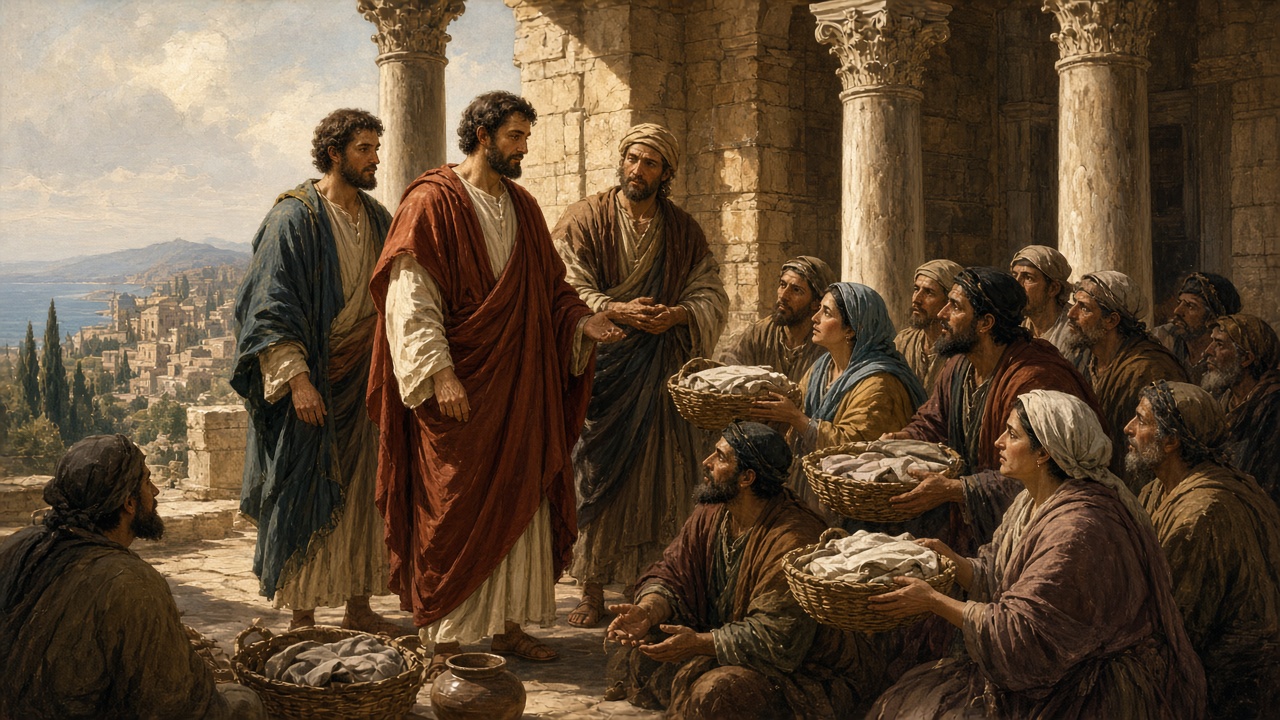
- En tiempos del Nuevo Testamento, Macedonia era una provincia romana al norte de Grecia. Pablo fue llamado por la visión de un hombre de Macedonia para predicar el evangelio allí, y este capítulo cuenta a los corintios cómo esas iglesias, en una terrible prueba y en profunda pobreza, dieron con alegría e incluso más allá de lo que podían.Fuentes: Macedonia · el propio texto bíblico
- Tito, cuyo nombre no aparece en Hechos, parece haber sido un gentil dedicado sobre todo a ministrar a los gentiles. Desde Éfeso, Pablo lo envió a Corinto para hacer llegar las contribuciones de la iglesia a favor de los santos pobres de Jerusalén; en este capítulo, Pablo lo insta a completar esa obra, y Tito viene con entusiasmo por propia iniciativa.Fuentes: Titus · el propio texto bíblico
- Junto con Tito, Pablo envía a un hermano alabado por todas las iglesias por su trabajo en el evangelio y elegido por ellas para acompañar la ofrenda, y a otro hermano cuyo empeño ya ha sido probado muchas veces y de muchas maneras. Explica que ese cuidado busca evitar críticas sobre cómo se administra el generoso donativo, de modo que hagan lo correcto no solo ante los ojos del Señor, sino también ante los ojos de las demás personas.Fuentes: el propio texto bíblico
Notas escritas con ayuda de IA a partir de fuentes abiertas (Theographic Bible Metadata, CC BY-SA 4.0; Easton’s Bible Dictionary, dominio público) y revisadas antes de publicarse.
Lugares de este capítulo
Solo aparecen lugares identificados con alta confianza (90 % o más según las fuentes académicas reunidas por OpenBible). Mapa de la época: DARE (Digital Atlas of the Roman Empire), CC BY 4.0; mapa actual: © colaboradores de OpenStreetMap; lugares: OpenBible.info (CC BY 4.0).
Créditos y licencia de esta traducción
I 'utz laj tzij re i dios
New Testament in Achi (I 'utz laj tzij re i dios)
copyright © 2009 Wycliffe Bible Translators, Inc.
Language: Achi
Dialect: Cubulco
Translation by: Wycliffe Bible Translators, Inc.
Achi, Cubulco
Achi' is a Mayan language very
closely related to K'iche' (Quiché in the older orthography). It is spoken by the
Achi people, primarily in the area of Baja Verapaz in Guatemala. There are two Achi'
dialects. Cubulco Achi' is spoken by approximately 48,000 people in the Cubulco area
west of Rabinal area. Rabinal Achi' is spoken by approximately 37,000 people in the
Rabinal area.
El Nuevo Testamento
en el idioma Achí de Cubulco de
Guatemala
Ediciones anteriores
Segunda edición
©2009, Wycliffe Bible
Translators
Primera edición
Publicado por
©1984, Sociedad Bíblica
Internacional
Copyright Information
© 2009, Wycliffe Inc. All rights reserved.
This translation text is made available to you under the terms of the Creative
Commons License: Attribution-Noncommercial-No Derivative Works. ( http://creativecommons.org/licenses/by-nc-nd/3.0/ ) In addition, you have
permission to port the text to different file formats, as long as you do not change
any of the text or punctuation of the Bible.
You may share, copy, distribute, transmit, and extract portions or quotations from
this work, provided that you include the above copyright information:
You must give Attribution to the work.
You do not sell this work for a profit.
You do not make any derivative works that change any of the actual words or
punctuation of the Scriptures.
Permissions beyond the scope of this license may be available if you contact us
with your request. If you want to revise a translation, use a translation in an
adaptation, or use a translation commercially, we will consider your request.
NT:segunda edición
The New Testament
in Achi
© 2009, Wycliffe Inc. All rights reserved.
This translation is made available to you under the terms of the
Creative Commons Attribution-Noncommercial-No Derivatives license 4.0.
You may share and redistribute this Bible translation or extracts from it in any format, provided that:
You include the above copyright and source information.
You do not sell this work for a profit.
You do not change any of the words or punctuation of the Scriptures.
Pictures included with Scriptures and other documents on this site are licensed just for use with those Scriptures and documents.
For other uses, please contact the respective copyright owners.
2013-01-05
Fuente: http://ebible.org/acr-acc/ · eBible.org