Exodus 3
YAUBADA YANA VONA'AWAUFAUFA 'IVAUNA · Tap a verse to see its cross-references.
Yaubada i veifufu Mosese taiadi
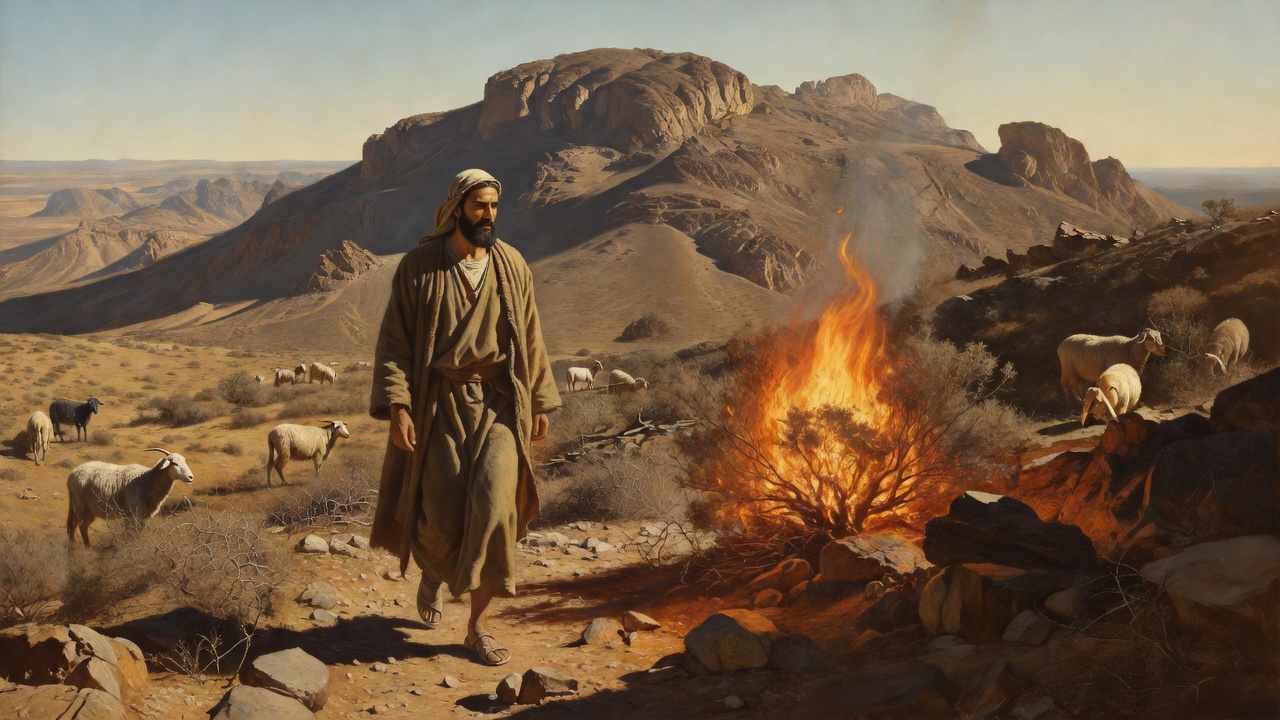
1Mosese lawana 'ana wagava Ietolo me Midiani yadi tovelomu, we'e yana 'aisayavo Mosese i 'i'isave'avinidi. Tamu 'aiata 'waineye lawana yana 'aisayavo taiadi i nago sali'avu'avu 'waineamo nika i le'wa Sainai, Yaubada yana 'Oya 'waineye. 2Bei welavi siaina yauyauvina i 'iseni i 'ala'alata siwe welavinina kebu i da 'ala'alaiga. I 'ise'iseni nika 'Auvea yana anelose i souyeni 'waineye 'ai-'ala'alata 'wainega. 3Mosese i vo, No'o welavinina 'eba nuavogana 'waikuye. A na nago lilivaneye a na 'isa-'atumaia ava'ai faifaina kebu i da 'ala'alaiga.”
4Tutuyanina 'Auvea Mosese i 'iseni i le'wa-'afo'afo, nika Yaubada i vegole welavi nagenega i vo, Mosese! Mosese!” I tutula i vo, Yau side.” |alt="Burning bush" src="02_Ex_03_04_RG.jpg" size="col" loc="quarter page" copy="WBT" ref="3:4"
5I vo, Kebu 'u na mai lilivakuye. 'Amu 'ageyafayafa 'u na ta'idi fai bei 'u tovotovoiga fwayafwaya tabutabuna. 6Yau kumaniku tamamu yana Yaubada wata tubumwavo Ebelamo, Aisake wata Iakobo yadi Yaubada.” Mosese i kololo-'afo'afo begaidi maigina i bwasai fai kebu 'ana fata i na 'isanago Yaubada 'waineye.
7'Auvea i vo, 'Akonadi yaku tomotoga Itifita nageneye 'adi vita a 'iseni. Yadi taivonavona a nogai nuanuadi 'ita'ita'i tove'isakololo 'waidiega. E'e mogitana, yadi mia vitana matatabuna a 'asetai. 8Begaidi yau a obuma a na yavudi me Itifita yadi veimea vitadi 'waidiega wata a na vagavaidi 'awalawanina 'wainega i na souyedi i na nago taunidi yadi fwayefwayeye, yadi 'awasasa bwaikidi wata 'eba bakula 'atumaidi 'waineye. We'e 'asiau 'awalawanina 'waineye mali 'aila'a i vili, 'aila'anidi me Kenani, me Aiti, me Amolaiti, me Felesi, me Aiviti wata me Iebusaiti. 9Tutuya de'e 'waineye me Isileli yadi taivonavona vita i veveluagadi faifaina a nogai wata me Itifita yadi vesauluva-sako 'waidie a 'iseni. 10Begaidi 'asiau a vevetunemu, 'u na nago Felo 'waineye yaku tomotogavo 'u na vagavaidi 'wa na souyemi Itifita 'wainega.
11Siwe Mosese Yaubada i voneni i vo, Yau tomogo-'avo'avovo. Kebu 'aku fata Felo 'waineye a na nago me Isileli a na yavudi me Itifita yadi veimea toketokena 'wainega?”
12Yaubada i vo, Yau 'omu taiadi. Tutuyanina me Isileli taiadi 'wa na souyemi Itifitayega side 'oyanina 'waineye 'wa na 'odu'odu 'waikuye. Naninina i na souyeniga 'u na 'aseta-'atumaia yau kumaniku a vetunemu.”
13Mosese Yaubada i voneni i vo, 'Ai'edi a na nago me Isileli 'waidie a na vonedi a na vo, Tubudavo yadi Yaubada i vetuneku a mai 'waimie,’ bega i na velutolieku i na vo, Yaubadanina, aitoi 'ana wagava?’ Bani'odi a na voneyedi?” 14Yaubada Mosese i voneni i vo, YAU MIAMIA-VAGAIKU, we'e side bani'odi 'u na voneyedi me Isileli 'waidie 'u na vo, MIAMIA-VAGAIKU kumanina i vetuneku a mai 'waimie.’ 15Wata me Isileli 'u na vonedi 'u na vo, YAHWEH tubumiavo Ebelamo, Aisake wata Iakobo yadi Yaubada i vetuneku 'waimie.’ 'Aku wagavanina i na 'eno-vagata. Tutuya i mimai 'waidie 'aila'anidi lakata 'aitamogana 'aitamogana wagavanina 'wainega i na nunuave'aviniku.” Yaubada i souyeni Mosese 'waineye i veifufu i 'a'ava, Mosese i vilai i nago Midiani. Naninidi matatabuna i lu'ivoneyedi tatana Eloni 'waineye, mulieta taiadi i nagoi Itifita. Tutuyanina i le'wa, i nago me Isileli yadi to'edakumeta 'waidie, Yaubada yana nuanua i lu'ivoneyeni. I veifufu i 'a'ava i luku Felo 'waineye i voneni i vo, Yama 'Auvea nuanuana yana tomotoga me Isileli 'u na tauyedi i na nagoi sali'avu'avuye bega ma yadi subia 'aisaya i na velomuyedi i na kabunidi 'waineye.” Siwe Felo i talabodedi i vo, Kebu 'ana fata a na tauyedi we'e 'asa'aiana bani'odi i na miamia wata i na folofolova.” Begaidi vematavuloga toketokedi Yaubada i 'i'idewadi me Itifita 'waidie, we'e Felo nuafouna i fa'ali kebu me Isileli i da tauyediga. Naninidi toketokedi bani'odi Ufa Naeli i vedayaga, me Itifita yadi 'aisayavo i ve'alawafawafa wata tomogodi i vebonu'ai. Siwe Felo bola kebu me Isileli i da tauyedi bega i na souyedi.
Did you know?
The Call of Moses at the Burning Bush
- Moses is shepherding in Midian when this chapter begins. The Midianites were a nomadic Arabian tribe descended from Midian, Abraham's fourth son by Keturah, whose name is explained as strife. They lived chiefly in the desert north of Arabia, and the Sinai peninsula was grazing land for their flocks; it was there, after fleeing Egypt, that Moses became a servant and then the priest's son-in-law.Sources: the Bible text itself · Midian · Midian
- His father-in-law is Jethro, called the priest of Midian. Easton's Bible Dictionary (1897) equates that priest with Raguel and says that, if the two names belong to one man, Raguel may be regarded as his personal name and Jethro, meaning excellency, as an official title.Sources: the Bible text itself · Jethro
- Moses leads the flock to Horeb, the mountain of God. The name is explained as desert, or mountain, of the dried-up ground, a general term for the whole range of which Sinai was one summit; Easton's Bible Dictionary (1897) gives the modern name of the range as Jebel Musa and describes a huge block about two miles long and about one mile wide, with a very spacious plain called Er Rahah at its north-east end, where the Israelites later camped for nearly a year.Sources: the Bible text itself · Horeb
Notes written with AI assistance from open sources (Theographic Bible Metadata, CC BY-SA 4.0; Easton’s Bible Dictionary, public domain) and reviewed before publishing.
Places in this chapter
- Midian · 28.495, 35.012 · verse 1
- Mount Horeb · Today: Jebel Musa · 28.540, 33.973 · verse 1
- Egypt · 30.129, 31.308 · verses 7, 8, 10, 11, 12, 16, 17, 18, 19, 20, 22
Only places identified with high confidence are shown (90% or more according to the scholarly sources compiled by OpenBible). Period map: DARE (Digital Atlas of the Roman Empire), CC BY 4.0; modern map: © OpenStreetMap contributors; places: OpenBible.info (CC BY 4.0).
Credits and license for this translation
YAUBADA YANA VONA'AWAUFAUFA 'IVAUNA
The New Testament in the Iamalele dialect of the Ubuvala Language of Papua New Guinea
Nupela Testamen long tokples Ubuvala long Niugini
copyright © 1984, 1988, 2025 Wycliffe Bible Translators, Inc. and SIL Papua New Guinea
Language: Ubuvala (Iamalele)
Dialect: Iamalele
Translation by: SIL PNG
Contributor: Wycliffe Bible Translators
This translation is made available to you under the terms of the
Creative Commons Attribution-Noncommercial-No Derivatives license 4.0.
You may share and redistribute this Bible translation or extracts from it in any format, provided that:
You include the above copyright and source information.
You do not sell this work for a profit.
You do not change any of the words or punctuation of the Scriptures.
Pictures included with Scriptures and other documents on this site are licensed just for use with those Scriptures and documents.
For other uses, please contact the respective copyright owners.
2026-09-30
Source: http://png.bible/yml/ · eBible.org