Exodus 2
YAUBADA YANA VONA'AWAUFAUFA 'IVAUNA · Tap a verse to see its cross-references.
Mosese yana tubuga
1Tutuyanina 'waineye tamu tomogo wata tamu vavine Livai 'ana wauma 'wainega taiadi i nagi. 2Bega vavinenina i miana nika kwamana iavetana i tubuga. Vavinenidi natudi i 'iseni kwamana 'ana 'isa 'atumaina, begaidi vanuga nageneye i giveni weta'i 'aitonu i 'i'isave'avini. 3We'e tutuyanina kebu 'adi fata vanuge i na giveniga, tamu yawana 'imo'imoa 'wainega i yogoni, i 'a'ava i fitai koluta 'wainega. Kwamana nageneye i dodogi mulieta Ufa Naeli lilivaneye i yatoi 'imo'imoa nagediamo i lulubeweni. 4Kwamana novuna 'ana wagava Miliama 'ani'ieyega i tovoi i vevemata'i'i'ieni ava'ai tamu nani i na souyeni kwamana 'waineye.
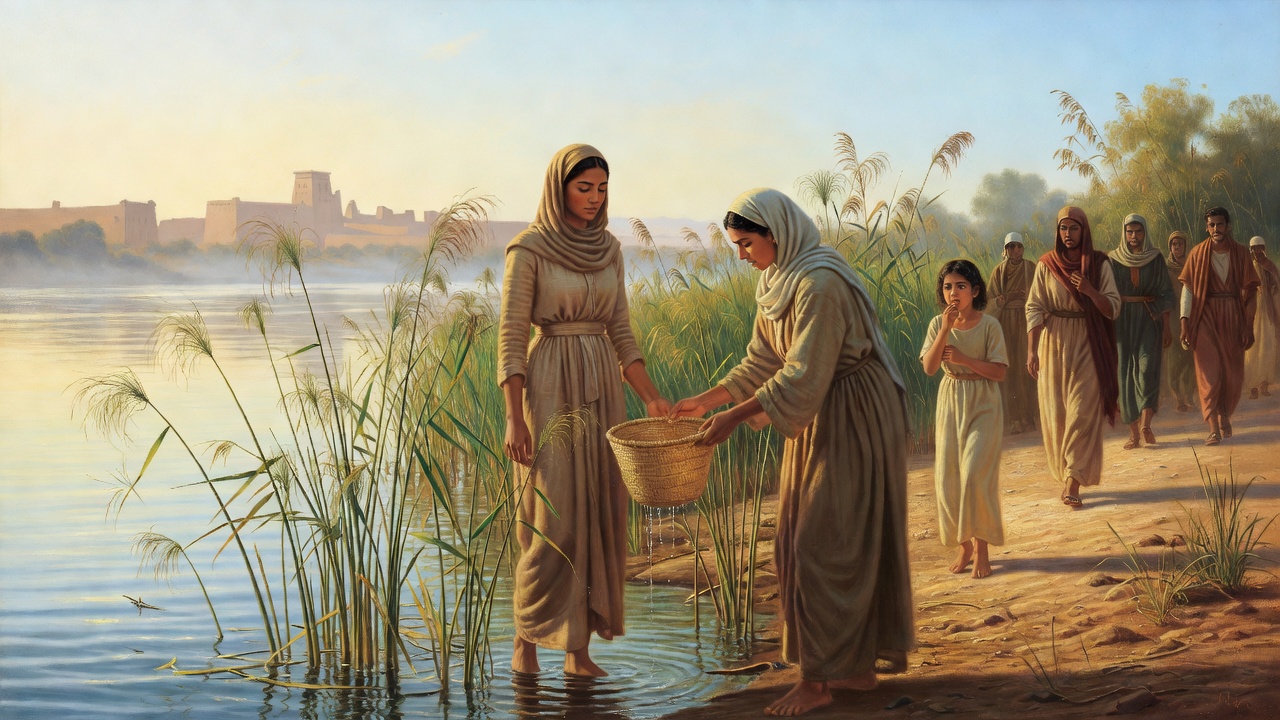
5Felo natuna vevinena i obu Ufa Naeli 'waineye i na toa, we'e yana tofolova vevinedi ufa doleneamo i yabayaba nika i 'isanago yawana i 'iseni 'imo'imoa nagediamo i bewebeweni. Tamu yana tofolova-maimaiga i voneni i nago yawananina i 'ewai i mieni 'waineye. 6Tutuyanina Felo natuna yawana i yavuya i 'iseni kwamana i 'we'we'wela bega nuana i vekalikalia i vo, De'e tamu kwamana Ibeliu.” |alt="Baby Moses" src="02_Ex_02_05_RG.jpg" size="span" loc="half page" copy="WBT" ref="2:6"
7Nika Miliama, kumanina kwamananina novuna i souyeni, Felo natuna 'waineye i vo, 'Ana fata a da nago tamu vavine Ibeliu a da vagavaia a da mieni, kwamana i da 'ewai i da vesusuya faifaimu?”
8Felo natuna i vo, E'e a sosoana, 'u na nago.” Bega kwamana novuna i nago inaotogina i vonedi taiadi i mai 'waineye. 9Felo natuna i veifufu kwamana inana 'waidie i vo, Kwamana 'wa na 'ewai 'wa na vesusuya faifaiku we'e bola a na tutulimi.” Bega vavine kwamana i 'ewai i vesusuya. 10Tutuyanina kwamana i vebwaika, i naweni Felo natuna vevinena i veleni, i fayayeni natuna. Felo natuna i vo, Fai ufayega a silakai begaidi a goleni 'ana wagava Mosese.”
Mosese i dega Itifita 'wainega i nago Midiani
11Malamala fuedi i 'a'ava, Mosese 'akonadi i taulai bega tamu 'aiata i souyeni i nago enavo me Ibeliu i na fogedi, nika i 'isedi me Itifita folova vitadi i veleveledi. Tutuyanina 'waineye i 'iseni tomogo Itifita tamu tomogo Ibeliu i nikenikei. 12Mosese mulina i 'isadabai bega tomogo Itifita i luvewafai nidula i alai i tavuni.
13I 'atai Mosese i vilai i nago i 'isedi me Ibeliu 'adi 'ailuga i vevetalaga. Kumanina vetalaga i velamuyaga i voneni i vo, Awale iamu 'u nikenikei?” 14Tomogonina i tutula i vo, 'Omu aitoi i silakaimu bega 'u na vetoveimea wata 'u na vetovenua'ivina-'atumai 'waimeye? Voke 'u mimai 'u na luvewafaku, bani'odi bogi tomogo Itifita 'u luvewafai.” Mosese i nuani mogitana nika i kololo i vo, Ava'ai a 'idewaiga tomotoga 'akonadi i 'asetai.” 15Tutuyanina Felo Mosese valana i nogai nuanuana i na luvewafai, siwe Mosese i dega i nago 'awalawa Midiani, ufa alaalana lilivaneye i miabui bei i miamia.
Did you know?
The birth and flight of Moses
- Pharaoh’s daughter named the child Moses, explaining that she had drawn him out of the water. Easton's Bible Dictionary (1897) links his name with “drawn,” or with the Egyptian word mesu, “son”—the element from which the dictionary also explains Rameses as “royal son.”Sources: the Bible text itself · Moses
- In Exodus 2 a daughter of Levi hides her son for three months, and Pharaoh’s daughter, finding him among the Nile reeds, recognizes a Hebrew child. Easton's Bible Dictionary (1897) links the Israelites’ affliction to “the new king who knew not Joseph,” long supposed to be Aahmes I, called Amosis by Josephus, though the dictionary, citing discoveries then recent, names Seti instead. Their hardship, it says, began after the Hyksos, masters of Egypt for some five centuries, were driven out and the old dynasty restored.Sources: the Bible text itself · Pharaoh
- After Pharaoh sought to kill him, Moses fled to Midian and sat down beside a well; he later married Zipporah, one of the seven daughters of the priest of Midian. The Midianites were nomadic Arabians descended from Midian, Abraham’s fourth son by Keturah, and they pastured their flocks in the Sinai peninsula and in the desert north of the Arabian peninsula. This chapter calls the priest Reuel, whom Easton's Bible Dictionary (1897) names Raguel, regarding that form as his personal name and Jethro—“excellency”—as an official title if the two are identified.Sources: the Bible text itself · Midian · Midian · Jethro
Notes written with AI assistance from open sources (Theographic Bible Metadata, CC BY-SA 4.0; Easton’s Bible Dictionary, public domain) and reviewed before publishing.
Places in this chapter
- Nile · Today: Nile River · 31.465, 30.367 · verses 3, 5
- Midian · 28.495, 35.012 · verses 15, 16
- Egypt · 30.129, 31.308 · verse 23
Only places identified with high confidence are shown (90% or more according to the scholarly sources compiled by OpenBible). Period map: DARE (Digital Atlas of the Roman Empire), CC BY 4.0; modern map: © OpenStreetMap contributors; places: OpenBible.info (CC BY 4.0).
Credits and license for this translation
YAUBADA YANA VONA'AWAUFAUFA 'IVAUNA
The New Testament in the Iamalele dialect of the Ubuvala Language of Papua New Guinea
Nupela Testamen long tokples Ubuvala long Niugini
copyright © 1984, 1988, 2025 Wycliffe Bible Translators, Inc. and SIL Papua New Guinea
Language: Ubuvala (Iamalele)
Dialect: Iamalele
Translation by: SIL PNG
Contributor: Wycliffe Bible Translators
This translation is made available to you under the terms of the
Creative Commons Attribution-Noncommercial-No Derivatives license 4.0.
You may share and redistribute this Bible translation or extracts from it in any format, provided that:
You include the above copyright and source information.
You do not sell this work for a profit.
You do not change any of the words or punctuation of the Scriptures.
Pictures included with Scriptures and other documents on this site are licensed just for use with those Scriptures and documents.
For other uses, please contact the respective copyright owners.
2026-09-30
Source: http://png.bible/yml/ · eBible.org