Exodus 14
YAUBADA YANA VONA'AWAUFAUFA 'IVAUNA · Tap a verse to see its cross-references.
Felo me Isileli i lu'wavinedi
5Tutuyanina Felo me Isileli valadi i nogai, 'akonadi i yavula i nunagoi nika yana to'edakumetavo taiadi yadi nuanua i siviladi. Bega i vo, Ava'ai ta 'idewai? Me Isileli ta veyavula'a'avadi i ve'aladegadega, 'awaie kebu wata i na vevetofolova-maimaiga faifaida.” 6Begaidi Felo yana salioti i 'idewadewadi i 'a'ava nika yana tolugaviavo taiadi i tauya. 7Yana salioti 600 'eba vetalaga 'atumaiotogidi i venua'ivinedi wata 'ifwaidi me Itifita yadi salioti taiadi i nagoi. Saliotinidi 'aitamogana 'aitamogana ma yadi tovemata'ai'ai. 8'Auvea Felo i nua'ania bega me Isileli i lu'wavinedi we'e me Isileli 'akonadi ma yadi sosoana wata ma yadi fwausa i nunagoi. 9Me Isileli i vebae'wa eyaga lilivaneye, 'atamana Fi-Ailoti vi'ainega, we'e Beli-Sefoni debanagodiega. Me Itifita yadi tolugaviavo matatabuna i yogo'wailidi, tolugavianidi salioti tabwadie ma yadi 'aisaya osi, tolugavianidi i laka osi kwavudie, wata tolugavianidi i lulu'agena, matatabudi me Isileli lilivadie i le'wa.
10Felo ma yana tolugaviavo sai'afoga i na 'ubwasadi nika me Isileli i 'isalaka i 'isedi mulidie i mimaia, matatabudi i kololo-'afo'afo bega 'Auvea 'waineye i taidaida 'ita'ita'i faifaina.
11Me Isileli Mosese i voneni i vo, 'U da vo Itifita 'waineye kebu taumata i da 'eno'enovi begaidi 'u vagavaima ta mai sali'avu'avuye 'a na wafa. Awale 'u lukakadema 'a souyema Itifita 'wainega? 12Itifita 'waineye 'u da vo kebu 'a da vonemuga, 'a vo, 'U bailema, bei 'a na miamia 'a na vevetofolova-maimaiga.’ 'Ai'edi 'a da folofolova me Itifita faifaidi de'e 'atumaina, siwe 'omu 'u vagavaima ta mai sali'avu'avuye bei 'a na ve'alawafawafa.”
13Mosese me Isileli i vonedi i vo, Kebu 'wa na kolologa, ma yami venuafoufa'ala 'wa na tovotovoi fa'alina bega 'Auvea 'wa na 'iseni 'ami 'ita'ita'i i na 'idewai 'asiau. 'Asiau me Itifita 'wa 'ise'isediga, 'awaie kebu wata 'wa veveluagadi. 14'Auvea tauniotogina faifaimi i na vetalaga, we'e 'omi 'wa na vemata'i'i'ienimo.” |alt="Exodus" src="YMLExodus.tif" size="span" loc="Full page" ref="14:14 after about Exodus 14:14"
Me Isileli eyaga lalaneamo i damana
15Nika 'Auvea Mosese i voneni i vo, Awale 'wa tataidaida nuanuami a na 'ita'ita'iemi? Me Isileli 'u na vonedi i na nunago. 16Yamu wautogana 'u na silakai wata nimamu 'u na 'otoi eyaga tabwaneye 'u na sinaweni bega eyaga i na 'awa'idia, i na lala nika me Isileli eyaga kamwaneamo i na damana. 17Me Itifita a na nua'anidi bega i na 'wavinemi mulimie i na wai. Felo ma yana tolugaviavo, salioti wata osi 'adi tomotogavo yadi ilagi 'wainega yadi tomotogavo i na awa'ai'aiku. Tutuyanina Felo ma yana tolugaviavo a na vetoketoke-'iawedi nika me Itifita yaku toketokena i na 'iseni i na awavemogitana yau 'Auvea.”
19Mulieta Yaubada yana anelose, kumanina me Isileli i kumekumesedi, i vilai i nago mulidie, we'e Yaubada yana waowa debanagodiega wata mulidie i nago, me Isileli wata me Itifita kamwadie i tovotovoi. Lovana 'waineye waowanina dudubala me Itifita i veledi, we'e me Isileli i magemagesedi begaidi lovananina 'waineye 'adi gaviavo i tovibodedi. |alt="Crossing sea" src="02_Ex_14_06_RG.jpg" size="span" loc="half page" copy="WBT" ref="14:19-20"
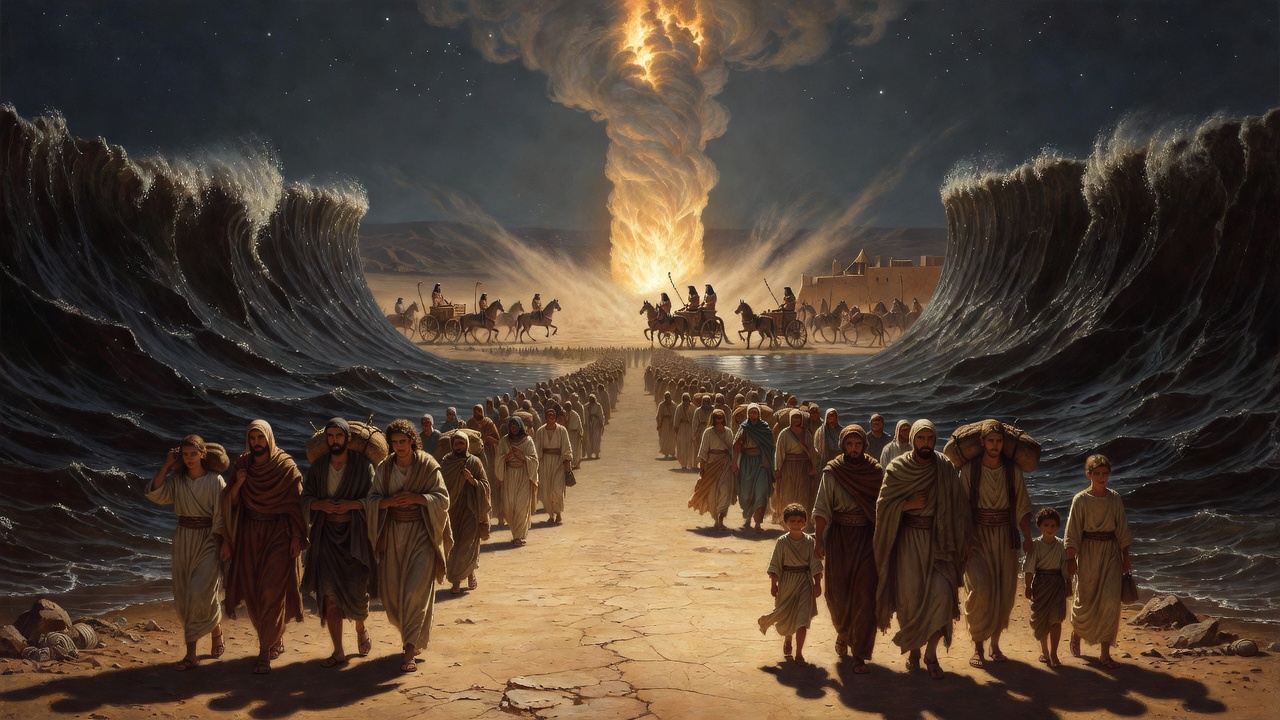
21Mulieta Mosese nimana i 'otoi eyaga tabwaneye bega lovananina matatabuna 'waineye, 'Auvea kaukau toketokena i butuya inala yana 'eba lakayega i nunuga. Eyaga i yuvei i nagoga nika eyaga i yuve'idia wata fwayafwaya i lala. 22Bega me Isileli eyaga kamwaneamo i damana fwayafwaya lalaneamo, we'e eyaga i ula i lakaga 'adi 'atagiega wata 'adi wamayega, 'wa da vo bani'odi vatu'ai ta da vevedadageni. 23Me Itifita i lausogi, Felo yana osi, yana salioti wata 'adi tosivetovetonova taiadi mulidiamo i luku eyaga kamwaneye. 24Sai'afoga i na 'awasa'usa'uya 'Auvea yana waowa i 'ala'alataga 'wainega i 'isaobu me Itifita yadi tovetalagavo 'waidie bega nuadi i luvegaugaudi. 25Yadi salioti 'agedi i 'aniwenowenodi nika i fafawa kebu 'adi fata i na lilide. Bega me Itifita i vo, 'Wa mai ta na dega me Isileli 'waidiega fai 'Auvea faifaidi i lulugavia 'waideye.”
26'Auvea Mosese i voneni i vo, Nimamu 'u na 'otoi eyaga tabwaneye bega eyaga i na 'anibaia, me Itifita, yadi salioti wata osi 'adi tosivetovetonova i na tavufwasedi.” 27Bega Mosese nimana i 'otoi eyaga tabwaneye, sai'afo inala i na vulaoga, eyaga i 'anibaia i obu 'ana 'ivie. Me Itifita nuanuadi i na dega eyaga 'wainega siwe 'Auvea eyaga 'wainega i tavunidi. 28Bega eyaga i 'anibaia me Itifita yadi salioti, osi 'adi tomotogavo wata tolugaviavo, kumanidiavo me Isileli i 'wavi'wavinediga, matatabudi eyaga nageneye kebu tamu aitoi i da luvegalalaiga. |alt="chariots drowned" src="02_Ex_14_11_RG.jpg" size="span" loc="half page" copy="WBT" ref="14:28"
31Tutuyanina me Isileli 'Auvea yana toketokena bwaikina 'wainega me Itifita i leodiga i 'iseni, nika ma yadi kololo taunidi i tauyedi i vetumagana 'Auvea 'waineye wata yana tofolova Mosese 'waineye.
Did you know?
Israel trapped between Pharaoh and the sea
- Israel was told to turn back and camp before Pi-hahiroth, between Migdol and the sea, directly opposite Baal-zephon, so that Pharaoh would think the wilderness had boxed them in. Pi-hahiroth means place where the reeds grow, though the Septuagint and the Coptic read farmstead, and Baal-zephon means Baal of the north.Sources: the Bible text itself · Pi-hahiroth · Baal-zephon
- Easton's Bible Dictionary (1897) describes Baal-zephon as an Egyptian town on the shores of the Gulf of Suez, probably modern Jebel Deraj or Kulalah on the western shore, and notes that Egyptian Baal-zapuna was a place of worship. Some have identified Pi-hahiroth with Ajrud, a fortress between Etham and Suez. The entry on Pi-hahiroth adds that the condition of the Isthmus of Suez at the time of the Exodus is not exactly known, so Pi-hahiroth and Israel's other camps in Egypt cannot be definitely located; the isthmus has been formed by deposits of the Nile.Sources: Baal-zephon · Pi-hahiroth
- Easton's Bible Dictionary (1897) says the Pharaoh of the Exodus was probably Menephtah I, the fourteenth and eldest surviving son of Rameses II, and that he resided at Zoan, where his interviews with Moses and Aaron recorded in Exodus took place. The same entry still treats it as an open question whether Seti II or his father Menephtah was that king, and notes that some judge the evidence to favor Seti II.Sources: Pharaoh (of the Exodus)
Notes written with AI assistance from open sources (Theographic Bible Metadata, CC BY-SA 4.0; Easton’s Bible Dictionary, public domain) and reviewed before publishing.
Places in this chapter
Only places identified with high confidence are shown (90% or more according to the scholarly sources compiled by OpenBible). Period map: DARE (Digital Atlas of the Roman Empire), CC BY 4.0; modern map: © OpenStreetMap contributors; places: OpenBible.info (CC BY 4.0).
Credits and license for this translation
YAUBADA YANA VONA'AWAUFAUFA 'IVAUNA
The New Testament in the Iamalele dialect of the Ubuvala Language of Papua New Guinea
Nupela Testamen long tokples Ubuvala long Niugini
copyright © 1984, 1988, 2025 Wycliffe Bible Translators, Inc. and SIL Papua New Guinea
Language: Ubuvala (Iamalele)
Dialect: Iamalele
Translation by: SIL PNG
Contributor: Wycliffe Bible Translators
This translation is made available to you under the terms of the
Creative Commons Attribution-Noncommercial-No Derivatives license 4.0.
You may share and redistribute this Bible translation or extracts from it in any format, provided that:
You include the above copyright and source information.
You do not sell this work for a profit.
You do not change any of the words or punctuation of the Scriptures.
Pictures included with Scriptures and other documents on this site are licensed just for use with those Scriptures and documents.
For other uses, please contact the respective copyright owners.
2026-09-30
Source: http://png.bible/yml/ · eBible.org