Exodus 13
YAUBADA YANA VONA'AWAUFAUFA 'IVAUNA · Tap a verse to see its cross-references.
Me Isileli yadi tubu'edakumetavo i na 'anivelenedi 'Auvea 'waineye
1Wata 'Auvea Mosese i voneni i vo, 2Yami tubu'edakumetavo iavetadi wata yami 'aisayavo natudiavo kumekumetadi, matatabudi 'wa na 'anivelenedi 'waikuye, fai me Isileli natumiavo wata yami 'aisayavo kumekumetadi 'asa'aiana yau faifaiku.”
11Mosese me Isileli i vonedi i vo, 'Awaie 'Auvea i na vagavaimi 'wa na nago me Kenani yadi 'awalaweye mulieta i na 'aniveleneni 'waimie, bani'odi basenadi i vona'awaufaufa taunina 'ana wagava 'wainega, 'omi wata tubumiavo taiadi 'waimie. 12Bei 'wa na miamiaga, yami tubu'edakumetavo wata yami 'aisayavo kumekumetadi 'wa na 'anivelenedi 'Auvea 'waineye, fai iaveta kumekumetadi 'asa'aiana 'Auvea faifaina. 13'Ai'edi nuanuami yami 'aisaya doniki natuna kumekumetana ma yawaina i na miamia, tamu 'aisaya sifi siaina 'wainega 'wa na sivedamaneni, we'e 'ai'edi kebu, doniki 'odona 'wa na tutukuali. We'e natumiavo iavetadi yami tubu'edakumeta i lubwainemi 'wa na tuveobudi.
14Tutuya i mimai 'waidie natumiavo i na velutoliemi i na vo, Ava'ai 'ana 'aseta?” Bega 'wa na vonedi 'wa na vo, 'Auvea yana toketokenayega i vagavaima 'a souyema Itifitayega a vetofolova-maimaiga 'wainega. 15Tutuyanina 'waineye Felo nuafouna i fa'ala-'afo'afoi bega kebu nuanuana i na tauyema 'a na souyema, begaidi 'Auvea me Itifita yadi tubu'edakumetavo 'aitamogana 'aitamogana wata yadi 'aisaya natudiavo kumekumetadi i luvewafadi. Side kumanina lamunanina begaidi yada 'aisayavo natudiavo iavetadi kumekumetadi 'aitamogana 'aitamogana ta vevelomuyedi 'Auvea 'waineye, we'e tomotoga yada tubu'edakumetavo iavetadi ta tutuveobudi.’ 16De'e sakalinina 'eba nuave'avina, 'wa da vo tugusa nimamie 'alo debamie nika 'wainega i na tolinuata'iemi 'Auvea yana toketokenayega i vagavaida ta souyeda Itifita 'wainega.”
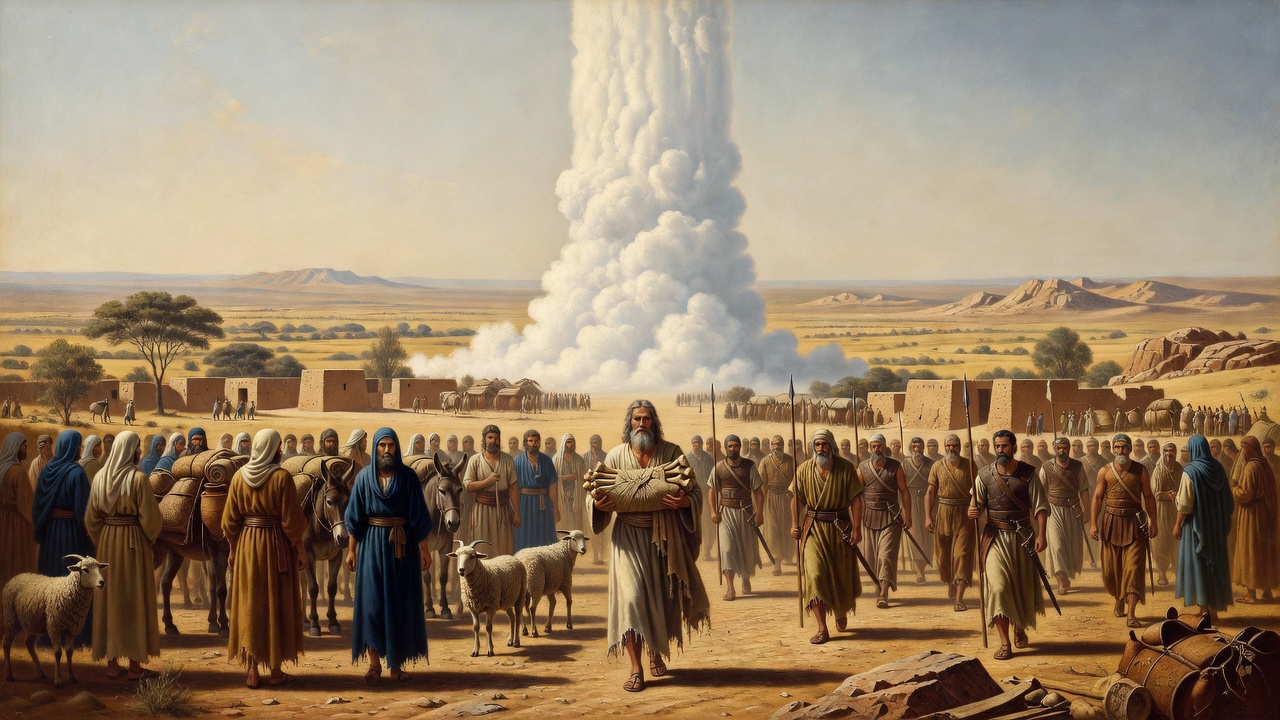
20Me Isileli Sukoti i 'iaweni nika i le'wa Etamu sali'avu'avu lilivaneye, bei i vebae'wa. 21Yadi nagonina 'waineye, 'Auvea i kumekumesedi. 'Aiaseye yana waowa i sivetovoia debanagodiega i sisivetonovedi 'waineamo i nunagoi. We'e lovane ma'itufa yana 'ai-'ala'alata i tovotovoi me Isileli i magemagesedi. Bega waowa wata 'ai-'ala'alata 'waidiega 'adi fata 'aiaseye wata lovane i na 'e'edakumesedi. |alt="Israel departs" src="02_Ex_13_03_RG.jpg" size="span" loc="half page" copy="WBT" ref="13:21"
Did you know?
The Firstborn and the Departure from Egypt
- God did not lead them by the shorter road through the land of the Philistines, lest war make them return to Egypt, but by the wilderness toward the Red Sea, which separates Asia from Africa. They set out from Succoth, the first encampment after leaving Ramesses and also the civil name of Pithom, and made their third camp at Etham, on the edge of the wilderness. Etham is perhaps another name for Khetam, or “fortress,” on the wall of Shur, which ran from the Mediterranean to the Gulf of Suez, and the camp was probably a little west of modern Ismailia.Sources: the Bible text itself · Succoth · Etham · Red Sea
- Moses took the bones of Joseph with him, because Joseph had made the sons of Israel swear that, when God attended to them, they must carry his bones from that place. Joseph was the elder of the two sons of Jacob by Rachel.Sources: the Bible text itself · Joseph (son of Jacob)
- The LORD told Moses to consecrate every firstborn male; the firstborn from every womb among the Israelites, both of people and of animals, belonged to him. Every firstborn donkey was to be redeemed with a lamb, or else have its neck broken, and every firstborn son was to be redeemed. When a son asked what this meant, he was to be told that Pharaoh had stubbornly refused to let them go, so the LORD killed every firstborn in Egypt, of people and of animals, and brought them out of the house of slavery.Sources: the Bible text itself
Notes written with AI assistance from open sources (Theographic Bible Metadata, CC BY-SA 4.0; Easton’s Bible Dictionary, public domain) and reviewed before publishing.
Places in this chapter
Only places identified with high confidence are shown (90% or more according to the scholarly sources compiled by OpenBible). Period map: DARE (Digital Atlas of the Roman Empire), CC BY 4.0; modern map: © OpenStreetMap contributors; places: OpenBible.info (CC BY 4.0).
Credits and license for this translation
YAUBADA YANA VONA'AWAUFAUFA 'IVAUNA
The New Testament in the Iamalele dialect of the Ubuvala Language of Papua New Guinea
Nupela Testamen long tokples Ubuvala long Niugini
copyright © 1984, 1988, 2025 Wycliffe Bible Translators, Inc. and SIL Papua New Guinea
Language: Ubuvala (Iamalele)
Dialect: Iamalele
Translation by: SIL PNG
Contributor: Wycliffe Bible Translators
This translation is made available to you under the terms of the
Creative Commons Attribution-Noncommercial-No Derivatives license 4.0.
You may share and redistribute this Bible translation or extracts from it in any format, provided that:
You include the above copyright and source information.
You do not sell this work for a profit.
You do not change any of the words or punctuation of the Scriptures.
Pictures included with Scriptures and other documents on this site are licensed just for use with those Scriptures and documents.
For other uses, please contact the respective copyright owners.
2026-09-30
Source: http://png.bible/yml/ · eBible.org