2 Chronicles 36
YAUBADA YANA VONA'AWAUFAUFA 'IVAUNA · Tap a verse to see its cross-references.

About this book
About 2 Chronicles
- Easton's Bible Dictionary (1897) reports that Jewish tradition, which he says was universally received until the middle of the seventeenth century, regarded Ezra as the author of Chronicles, an opinion he finds supported by many points of resemblance and contact with the Book of Ezra. He dates the composition after the Babylonian exile, probably between 450 and 435 B.C., noting that the language is, in its general character, Aramaean, like other books written after the exile, and that the writer gives details of Zerubbabel's family.Sources: Easton: Chronicles, Books of
- The two books of Chronicles were originally one. In the Masoretic Hebrew the title is Dibre hayyamim, “Acts of the Days,” which Jerome rendered Chronicon, hence Chronicles; the Septuagint divides the work and calls it Paraleipomena, “things omitted” or “supplements,” because it contains many things omitted in the Books of Kings. Easton groups the contents in four parts: genealogies in the line of Israel down to David, the reign of David, Solomon’s reign in the first nine chapters of the second book, and the history of the separate kingdom of Judah until the return from the Babylonian exile.Sources: Easton: Chronicles, Books of
- Easton presents these books as didactic rather than primarily historical: the writer’s principal aim appears to be moral and religious truth, and he gives less prominence to political events than Samuel and Kings do, and more to ecclesiastical institutions. He adds that the genealogies were an important part of the Hebrew state’s public records, the basis both for distributing and holding land and for arranging and conducting temple service, to which the Levites and their descendants alone were entitled.Sources: Easton: Chronicles, Books of
- The first nine chapters of 2 Chronicles recount the reign of Solomon, David’s son by Bathsheba, whom his father chose as successor. The remaining chapters follow the separate kingdom of Judah until the return from the Babylonian exile. Rehoboam succeeded Solomon, while the ten tribes revolted and invited Jeroboam, who had fled to Egypt, to become their first king.Sources: Easton: Chronicles, Books of · Solomon · Rehoboam · Jeroboam
- The book closes with the proclamation of Cyrus permitting the Jews to return to their own land. Easton notes that this ending and the beginning of Ezra are almost identical in expression, and he treats Ezra as a continuation of Chronicles.Sources: Easton: Chronicles, Books of
Notes written with AI assistance from open sources (Theographic Bible Metadata, CC BY-SA 4.0; Easton’s Bible Dictionary, public domain) and reviewed before publishing.
Me Iuda yadi vona-awa'ufa'ufa 'Auvea 'waineye kebu i da ve'ilibuyeni
14Tovelomu 'adi to'edakumetavo wata tomotoga matatabudi yadi vona-awa'ufa'ufa 'Auvea 'waineye i baileni nika mali tomotoga yadi sauluva sakoidi 'eba bunumayaga i 'isa'ewa 'waidiega bega i vetutuyamedi. Yana Vanuga 'Eba Velu'ui Ielusalema 'waineye 'Auvea i vetabuyaga, siwe yadi vesauluva-sako 'wainega i kiaveyokeyokei wata i 'ivesakoi.
15'Auvea Yaubada, kumanina basenadi me Iuda tubunavo 'waineye i 'odu'odu, nuana i vekalikalia yana tomotogavo wata yana Vanuga 'Eba Velu'ui faifaidi begaidi tutuya fuedi yana tolu'ivonavo i vevetunedi bega i na velu'ase'asedi. 16Siwe tomotoganidi Yaubada yana tolau'agevo i sidibidibiedi wata kebu yana veimeanidi i da awavemogitanediga, we'e yana tolu'ivonavo i namanamagedi. Sino kumanina faifaina 'Auvea yana nuasako i vebwaika-'afo'afo kebu aitoi 'ana fata i na tolibodeniga.
Me Babiloni Ielusalema i luvela'ovi
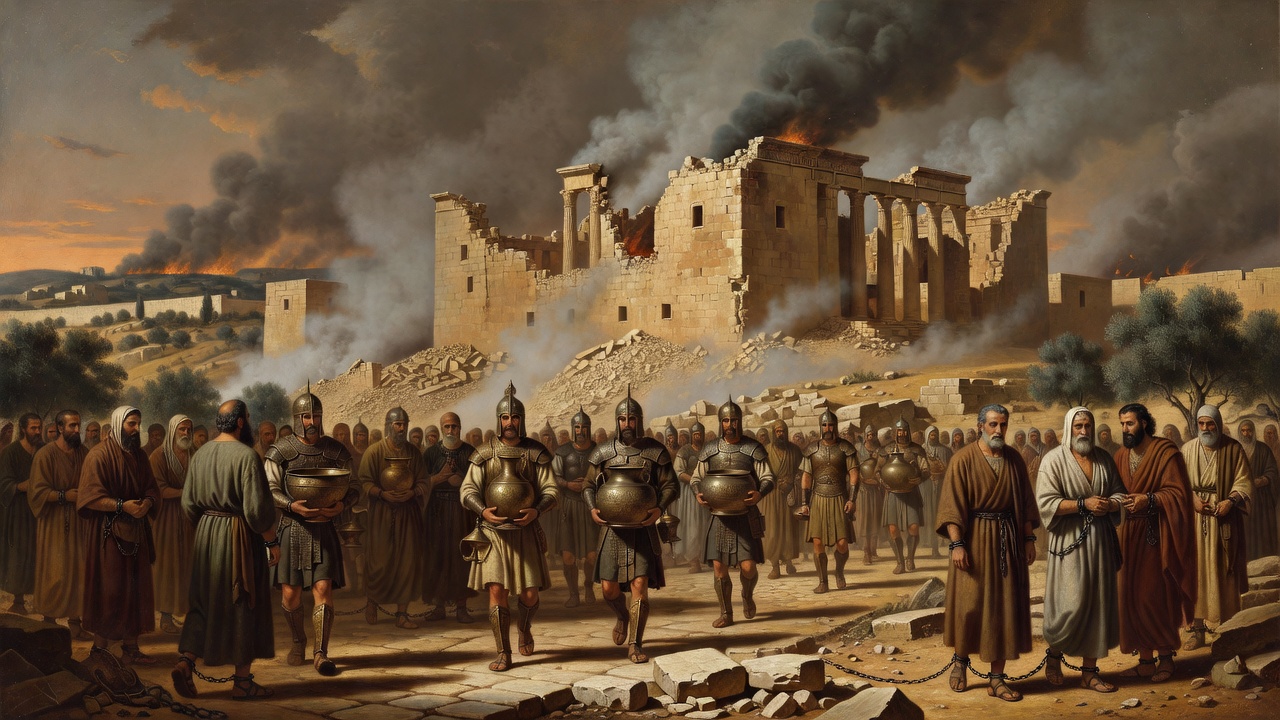
17Begaidi 'Auvea me Babiloni yadi kini i vetunei Ielusalema 'atamana bwaikina i lukuya. Babiloni tolugaviavo me Iuda fuedi i luvewafadi. We'e tubuvauvau 'ifwaidi i 'wavinedi i luku Vanuga 'eba Velu'ui nageneye bei luvewafadi. Tolugaviavonidi kebu tamu aitoi i da 'isanuakalikaliedi, me Iuda matatabudi, tubuvauvaudi wata nigolalaga, 'au'auveadi wata toviga taiadi. 'Auvea me Iuda matatabudi i 'anivelenedi me Babiloni yadi kini nimaneye. 18Babiloni 'ana kini nani matatabuna bwaikidi wata siaidi me Isileli i vevefolovediga 'Auvea yana Vanuga 'eba Velu'ui nageneye i 'ewadi kukua 'ai'aiwabudi 'adi 'isa 'atumaiotogidi taiadi. Me Iuda yadi kini yana vanuga wata yana tofolovavo bwaikidi yadi vanuga 'waidiega, kukua 'ai'aiwabudi i 'ewadi i nawedi Babiloni, we'e kebu tamu i da luvegalalaiga. 19Tolugaviavonidi Yaubada yana Vanuga 'Eba Velu'ui i tunuya i 'alai, we'e Ielusalema 'atamana 'ana kali kileu 'wainega i didigiga, i tutuweawealidi wata vanuga bwaikidi i tunudi i 'alaidi we'e kukuanidi matatabudi i luvela'ovidi.
20Iuda 'ana tomotogavo, kumanidiavo ma yawaidi i miamianiga, tolugaviavonidi nimadi i 'iyogoyogonidi i 'a'avana i nawedi Babiloni. Tutuyanina i miamia 'awalawa Babiloni 'waineye me Iuda i vetofolova-maimaiga kini ma natunavo faifaidi, i nagoga mulieta me Fesia Babiloni i vetoketoke-'iawedi ma'itufa 'eba veimeanina i 'ewai. 21Nika ava'ai 'Auvea yana vona 'ana tolu'ivona Ielemaia i vona-samuleniga 'ana mogitana i souyeni. Me Iuda yadi fwayafwaya i 'iawelovei i vedigaba 'wa da vo i da veawai me Iisileli yadi Sabati bani'odi, i nagoga malamala 70 i veluagai bani'odi 'Auvea i voneyedi.
22'Awalawa Fesia 'waineye Kini Sailusi yana vetoveimea 'ana malamala kumekumetana 'waineye, 'Auvea yana vona Ielemaia i vona-samuleniga, 'ana mogitana i souyeni. Side bani'odi. 'Auvea yana nuanua Sailusi i veleni bega yana veimea i kilumi, i 'a'avana veimeanina yana tofolovavo i veledi i vetunedi yana 'eba veimea matatabuna 'waineye, nika matatabudi i 'asetai. Yana veimea side bani'odi i vo,
23Yau Kini Sailusi me Fesia yadi kini, yaku veimea side:
'Auvea tomia abama yadi Yaubada, 'eba veimea matatabuna fwayafwaya tabwaneye i veleku. I venua'ivineku veimea i veleku yana Vanuga 'Eba Velu'ui a na yogoni Ielusalema 'atamana bwaikina 'waineye Iuda yana 'eba veimea nageneye. 'Auvea yana tomotogavo kumanimiavo nuanuami 'wa na vilami a tauyemi 'wa na nagoi folovanina faifaina. 'Auvea yami Yaubada kumanina 'asa'aiana i na kumesemi taiadi 'wa na nagoi.”
Did you know?
The Fall of Jerusalem and the Decree of Cyrus
- In the final decades of Judah, foreign rulers repeatedly dictated the royal succession in Jerusalem. Pharaoh Neco of Egypt deposed Jehoahaz and placed his brother Eliakim on the throne under the name Jehoiakim, while King Nebuchadnezzar of Babylon later installed Zedekiah.Sources: the Bible text itself · Jehoiakim · Zedekiah
- Nebuchadnezzar and his Chaldean forces destroyed Jerusalem by burning down the temple and royal palaces, breaking down the city walls, and carrying the sacred vessels and surviving population into exile in Babylon.Sources: the Bible text itself · Jerusalem · Babylon
- In fulfillment of the word spoken through the prophet Jeremiah, the land lay desolate for seventy years until Cyrus, king of Persia, issued a royal decree granting the Jewish exiles permission to return and rebuild the house of God in Jerusalem.Sources: the Bible text itself · Cyrus · Jeremiah
Notes written with AI assistance from open sources (Theographic Bible Metadata, CC BY-SA 4.0; Easton’s Bible Dictionary, public domain) and reviewed before publishing.
Places in this chapter
- Jerusalem · 31.777, 35.234 · verses 1, 2, 3, 4, 5, 6, 9, 10, 11, 14, 19, 23
- Egypt · 30.129, 31.308 · verses 3, 4
- Babylon · 32.543, 44.422 · verses 6, 7, 10, 17, 18, 20
- Chaldea · 30.962, 46.104 · verse 17
- Persia · 34.806, 48.516 · verses 20, 22, 23
Only places identified with high confidence are shown (90% or more according to the scholarly sources compiled by OpenBible). Period map: DARE (Digital Atlas of the Roman Empire), CC BY 4.0; modern map: © OpenStreetMap contributors; places: OpenBible.info (CC BY 4.0).
Credits and license for this translation
YAUBADA YANA VONA'AWAUFAUFA 'IVAUNA
The New Testament in the Iamalele dialect of the Ubuvala Language of Papua New Guinea
Nupela Testamen long tokples Ubuvala long Niugini
copyright © 1984, 1988, 2025 Wycliffe Bible Translators, Inc. and SIL Papua New Guinea
Language: Ubuvala (Iamalele)
Dialect: Iamalele
Translation by: SIL PNG
Contributor: Wycliffe Bible Translators
This translation is made available to you under the terms of the
Creative Commons Attribution-Noncommercial-No Derivatives license 4.0.
You may share and redistribute this Bible translation or extracts from it in any format, provided that:
You include the above copyright and source information.
You do not sell this work for a profit.
You do not change any of the words or punctuation of the Scriptures.
Pictures included with Scriptures and other documents on this site are licensed just for use with those Scriptures and documents.
For other uses, please contact the respective copyright owners.
2026-09-30
Source: http://png.bible/yml/ · eBible.org