Ruth 1
Vanuvei Eo e sepinien Vatlongos na mol-Vatimol xil niutestamen e rute te oltestamen · Tap a verse to see its cross-references.
About this book
About Ruth
- The events are set in the days of the judges. A great famine led Elimelech, a man of the tribe of Judah and a kinsman of Boaz, to leave Bethlehem with his wife Naomi and their sons Mahlon and Chilion and settle in Moab, east of the Jordan and the Dead Sea. There Elimelech and both sons died.Sources: Elimelech · Moab · Mahlon · Chilion
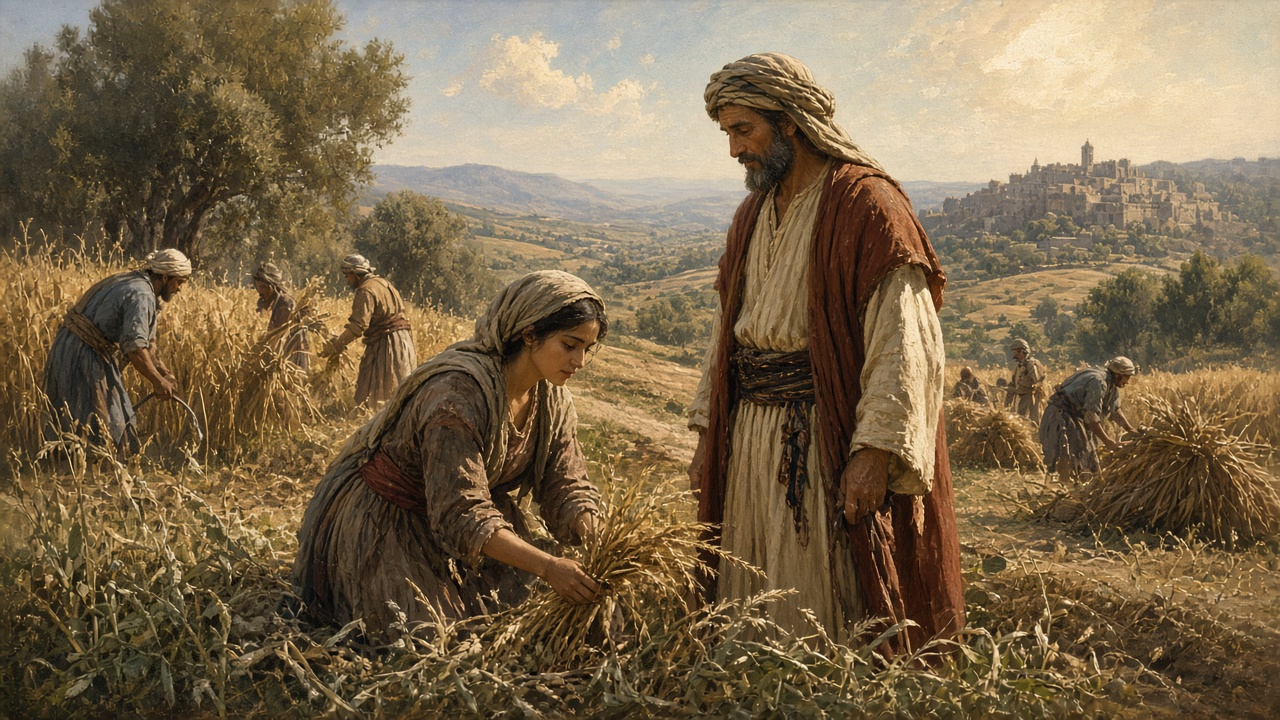
- Naomi then returned to Bethlehem with Ruth, a Moabite and the widow of Mahlon, who refused to leave her. Orpah, Chilion's widow, accompanied Naomi part of the way and then returned to Moab. In the valley east of the town, Ruth gleaned in the fields and was eventually married to Boaz, a wealthy relative.Sources: Easton: Ruth · Orpah · Bethlehem · Boaz
- Easton's Bible Dictionary (1897) says the story of the gleaner Ruth illustrates friendly relations between Boaz and his reapers, the land system, the way property was transferred, and the working of the Mosaic law for the relief of ruined families. By the levirate law, Boaz, a kinsman of Mahlon, took on the duty of marrying Ruth.Sources: Easton: Ruth · Boaz
- Ruth became the mother of Obed, the grandfather of David. The genealogy in Ruth 4:18-22 traces that line, and Matthew 1:5 includes Ruth, a Gentile, among the ancestors of Jesus. Easton also compares her with Tamar and Rahab, who likewise became ancestors of David.Sources: Easton: Ruth · Obed · Ruth
- Bethlehem, in the hill country of Judah, was originally called Ephrath; Ruth 1:2 calls it Bethlehem-Judah and its people Ephrathites. Easton's Bible Dictionary (1897) explains Ruth as meaning a friend, and Naomi as bitter or sad, a symbolic name she gave herself because of her misfortunes.Sources: Bethlehem · Ephrathah · Ruth · Naomi
Notes written with AI assistance from open sources (Theographic Bible Metadata, CC BY-SA 4.0; Easton’s Bible Dictionary, public domain) and reviewed before publishing.
Sakpisien xil xa nggeih bemei e meulien na ate‑Isrel tei
1Tetiamu, Iahova tesa vat xil mei latetutou ni mol‑Isrel xil, vengan xa suv toto nae tehe tovuol tamu tengan valaxat xil mu valepis rin nae xil. E melele nen ak, mae kekaten tei xa eilep tekapis e tan xa mol‑Isrel lateti en. Reitin, us tamus ti aveti xil holu e misak ni anien tovuol e mae di nggat moletin xil. Misak ni, moletin tei te metimal te hal Betlehem e tan na mol‑Sudah xil, xi tehe kantri te hal Moab, hisen Elimelek, e xi texo vatimol xa mahulong na Efrat. Xi teha tetel atou nan, hisen Noume, e tetel horamue lu nalu, hisealu Malon xal Kilion. E xil ba lateti e tan na mol‑Moab xil huram vahis. 3E melele xa lateti rute ak, Elimelek temat, ma Noume teta tasen tang tetel horamue nan xalu. 4Di, horamue nan xalu ak luteteli mi atou lu te hal Moab, hisealu Oripa e Rut. Melele xa huram he xalu (10) mei tetavi, 5Malon xal Kilion mun lutelel. Ma, Noume tetat temak tang, tiramue nan e horamue nan xalu mun latehe tovuol.
Noume dilomun be metimal te hal Betlehem del havnahin Rut
6Aveti vahis mei mitavi, e Noume milongeong ni xa Hi di duxol xat moletin nan xil nggo rin xa di misak ni anien sae xil di meul bos rilomun. Misak ni, Noume bue xat xi tengan ihe reling kantri te hal Moab itel havnahin xalu. 7Xatel vus latobituei latoba tengan latotilomun latohe tan na mol‑Sudah xil. E melele xa di latoba, 8Noume biteni mi xalu bit, “Multilomun mun tang mulihe visal ninemil xati xalu e multit itel xalu. Inou nasis tengan Hi ipisen hosien mi xamil ixoni ngan taxa mutepisen ni minou tetel horamue navan xalu xa lulel tuei. 9Nasisi mun xa Hi ipol ni xamil mulkila muliteli rilomun e mulikamet hosien itel tiramue hu namil xalu.”
Di, Noume po xat xalu tengan istokovein xalu laliha. E xalu di lumuis 10e lubiteni mi Noume lubit, “!Masakras li malhe relinguk! Xamel malhusiluk, ratiha ratti vituei itel moletin nam xil.”
11E Noume bit rilomun ni mi xalu bit, “Havuxahin xalu, bos mak mu xa multilomun muliha. ?Veneh ma mubit mulhusil inou? ?Munemi mubit inou nikila niling horamue lu mun tengan muliteli mun itel xalu? 12!E‑e! !Muliha! Inou nabe tovolih pupu tengan nateli rilomun. ?Tave ti neta xosxa inou nanemi namit nakila niteli mun xosali tang, e niling horamue lu mun, 13xamil mukila multatil xalu ha vuma … lalimatu lalipin ni tetelien? E‑e, ngan ak misakras vastal vamak. Havuxahin xalu, xos mukila mulikamet hosien mu e meulien namil, e inou nasakras. Mulnahusil nou ti. E meulien navan, napus longpangasien holu vengan xa he Iahova di nggeih da xat inou.”
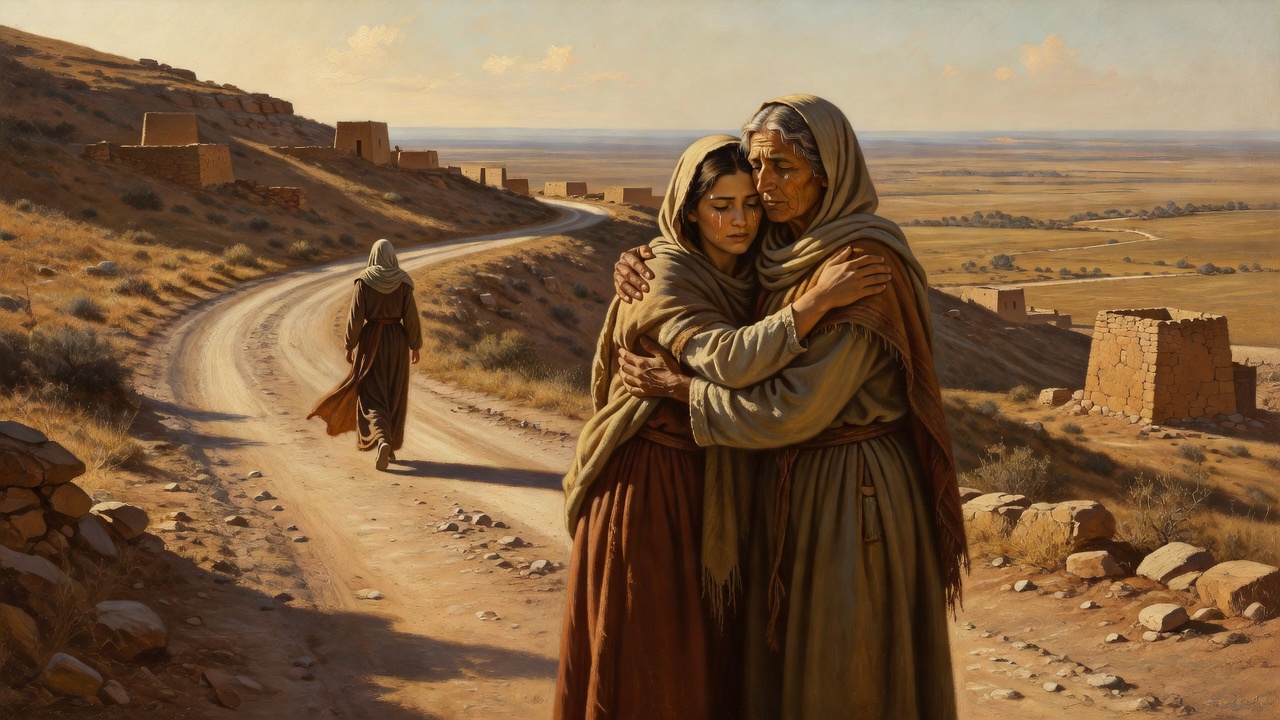
14Xalu lumuis vatei mun. Di, Oripa maheah xat avu sasa nan, misep lingi, e ba tengan vatilomun vahe visal vatimol nan xil. E Rut, xi miteli en nggeih, ien ti tavei vahe reling Noume. 15Ma Noume biteni mini bit, “?Rut, pus ti? Tumahin di dilomun tengan vahe visal moletin nan xil e hi nan xil. Xouk mun uhusili muliha ha upus vatimol nam xil.” Rut bit xati xa nave reling avu sasa nan.|alt="Naomi and Ruth on the road" src="RUTH1-6.TIF" size="col" copy="© Global Recordings Network. Used with permission." ref="1:15"
16E Rut bit rilomun ni mini bit, “!Onasil nou ti tengan name relinguk! Umaen nou li nihusiluk. !Rute xave xa uha en, inou mun niha en! !Rute xave xa uta en, inou mun nita en! Moletin nam xil, lihe moletin navan xil mun. E Hi nam, ihe Hi navan mun. 17Rute xave xa umat en, inou mun nimat en, e litihin nou e rute ak. Nasakras namaen neta tova vahur rat nou ra xouk ha vuma … tei ralu imat. !Ngan ak be hitxatien navan e Iahova isa pangasien te xeih mei iti xat nou xosxa nihur xotehi!”
18Melele xa Noume pus kila xa Rut, nenemien nan nggeih tengan ihusili, xi tasak ti mun tengan vasila vahe relingi.
19Ma xalu lukakao vuma … ba luduxoh metimal te hal Betlehem. E melele xa be lustal en, moletin xil vus te rute ak latemanin ni xalu. E atou xil lamesep pupu labit, “?Noume mak xiak?”
20E Noume bit rilomun ni mi xil bit, “Munakes nou ti mun ni ‘Noume’ e mukes nou ni ‘Mara’ vengan xa Iahova pol ni meulien navan mei mikon ni longpangasien. 21Melele xa natehe reling rute ak, heok xalu tepolu ni hosien, e taxeak, Hi nggur rilomun ni nou mei nabe heok hon tang. ?Veneh ma mukes nou ni Noume vengan xa Hi te Xeihen tepol ni texeih pupu minou e tesa longpangasien minou?”
22Nggo sexien ak, Noume nggo kantri te hal Moab e dilomun bemei e tan te hal Isrel del havnahin Rut, xa be ate‑Moab. E melele xa mei lustal e metimal te hal Betlehem, bale mun tehe temetu e naho sa mol‑Isrel xil.
Did you know?
Naomi and Ruth Return to Bethlehem
- In the days when the judges ruled, famine forced Elimelech and his family from Bethlehem in the hill country of Judah to migrate to the land of Moab, east of the Dead Sea. After the deaths of Elimelech and her two sons, Naomi decided to return to Bethlehem when she heard that food was once again available in Judah.Sources: the Bible text itself · Bethlehem · Moab · Elimelech
- While Orpah returned to her people and gods in Moab, Ruth clung to her mother-in-law and pledged loyalty to Naomi and her God. Ruth, a Moabite woman, traveled to Bethlehem and would later become an ancestor of King David.Sources: the Bible text itself · Ruth · Orpah
- Upon arriving in Bethlehem at the beginning of the barley harvest, Naomi asked the women of the city to call her Mara, meaning bitter, because she felt the Almighty had dealt bitterly with her. She had departed full with a husband and two sons, but returned empty after their deaths.Sources: the Bible text itself · Naomi
Notes written with AI assistance from open sources (Theographic Bible Metadata, CC BY-SA 4.0; Easton’s Bible Dictionary, public domain) and reviewed before publishing.
Places in this chapter
- Bethlehem · 31.704, 35.208 · verses 1, 2, 19, 22
- Moab · Today: Moab 1 · 31.181, 35.701 · verses 1, 2, 4, 6, 22
Only places identified with high confidence are shown (90% or more according to the scholarly sources compiled by OpenBible). Period map: DARE (Digital Atlas of the Roman Empire), CC BY 4.0; modern map: © OpenStreetMap contributors; places: OpenBible.info (CC BY 4.0).
Credits and license for this translation
Vanuvei Eo e sepinien Vatlongos na mol-Vatimol xil niutestamen e rute te oltestamen
Portions of the Holy Bible in the Southeast Ambrym Language of Vanuatu
Des portions de la Sainte Bible dans le Sud-Est Ambrym Langue de Vanuatu
copyright © 2015 Wycliffe Bible Translators, Inc.
Language: Southeast Ambrym (Ambrym, Southeast)
Dialect: Central
Translation by: Wycliffe Bible Translators
This translation is made available to you under the terms of the
Creative Commons Attribution-No Derivatives license 4.0.
You may share and redistribute this Bible translation or extracts from it in any format, provided that:
You include the above copyright and source information.
You do not make any derivative works that change any of the actual words or punctuation of the Scriptures.
Pictures included with Scriptures and other documents on this site are licensed just for use with those Scriptures and documents.
For other uses, please contact the respective copyright owners.
2016-09-06
Source: http://ebible.org/tvk/ · eBible.org