Jonah 1
Vanuvei Eo e sepinien Vatlongos na mol-Vatimol xil niutestamen e rute te oltestamen · Tap a verse to see its cross-references.
About this book
About Jonah
- Jonah, whose name means “a dove,” was the son of Amittai of Gath-hepher and a prophet of Israel. Easton's Bible Dictionary (1897) holds that he wrote the book himself. His ministry is placed very early in the reign of Jeroboam II: he was contemporary with Hosea and Amos, or possibly earlier, and so may have been the oldest of the prophets whose writings survive.Sources: Jonah · Amittai · Easton: Jonah, Book of
- The book professes to tell what actually happened to the prophet. Some critics have read it as a parable or allegory rather than history, because miracle is so prominent and the form is narrative rather than prophecy, or because they deny miracles altogether. Easton's Bible Dictionary (1897) instead treats it as history, attaching great weight to the mention of Jonah in Matthew 12:39-40 and Luke 11:29.Sources: Easton: Jonah, Book of
- Jonah was commissioned to go to Nineveh, described as a great and populous city and the flourishing capital of the Assyrian empire, but he sailed from Joppa, Judea's chief seaport, to flee toward Tarshish. Where Tarshish lay is disputed: some place it in the east, on the Indian coast, some identify it with Carthage, and Easton's dictionary takes it to be a Phoenician port in Spain.Sources: Easton: Jonah, Book of · Nineveh · Joppa · Tarshish
- Easton's outline has four movements: the divine commission, disobedience, and punishment; Jonah's prayer and deliverance; a second commission, the Ninevites' repentance, and God's sparing mercy; and Jonah's anger at that mercy, followed by a rebuke. The same dictionary notes that Nineveh was spared for more than a century after his mission.Sources: Easton: Jonah, Book of
- As a prophet of Israel, Jonah foretold the restoration of the kingdom's ancient borders. A biographical note presents him both as a missionary to Nineveh and as a type of the Son of man. The book of Nahum is taken up almost entirely with denunciations of that city, and Zephaniah also predicts its destruction.Sources: Jonah · Nineveh
Notes written with AI assistance from open sources (Theographic Bible Metadata, CC BY-SA 4.0; Easton’s Bible Dictionary, public domain) and reviewed before publishing.
Iahova misil provet Siona tengan vasel xat mol‑Nineva xil, e Siona ien ti tavei vaha
1E tan te hal Isrel, provet tei da en, hisen Siona, nat Amitai. Vatei, Iahova misa sepinien tei mini bit, 2“Utemanon uhe taon xa mahulong te hal Nineva, e usel xat moletin xil xa ladi en. Uhiteni mi xil xa sexien nae xil pupuru pupu pe metok.”
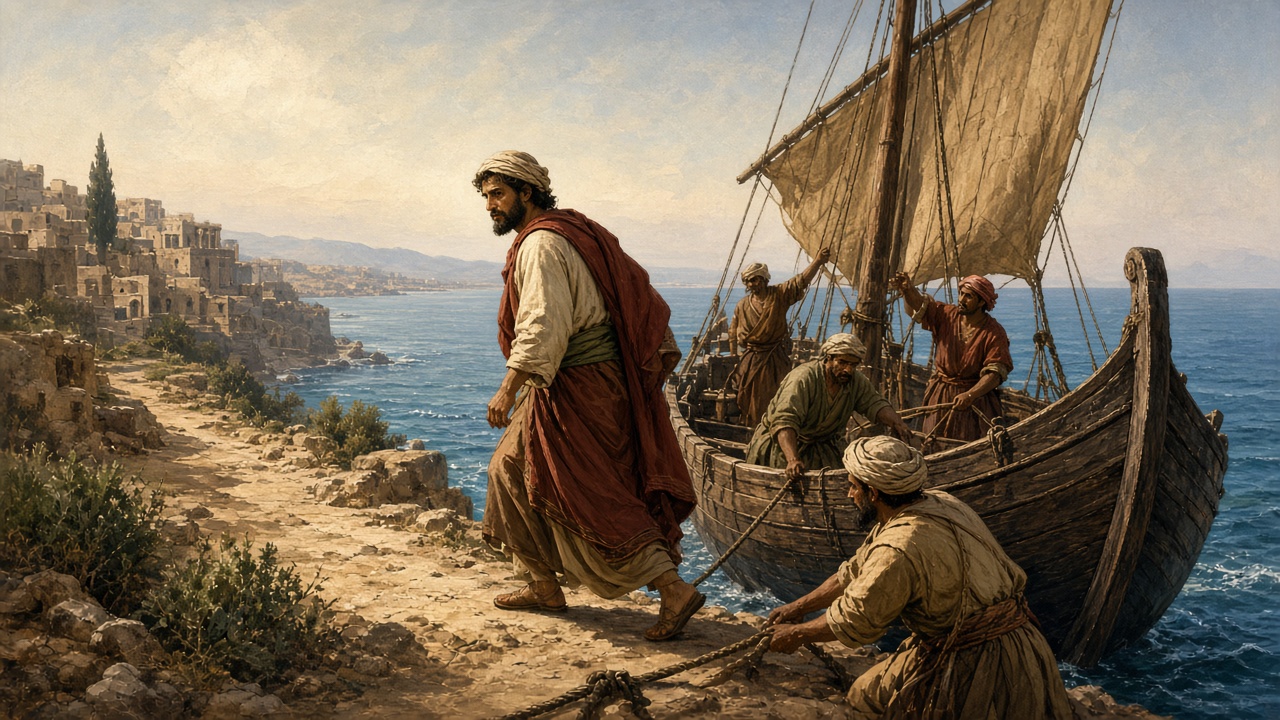
3E Siona, ien ti tavei vahusil suse xa be ist tengan ha vasa sepinien na Iahova mi mol‑Nineva xil xa ladi e kantri tei xa de ist. Mak, ma xi biles be wes e suse sav tengan valesae rani. Siona ba duxoh pasis e taon te hal Siopa, e mikamet tuturil tei xa di labue xat xi tengan vahe Spen, kantri tei xa be sotin pilei mak e rin xa wes. Ma xi minggal suse nan e be tuturil ak del boskru xil teni. Di, tuturil ak miloh tengan vahe Spen del Siona xa di milesae ra Iahova. Provet Siona sak pisi tengan valesae ra Hi.|alt="Jonah boards a ship" src="JONA1-1.TIF" size="col" copy="© Global Recordings Network. Used with permission." ref="1:3"
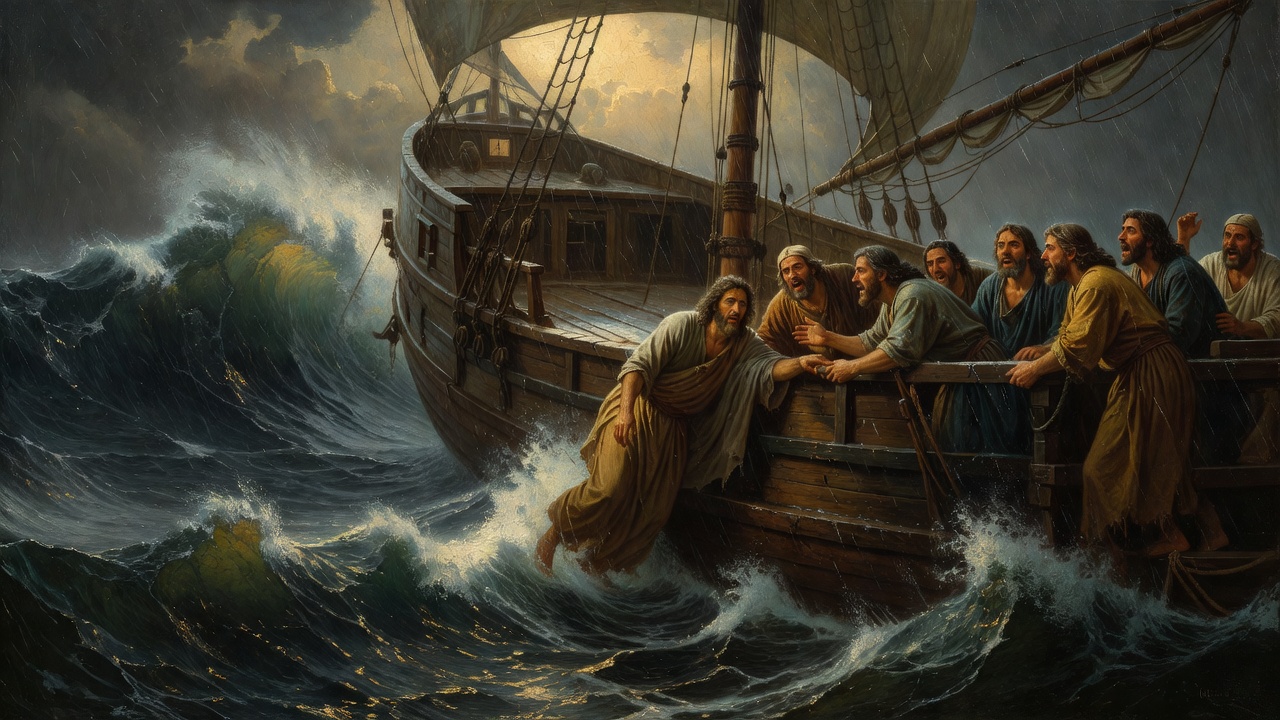
4Melele xa tuturil ak di miloh ba, Iahova pol ni votiang mu e tas misa xa misa, e sangas tuturil ak vamahoe lel. 5Boskru xil ulixil mikan pupu, e xil kekes di ladakes hi nae xil tengan lasa tutouen mi xil. Di, laleh rat holesok xil xa ladi vangit tuturil e laso ni be tas tengan vapol ni tuturil ak vameit mu.
E melele xa holesok xil ak di mistal, Siona dit por sae e vangit tuturil ak. 6E melele xa vatihos te tuturil ak be vangit, mikamet Siona e biteni mini bit, “!Ei! ?Veneh ma di opat mak? !Utamea, e usis mi hi nam ve tutouen! Xos xi iaxa mikila ien isae e xir e iteh meulien e xir.”
7Di, boskru xil lamei vituei e laling nenemien nae tengan lilihi hisexil tengan lakameti xa visi e xil di milihi an tesa ak ba xat xil. E melele xa lapol ni, lalihi his Siona. 8Ma ba lasepin mini labit, “?Ei, uhiteni mi xamem, veneh ma an tesa ak di bas xir? ?Polien eah iaxa xouk di opol ni? ?Xouk onggo kantri xave e moletin nam xil labe hisit moletin eah?”
9Ma Siona biteni mi xil bit, “Inou nabe ngan Isrel tei e di namot mi Iahova, Hi te ut nesao xa tepol ni tan e tas.” 10Di, Siona bit rat xi mi xil bit xi di milesae ra Iahova.
Melele xa boskru xil lalonge mak, ulixil mikan pupu ma lasel mini labit, “?Veneh ma otepol ni tesaen ak?” 11E melele xa lapusi xa votiang di bemei nggeih pilei mu, lasis Siona labit, “?Uhiteni mi xamem, mupol ni itep tengan isak ni an tesa ak ihe tan?”
12Ma Siona bit rilomun ni mi xil bit, “Mupo nou e muso nou nihe tas. Melele xa mupol ni imak, ma tas mei ihos rilomun. Nakila xa votiang ak bas xir mak venou vari.”
13E boskru xil iexil ti tavei tengan laso Siona vahe tas. Misak ni xil lasak tengan lavalis ni tuturil ak vahe ut, e lasakras vengan xa tahe xil mei labe tellep mu e votiang mei nggeih pilei sung. 14Ma di, xil ladakes Iahova labit, “O Iahova, masis minuk li xa onasa pangasien ti mi xamem ve maten na moletin xai. Reitin, onahas xamem ti li vengan xa xouk, Iahova, otepol ni holesok xil ak testal texo hem e tehusil lingxatien nam kestang.” 15Di, lapo rat Siona e laso ni be tas. E vatakes, tas mei bos rilomun. 16Melele xa boskru xil lapusi mak, lamerere ni Iahova himetu. Ma lasa sanien eo tei te memesien mini e xil kekes lapol ni hitxatien nae xil dela.
17E Siona tamat ti. Iahova misil meseo tei xa mahulong mei miromi e Siona meul tang de vang meseo ak melengien tol.
Did you know?
Jonah Flees from the Lord
- Jonah, the son of Amittai from Gath-hepher, is also recorded in 2 Kings 14:25 as a prophet active in the northern kingdom of Israel during the reign of Jeroboam II. God instructed him to travel east to Nineveh, the prominent and populous capital of the Assyrian empire, to preach against its wickedness.Sources: Jonah · Amittai · Nineveh · the Bible text itself
- Rather than traveling northeast overland to Nineveh, Jonah journeyed down to the Mediterranean seaport of Joppa to board a ship for Tarshish. Tarshish is traditionally identified as a Phoenician trading port located far to the west in southern Spain, representing the exact opposite direction.Sources: Joppa · Tarshish · the Bible text itself
- The sailors aboard the cargo ship came from polytheistic backgrounds, each calling out to his own deity during the violent tempest. After throwing the ship's cargo overboard to lighten the vessel, they turned to the ancient practice of casting lots to determine who was responsible for the calamity.Sources: the Bible text itself
Notes written with AI assistance from open sources (Theographic Bible Metadata, CC BY-SA 4.0; Easton’s Bible Dictionary, public domain) and reviewed before publishing.
Places in this chapter
Only places identified with high confidence are shown (90% or more according to the scholarly sources compiled by OpenBible). Period map: DARE (Digital Atlas of the Roman Empire), CC BY 4.0; modern map: © OpenStreetMap contributors; places: OpenBible.info (CC BY 4.0).
Credits and license for this translation
Vanuvei Eo e sepinien Vatlongos na mol-Vatimol xil niutestamen e rute te oltestamen
Portions of the Holy Bible in the Southeast Ambrym Language of Vanuatu
Des portions de la Sainte Bible dans le Sud-Est Ambrym Langue de Vanuatu
copyright © 2015 Wycliffe Bible Translators, Inc.
Language: Southeast Ambrym (Ambrym, Southeast)
Dialect: Central
Translation by: Wycliffe Bible Translators
This translation is made available to you under the terms of the
Creative Commons Attribution-No Derivatives license 4.0.
You may share and redistribute this Bible translation or extracts from it in any format, provided that:
You include the above copyright and source information.
You do not make any derivative works that change any of the actual words or punctuation of the Scriptures.
Pictures included with Scriptures and other documents on this site are licensed just for use with those Scriptures and documents.
For other uses, please contact the respective copyright owners.
2016-09-06
Source: http://ebible.org/tvk/ · eBible.org