Psalms 23
Godón Buk · Tap a verse to see its cross-references.
About this book
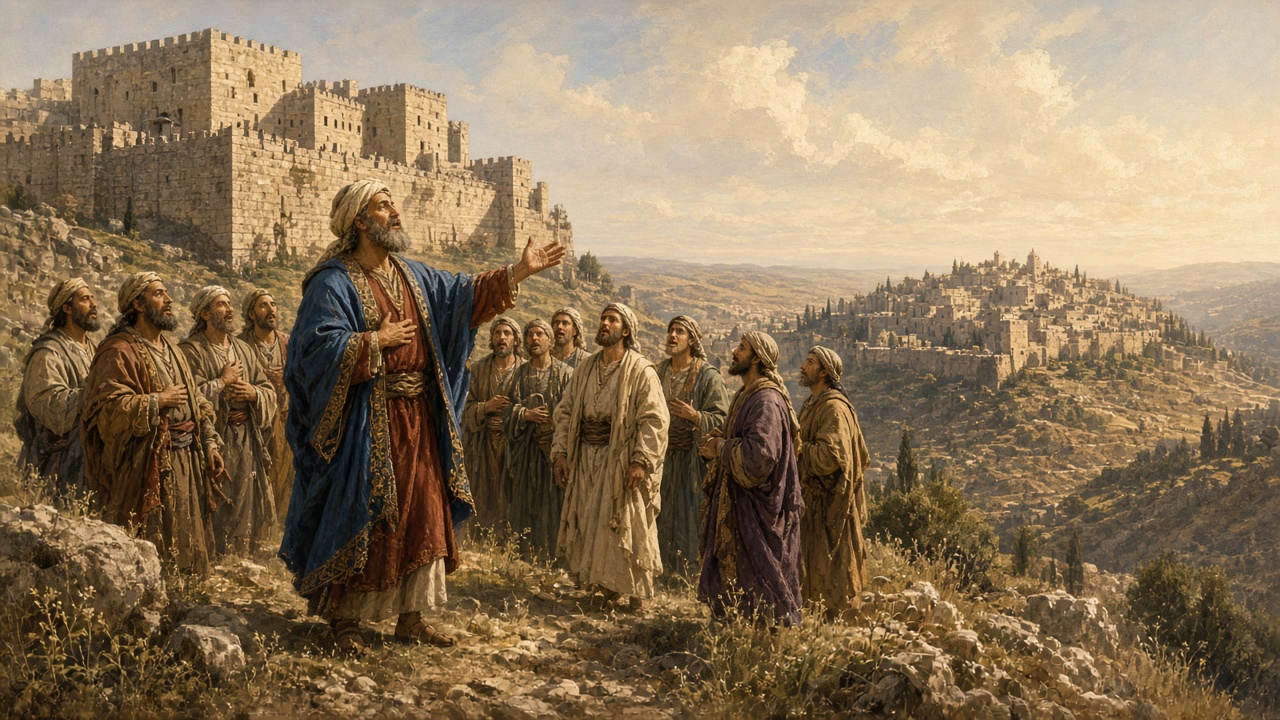
About Psalms
- Easton's Bible Dictionary (1897) presents the Psalms as the work of various authors, owed especially to David and his contemporaries, while poets of later generations added further songs. Easton remarks that, for this reason, the collection more completely reflects every phase of human emotion and circumstance than it otherwise could. The titles ascribe 73 psalms to David; Easton also notes that Peter and John (Acts 4:25) attribute the anonymous Psalm 2 to him, and that about two-thirds of the collection have been ascribed to David.Sources: Easton: Psalms
- Easton's Bible Dictionary (1897) holds that no psalm can be proved later than the time of Ezra and Nehemiah, so the collection spans about a thousand years. It records the presumption that the five smaller collections were made at times of high religious life: the first near the close of David's life, the second in the days of Solomon, the third by the singers of Jehoshaphat, the fourth by the men of Hezekiah, and the fifth in the days of Ezra.Sources: Easton: Psalms
- Like the Pentateuch, the Psalter is divided into five books, each closing with a doxology or benediction: Psalms 1-41, 42-72, 73-89, 90-106, and the remaining 44. Easton reports many ascriptions to David, to Solomon in Psalms 72 and 127, to Moses in Psalm 90, to Heman the Ezrahite in Psalm 88, and to Ethan the Ezrahite in Psalm 89, while many other psalms are anonymous.Sources: Easton: Psalms
- Some titles connect psalms with singers of worship. Psalms 50 and 73-83 are addressed to Asaph, a Levite and one of the leaders of David's choir, skilled in music and called a seer; the Asaph entry says the sons of Asaph were his descendants or, more probably, a class of poets or singers who recognized him as their master. The sons of Korah, a leading part of the Kohathite singers, were entrusted with arranging and singing Psalms 42, 44-49, 84, 85, 87, and 88, and Psalms 39, 62, and 77 are addressed to Jeduthun, to be sung after his manner or in his choir.Sources: Easton: Psalms · Asaph (Levite)
- Psalm 136 is generally called the great hallel, though the Talmud also includes Psalms 120-135. Psalms 113-118 form the hallel recited at the three great feasts, at the new moon, and on the eight days of the feast of dedication. Easton counts 116 direct quotations from the Psalter in the New Testament, and notes that in Luke 24:44 the word psalms means the Hagiographa, the holy writings, one of the sections into which the Jews divided the Old Testament.Sources: Easton: Psalms
Notes written with AI assistance from open sources (Theographic Bible Metadata, CC BY-SA 4.0; Easton’s Bible Dictionary, public domain) and reviewed before publishing.
⌊Lod⌋ Kürü Ngakan Pama
Darrü ⌊Deibidün⌋ Wórr
1Lod kürü ngakan pama, kürü wató alngomólda; Ka igósidi darrü kla koke arendóla.
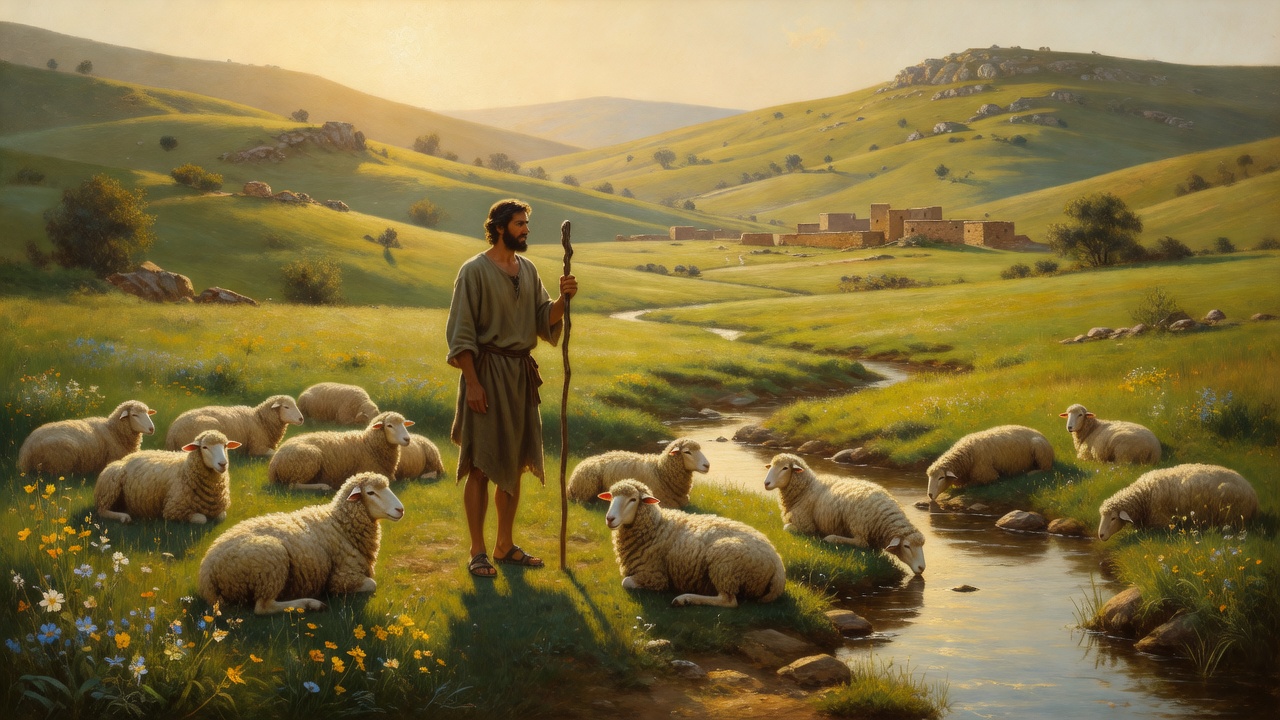
2Wa kürü morroal mórrel bwóbdü mórran-mórran ainda. Sip ngakan omokur Deibid ap apulda.|alt="Shepherd Dabid playing the harp" src="CO01006B.TIF" size="span" copy="David C. Cook" ref="23:2"
Wa kürü alngomólda morroal piküp güb arób naedó.
3Wa kürü küsil arüng akyanda.
Wa kürü dümdüm kwatódóma alngomólda,
tóba morroal ngianme.
4Enana ka agóltagóldóla güm algón-koke tümün kwatódóma,
kürü kolaedó gum babula,
zitülkus ma kankü asinla.
Marü bidam wóp akó tupuru,
kürü ini nis klama adlangdamli.
5Ma kürünkü alongalo tóre tónggapóna,
kürü gómdamal-koke nidipko, ibü wapi;
Ma kürü singül ⌊olib⌋ oele kóngangoa, kürü morroal apadóm,
marüme, kürü kübüla byamróke tai kókó ib.
6Amkoman, marü morroal tonarr akó gyaur sab kürüka asi namüli
kürü ngyabendó,
akó ka sab Lodón Müótüdü ngyaben namulo metat.
Did you know?
The Shepherd and the Gracious Host
- The psalm opens with pastoral imagery drawn from everyday shepherd life, describing guidance toward green pastures and quiet waters, as well as protection through dark valleys using a rod and staff.Sources: the Bible text itself
- In the latter part of the psalm, the imagery shifts from pastoral flock care to hospitality, portraying a host who prepares a banquet table, anoints the guest's head with oil, and fills an overflowing cup.Sources: the Bible text itself
Notes written with AI assistance from open sources (Theographic Bible Metadata, CC BY-SA 4.0; Easton’s Bible Dictionary, public domain) and reviewed before publishing.
Credits and license for this translation
Godón Buk
Portions of the Holy Bible in the Gizrra language of Western Province, Papua New Guinea
Buk Baibel long tokples Gizrra long Niugini
copyright © 2019 Wycliffe Bible Translators, Inc.
Language: Gizrra
Translation by: Wycliffe Bible Translators, Inc.
This translation is made available to you under the terms of the
Creative Commons Attribution-Noncommercial-No Derivatives license 4.0.
You may share and redistribute this Bible translation or extracts from it in any format, provided that:
You include the above copyright and source information.
You do not sell this work for a profit.
You do not change any of the words or punctuation of the Scriptures.
Pictures included with Scriptures and other documents on this site are licensed just for use with those Scriptures and documents.
For other uses, please contact the respective copyright owners.
2024-07-01
Source: http://png.bible/tof/ · eBible.org