Isaiah 7
Godón Buk · Tap a verse to see its cross-references.
About this book
About Isaiah
- Easton's Bible Dictionary (1897) attributes the book to Isaiah, son of Amoz, dating his ministry from 762 B.C., the fourth year before Uzziah's death, to 698 B.C., Hezekiah's last year, sixty-four years under Uzziah, Jotham, Ahaz, and Hezekiah, and says he may have outlived Hezekiah. Some critics, following a theory Easton traces to Koppe, assign chapters 40-66 to a later "deutero-Isaiah" near the end of the Babylonian captivity, and other passages to further unknown prophets; Easton notes that the Septuagint (about 250 B.C.) ascribes the whole book to Isaiah, and that the New Testament quotes disputed passages as his words.Sources: Easton: Isaiah, The Book of · Isaiah
- These prophecies were delivered during the reigns of kings of Judah, with Assyria the enemy in view in the earlier part of the book and Babylon in the later part. Isaiah ministered under Ahaz, who appealed to Tiglath-pileser of Assyria against Rezin, king of Damascus, and Pekah, king of Israel, and under Hezekiah, Ahaz's son. Easton's dictionary says Hezekiah reigned twenty-nine years (726-697 B.C.) and set himself to abolish idolatry in Judah; part of his reign is narrated in Isaiah 36-39.Sources: Easton: Isaiah, The Book of · Ahaz · Hezekiah
- Easton divides the book into three main parts: chapters 1-35, almost wholly prophetic, with Assyria as Israel's enemy and the Messiah presented as a mighty ruler and king; chapters 36-39, historical narratives from Hezekiah's time; and chapters 40-66, prophetic, with Babylon as the enemy and the Messiah described as a suffering victim, meek and lowly. He also groups the prophecies by reign: Uzziah (chapters 1-5), Jotham (6), Ahaz (7 through 14:28), the first half of Hezekiah's reign (14:28-35), and the second half (36-66).Sources: Easton: Isaiah, The Book of
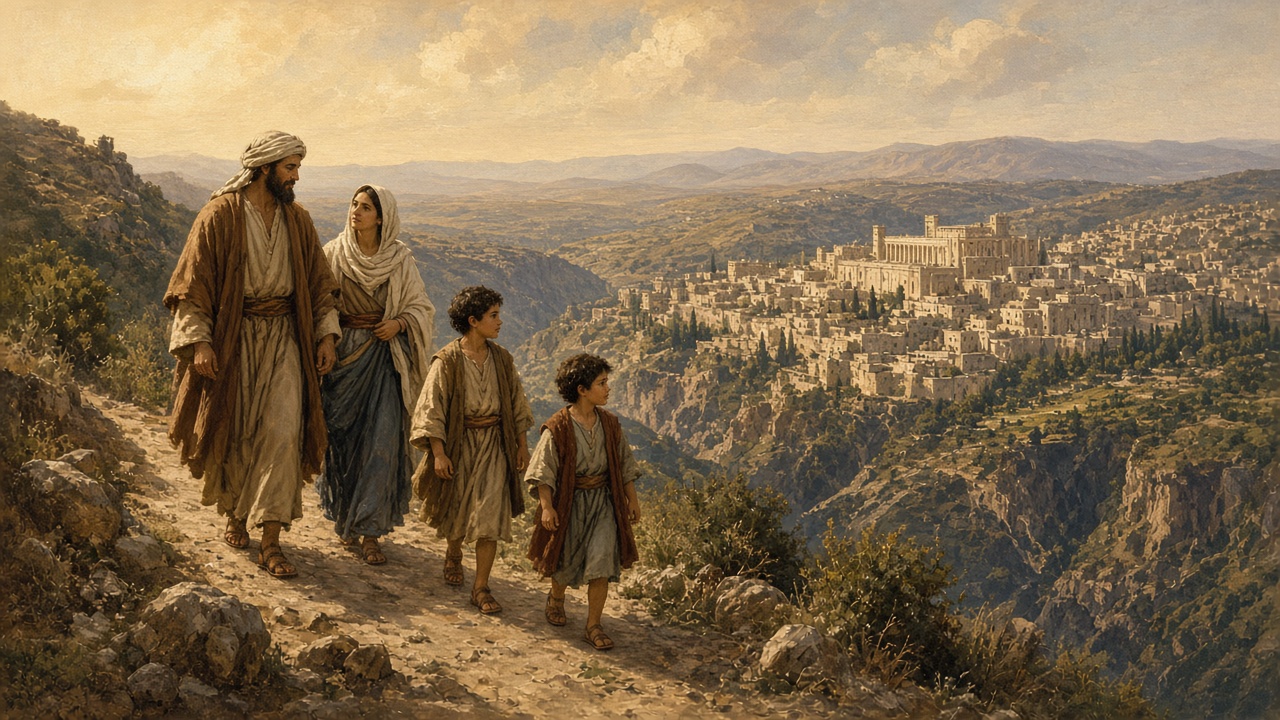
- Isaiah's father, Amoz, was apparently a man of humble rank, and little is positively known of his life. His wife is called "the prophetess," either because she was endowed with the prophetic gift, like Deborah and Huldah, or simply because she was the prophet's wife, and he had two sons who bore symbolic names.Sources: Isaiah · Amoz
Notes written with AI assistance from open sources (Theographic Bible Metadata, CC BY-SA 4.0; Easton’s Bible Dictionary, public domain) and reviewed before publishing.
Emanuelón Amtómól Umul-umulan Ngitan Bóktan
10Aesaya ⌊ Lodón⌋ darrü bóktan okaka imzazilürr king Eiazka wagó, 11“Imti Lodón, ma ne God ⌊ótókdóla⌋, darrü ⌊wirri tulmil⌋ pupainüm marü tangamtinüm oya bóktan amkoman angunüm, ia tai aumana büdülab bwóbdügab tame, ó ta ia wirri kwitümgab.”
12A Eiaz ma bóktan yalkomólórr wagó, “Ka wirri tulmilüm koke imtino. Ka Lodón apókóm kokela!”
13Ene pokodó, Aesaya wató bóktan yalkomólórr wagó, “Da tübarrkrru, king ⌊Deibidün⌋ Müót kolpam! Yabüka ia gaodó kokea pamkolpam genggorraman ngibtanóm? E akó ia Godón, ka ne God ótókdóla, genggorraman ngitanóm kaindakla, yabü ubi babulzane oya darrü klamóm amtinüm? 14Da taia, ezan bangóndakla amtinüm, Lod sab tüób yabüka okaka simzazile darrü wirri tulmil. Tübarrkrru, pampükü koke ne kola umtulürr, sab bikóm ipüde, da wa sab siman olom esene, da wa sab ngi ngyesile Emanuel.”
Did you know?
The Sign of Immanuel and the Threat to Judah
- During the reign of King Ahaz of Judah, King Rezin of Aram (Syria) and King Pekah of Israel formed an alliance to besiege Jerusalem and install a puppet ruler. Isaiah urged Ahaz not to fear them, describing the two hostile kings as mere smoldering stubs of firewood.Sources: the Bible text itself · Ahaz · Rezin · Pekah
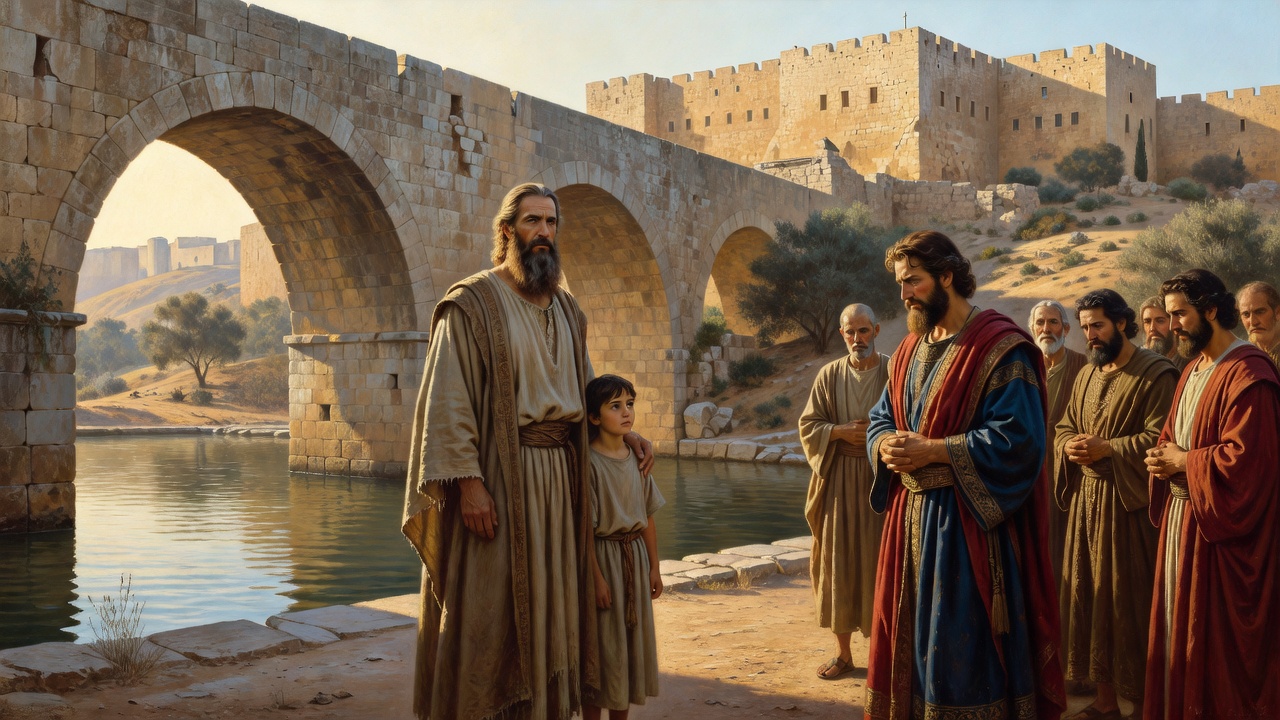
- Isaiah and his son Shear-jashub were directed to meet Ahaz near the aqueduct of the upper pool on the road to the Launderer's Field. Located west of Jerusalem, this open area was used by workers to wash and dry cloth outside the city walls.Sources: the Bible text itself · Field · Isaiah
- Although Ahaz sought military assistance from Assyria against his northern neighbors, Isaiah warned that relying on foreign empires would ultimately bring Assyrian devastation upon the land of Judah.Sources: the Bible text itself · Ahaz
Notes written with AI assistance from open sources (Theographic Bible Metadata, CC BY-SA 4.0; Easton’s Bible Dictionary, public domain) and reviewed before publishing.
Places in this chapter
- Jerusalem · 31.777, 35.234 · verses 1, 6
- Syria · Today: Aram · 33.511, 36.306 · verses 1, 2, 4, 5, 8
- Upper Pool · Today: in Jerusalem · 31.777, 35.234 · verse 3
- Damascus · 33.511, 36.306 · verse 8
- Samaria · 32.276, 35.195 · verse 9
- Assyria · 36.359, 43.153 · verses 17, 18, 20
- Egypt · 30.129, 31.308 · verse 18
- Nile · Today: Nile River · 31.465, 30.367 · verse 18
- Euphrates · Today: Euphrates River · 31.004, 47.442 · verse 20
Only places identified with high confidence are shown (90% or more according to the scholarly sources compiled by OpenBible). Period map: DARE (Digital Atlas of the Roman Empire), CC BY 4.0; modern map: © OpenStreetMap contributors; places: OpenBible.info (CC BY 4.0).
Credits and license for this translation
Godón Buk
Portions of the Holy Bible in the Gizrra language of Western Province, Papua New Guinea
Buk Baibel long tokples Gizrra long Niugini
copyright © 2019 Wycliffe Bible Translators, Inc.
Language: Gizrra
Translation by: Wycliffe Bible Translators, Inc.
This translation is made available to you under the terms of the
Creative Commons Attribution-Noncommercial-No Derivatives license 4.0.
You may share and redistribute this Bible translation or extracts from it in any format, provided that:
You include the above copyright and source information.
You do not sell this work for a profit.
You do not change any of the words or punctuation of the Scriptures.
Pictures included with Scriptures and other documents on this site are licensed just for use with those Scriptures and documents.
For other uses, please contact the respective copyright owners.
2024-07-01
Source: http://png.bible/tof/ · eBible.org