Genesis 9
Godón Buk · Tap a verse to see its cross-references.
Godón ⌊Alkamül-koke Tónggapórrón Bóktan⌋ Noaka akó Oya Olmalbobatal
1God Noa akó tóba simanal olmal bles ninóp, da we bóktanórr wagó, “E küppükü bailamke akó abün olmal balngólamke, da tüpa tai ki gwarran yabübókamde! 2Blaman ini tüpdü lar, kwitüm póyae, ngübyón elklaza, akó maludü wapi, yabü sab wirribóka gum nangónórre; ka yabü tangdó kuri irrbüna. 3Blaman arról elklaza, ne klama agóltagóldako, sab yabü alóng kla kwarile. Ka yabü alo nugup zid enezan nülinarre, ka yabü errkya blaman kla kuri nülinünüma. 4A e sab óepükü alóng kla murr alóng-gu, zitülkus arról óedóma. 5Sab darrü pama ne paman arról nóma itüle, ka sab oya kolae darrem ekyeno, zitülkus paman arrólan óea bókanórr. Akó lara ne paman arról nóma itüle, ka ta sab oya kolae darrem ekyeno.
6“Pam büdülümpükü nótó nóma emkóle,
oya sab darrem büdülümpükü emkórre;
zitülkus God pam tónggapónórr
tóba dandang ngarkwatódó.
7A yadi, e küppükü bailamke, akó abün olmal balngólamke, tüpa tai ki gwarran yabübókamde! Yabü olmalbobatala sab abün ki bainünüm ini tüpdü.”
8God we tóbtanórr Noaka akó oya simanal olmaldó wagó, 9“Tübarrkrru, ka yabüpükü akó yabü olmalbobatalpükü errkya kólba alkamül-koke tónggapórrón bóktan angrindóla, 10akó blaman arról elklaza, yenkü ne kla kwarilürr - blaman póyae, blaman ngabyón lar, akó nurr lar, blaman ne klama tübausürr yenkü butüdügab - blaman arról elklaza ini tüpdü. 11Ka kólba alkamül-koke tónggapórrón bóktan angrindóla yabüpükü: sab myamem blaman ne arról elklaza naiz naea kokean pabzue, akó myamem inzan naiz babul yarile tüp kulainüm.”
12Da God akó bóktanórr wagó, “Alkamül-koke tónggapórrón bóktan, ka ne kla angrindóla, ka küób akó yadi, mibü aodó, akó blaman arról elklaza yenkü, akó blaman pamkolpama sab solkwat nidi tóbabótóle, timam we kla yarile: 13ka kólba órrólab kuri ingrina pülpüldü. Ene sab alkamül-koke tónggapórrón bóktanan timam yarile, kótóka tüp, mibü aodó. 14Ka sab pülpül poko nóma dakabasulo tüp ngalaom, da órrólaba panzedó nóma okaka tübine, 15kürü sab ngambangóle, ka ne alkamül-koke tónggapórrón bóktan ingrirrü, kótó, yadi, akó blaman obzek arról elklaza, mibü aodó. Igó wagó, sab naea myamem wirri naizüm koke baine blaman arról elklaza kulainüm. 16Órrólaba sab pülpüldü nóma okaka tübine, ka sab eseno, akó kürü sab ngambangóle alkamül-koke tónggapórrón bóktan, God akó blaman obzek arról elklaza ini tüpdü, ibü aodó. Ene tónggapórrón bóktan sab metatómpükü asi yarile.” 17Da God tóbtanórr Noaka wagó, “Ene timam módóga, ka ne alkamül-koke tónggapórrón bóktan ingrina, kótóka blaman arról elklaza ini tüpdü, mibü aodó.”
Noa akó Oya Simanal Olmal
18Noan ne simanal olmala tübausürr butüdügab, idi kwarilürr: Syem, Am, akó Zeipet. (Am wa Keinanón ab yarilürr.) 19Ini aüd pam Noan simanal olmal kwarilürr; pamkolpama ibükagab bayolórr ini tüp ngalaom.
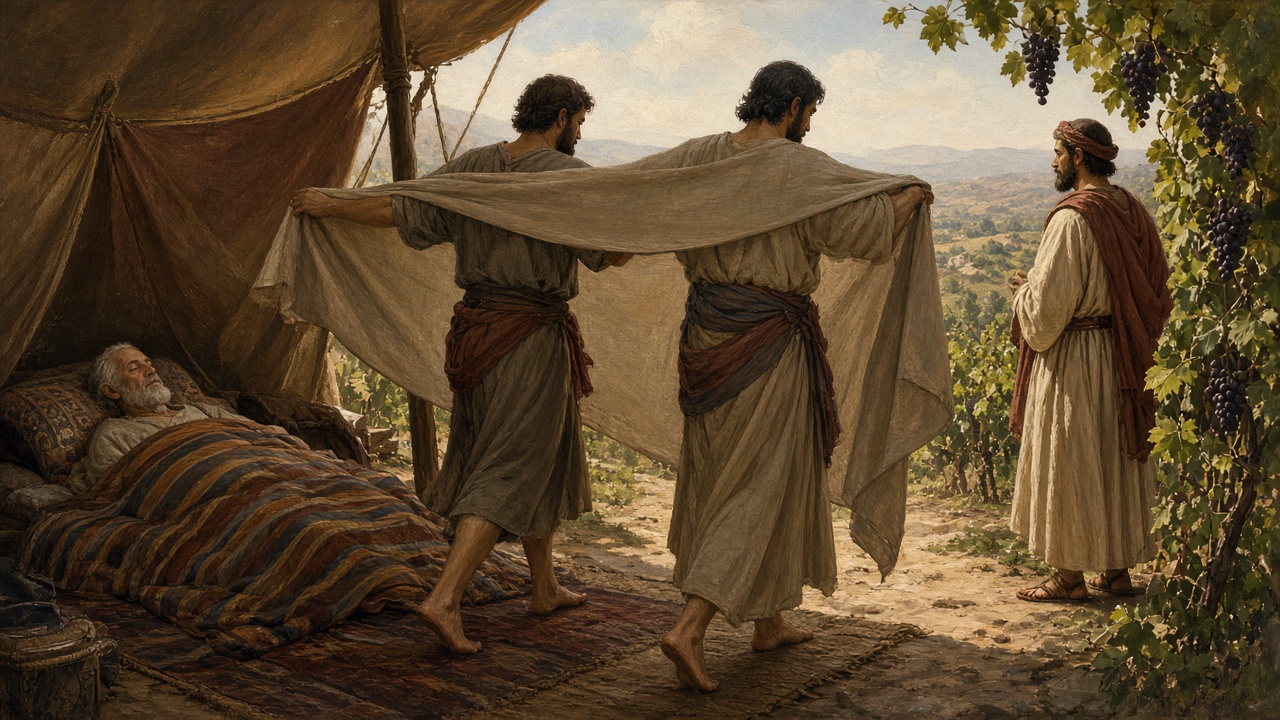
20Noa didiburr ngaon pam yarilürr. Wa ⌊grreip⌋ zid arit ugón bókyanórr grreip didiburr tónggapónóm. 21Wa ngibürr waen nóma enónórr, oya gorrgorra ugón simiógürr. Kakapurr we umtulülürr tóba palae müót kugupidü. 22Am, Keinanón ab, tóba ab Noan büb kakapur esenórr. Wa tóba naret nis we nüzazilürr. I pulkaka namülnürri. 23Da Syem a Zeipet mórrkenyórr poko ipadrri, tibiób tupodó we ingrirri. I kake aurrürri, aban kakapur büb ngalaom. Tibiób aban büb kakapur asen-gum, i obzek darrü pokodó nalüngrri. 24Noan waen gorrgorra nóma amgatórr akó nóma umul bainürr wagó, oya solo kupo oloma ne poko tónggapónórr oyaka, 25we bóktanórr wagó,
“Ka Keinan amórrdóla!
Wa sab kari-kari ⌊leba zaget olom⌋ yarile tóba naret nisabkü.”
26Wa akó igó poko bóktanórr wagó, “⌊ Lodón⌋ yagüram, Syemón God!
Keinan sab Syemón leba zaget olom ki yarilün.
27God sab Zeipetón bwób ki arratlón!
Zeipet sab Syemón palae müótüdü ki ngyabelón,
akó Keinan sab Zeipetón leba zaget olom ki yarilün.”
28Naiz nae kakóm, Noa akó 350 pailüm ngyabelórr. 29Noa blaman kókó 950 pailüm ngyabenórr, da wa we nurrótókórr.
Did you know?
Noah's Covenant and the Words about His Sons
- God makes a covenant with Noah, with his descendants, and with every living creature that came out of the ark, promising never again to destroy all life by a flood. The sign is a rainbow set in the clouds, for all generations. One chronology dates this covenant to 2346 BC.Sources: the Bible text itself · God makes a covenant with Noah
- Genesis 9 says the whole earth was populated from Shem, Ham, and Japheth. Shem is explained as 'a name' or 'renown,' probably the eldest and the ancestor of the Israelites, though Japheth is also described as perhaps first by birth. Japheth means 'wide spreading,' a play on the Hebrew 'God shall enlarge Japheth,' and is linked to many tribes in the east of Europe and the north of Asia; Ham, meaning 'warm' or 'hot,' and hence the south, is called Noah's youngest son.Sources: the Bible text itself · Shem · Japheth · Ham
- Noah, a man of the soil, plants a vineyard, drinks the wine, and lies uncovered in his tent. Shem and Japheth cover him while walking backward, faces turned away, an act a dictionary calls filial piety and the occasion of the prophecy that Japheth's descendants would spread. The curse is spoken against Canaan, Ham's fourth son, because of what his father had done; one chronology dates the episode to 2345 BC.Sources: the Bible text itself · Japheth · Canaan · Noah gets drunk and Canaan is cursed
Notes written with AI assistance from open sources (Theographic Bible Metadata, CC BY-SA 4.0; Easton’s Bible Dictionary, public domain) and reviewed before publishing.
Credits and license for this translation
Godón Buk
Portions of the Holy Bible in the Gizrra language of Western Province, Papua New Guinea
Buk Baibel long tokples Gizrra long Niugini
copyright © 2019 Wycliffe Bible Translators, Inc.
Language: Gizrra
Translation by: Wycliffe Bible Translators, Inc.
This translation is made available to you under the terms of the
Creative Commons Attribution-Noncommercial-No Derivatives license 4.0.
You may share and redistribute this Bible translation or extracts from it in any format, provided that:
You include the above copyright and source information.
You do not sell this work for a profit.
You do not change any of the words or punctuation of the Scriptures.
Pictures included with Scriptures and other documents on this site are licensed just for use with those Scriptures and documents.
For other uses, please contact the respective copyright owners.
2024-07-01
Source: http://png.bible/tof/ · eBible.org