Genesis 8
Godón Buk · Tap a verse to see its cross-references.
Naiz Naea Alkomólórr
1Da God Noan gyagüpi amaikürr, akó blaman nurr akó ngabyón lar wankü ene butüdü. Wa wór zirrsapónórr busom ini tüpdü, da naiz naea we ukyólürr. 2Ene aumana tüp kugupidü arób nae, akó kwitüm nae mamtaepükü murrnausóp. Da wirri ngupa amil piküp bainürr kwitüdügab.
3Da módóga, ene naiz naea zaorrón we alkomólólórr; 150 ngürra nóma blakónóp, naea ama barrkyananbóka ukyónürr. 417 Ngim ngürrdü, 7 ngim melpaldó, but naea we amgatórr darrü Arrarrat podo kwitüm. 5Naea zaorrón inzan alkomólólórr kókó 10 ngim melpal. Ngaen-gógópan ngürrdü, ene melpaldó, ngibürr podoa panzedó ugón pulkaka tübinóp.
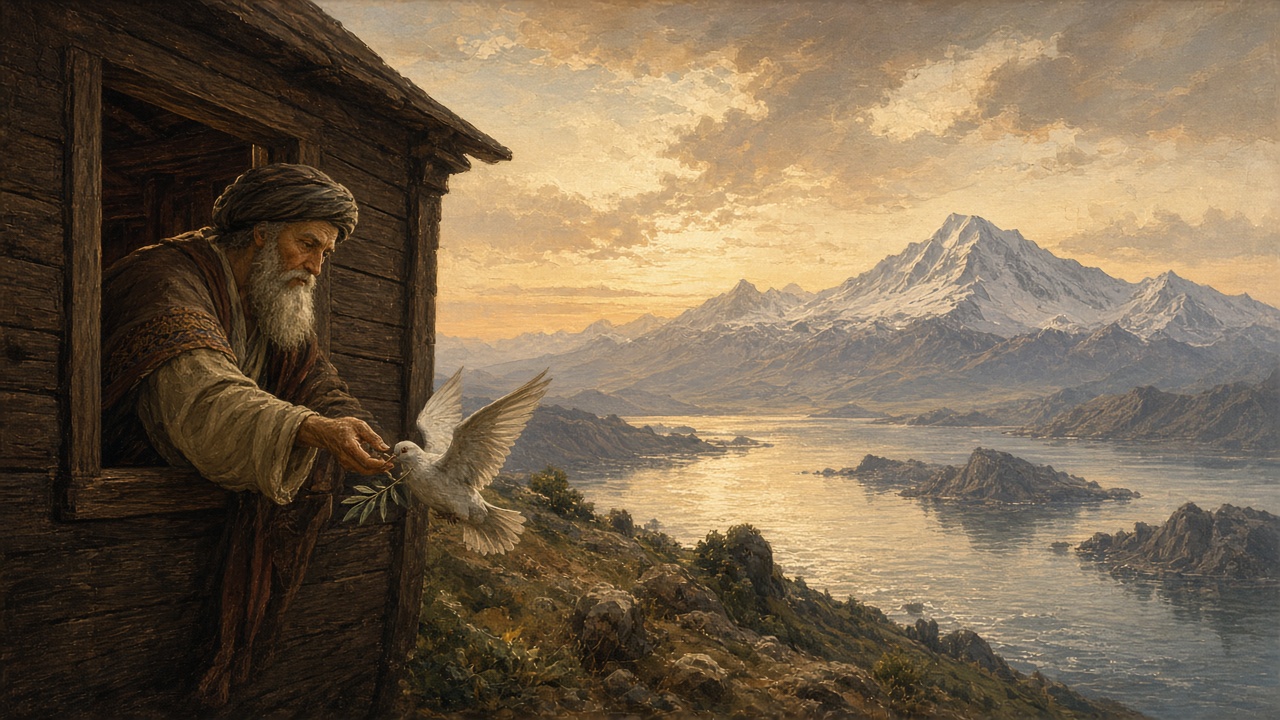
640 Ngürra nóma blakónóp, Noa pokar mamtae we tapakurr, wa ne kla tónggapónórr butüdü, 7da kokabzan póyae arrmulüm we elkomólórr. Ene póyaea arrmulülürr bwób-bwób, kókó ta blaman naea ukyónürr tüpdügab. 8Da wa nurre póyae arrmulüm we elkomólórr ngakanóm igó wa, naea ia kuri ukine tüpdügab. 9A ene nurre póyaea darrü bwób koke esenórr aupüm, da wa Noaka we tolkomólórr butüdü, zitülkus tüp wata dudu yarilürr naea ngalaorrón. Noa tang adrratórr, da ene nurre póyae ipadórr, salkomólórr tóbaka ama butüdü. 10Wa akó ngibürr 7 ngürr nókyenóp, da wa ene dadan nurre póyae akó ugón busom elkomólórr butüdügab. 11Ene nurre póyaea ama oyaka simaman tolkomólórr, da módóga, küsil agirrün ⌊olib⌋ pórngae tóba taedó yarilürr, mólmóne arümürrün. Olgabi Noa umul bainürr wagó, naea barrkyananbóka ukyónürr tüpdügab. 12Wa akó 7 ngürr nókyenóp, da olgabi ene nurre póyae aüd mün elkomólórr busom. A ini tonarr, wa myamem koke tolkomólórr oyaka.
13Ngaen-gógópan ngürrdü, ngaen-gógópan melpaldó, Noa 601 pail nóma yarilürr, nae ugón ukyórrün yarilürr tüpdügab. Noa ene butan ngibürr twól ngalaorrón nugup poko nanenóp azilüm, da módóga, wa esenórr wagó, tüpa mólóg baindase. 1427 Ngim ngürrdü, nis ngim melpaldó, tumum tüp amkoman mólóg yarilürr.
15Da God Noaka tóbtanórr wagó, 16“Tubrra butüdügab - matóka moba kol, akó marü simanal olmal akó ibü kol mankü. 17Ugó yus blaman arról elklaza, mankü ne klamko - póyae, ngabyón lar, akó tüpdü ngübyón elklaza. Da i sab küppükü ki bainünüm ini tüp ayom, kókó tüpa tai ki barüm!”
18Da Noa butüdügab burruanórr, tóba simanal olmal, oya kol, akó oya olmalab kol wankü. 19Blaman lar, blaman tüpdü ngübyón elklaza, akó blaman póyae - blaman agóltagól elklaza, butüdügab bauslürr. Darrpan ngarkwat obzek lara kopo-kopo bauslürr.
Noa Lar Bamngulürr Godón Akyanóm
20Olgabi Noa ⌊alta⌋ elórr ⌊ Lodónkü⌋; blaman darrü-darrü obzek ⌊tóman-koke⌋ lardógab akó tóman-koke póyaedógab, wa ngibürr yazebórr, altadó dudu yamselórr ura adüngüm Godón akyanóm. 21Da Lod morroal ilang nóma irrzümülürr, da moboküpi bóktanórr wagó, “Ka sab myamem akó ini tüp koke amórro ini pamkolpamabme, enana ibü moboküpdü ne gyagüpitótók kolaeanako ene tonarrdógab i karianpókal koralórr. Ka sab myamem blaman arról elklaza kokean kolae ninünümo, ka enezan tónggapórró.
22“Tüpa sab enezan ngyabele,
arit akó abül,
güb akó urur ngürr,
abüsbarr akó pail,
ngürr akó irrüb
sab kokean blakórre.”
Did you know?
The Waters Recede
- The ark came to rest on the mountains of Ararat, a name meaning “sacred land” or “high land” for a country on whose mountains the ark settled after the flood. Easton's Bible Dictionary (1897) suggests those mountains were probably the Kurdish range of southern Armenia, though the name is also commonly applied to a high, almost inaccessible peak rising from the plain of the Araxes. In 2 Kings 19:37 and Isaiah 37:38 the Authorized Version renders the name “Armenia” and the Revised Version “land of Ararat,” while Jeremiah 51:27 uses it for central or southern Armenia.Sources: Ararat · the Bible text itself
- Noah’s Hebrew name means “rest,” and in this chapter the ark itself comes to rest as the waters go down. He was the son of Lamech and the grandson of Methuselah, and the father of Shem, Ham, and Japheth. Easton's Bible Dictionary describes him as the connecting link between the old world and the new, and as a second great progenitor of the human family.Sources: Noah · the Bible text itself
- Chronological notes place the Great Flood in 2347 BC, lasting one year; the subsiding of the waters in 2346 BC, over 220 days; and the leaving of the ark in 2346 BC, as a single day. In the chapter itself, the waters have gone down after 150 days and the ark rests on the seventeenth day of the seventh month; on the first day of the first month of Noah’s six hundred and first year the waters have dried up, and by the twenty-seventh day of the second month the earth is fully dry.Sources: The Great Flood · The flood subsides · Leaving the Ark · the Bible text itself
Notes written with AI assistance from open sources (Theographic Bible Metadata, CC BY-SA 4.0; Easton’s Bible Dictionary, public domain) and reviewed before publishing.
Places in this chapter
- Ararat · Today: Urartu · 39.703, 44.300 · verse 4
Only places identified with high confidence are shown (90% or more according to the scholarly sources compiled by OpenBible). Period map: DARE (Digital Atlas of the Roman Empire), CC BY 4.0; modern map: © OpenStreetMap contributors; places: OpenBible.info (CC BY 4.0).
Credits and license for this translation
Godón Buk
Portions of the Holy Bible in the Gizrra language of Western Province, Papua New Guinea
Buk Baibel long tokples Gizrra long Niugini
copyright © 2019 Wycliffe Bible Translators, Inc.
Language: Gizrra
Translation by: Wycliffe Bible Translators, Inc.
This translation is made available to you under the terms of the
Creative Commons Attribution-Noncommercial-No Derivatives license 4.0.
You may share and redistribute this Bible translation or extracts from it in any format, provided that:
You include the above copyright and source information.
You do not sell this work for a profit.
You do not change any of the words or punctuation of the Scriptures.
Pictures included with Scriptures and other documents on this site are licensed just for use with those Scriptures and documents.
For other uses, please contact the respective copyright owners.
2024-07-01
Source: http://png.bible/tof/ · eBible.org