Genesis 3
Godón Buk · Tap a verse to see its cross-references.
Kolae Tonarran Zitülkus
1Da módóga, gwar wa kari ilklió-bülión gyagüpitótóke pam koke yarilürr blaman molpokodó nurr lardógab, ⌊ Lod⌋ God ne kla tómbapónórr. Wa kol umtinürr wagó, “God ia amkoman bóktanórr nugup ngórr alogum blaman nugupdügab ini didiburrdü?”
2Da kola bóktanórr gwardó wagó, “Ki wa eloli blaman nugup ngórr ini didiburrdü. 3A God igó yarilürr wagó, ‘Didiburr aodó nugupdügab, e sab ngórr alogu, akó amurr ta amurrgu! E ne nóma tónggapóni, e sab nurrótóki.’”
4Gwara bóktanórr koldó wagó, “E sab kokean nurrótóki! 5A God umula wagó, e sab nóma elo-i, yabü ilküpa sab babzeli: e sab morroal akó kolae umul baini, God tüóbzane.”
6Kola nóma esenórr, ene nugup ngórr morroal kwarilürr alom akó morroal obzek kwarilürr, oya wirrian ubi yarilürr ⌊wirri gyagüpitótók⌋ apadóm, da wa nugup ngórr we aginürr, da ngibürr poko elorr. Wa akó tóba müór ngibürr poko we iliónürr, wankü nótó yarilürr, da wa ta elorr. 7Ibü nizanab ilküpa babzelórri, da i ugón umul bairri wagó, i kakapuramli. Da i tibiób ngablaom tib ⌊pig⌋ nugup pórngae-e kurr nis nürrgüprri.
8Simaman, bwóba güb nóma bainürr, ene pama tóba kolpükü Lod Godón tótók gógóram arrkrrurr, didiburrana nóma agóltagól yarilürr, da i we anikürri didiburr nugup paldó Lod Godón obzekdógab. 9Da Lod God pamdó we górrganórr wagó, “Ma ia negla?”
10Pama wagó, “Ka marü tótók gógóram arrkrrua didiburrdü, da ka gum namüla, zitülkus ka kakapurla. Da ka igósidi tünika.” Adam ó Ib pig nugup pórngae-e tónggapórrón kurrpükü|alt="Adam and Eve with fig leaves" src="CO00609B.TIF" size="col" loc="3:9-12" copy="David C. Cook" ref="3:10"
11God we bóktanórr wagó, “Marü nótó müzazile igó, ma kakapurla? Ia ma eloa ene nugupdügab, ka marü ne arüng bóktan mókyarró alogum?”
12Pama we bóktanórr wagó, “Ma ne kol tungrinürr kankü, kürü ngibürr wató küline ene nugup ngórrdügab, da ka we eloa.”
13Lod God ene kol umtinürr wagó, “Ini ia pokoa? Ma ia larógóm tónggapóna?”
Kola bóktan yalkomólórr wagó, “Kürü gwara ilklió küline, da ka igósidi amkoman kuri eloa!”
Kolae Tonarran Darrem
14Da Lod God gwardó bóktanórr wagó, “Zitülkus ma ini poko tónggapóna,
“Ka marü amórrdóla blaman ngabyón lardógabi
akó blaman molpokodó nurr lardógabi;
ma sab bikómi ngain namulo,
akó ma sab tüp buru elolo
blaman ngürrzan moba ngyaben tonarrdó.
15Ka sab alzizi aman ngyaben sidüdo,
matóka kol,
akó marü küp akó oya küp;
oya küpa sab marü singül emkóle,
akó ma sab oya küpan wakub elóngo.”
16A koldó Lod God igó bóktanórr wagó,
“Ka marü azid aeng sab wirrian ino bikóm amarrudi
akó olmal balngende;
marü moboküpdü sab metat wirri ubi asi yarile moba müórdü,
a wa ma sab metat marü singüldü pam yarile, marü alngomólóm.”
17Lod God pamdó we bóktanórr wagó, “Zitülkus ma moba kolan bóktan arrkrrua, akó mazan eloa ene nugupdügab, ka marü ne arüng bóktan mókyarró alogum,
“ka tüp errkya amórrdóla marübókamde.
Ma sab moba büb barre enan emkalolo tüp kesu angónde moba alo kla basenóm,
blaman ngürrzan moba ngyaben tonarrdó.
18Sab tüpa tórezpükü opopor dódórr nyónórre,
akó ma sab apapdó akó molpokodó zid alo namulo.
19Marü sab gügürüma tópkale
alo kla basenóm,
kókó ma tüpdü alkomolo,
zitülkus ma olgab apadórrónla.
Zitülkus ma tüp burula,
da ma akó sab tüp burum baino.”
20Módóga, Adam tóba kol ngizwasilürr “Ib”, zitülkus wa blaman arrólab aipbobat warilürr.
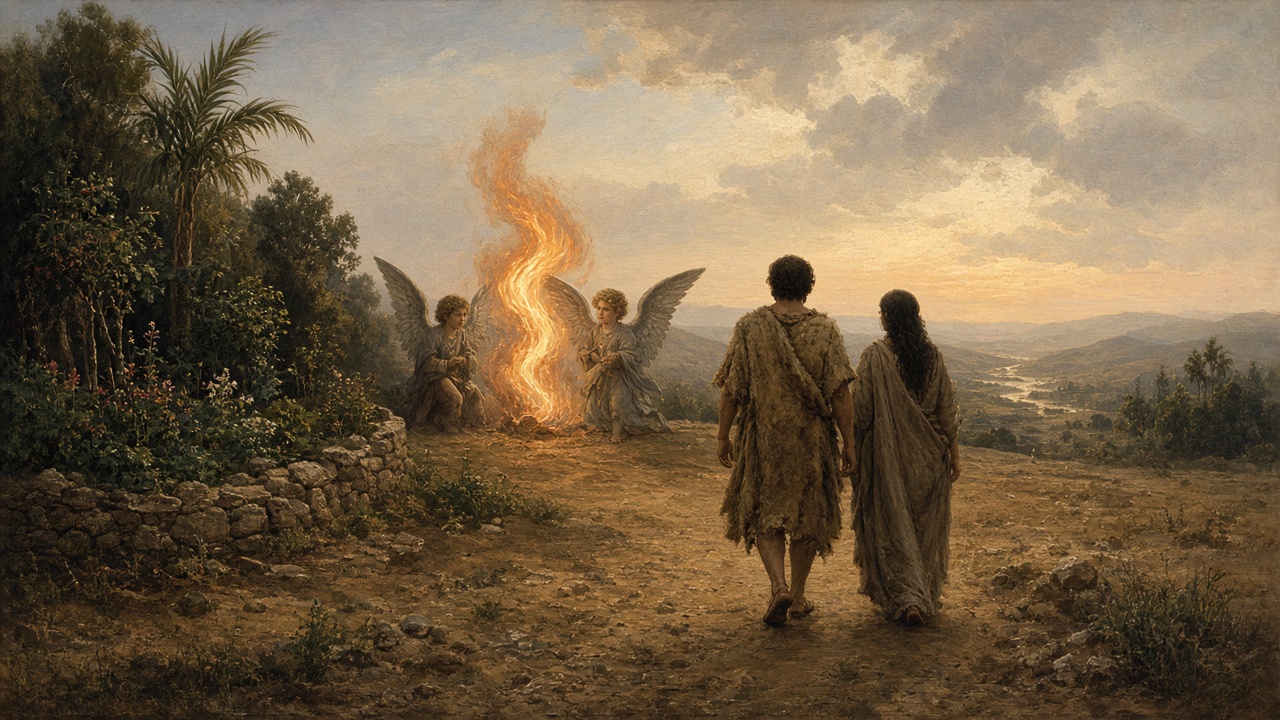
21Lod God lar sopae mórrkenyórr tómbapónórr Adamónkü akó oya kol, da wa ibü we klame püti nyónürr. 22Da Lod God tóbaka bóktanórr wagó, “Pama errkya mizan kuri baine; morroal a kolae ta wa umula. Wa tóba tang koke ki adrratól nugup ngórr aginüm akó alom, ene ngarkwat-koke arról ne nugupa gaildo. Wa ne nóma elo-e, wa sab metat ngyabele!” 23Da Lod God pam tóba kolpükü zirrapónórr Iden Didiburrdügab, tüp kesu angónóm oya nólgab tónggapónórr. 24Da wa ibü Iden Didiburrdügab we kolanókyanórr. Abüsa nólgab banikda, wa wirri arüng anerruzan kla irrbünürr akó darrpan ur ulitpükü gazirr turrik. Ene turrika ongang bapólórr akó balkomentóbalkomen yarilürr ene ngarkwat-koke arról gail nugupan kwat murrausüm.
Did you know?
The Fall and Exile from Eden
- A traditional reference explains Adam as “red,” a Babylonian word used as the generic name for man, with the same meaning in Hebrew and Assyrian, and links the name to his being formed from the dust of the earth. In this chapter that origin returns in the judgment: he will toil for his food until he returns to the ground, for he is dust and to dust he will return, and he is sent to work the soil from which he was taken.Sources: Adam · the Bible text itself
- In this chapter Adam gives his wife the name Eve, meaning “life” or “living,” because she would be the mother of all the living.Sources: Eve · the Bible text itself
- The site of the garden of Eden, from which the man is driven in this chapter, has been much discussed and placed in Armenia, west of the Caspian Sea, in Media, near Damascus, in Palestine, in southern Arabia, and in Babylonia. A traditional geographical note looks for it along the Tigris and the Euphrates, in the land of Shinar, or Babylonia.Sources: Eden · the Bible text itself
Notes written with AI assistance from open sources (Theographic Bible Metadata, CC BY-SA 4.0; Easton’s Bible Dictionary, public domain) and reviewed before publishing.
Credits and license for this translation
Godón Buk
Portions of the Holy Bible in the Gizrra language of Western Province, Papua New Guinea
Buk Baibel long tokples Gizrra long Niugini
copyright © 2019 Wycliffe Bible Translators, Inc.
Language: Gizrra
Translation by: Wycliffe Bible Translators, Inc.
This translation is made available to you under the terms of the
Creative Commons Attribution-Noncommercial-No Derivatives license 4.0.
You may share and redistribute this Bible translation or extracts from it in any format, provided that:
You include the above copyright and source information.
You do not sell this work for a profit.
You do not change any of the words or punctuation of the Scriptures.
Pictures included with Scriptures and other documents on this site are licensed just for use with those Scriptures and documents.
For other uses, please contact the respective copyright owners.
2024-07-01
Source: http://png.bible/tof/ · eBible.org