Genesis 2
Godón Buk · Tap a verse to see its cross-references.
1Tüp a pülpül tómbapóna inzan blakónórr, akó blaman elklaza, ne kla koralórr ibü kugupidü.
27 Ngim ngürr nóma semrranórr, Godón zaget ugón blakórrón yarilürr, wa ne kla tómbapón yarilürr. Da ene ngürr, wa ngón ngagónórr tóba blaman zagetódógab, wa ne kla tómbapón yarilürr. 3God 7 ngim ngürr bles yónürr, da tebe-tebe amaikürr, zitülkus wa ene ngürrdü ngón ngagónórr tóba blaman zagetódógab, wa ne kla tómbapón yarilürr. 4Tüp a pülpül tónggapón póepa ae blakónda.
God Didiburr Tónggapónórr Idenóm
⌊ Lod⌋ God tüp a pülpül nóma tónzapónórr, ugón 5tüpdü elklaza zid babul kwarilürr akó küpa koke bamkenóp, zitülkus Lod God darrü ngup koke zirrsapónórr tüpdü. Akó pam babul yarilürr tüp kesu angónóm. 6Nae godeata tüpdügab tumkulnóp, da i blaman tumum tüp nangnóp.
7Da Lod God tüp buru-i pam we tónggapónórr, da wa arról ngón we semanórr oya syók tótórr nisdü. Ene pam ama arról pamakanóm bainürr.
8Lod God didiburr we irtümülürr Iden bwóbdü, abüsa nólgabi banikda, da ne pam tónggapónórr ola ingrinürr. 9Da Lod God abün-abün obzek nugup dódórr ninóp tüpdügab, morroal ne kla koralórr basenóm akó alom. Didiburr aodó nis nugup namülnürri, ⌊ngarkwat-koke arról⌋ gail nugup asi yarilürr, akó umul gail nugup asi yarilürr, morroal a kolae nega.
10Tobarra Iden bwóbdügab olmealórr ene didiburr nae angóm, da didiburr kalkuma, tokom il we bangónórr. 11Ngaen-gógópan tobarr ngi módóga, Pison; wa blaman Abila kantrri myangrao apónda, ⌊gold⌋ nólamase. 12(Ene kantrrian gold morroala, akó morroal ilang móeg akó kómal wirri darrem ingülküp, ngi oniks, ta ola asisko.) 13Nis ngim tobarr ngi módóga, Gion; wa blaman Kas kantrri myangrao apónda. 14Aüd ngim tobarr ngi módóga, Taegrris. Wa olmeanda Asirria kantrri kabeana, abüsa nólgabi banikda. Tokom ngim tobarr ngi módóga, Yuprreitis.
Adam a Ib
15Lod God pam ipadórr, da we ingrinürr didiburrdü Idenóm, tüp kesu angónóm akó morroal ngakanóm. 16Akó Lod God pam arüng bóktan we ekyanórr wagó, “Marü taia blaman ini nugupdügab alom didiburr kugupidü, 17a ma sab ini nugupdügab alogu, ne nugupa umul gailda, morroal a kolae nega. Zitülkus módóga, ma ne sab nóma elo-o, ma amkoman nurrótoko.”
18Lod God bóktanórr wagó, “Ini go morroal kokea; pam tebe püóran koke yarile, a ka morroal tangamtin gódam tonzapono oyankü.” 19Lod God ne blaman molpokodó nurr lar akó kwitüm póyae tómbapónórr tüpdügab, wa ibü ugón simarrurr pamdó oya basenóm, wa ia nadü ngi ki ngibasil yarile. Wa nadü ngi ngibasile, ene wata ibü ngi módó korale. 20Da pama ngi we ngibasilürr ngabyón lar, kwitüm póyae, akó blaman molpokodó nurr lar. A paman ma darrü morroal tangamtin gódam babul yarilürr.
21Lod God pam büdül ut iminürr, da wa nóma umtulürr, wa darrpan nólkak kus irruanórr, da ene gao akó murrausürr tóba murri. 22Lod God kol tónzapónórr ene nólkak kusdügab, wa ne kla irruanórr pamdógab, da we tudódürr ama pamdó. 23Da pama bóktanórr wagó,
“Dómdóm:
Ini kus kürü kusdügabia,
akó murr kürü murrdügabia;
oya sab ngi ngizwasilórre: ‘kol’,
zitülkus oya pamdógab urrunóp.”
24Da ini zitülkusdü pama tóba aipab nis nümgüte, ama tóba koldó dabine, da i ama darrpan bübüm baini.
25Pam a kol nizan kakapur namülnürri, a i büód ta koke aengrri.
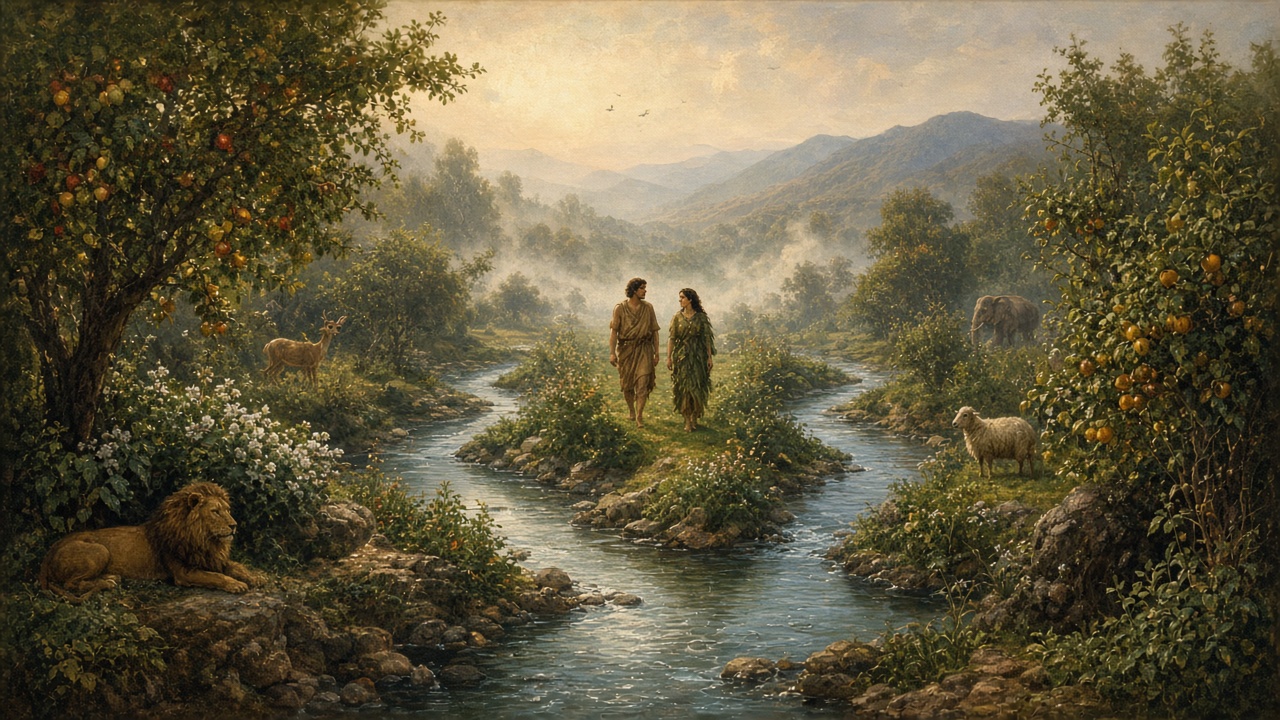
Did you know?
Adam, Eden, and the Four Rivers
- Adam, meaning “red,” is a Babylonian word and the ordinary name for a human being, with the same sense in Hebrew and in Assyrian. It was given to the first man. He was formed from the dust of the ground—hence the name—and God breathed into his nostrils the breath of life.Sources: Adam · the Bible text itself
- A river flowed out of Eden and divided into four headwaters: the Pishon, the Gihon, the Hiddekel, and the Euphrates. Some identify the Pishon with the Phasis or the Halys, others with the Indus, the Ganges, or still other rivers; the Gihon has been identified with the Nile, and others regard it as the Oxus, the Araxes, or the Ganges. The Hiddekel is the Tigris, called by the Accadians the river of Idikla; Gesenius understood the name as “the rapid Tigris.”Sources: the Bible text itself · Pison · Gihon · Hiddekel
- The site of Eden, the garden in which the first parents lived, has been discussed more than almost any other geographical question. It has been placed in Armenia, in the region west of the Caspian Sea, in Media, near Damascus, in Palestine, in southern Arabia, and in Babylonia. Easton's Bible Dictionary (1897) seeks it along the Tigris and the Euphrates of western Asia, in the land of Shinar, or Babylonia.Sources: Eden
Notes written with AI assistance from open sources (Theographic Bible Metadata, CC BY-SA 4.0; Easton’s Bible Dictionary, public domain) and reviewed before publishing.
Places in this chapter
- Assyria · 36.359, 43.153 · verse 14
- Euphrates · Today: Euphrates River · 31.004, 47.442 · verse 14
- Tigris · Today: Tigris River · 31.004, 47.442 · verse 14
Only places identified with high confidence are shown (90% or more according to the scholarly sources compiled by OpenBible). Period map: DARE (Digital Atlas of the Roman Empire), CC BY 4.0; modern map: © OpenStreetMap contributors; places: OpenBible.info (CC BY 4.0).
Credits and license for this translation
Godón Buk
Portions of the Holy Bible in the Gizrra language of Western Province, Papua New Guinea
Buk Baibel long tokples Gizrra long Niugini
copyright © 2019 Wycliffe Bible Translators, Inc.
Language: Gizrra
Translation by: Wycliffe Bible Translators, Inc.
This translation is made available to you under the terms of the
Creative Commons Attribution-Noncommercial-No Derivatives license 4.0.
You may share and redistribute this Bible translation or extracts from it in any format, provided that:
You include the above copyright and source information.
You do not sell this work for a profit.
You do not change any of the words or punctuation of the Scriptures.
Pictures included with Scriptures and other documents on this site are licensed just for use with those Scriptures and documents.
For other uses, please contact the respective copyright owners.
2024-07-01
Source: http://png.bible/tof/ · eBible.org