Genesis 21
Godón Buk · Tap a verse to see its cross-references.
Serra Aesakón Ilngumilürr
1⌊ Lod⌋ Serraka ⌊gail tonarr⌋ yarilürr, wa enezan bóktanórr. Wa oyankü tónggapónórr, wa ne ⌊alkamül-koke bóktan⌋ okyanórr. 2Serra bikóm ipadórr, da siman olom we ilngumilürr Eibrra-amón myangande, tai we ngarkwatódó, God ne ngarkwat ngilianórr oya amtómólóm. 3Eibrra-am tóba siman olom, Serra noan ilngumilürr oyankü, ngi we ngyesilürr Aesak. 4Da oya God ne tulmil ekyanórr tónggapónóm, da wa Aesakón ⌊gyabi sopae ugón singgapinürr⌋, wa 8 ngürr nóma yarilürr. 5Eibrra-am 100 pail nóma yarilürr, Aesak ugón tómtómólórr oyankü. 6Serra we bóktanórr wagó, “God kürü ngüóngan ngigütanórr barnginwómpükü. Sab blamana nidi barrkrrue ini poko, i ta ngüóng korale kankü. 7Ia nótó ki bóktóne Eibrra-amka wagó, ia Serra sab amkoman olom ngayóne?
“Darrü olom umul babul yarilürr Eibrra-amón azazilüm wagó, Serra sab olom ngayóne. A errkya, ka ma oyankü olom kuri ilngumila, enana wa myangana!”
Eibrra-am Zirrnapónórr Agarrón akó Isma-el
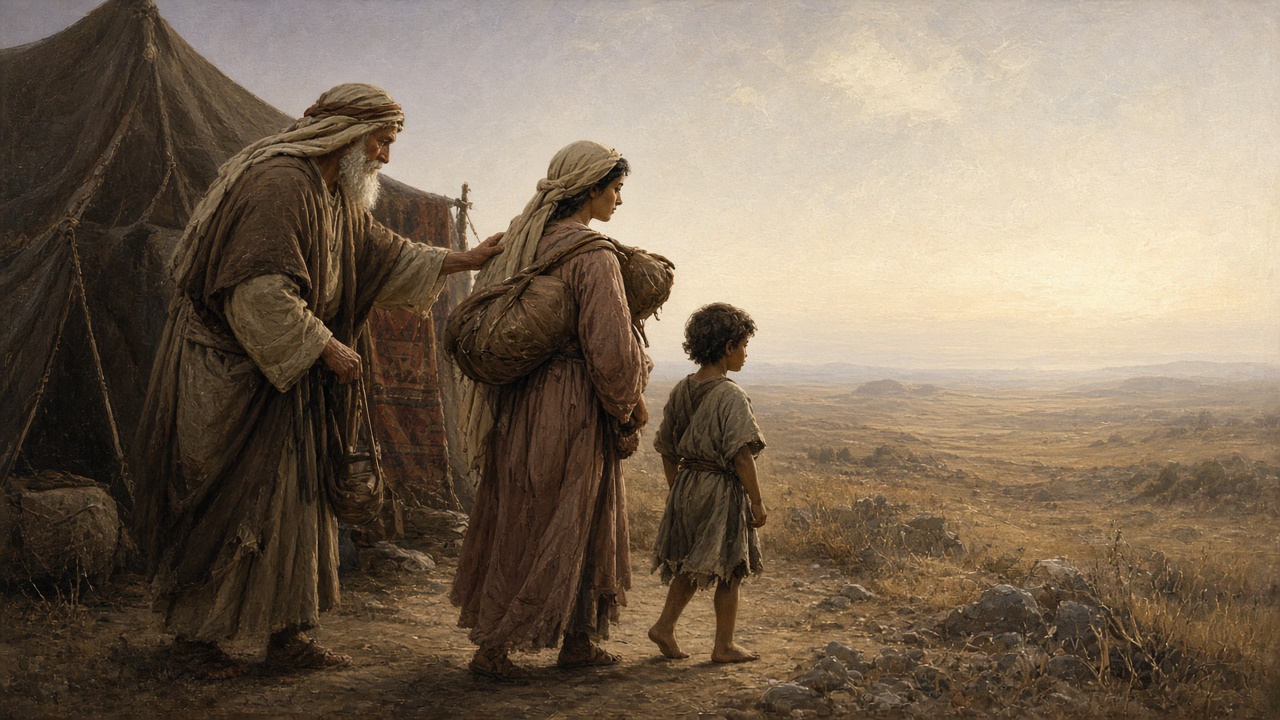
8Aesak morroal dódórr bailürr, kókó aipa ngómdügab ne ngürr amanikürr. Da ene ngürr Eibrra-am ugón wirri garrirr tóre tónggapónórr. 9A Serra Isma-elón esenórr, Izipt leba zaget kol Agarr ne olom ilngumilürr Eibrra-amónkü, tóba olom Aesakón ngüóng angyalde. 10Da Eibrra-amón we yalórr wagó, “Ugó zirrzwapó ini leba zaget kol tóba olompükü! Zitülkus módóga, kürü olom Aesak marü elklaza marü büdül kakóm koke ki arrgrrüte ini leba zaget kolan olompükü!” 11Módóga, ini bóktana Eibrra-amón wirri müp ekyanórr, zitülkus Isma-el ta oya olom yarilürr. 12A God Eibrra-amka we bóktanórr wagó, “Ma müp apadgu moba olomankwata akó moba leba zaget kolankwata! Tónggapó marü Serra ne poko mile, zitülkus wata sab Aesakón olmalbobatal marü olmalbobatalbóka ngiblianórre. 13A ka ta sab Isma-elón abün olmalbobatal ilino akó i tibióban kantrridü ngyaben kwarile, zitülkus wa ta marü küpe.”
14Irrbianande darrü ngürr Eibrra-am türsümülürr, Agarrón ngibürr alo kla uliónürr, akó naepükü lar sopae bele, oya tupodó emelórr, da we zirrzwapónórr tóba siman olompükü. Agarr a Isma-el we bupadürri, da ⌊ngüin-koke bwóbdü⌋ we apól namülnürri. Ene ngüin-koke bwób Berrsyiba wirri basirr minggüpanan yarilürr. 15Ene lar sopae beledó naea nóma blakónórr, Agarr tóba siman olom kari tugupanan tiz bórean-bórean nugup murrdü ingrinürr. 16Agarr tebe natókórr, da barrkyanan kan we mórran-mórran bainürr. Wa tóbaka bóktanórr wagó, “Ka kokela kólba olom asenóm nurrótókde.” Módóga, yarrmurrande yónüm we bainürr, wa enezan mórran warilürr.
17God ene siman olom bóktan bómgól arrkrrurr, da ⌊Godón anerrua⌋ kwitümgab Agarrka we tóbtanórr wagó, “Agarr! Ia laró müpa? Ma gumgu! God marü oloman bóktan bómgól kuri arrkrrue wa utürrün nege. 18Ugó bupa, olom zamngól-zamngólan ngita, da tangdó emoa zao-zao ainüm, zitülkus ka sab oya abün olmalbobatal ilino akó i tibióban wirri kantrridü ngyaben kwarile.”
19Da God oya ilküp nis we nóbzelórr, da wa nae badu we esenórr. Wa ola natókórr, lar sopae bele errngamórr, tóba olom we emyanórr.
20Isma-el nóma dódórr bainürr, God oyaka asi yarilürr. Wa ngüin-koke bwóbdüzan ngyaben yarilürr, wa bügür pamóm we bainürr. 21Wa Parran ngüin-koke bwóbdüzan ngyaben yarilürr, aipa oya kol kwat we tónggapónórr Izipt kantrri kol amiógüm. Da wa we zumiógürr.
Eibrra-am Alkamül-koke Ngyaben Bóktan Ingrinürr Gerrarr Kingpükü
22Ene tonarrdó, Abimelek akó tóba gazirr pamab singüldü wirri ngi pam, ngi Paekol, Eibrra-amka bóktarri wagó, “God mankü asine ma blaman ne poko tómbapóndóla. 23Da ma ⌊arüng alkamül-koke bóktan⌋ ugó tónggapó Godón obzek kwata. Ma sab kürü myamem ilklió alión-gu kólba olmal akó olmalbobatalpükü. Ma kürü morroal kyó ma ne kantrridü ngyabendóla mogob pamzan, ka marükazan namülnürrü morroal tonarr.”
24Da Eibrra-am bóktanórr wagó, “Ka arüng alkamül-koke bóktan igó tónggapóndóla!”
25Eibrra-am murrkurr bóktan sidódürr Abimelekka tóba darrü nae baduankwata, Abimelekón zaget pama arüngi ne kla arrbainóp. 26Da Abimelek we bóktanórr wagó, “Ka umul-kókla, ene poko nótó tónggapóne! Ma kürü ngaen-gógópan koke küzazilürrü, a ka wata errkya arrkrrua.” 27Módóga, Eibrra-am Abimelekón ngibürr ⌊sip⌋, ⌊gout⌋, akó ⌊kau⌋ iliónürr, da ene kakóm, i nizana ⌊alkamül-koke tónggapórrón bóktan⌋ we ingrirri. 28Eibrra-am akó 7 sip kupo tibi-tibi irrbünürr. 29Abimelek Eibrra-amón imtinürr wagó, “Küp ia laróga, ma ene 7 sip kupo tibi-tibi iade amóna?”
30Eibrra-am bóktan we yalkomólórr wagó, “Ini 7 sip kupo yazeb kürü tangdógab, kürü amkoman angunüm ma kubó abino wagó, ini nae badu kótó ilüngürrü.” 31Ene bwób ngi igósidi ngyesilóp Berrsyiba, zitülkus ene pam nisa arüng alkamül-koke tónggapórrón bóktan ola ingrirri.
32Alkamül-koke tónggapórrón bóktan angrina nóma blakónórr Berrsyibam, Abimelek akó Paekol, tóba gazirr pamab singüldü wirri ngi pampükü, we alkomórri ama Pilistia bwóbdü. 33Ene kakóm, Eibrra-am darrü tamarrisk nugup zid we irtümülürr Berrsyibam. Eibrra-am ene pokodó Lodón ngian we ngilialórr oya ótókóm, ⌊Ngarkwat-koke Arról⌋ God. 34Eibrra-am Pilistia isab kantrridü mogob pama ngyaben yarilürr wirri kokrrap ngarkwatóm.
Did you know?
Isaac’s birth, Hagar’s departure, and Beersheba
- Abraham was a hundred years old when Sarah bore him Isaac, their only son together, and he circumcised the child at eight days old, as God had commanded. Sarah said that God had made her laugh, and that everyone who heard of this would laugh with her. Easton's Bible Dictionary (1897) notes that a great feast was held when Isaac was weaned, probably when he was about two years old.Sources: the Bible text itself · Isaac
- Hagar, whose name is explained as “flight” or, according to others, “stranger,” was an Egyptian and Sarah’s handmaid, whom Sarah gave to Abraham as a secondary wife. After Isaac’s birth, Abraham sent Hagar and their son Ishmael into the Wilderness of Beersheba with bread and a skin of water. Ishmael later settled in the Wilderness of Paran, a desert tract in the northeastern Sinai Peninsula between the Arabah on the east and the wilderness of Shur on the west, became a great archer, and his mother got him a wife from Egypt.Sources: the Bible text itself · Hagar · Paran
- Beersheba, “well of the oath” or “well of seven,” was named when Abraham and Abimelech swore an oath there over a well that Abraham said he had dug; he set apart seven ewe lambs as a witness, and the two made a covenant. Phicol, chief captain of the army of Abimelech, the Philistine king of Gerar, entered that alliance with Abraham. Abraham then planted a tamarisk at Beersheba and lived for a long time in the land of the Philistines.Sources: the Bible text itself · Beersheba · Phichol
Notes written with AI assistance from open sources (Theographic Bible Metadata, CC BY-SA 4.0; Easton’s Bible Dictionary, public domain) and reviewed before publishing.
Places in this chapter
Only places identified with high confidence are shown (90% or more according to the scholarly sources compiled by OpenBible). Period map: DARE (Digital Atlas of the Roman Empire), CC BY 4.0; modern map: © OpenStreetMap contributors; places: OpenBible.info (CC BY 4.0).
Credits and license for this translation
Godón Buk
Portions of the Holy Bible in the Gizrra language of Western Province, Papua New Guinea
Buk Baibel long tokples Gizrra long Niugini
copyright © 2019 Wycliffe Bible Translators, Inc.
Language: Gizrra
Translation by: Wycliffe Bible Translators, Inc.
This translation is made available to you under the terms of the
Creative Commons Attribution-Noncommercial-No Derivatives license 4.0.
You may share and redistribute this Bible translation or extracts from it in any format, provided that:
You include the above copyright and source information.
You do not sell this work for a profit.
You do not change any of the words or punctuation of the Scriptures.
Pictures included with Scriptures and other documents on this site are licensed just for use with those Scriptures and documents.
For other uses, please contact the respective copyright owners.
2024-07-01
Source: http://png.bible/tof/ · eBible.org