Genesis 20
Godón Buk · Tap a verse to see its cross-references.
Eibrra-am akó Abimelek
1Eibrra-am olgabi we bupadórr, da zaorrón ngyabenkü inzan wamlórr, kókó wa Negeb emrranórr, ⌊ngüin-koke bwób⌋. Wa kya karianbóka ini nis bwób aodó ngyabelórr: Kades akó Syurr. Solkwat, wa akó we bupadórr, da mogob pamzan Gerrarr wirri basirrdü bupso ngyabenóm wamórr. 2Wa olazan ngyabelórr, wa pamkolpam igó nilóp tóba kolbóka wagó, wa oya bólbóto. Da Abimelek, Gerrarr basirran king, tóba darrü zaget pam we zirrapónórr Serran ódódóm oyaka. Da Abimelek we upadórr tóba kolóm.
3Ene irrüb, God Abimelek-ka nusi we tamórr. God bóktanórr wagó, “Turrkrru! Ma büdül pamla, zitülkus ma ne kol upuda, oya müór asine!”
4Abimelek ma Serradi koke umturri, da wa we bóktanórr wagó, “⌊ Lod⌋, ma wa sab kürü iade kómkolo kólba pamkolpampükü? Ka umul-kók namüla igó, ka kolae tonarr tónggapóna. 5Eibrra-am tüób igó yarilürr wagó, ‘Wa kürü bólbóto,’ akó Serra ta tüób inzan warilürr wagó, ‘Wa kürü bólbóta.’ Ka ini amkoman morroal moboküpi tónggapóna.”
6Lod ene dadan nusdü akó bóktanórr wagó, “Ka umulóla, marü gyagüpitótók igósa, wamaka ma dümdümla, da ka marü mólena kürüka kolae tonarr tónggapón-gum. Módóga, ka marü igósidi mürrmüta oya amurrgum. 7Da errkyadan ene kol ugó walkomól tóba müórdü. Oya müór ⌊prropeta⌋, da wa sab marünkü tóre eko-e, da ma sab igósidi ngyabelo. A ma ne oya koke nóma walkomolo müórdü, ma umul namulo, ma sab nurrótoko moba blaman pamkolpampükü.”
8Irrbianande darrü ngürr Abimelek türsümülürr, tóba ngi pam we ngibaunürr, da wa blaman kla we adrratórr ne pokoa tómbapónórr nusdü. Ene pam ta wirri guma yazebórr. 9Abimelek Eibrra-amón ngyaunürr, da we yalórr wagó, “Ma ia laró poko tónggapóna kibüka? Ka marüka ia laró kolae tónggapóna, da ma kürü igósidi kyórrü wirrian kolae tonarr tónggapónóm kólba pamkolpampükü? Ma kürüka ne kla tónggapóna, ma kokean ki tónggapóna!” 10Da Abimelek Eibrra-amón imtinürr wagó, “Ma namügüm gyagüpi wama tiz agósüm moba kolbóka?”
11Eibrra-am bóktan we yalkomólórr wagó, “Ka kólbaka igó bóktan namülnürrü: ‘Darrü olom ini pokodó babulana Godón gum angónóm, da i sab kürü kómkólórre kólba kolanbókamde.’ 12Ene go amkoman, wa ta kürü bólbóto: kibü darrpan ab, a aip ma koke. Da kürü igósidi gaodó yarilürr oya amiógüm. 13Kürü God nóma kyalórr kólba aban müót basirr amgatóm, ka oya we wyalórró wagó, ‘Ma sab kürüka moba morroal tonarr inzan kwata pupain namülünke: mi negama aurrli, ma igó byal namülünke magó kürübóka, “Wa kürü bólbóta.” ’”
14Módóga, Abimelek ene gyaur elklaza simarrurr: ⌊sip⌋, ⌊kau⌋, akó ópal a simanal ⌊leba zaget⌋ kolpam, da Eibrra-amón siliónürr. Serran ta we walkomólórr Eibrra-amka. 15Abimelek oyaka we bóktanórr wagó, “Turrkrru, ini ne bwóbe blaman kürüne; ma ne tüp pokom ubi baino, da ma we ngyabelónke.” 16Wa Serraka igó bóktanórr wagó, “Turrkrru, ka marü bólbót 1,000 ⌊silba⌋ poko alióndóla, blaman marü pamkolpam igó byalóm wa, ma darrü kolae koke tónggapóna. Ma errkya dümdümla.”
17Abimelek Eibrra-amón kol Serran nóma upadórr, da Lod ini zitülkusdü olmal balngón-kokean ngintinóp blaman kol Abimelekón müótüdü. Da Eibrra-am Godka tóre we ekorr. God Abimelekón, oya kol akó leba zaget ngul olmal dólóng ninóp, da arüng we nülinóp olmal balngónóm.
Did you know?
Sister and Wife in Gerar
- Abraham was staying in Gerar, a very ancient town and district on the southern border of Palestine, then ruled by a king named Abimelech. He had journeyed to the Negev, the arid district south of Palestine on the caravan route toward Egypt, and settled between Kadesh and Shur. Shur, a name meaning “wall,” was a desert region on Egypt’s northeastern edge, probably named for the frontier wall the Egyptians built there.Sources: the Bible text itself · Gerar · Negeb · Shur
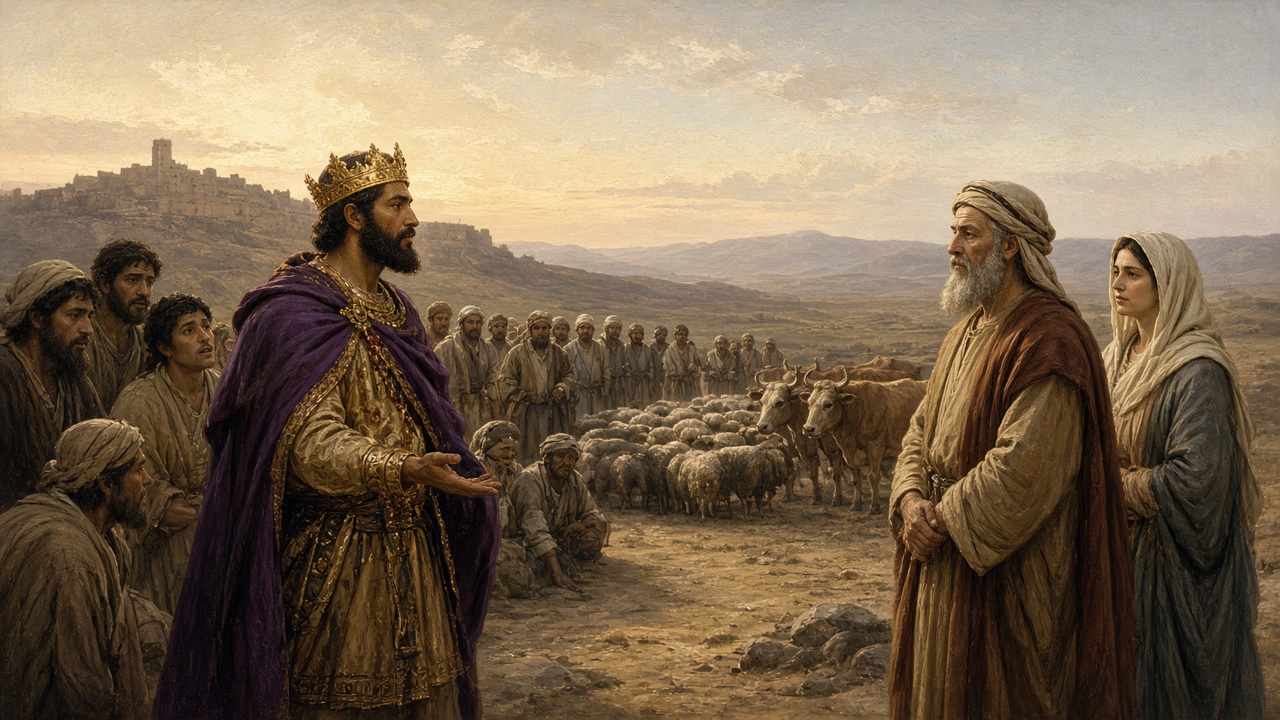
- When Abraham said that Sarah was his sister, the kinship was not wholly invented: she was also his half-sister, the daughter of his father but not of his mother. Easton's Bible Dictionary (1897) gives the name Sarah as meaning “princess,” and says that name was given when it was announced that she would be the mother of the promised child.Sources: the Bible text itself · Sarah
- The name Abimelech appears again at Gerar in Isaac’s story. Easton's Bible Dictionary (1897) describes that later king as probably the son of the Abimelech Abraham met, and says he rebuked Isaac for a similar deception about his wife Rebekah, which the king discovered by accident. The same work says Gerar seems to have been a rich pastoral country.Sources: Abimelech (King of Gerar) · Gerar
Notes written with AI assistance from open sources (Theographic Bible Metadata, CC BY-SA 4.0; Easton’s Bible Dictionary, public domain) and reviewed before publishing.
Places in this chapter
- Negeb · 31.245, 34.841 · verse 1
Only places identified with high confidence are shown (90% or more according to the scholarly sources compiled by OpenBible). Period map: DARE (Digital Atlas of the Roman Empire), CC BY 4.0; modern map: © OpenStreetMap contributors; places: OpenBible.info (CC BY 4.0).
Credits and license for this translation
Godón Buk
Portions of the Holy Bible in the Gizrra language of Western Province, Papua New Guinea
Buk Baibel long tokples Gizrra long Niugini
copyright © 2019 Wycliffe Bible Translators, Inc.
Language: Gizrra
Translation by: Wycliffe Bible Translators, Inc.
This translation is made available to you under the terms of the
Creative Commons Attribution-Noncommercial-No Derivatives license 4.0.
You may share and redistribute this Bible translation or extracts from it in any format, provided that:
You include the above copyright and source information.
You do not sell this work for a profit.
You do not change any of the words or punctuation of the Scriptures.
Pictures included with Scriptures and other documents on this site are licensed just for use with those Scriptures and documents.
For other uses, please contact the respective copyright owners.
2024-07-01
Source: http://png.bible/tof/ · eBible.org