Judges 7
Bibiri Kuyie Nnɑ́ɑǹtì Pɑ́tíri · Tap a verse to see its cross-references.
Sedeɔ̃ɔ̃ kɔ̀tɛmɛ̀ mudoò nɛ̀ bɛnìtìbɛ̀ sikɔusìtɑ̃ɑ̃ti
1Kɛ̀ dɛ̀ nkpɑɑ́ uu kɛ̀ Sedeɔ̃ɔ̃, bɛ̀ tu wè Yedubɑɑdi, kòo bɑ́ɑ́tínɛ̀ o ɑ̃ɑ̃pɔ̀mbɛ̀ bɛmɔu kɛ́bɑ́tɛ́ Adodi bintɛ borɛ̀, kɛ̀ Mɑndiyɑ̃ɑ̃bɛ mɛ ntó bɑ́tɛ́ kubɑkù cɑ̃̀nku bíɛ́kɛ̀ Mɔdee tɑ̃rì bíɛ́kɛ̀ kubiriku miɛkɛ.
2Kɛ̀ ti Yiɛ̀ nKuyie nnɑ́kɛ́ Sedeɔ̃ɔ̃ kɛ dɔ̀: A nìtìbɛ̀ sũnɛ̀ m bo duɔ́mmɛ̀ kɛ̀ dí nɑ Mɑndiyɑ̃ɑ̃bɛ, kɛ̀ n duɔ́ nkɛ̀ di bɛ̀ nɑ, Isidɑyɛɛribɛ bo nɑ kɛ́sɑ̃ntɛ bɛmɑ́ɑ̀ kɛ dɔ̀ bɛɛ̀ bɛ̀ nɑ nɛ̀ bɛ kó muwɛ̃rímú, kɛ́cɔutɛ́ disɑ̃nni dìì nɑ ntú n kpɛri. 3Á nɑ́kɛ́ ɑ nìtìbɛ̀ kɛ tú n yɛ̃ nkɛ̀ kufɔ̃wɑɑ́ mbo wè, kòo kɔ̃m̀bùɔ̀tì duò, wèe kò nho cĩ́ɛ̃̀tɛ̀.
Kɛ̀ Sedeɔ̃ɔ̃ tì bɛ́i nkɛ̀ bɛnìtìbɛ̀ sikɔupípísìdɛ́ nɛ̀ sikɔusìdɛ́ (22000) wɛ̃tɛ, kɛ̀ bɛ̀ nkpɑɑ́ tɛkɔupípíítɛ̀ (10000). 4Kɛ̀ ti Yiɛ̀ nKuyie nnɑ́kɛ́ Sedeɔ̃ɔ̃ kɛ dɔ̀ ɑ nìtìbɛ̀ kpɑɑ́ sũmu, tɑnnɛ̀ bɛ kukó nkɛ̀ m bɛ̀ ndɑ bɑtɛ, kɛ́ dɑ nɑ́kɛ́ bɛ̀ɛ̀ yóó dɑ nɛinɛ̀ nɛ̀ bɛ̀ɛ̀ yó nkpɑɑ́.
5Kɛ̀ Sedeɔ̃ɔ̃ bɛ̀ tɑnnɛ́ kukó nkɛ̀ ti Yiɛ̀ nKuyie nhò nɑ̀kɛ́ kɛ dɔ̀: Bɛ̀ɛ̀ bo nkɛì mɛniɛ nnɛ̀ bɛ nɔu kɛ yɔ̃̀ nhɑ́ bɛ̀ bɑ̀tɛ, kɛ́bɑtɛ bɛ̀ɛ̀ bo nínkú kɛ́sĩ́nnɛ́ kɛ́nyɔ̃nnɛ̀ bɛ nɔ̀.
6Kɛ̀ bɛnìtìbɛ̀ sikɔusìtɑ̃ɑ̃ti (300) bɛɛ̀ nkɛìnɛ̀ bɛ nɔu kɛ yɔ̃, kɛ̀ bɛsɔmbɛɛ nínkú kɛ́nyɔ̃nnɛ̀ bɛ nɔ̀. 7Kɛ̀ ti Yiɛ̀ nKuyie nnɑ́kɛ́ Sedeɔ̃ɔ̃ kɛ dɔ̀: Bɛ̀ɛ̀ nìńkú kɛ yɔ̃nnɛ̀ bɛ nɔ̀ bɛ̀ɛ kũṹ mbɛ cɛ̃́ĩ, sikɔu sìtɑ̃ɑ̃ti (300) bɛ̀ɛ̀ kɛ̀ìnɛ̀ bɛ nɔu kɛ yɔ̃, fɔ̃́ nnɛ̀ bɛ díì yóó kɔtɛ mudoò kɛ̀ n dí dɛɛtɛ́ kɛ́duɔ́ nkɛ̀ dí nɑ Mɑndiyɑ̃ɑ̃bɛ.
8Kɛ̀ Sedeɔ̃ɔ̃ duɔ́ nkɛ̀ bɛ̀ɛ cuɔ́ bɛ diitì nɛ̀ bɛ tɑ̃tɛhe, kòo duɔ́ nkɛ̀ bɛ̀ɛ kũṹ mbɛ cɛ̃́ĩ, kòo nkpɑɑ́nɛ̀ bɛnìtìbɛ̀ sikɔusìtɑ̃ɑ̃ti (300).
Kɛ̀ Mɑndiyɑ̃ɑ̃bɛ mɛ mbɑ́tɛ́ dɛ fũ̀ɔ̃̀ kubiriku kɛ kɑri.
Kuyie mbɛnkɛ mɛ̀ Sedeɔ̃ɔ̃ ò yóó nɑmɛ̀ o dootitɔbɛ̀
9Dɛ kó kɛyènkɛ̀ kɛ̀ ti Yiɛ̀ nKuyie nnɑ́kɛ́ Sedeɔ̃ɔ̃ kɛ dɔ̀: Ítɛ́ kɛ́kɔtɛ kɛ́do Mɑndiyɑ̃ɑ̃bɛ m bɛ̀ ndɑ duɔ́mmu. 10Kɑ̀ɑ mɛ nyí dɑ̀ɑ́tí kɛ bo kɔtɛ kɛ́ bɛ̀ do, ɑ́ nɛinɛ̀ ɑ kóo tɔ̃ntì Pudɑɑ kɛ̀ di kɔtɛ. 11Kɑ̀ɑ keè bɛ̀ nɑ̀ɑ́ ntì dɛ bíɛ́kɛ̀, dɛ mɔ̀nnì kɛ́mɔɔtɛ dikɔ̃m̀bùɔ̀, kɛ nɛ́ kɔtɛ kɛ́ bɛ̀ do.
Kɛ̀ Sedeɔ̃ɔ̃ nɛinɛ̀ o kóo tɔ̃ntì kɛ̀ bɛ̀ɛ kɔtɛ Mɑndiyɑ̃ɑ̃bɛ kɑrì dìì tɔ̀kɛ́ní. 12Kɛ̀ Mɑndiyɑ̃ɑ̃bɛ nɛ̀ Amɑdesiibɛ nɛ̀ diyiè yìɛ̀ní kɛ̀ɛ̀ bíɛ́kɛ̀ kɔbɛ kɛ̀ bɛ̀ pitɛ́ kubiriku kɛ sũ kɛ mɑ̀nnɛ̀ fɛcofɛ bɑ́ yòyóbɛ̀ í dò nkɛ́nɑ kɛ́kɑɑ nkɛ́deè, kɛ mɛ̀nkɛ sũ kɛ dònnɛ̀ dɑ̀mɛ́ɛ̀rì nùù kó mubirímú. 13Bɛ̀ tùɔ̀koo dìì mɔ̀nnì kɛ́nsɔ̃́ nhòmɔù nɑ̀ɑ́ nho nɛ́po tidɔuǹtì kɛ tú: N duɔ́ tidɔuǹtì nti kɛ̀ dɛ̀ dò mpɛ̃́ɛ̃̀ mɔù birimúní ditɑ̃rì ĩ́nkɛ̀, kɛ bɔ̀tɛ́ kutouku mɑkù kɛ̀ kù do kɛ kòńtɛ́ kóntɛ́.
14Kòo nɛ́poo ò nɑ̀kɛ́ kɛ dɔ̀: Isidɑyɛɛribɛ kou Soɑsi birɛ Sedeɔ̃ɔ̃ kó disiè ndi, Kuyie nti ɑ̃nnɛ́ o nɔu miɛkɛ nkɛ tínti nɛ̀ ti kó ditĩ̀nnì dimɔu.
15Kɛ̀ Sedeɔ̃ɔ̃ keè tidɔuǹtì nɛ̀ tì bɛnkú mù, kɛ́nínkú kɛ́sĩ́nnɔ́ɔ kɛtenkɛ̀, kɛ́dɔunnɛ̀ ti Yiɛ̀ nKuyie mmutɔ̃mmú, kɛ́deè kɛ́wɛ̃tɛní Isidɑyɛɛribɛ bɑ̀tɛ́ dɛ̀, kɛ́pĩɛ̃kɛ́ kɛ dɔ̀: Bɑ́ɑ́tínɛ̀ ti Yiɛ̀ nKuyie ndi duɔ́mmu Mɑndiyɑ̃ɑ̃bɛ.
Kuyie nkpɑmmɛ̀ Sedeɔ̃ɔ̃ kpɛ́í
16Dɛ kó dimɔ̀nnì kòo totɛ́ bɛnìtìbɛ̀ sikɔusìtɑ̃ɑ̃ti (300) sinsi yɛtĩ̀rɛ̀ yɛ̀tɑ̃ɑ̃ti, kɛ́pií mbɑ́ wè ditɑ̃tɛheù nɛ̀ dɛfìtírɛ̀ nɛ̀ dɛ dúù, 17kɛ́deè kɛ́ bɛ̀ nɑ̀kɛ́ kɛ dɔ̀: Dí nni nwúó nkɛ̀ n tùɔ̀kɛ bɛ kɑrì kɛ dɔ̀ɔ̀mɛ̀, dí mɛ ndɔɔ̀. 18Mí nnɛ̀ n kó ditĩ̀nnì kɛ̀ ti eé dìì mɔ̀nnì yɛtɑ̃tɛhe di múnkɛ eé kɛ́fitɛ́ bɛ kɑrì, kɛ́mpĩɛ̃kù kɛ tú: Ti Yiɛ̀ nKuyie nnɛ̀ Sedeɔ̃ɔ̃ bɛɛ̀ nɑ.
19Sedeɔ̃ɔ̃ nɛ̀ o nìtìbɛ̀ kɛ̀ bɛ̀ ntuɔ̀kòo Mɑndiyɑ̃ɑ̃bɛ kɑrì kɛ̀ kɛyènkɛ̀ dɔ́ kɛ́totɛ́ kɛ cuokɛ̀, kɛ̀ bɛ̀ bo kɛ ceeri bɛ̀ɛ̀ bɑ̀ɑ bɛ kɑrì. Kɛ̀ bɛ̀ɛ eé yɛtɑ̃tɛhe kɛ́pɔntɛ bɛ fìtídɔ́. 20Kɛ̀ yɛtĩ̀rɛ̀ tɛyɛ̀ yɛ̀dɛ́ɛ̀ mɛ ndɔɔ̀ kɛ́ntɔ bɛ fìtíyì nɛ̀ sinɔu cɑ̃̀nkusì, kɛ tɔ yɛtɑ̃tɛhe siyoú, kɛ pĩɛ̃kù kɛ tú: Ti Yiɛ̀ nKuyie nnɛ̀ Sedeɔ̃ɔ̃ bɛɛ̀ nɑ!
21Bɑ́ wè kòo cómmú o kó mɛfíè, kɛ̀ bɛ̀ɛ cɛ̃tinnɛ bɛ kɑrì, kɛ̀ bɛ̀ nkuɔ̀ ndɛ miɛkɛ kɛ cokù. 22Kɛ̀ bɛnìtìbɛ̀ sikɔusìtɑ̃ɑ̃ti (300) ncómmú kɛ eu yɛtɑ̃tɛhe kɛ̀ ti Yiɛ̀ nKuyie nduɔ́ nkɛ̀ Mɑndiyɑ̃ɑ̃bɛ nkɔù bɛtɔbɛ̀ bɛ kɑrì dimɔu miɛkɛ. Kɛ̀ dɛ̀ nyóó dentɛnɛ̀ bɛ̀ɛ̀ kpɑɑ́ kɛ̀ bɛ̀ɛ cokɛ́ kɛ́tuɔkɛ Bɛti-Itɑ kɛ́nwetí Sededɑɑ kɛ yɑ̀ɑ tuɔkɛnɛ̀ Abɛdi-Mɛodɑɑ ɛì dìì tɔ̀kɛ́nɛ̀ Tɑbɑɑ.
23Kɛ̀ bɛ̀ɛ yú Isidɑyɛɛribɛ sɔmbɛ Nɛfutɑdii nɑɑ̀mùnkù kɔbɛ nɛ̀ Asɛɛ kɔku nɛ̀ Mɑnɑnsee kɔku kɛ̀ bɛ̀ɛ kɔtɛní kɛ́bɛti Mɑndiyɑ̃ɑ̃bɛ. 24Kɛ̀ Sedeɔ̃ɔ̃ tɔ̃ nkɛ̀ bɛ̀ɛ nɑ́kɛ́ Efɑdɑimmu tɑ̃rì kɔbɛ kɛ dɔ̀: Cútɛ́nɛ̀ní mɛcɑ̃ɑ̃ nkɛ́niitɛ́ kɛ́bɑɑ mɛniɛ ntɛpurɛ kɛ́túótɛ́ Suditɛ̃ɛ̃ kɛ́tuɔkɛnɛ̀ Bɛti-Bɑdɑɑ.
Mɛm̀mɛ kɛ̀ Efɑdɑimmu kɔbɛ bɛmɔu kɔtɛ kɛ́bɑɑ kukó nSuditɛ̃ɛ̃ kɛ́tuɔkɛnɛ̀ Bɛti-Bɑdɑɑ, 25kɛ́pĩ́ mMɑndiyɑ̃ɑ̃bɛ kpɑ̀ɑ̀tìbɛ̀ bɛ̀dɛ́ Odɛbu nɛ̀ Sɛbu kɛ́kuɔ Odɛbu tɑ̃rì tɑkɛ́ kɛ́kuɔ Sɛbu dinɑ̀ɑ̀ bɛ̀ tú dì Sɛbu nɑ̀ɑ di tɑkɛ́, kɛ́sɔɔtɛ́ kɛ́mbɛti Mɑndiyɑ̃ɑ̃bɛ, kɛ́tɔnní Odɛbu nɛ̀ Sɛbu bɛ yɔ kɛ́séntɛ́nɛ̀ní Suditɛ̃ɛ̃, kɛ́ yɛ̀ duɔ́ nSedeɔ̃ɔ̃.
Did you know?
Gideon's Three Hundred
- Before the battle, Gideon's force of 32,000 men was drastically reduced to just 300 at the spring of Harod. First, 22,000 fearful men were permitted to return home, and the remaining 10,000 were sifted by how they drank water from the spring, leaving only those who brought water to their mouths with their hands.Sources: the Bible text itself · Harod
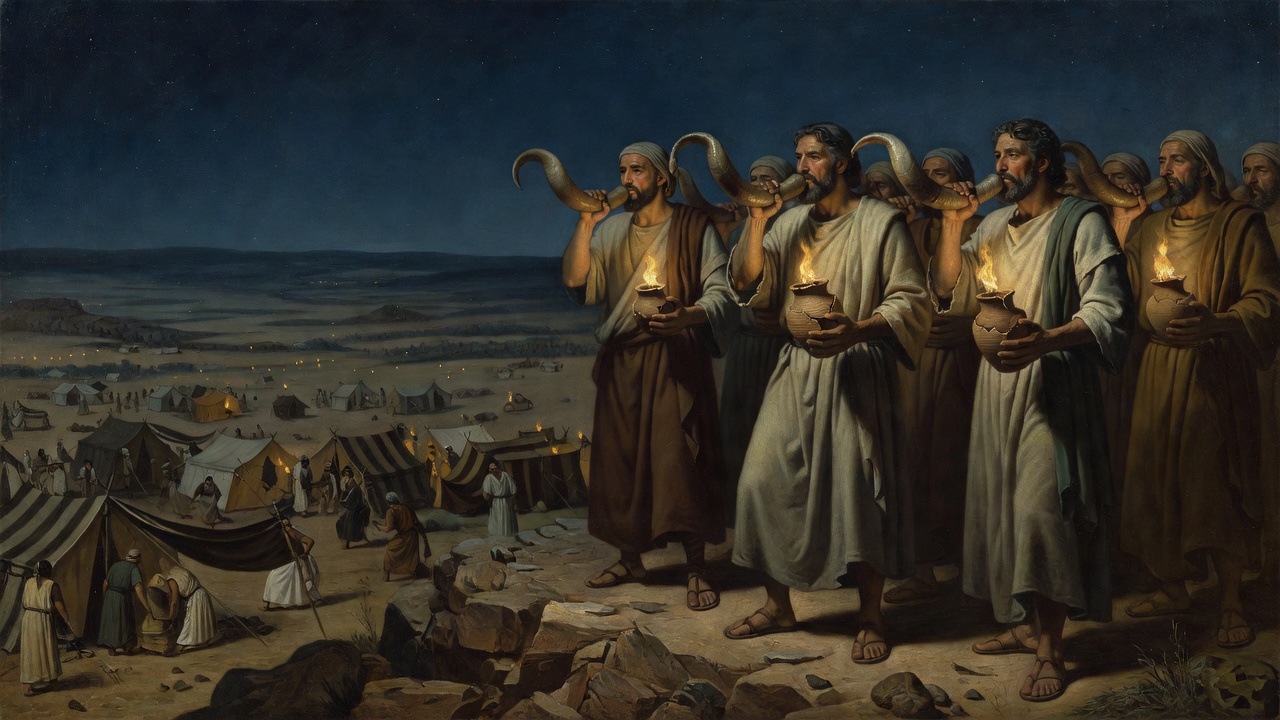
- Gideon used night tactics and psychological shock by dividing his 300 men into three companies armed only with rams' horns, torches, and clay jars. Surrounding the vast camp of Midianites and allied eastern nomads near the hill of Moreh during the night watch, the sudden sound of shattering jars and blowing horns caused the enemy to turn on one another in the dark.Sources: the Bible text itself · Moreh (little Hermon) · East
- As the Midianites fled toward the Jordan River, the tribe of Ephraim was summoned to cut off their retreat at the river crossings. The Ephraimites captured and executed two Midianite leaders, Oreb (meaning 'raven') and Zeeb (meaning 'wolf').Sources: the Bible text itself · Oreb · Zeeb · Ephraim
Notes written with AI assistance from open sources (Theographic Bible Metadata, CC BY-SA 4.0; Easton’s Bible Dictionary, public domain) and reviewed before publishing.
Places in this chapter
- Midian · 28.495, 35.012 · verses 1, 2, 7, 8, 12, 13, 14, 15, 23, 24, 25
- Amalek · 30.648, 34.422 · verse 12
- East · Today: region around Amman · 31.955, 35.934 · verse 12
- Jordan · Today: Jordan River · 31.761, 35.558 · verses 24, 25
Only places identified with high confidence are shown (90% or more according to the scholarly sources compiled by OpenBible). Period map: DARE (Digital Atlas of the Roman Empire), CC BY 4.0; modern map: © OpenStreetMap contributors; places: OpenBible.info (CC BY 4.0).
Credits and license for this translation
Bibiri Kuyie Nnɑ́ɑǹtì Pɑ́tíri
The Holy Bible in the Ditammari language of Benin
copyright © 2001 SIM International
Language: Ditammari
Translation by: SIM
This translation text is made available to you under the
terms of the Creative Commons License: Attribution-Noncommercial-No Derivative Works.
( http://creativecommons.org/licenses/by-nc-nd/3.0/ )
In addition, you have permission to port the text to different file formats, as long as you
do not change any of the text or punctuation of the Bible.
You may share, copy, distribute, transmit, and extract portions
or quotations from this work, provided that you include the above copyright
information:
You must give Attribution to the work.
You do not sell this work for a profit.
You do not make any derivative works that change any of the actual words or punctuation of the Scriptures.
Permissions beyond the scope of this license may be
available if you contact
us with your request.
This translation is made available to you under the terms of the
Creative Commons Attribution-No Derivatives license 4.0.
You may share and redistribute this Bible translation or extracts from it in any format, provided that:
You include the above copyright and source information.
You do not make any derivative works that change any of the actual words or punctuation of the Scriptures.
Pictures included with Scriptures and other documents on this site are licensed just for use with those Scriptures and documents.
For other uses, please contact the respective copyright owners.
2022-05-31
Source: http://ebible.org/tbzsim/ · eBible.org