1 Kings 12
Bibiri Kuyie Nnɑ́ɑǹtì Pɑ́tíri · Tap a verse to see its cross-references.
Bɛ̀ tìímmɛ̀ Sisɛmmu
1Kɛ̀ Odoboɑmmuu kɔtɛ Sisɛmmu kɛ̀ Isidɑyɛɛribɛɛ tíí nkɛ bo ò pĩ ntikpɑ̀tì. 2Dɛ̀ do sɔ̃́ nNɛbɑti birɛ Sedoboɑmmu kpɑɑní Esibiti nwe ò do cokɛ́nɛ̀ okpɑ̀ɑ̀tì Sɑdomɔɔ nwe kɛ́ kɛ̀ kɔtɛ. Ò do kɛ mbo kɛ́keè bɛ̀ tìímmɛ̀ kɛ́konní. 3Kɛ̀ bɛ̀ɛ ò yu kòo kɔtɛní Isidɑyɛɛribɛ tìí ndɛ̀ kɛ̀ bɛ̀ɛ wɛ̃nnɛ́ kɛ́nɑ́kɛ́ Odoboɑmmu kɛ dɔ̀: 4A cicɛ do ti fɛ̃́ũ mudɑɑtɔ̃mmú mmu kɛ̀ mù ti kɛ̀itɛ ɑ mù nti yɑɑtɛ kɛ̀ ti mpĩ́ nhɑ tɔ̃mmú. 5Kɛ̀ Odoboɑmmuu bɛ̀ tɛ̃̀ńnɛ́ kɛ dɔ̀: Cíɛ́tɛ́nɛ̀, yɛwe yɛ̀tɑ̃ɑ̃ti kó difɔ̃nkúò kɛ́wɛ̃tɛní.
Kɛ̀ bɛ̀ɛ cíɛ́tɛ́. 6Kòo tíí mbɛkótíbɛ̀ bɛ̀ɛ̀ do bonɛ̀ o cicɛ Sɑdomɔɔ kɛ́ bɛ̀ bekɛ kɛ dɔ̀: Di yɛ̀mmɛ̀ dò n tɛ̃̀ńnɛ́ ɔ̃̀nti bɛ nnìtìbɛ̀.
7Kɛ̀ bɛkótíbɛ̀ɛ ò nɑ̀kɛ́ kɛ dɔ̀: Kɑ̀ɑ yie nkɛ dɔ̀ɔ̀ ɑmɑ́ɑ̀ bɛ kóo tɔ̃ntì kɛ bɛ̀ nɑ̀ɑ́nnɛ̀ tinɑ́ɑǹsɑ̀ɑ̀tì, bɛ̀ yó mpĩ́mmu ɑ tɔ̃mmú sɑ̃́ɑ̃̀.
8Okpɑ̀ɑ̀tì mɛ nyí nyie mbɛkótíbɛ̀ ò duɔ́ nyìì tié, kɛ́bekɛ bɛdɑpɑ̀mbɛ̀, o kó kutɔ̃nkù kɔbɛ bɛ̀ɛ̀ ò bonɛ̀ kɛ dɔ̀: 9Bɛ nnìtìbɛ̀ tu m bɛ̀ yɑ̀ɑ̀tɛ ditɔu n cicɛ bɛ̀ toú ndì cɛ̃́ɛ̃́kù, di yɛ̀mmɛ̀ dò m bɛ̀ nɑ̀kɛ́ ɔ̃̀nti?
10Kɛ̀ bɛdɑpɑ̀mbɛ̀ o kó kutɔ̃nkù kɔbɛɛ ò tɛ̃̀ńnɛ́ kɛ dɔ̀: Bɛnìtìbɛ̀ bɛ̀ɛ̀ tu ɑ cicɛ bɛ̀ toú ndìì tɔu cɛ̃́ɛ̃̀, kɛ tú ɑ́ bɛ̀ yɑ̀ɑ̀tɛ di cɛ̃́ɛ̃́kù, nɑ́kɛ́ bɛ kɛ dɔ̀ ɑ nɔ́mbíyɑ̃ɑ̃rɛ cɛ̃́ɛ̃̀nɛ̀mu ɑ cicɛ kɑ. 11Kɑ̀ɑ cicɛ do bɛ̀ toú ndìì tɔu cɛ̃́ɛ̃̀, ɑ kpɛri bo pɛ̃ɛ̃tɛ́ mɛmmɛ. A cicɛ do bɛ̀ tiènnɛ̀ idɑ́ nyi, kɛ̀ fɔ̃́ mbo mbɛ̀ tiènnɛ̀ yɛdɑ́ yɛ̀ɛ̀ ɑ̃ timɑ́tì yɛ yómmɛ̀.
12Diyiè tɑ̃ɑ̃́nnì yiè, Sedoboɑmmu nɛ̀ bɛnìtìbɛ̀ kɛ̀ bɛ̀ɛ wɛ̃tɛní Odoboɑmmu borɛ̀, ò sòò bɛ̀ nɑ̀kɛ́ kɛ yɛ̃mmɛ̀. 13Kòo sènkɛ̀rì bɛkótíbɛ̀ do ò duɔ́ nyìì tié nkɛ́bɑɑo bɛnìtìbɛ̀ nɛ̀ mɛtɑnkperímɛ̀, 14kɛ́tũnnɛ o kó kutɔ̃nkù kɔbɛ ò tié ntì nti, kɛ́bɛ́i nkɛ dɔ̀: N cicɛ do di toú nditɔu cɛ̃́ɛ̃́rì kɛ̀ n kpɛri bo pɛ̃ɛ̃tɛ́ mɛmmɛ, n cicɛ do di tiènnɛ̀ idɑ́ nyi, kɛ̀ mí m bo di tiénnɛ̀ yɛdɑ́ yɛ̀ɛ̀ ɑ̃ timɑ́tì yɛ yómmɛ̀.
15Mɛm̀mɛ okpɑ̀ɑ̀tì yetɛmɛ̀ bɛnìtìbɛ̀ ò bekɛ tì. Ti Yiɛ̀ nKuyie nkuù do dɔ̀ɔ̀ mɛmmɛ dɛ̀ bo yiemmɛ̀ kɛ̀ kù do nɑ̀kɛ́ tì Nɛbɑti birɛ Sedoboɑmmu nɛ̀ ku kóo tɔ̃ntì Aiyɑ Sidoo kou nùù miɛkɛ kɛ̀ tiì dɔɔ̀.
Dikpɑ̀ɑ̀tìyuu totɛ́mɛ̀
16Isidɑyɛɛribɛ sɔ̃́ ndìì mɔ̀nnì okpɑ̀ɑ̀tì í yie mbɛ kpɛti kóò nɑ̀kɛ́ kɛ dɔ̀:
Ti kpɛti tú nɛ̀ bɑ Dɑfiti Sɛsee birɛ?
Ti múú mbɑ tínti nɛ̀ we?
Tínti Isidɑyɛɛribɛ tí kònnɛ̀,
kɛ̀ Dɑfiti birɛ mbɑkɛ́ dɛ cĩ́ɛ̃̀tɛ̀.
Mɛm̀mɛ kɛ̀ bɛ̀ɛ cíɛ́tɛ́ kɛ́kũṹ. 17Dɛ mɔ̀nnì kɛ̀ Odoboɑmmu nkpɑɑ́ bɑkɛ́ Sudɑɑ tempɛ̃ nkɔbɛ mɑ́ɑ̀, 18kɛ́tɔ̃ nhAdodɑmmu wèè bɑkɛ́ muhɛikɛ̀ntɔ̃mmú Isidɑyɛɛribɛ borɛ̀, kɛ̀ bɛ̀ɛ ò bùɔ́tí bɛmɔu yɛtɑ̃́rɛ̀ kɛ́kuɔ. Kɛ̀ Odoboɑmmu nsɔ̃́ ndɛ̀ fuutɛ, kòo dekɛ o nɑɑsɑ̃ntɛ̀ mɛcɑ̃ɑ̃ nkɛ́cokɛ́ kɛ́kɔtɛ Sedisɑdɛmmu. 19Mɛm̀mɛ Isidɑyɛɛribɛ yɑtɛnɛ̀mɛ̀ Dɑfiti cĩ́ɛ̃̀tɛ̀ nɛ̀ yíenní.
20Isidɑyɛɛribɛ kèè dìì mɔ̀nnì Sedoboɑmmu konnímɛ̀, kɛ́tíí nkɛ́tɔ̃ nkɛ̀ bɛ̀ɛ ò yùní. Kòo tuɔkɛní kɛ̀ bɛ̀ɛ ò pĩ ntikpɑ̀tì. Kɛ̀ Sudɑɑ nɑɑ̀mùnkù kɔbɛ mɑ́ɑ̀ bɛɛ̀ nkpɑɑ́ tũ nDɑfiti cĩ́ɛ̃̀tɛ̀ kóo kpɑ̀ɑ̀tì.
21Mɛm̀mɛ Odoboɑmmu tùɔ̀kɛmɛ̀ Sedisɑdɛmmu kɛ́tíí nSudɑɑ wuɔ nkɔbɛ nɛ̀ Bɛnsɑmɛɛ wuɔ nkɔbɛ kó bɛhɑ̃ɑ̃pɔ̀mbɛ̀ bɛ̀ɛ̀ nɔ mmudoò, kɛ̀ bɛ̀ mbo tɛkɔupíkɔ̀ùtɛ̀ nɛ̀ sikɔupípísìni (180000) kɛ̀ bɛ̀ɛ kɔtɛ kɛ bo pɔntɛ Isidɑyɛɛribɛ kó dikpɑ̀ɑ̀tìyuu kòò mbɛ̀ bɑkɛ́ wenwe Sɑdomɔɔ kó dɛbirɛ. 22Kɛ̀ ti Yiɛ̀ nKuyie mbɛ́innɛ̀ ku kóo nìtì Semmɑyɑ kɛ dɔ̀: 23Nɑ́kɛ́ Sudɑɑ kɔbɛ kóo kpɑ̀ɑ̀tì Sɑdomɔɔ birɛ Odoboɑmmu nɛ̀ o kɔbɛ nɛ̀ Bɛnsɑmɛɛ wuɔ nkɔbɛ nɛ̀ bɛsɔmbɛ kɛ dɔ̀: 24N tú di bɑ́ɑ́ kɔtɛ kɛ́kpɑnnɛ̀ di tebìí Isidɑyɛɛribɛ. Bɑ́ wè, wèe kò nho cĩ́ɛ̃̀tɛ̀, míì yɛ̃ ndɛ̀ɛ̀ dɔ̀ɔ̀ dɛ̀ɛ dɔɔ̀.
Kòo ti mbɛ̀ nɑ̀kɛ́ kɛ̀ bɛ̀ɛ tì kèè kɛ tì yie mbɑ́ wè kòo kò nho cĩ́ɛ̃̀tɛ̀.
25Mɛm̀mɛ kɛ̀ Sedoboɑmmuu mɑɑ́ kuduotí kɛ́fii nSisɛmmu Efɑdɑimmu tɑ̃rì kó dihɛì kɛ́mbo. Ò dɛ nyìtɛ́ kɛ́kɔtɛ kɛ́mɑɑ́ kuduotí kɛ́fii mPenniyɛɛdi.
Sedoboɑmmu dɔ̀ɔ̀mɛ̀ mɛyɛi
26Kɛ̀ Sedoboɑmmuu totí o yɛ̀mmɛ̀ kɛ dɔ̀: Kɛ̀ dɛ̀ sɔkɛ́ miɛ mbotí n kpɑ̀ɑ̀tìyuu wɛ̃ti kɛ bo tũnnɛ Dɑfiti cĩ́ɛ̃̀tɛ̀ kɔbɛ mbɛ. 27Kɛ̀ bɛnìtìbɛ̀ kpɑɑ́ kɔrì Sedisɑdɛmmu ti Yiɛ̀ nKuyie ncĩ́ɛ̃̀tɛ̀ iwũɔ̃ féù, bɛ yɛ̀mmɛ̀ bo wɛ̃tɛ kɛ́tũnnɛ Odoboɑmmu Sudɑɑ kɔbɛ kóo kpɑ̀ɑ̀tì kɛ̀ bɛ̀ n kuɔ. 28Ò totí dìì mɔ̀nnì o yɛ̀mmɛ̀ kɛ́dɔɔ̀ isɔɔnɑ̀ɑ̀kɛ ìdɛ́ì, kɛ́nɑ́kɛ́ Isidɑyɛɛribɛ kɛ dɔ̀: Di sũ̀ṹ nSedisɑdɛmmu nwe mukɔtimù. Di mmɔ̀nnì ntɛnɛ̀ kuyie nkùù ti dènnɛní Esibiti.
29Ò mɛ nyĩ kɛ́cónnɛ́ fɛsɔɔnɑ̀ɑ̀fɛ̀ mɑfɛ̀ Betɛɛdi, fɛtɛfɛ̀ Dɑnni tenkɛ̀. 30Mɛm̀mɛ ò tɑnnɛ́mɛ̀ Isidɑyɛɛribɛ mɛyɛi mmiɛkɛ kɛ̀ bɛ̀ɛ tɔ fɛsɔɔnɑ̀ɑ̀fɛ̀ tɛfɛ̀ kɛ́ndentì kɛ́ fɛ̀ kɔ̀tɛnɛ̀ Dɑnni ɛì.
31Kòo mɑɑ́ yɛwũɔ̃tɔ̀rɛ̀ yɛtɑ̃rɛ̀ ĩ́nkɛ̀ kɛ́dɛi bɛ cuokɛ̀ ikuɔ́ nìùbɛ̀, bɛ̀ tɛ̃́nkɛ í ntú Defii botí kɔbɛ. 32Mɛm̀mɛ Sedoboɑmmu dɔ̀ɔ̀mɛ̀ dibɑnni otɑ̃̀nkù niínwè yiè tɛpíítɛ̀ nɛ̀ dinummurì Sudɑɑ kɔbɛ do bɑɑ̀ mmɛ̀ɛ̀ botí, kɛ́dekɛ o mɔ́mmuɔ ndiwũɔ̃tɔ̀nnì ĩ́nkɛ̀ kɛ́fíé iwũɔ̃ isɔɔnɑ̀ɑ̀kɛ ò do dɔ̀ɔ̀ ì, kɛ́wɑɑ́ nyikuɔ́ nìùbɛ̀ kɛ́kɑnnɛ Betɛɛdi ò mɑɑ́ yɛ̀ɛ̀ wũɔ̃tɔ̀rɛ̀ kpɛ́í. 33Ò do dèkɛ ò mɑɑ́ dìì wũɔ̃tɔ̀nnì Betɛɛdi di ĩ́nkɛ̀ otɑ̃̀nkù niínwè ò do tɑ̃ɑ̃tɛ́ wè kó diyiè tɛpíítɛ̀ nɛ̀ dinummurì ndi. Dɛ yiè ndi ò duɔ́mmɛ̀ kɛ̀ Isidɑyɛɛribɛɛ ɑ̃nnɛ́ dibɑnni, kòo dekɛ kɛ bo tuɔ nyɛpɑ̃rɛ̀.
Did you know?
The Division of the Kingdom
- When the northern tribes gathered at Shechem requesting lighter taxes and labor burdens, Rehoboam rejected the counsel of Solomon's elders and threatened harsher measures. This triggered the division of the united monarchy, fulfilling the prophecy previously spoken by Ahijah the Shilonite.Sources: the Bible text itself · Rehoboam · Ahijah · Shechem
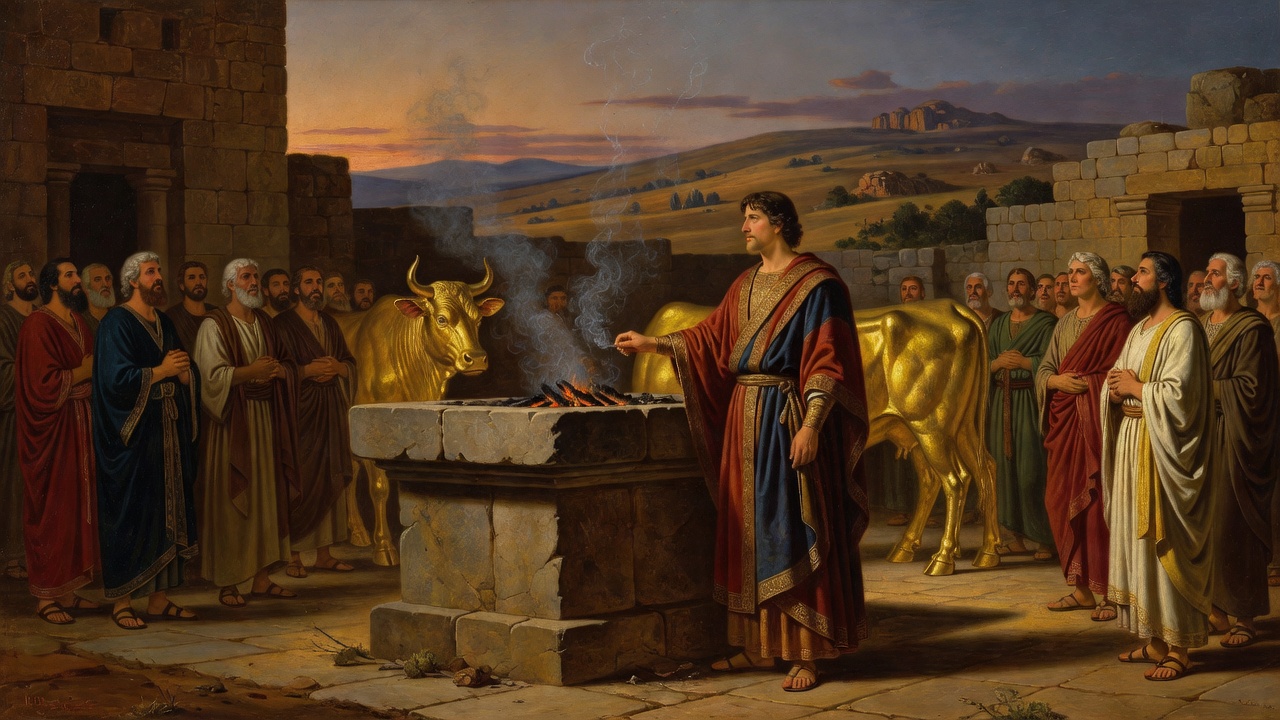
- To prevent his subjects from traveling to the temple in Jerusalem, King Jeroboam set up two golden calves for worship at opposite ends of the northern kingdom, placing one in Bethel and the other in Dan. He also established shrines on high places and appointed priests who were not from the tribe of Levi.Sources: the Bible text itself · Jeroboam · Bethel (of Palestine) · Dan
Notes written with AI assistance from open sources (Theographic Bible Metadata, CC BY-SA 4.0; Easton’s Bible Dictionary, public domain) and reviewed before publishing.
Places in this chapter
- Shechem · Today: Tell Balatah · 32.214, 35.282 · verses 1, 25
- Egypt · 30.129, 31.308 · verses 2, 20, 28
- Shiloh · Today: Khirbet Seilun · 32.056, 35.290 · verse 15
- Jerusalem · 31.777, 35.234 · verses 18, 21, 27, 28
- Dan · Today: Tel Dan · 33.249, 35.652 · verses 29, 30
Only places identified with high confidence are shown (90% or more according to the scholarly sources compiled by OpenBible). Period map: DARE (Digital Atlas of the Roman Empire), CC BY 4.0; modern map: © OpenStreetMap contributors; places: OpenBible.info (CC BY 4.0).
Credits and license for this translation
Bibiri Kuyie Nnɑ́ɑǹtì Pɑ́tíri
The Holy Bible in the Ditammari language of Benin
copyright © 2001 SIM International
Language: Ditammari
Translation by: SIM
This translation text is made available to you under the
terms of the Creative Commons License: Attribution-Noncommercial-No Derivative Works.
( http://creativecommons.org/licenses/by-nc-nd/3.0/ )
In addition, you have permission to port the text to different file formats, as long as you
do not change any of the text or punctuation of the Bible.
You may share, copy, distribute, transmit, and extract portions
or quotations from this work, provided that you include the above copyright
information:
You must give Attribution to the work.
You do not sell this work for a profit.
You do not make any derivative works that change any of the actual words or punctuation of the Scriptures.
Permissions beyond the scope of this license may be
available if you contact
us with your request.
This translation is made available to you under the terms of the
Creative Commons Attribution-No Derivatives license 4.0.
You may share and redistribute this Bible translation or extracts from it in any format, provided that:
You include the above copyright and source information.
You do not make any derivative works that change any of the actual words or punctuation of the Scriptures.
Pictures included with Scriptures and other documents on this site are licensed just for use with those Scriptures and documents.
For other uses, please contact the respective copyright owners.
2022-05-31
Source: http://ebible.org/tbzsim/ · eBible.org