1 Kings 1
Bibiri Kuyie Nnɑ́ɑǹtì Pɑ́tíri · Tap a verse to see its cross-references.

About this book
About 1 Kings
- Easton's Bible Dictionary (1897) treats the authorship of the books of Kings as uncertain. A tradition that Jeremiah wrote them is, in Easton's view, supported by passages almost identical with parts of Jeremiah and by events Jeremiah knew personally, yet Easton thinks it more probable that Ezra, after the Captivity, compiled the books from earlier documents, perhaps written by David, Solomon, Nathan, Gad, and Iddo. Easton dates the composition between 561 B.C., when Jehoiachin was released from captivity by Evil-merodach, and 538 B.C., the decree of Cyrus.Sources: Easton: Kings, The Books of
- Easton says these books contain the annals of the kingdom from Solomon's accession until Nebuchadnezzar and the Babylonians subdued it, a period he estimates at about 453 years. 1 Kings opens while David is dying: Adonijah, his fourth son, who had become heir-apparent to the throne after the deaths of Amnon and Absalom, has himself proclaimed king, but Nathan and Bathsheba persuade David to enthrone Solomon at once. Solomon, David's son by Bathsheba, whose history is recorded in 1 Kings 1-11, came to the throne, Easton suggests, at about sixteen or eighteen.Sources: Easton: Kings, The Books of · Adonijah · Solomon
- In the Hebrew Scriptures the two books of Kings originally formed one book; the Septuagint first divided them and, with the Vulgate, numbers them as the third and fourth books of Kings, the books of Samuel being the first and second. Easton notes that Chronicles gives greater prominence to the priestly or Levitical office, while Kings gives greater prominence to the royal office, and that in the threefold division of the Scriptures by the Jews these books are ranked among the Prophets. The narrative points to earlier sources: the book of the acts of Solomon and the chronicles of the kings of Judah and of Israel.Sources: Easton: Kings, The Books of
- After Solomon's death the ten tribes revolted and invited Jeroboam, son of Nebat, to be their king; Easton calls him the first king of those tribes and dates his reign from 976 to 945 B.C. He had fled to Egypt under the protection of Shishak I, and later moved his residence from Shechem, his first capital, to Tirzah, which remained the chief residence of Israel's kings until Omri bought the hill of Shomeron from Shemer for two talents of silver and built Samaria. The later narrative includes Ahab, Omri's son and the seventh king of Israel, whose wife was Jezebel: to the calf worship introduced by Jeroboam he added the worship of Baal, and he was severely admonished by the prophet Elijah.Sources: Jeroboam · Tirzah · Samaria · Ahab
Notes written with AI assistance from open sources (Theographic Bible Metadata, CC BY-SA 4.0; Easton’s Bible Dictionary, public domain) and reviewed before publishing.
Adonniyɑ dɔ́mɛ̀ kɛ́cɔutɛ́ tikpɑ̀tì
1Dɛ mɔ̀nnì kɛ sɔ̃́ nhokpɑ̀ɑ̀tì Dɑfiti kòtɛ́ kɛ mɛ̀nkɛ kòtɛ́, bɑ́ kɛ̀ bɛ̀ ò dɑ̀tínnɛ́ tiyɑ̀ɑ̀tì ò bɑ́ɑ́ keè kuyiìnkù. 2Kòo kó bɛtɔ̃mbɛ̀ɛ ò nɑ̀kɛ́ kɛ dɔ̀: Okpɑ̀ɑ̀tì yóu kɛ̀ tí dɑ wɑɑ́ nhosɑpɑ̀ɑ̀ nkòo ndɑ pĩ́ mmutɔ̃mmú kɛ́ntú ɑ pokù kɛ̀ dí nwɛ̃ nkɛ dɔu kòò ndɑ dɛì muséé.
3Mɛm̀mɛ kɛ̀ bɛ̀ɛ ítɛ́ Isidɑyɛɛribɛ tenkɛ̀ kɛmɔu miɛkɛ osɑpɑ̀ɑ̀ nsɑ̀ɑ̀wè wɑmmù, kɛ́pɛ́tɛ́ Sunɛmmu ɛitɛ̀ miɛkɛ osɑpɑ̀ɑ̀, kòò mɛ̀nkɛ wenni mɛdiɛ̀, nkòo yètìrì tu Abisɑki, kɛ̀ bɛ̀ɛ ò kɔ̀tɛnní kóò duɔ́ nhokpɑ̀ɑ̀tì kòò mpĩ́ nho tɔ̃mmú. Ò mɛ nyí nhò duɔ́nɛ̀.
5Abusɑdɔmmu do ku kɛ̀ Adonniyɑɑ Akiti do pɛitɛ́nɛ̀ wè Dɑfiti. Kɛ̀ wèe nɑɑ́ Mpo, kɛ́ntú odɑsɑ́ɑ́tì, o cicɛ do í ò bɔnnɛ̀ tìmɑtì, kòò mpɔtì ò túmɛ̀ okpɑ̀ɑ̀tì kóo dɑpɑ̀ɑ̀ nkɛ́nnɑ́ɑ́ nkɛ tú: Míì yóó nɑɑ́ nhokpɑ̀ɑ̀tì. Kòo wɑɑ́ ntɛnɑɑsɑ̃ntɛ̀ nɛ̀ tɛ dèèbɛ̀ nɛ̀ bɛhɑ̃ɑ̃pɔ̀mbɛ̀ sipísìnùmmù, 7kɛ́dɑkɛnɛ̀ Seduyɑ birɛ Soɑbu nɛ̀ ikuɔ́ nìùtì Abiɑtɑɑ kɛ̀ bɛ̀ɛ ò tũ̀nnɛ. 8Ikuɔ́ nìùtì Sɑdɔki nɛ̀ Yoyɑdɑ birɛ Bennɑyɑ nɛ̀ Nɑtɑ̃ɑ̃ ti Yiɛ̀ nKuyie mpɑ̃ɑ̃nɑ́ɑǹtì nɑ́ɑǹtò nɛ̀ Simmɛi kɛ́yíɛ́nɛ̀ Dei nɛ̀ Dɑfiti kó bɛhɑ̃ɑ̃pɔ̀mbɛ̀ bɛmbɛ í nyie nkóò tũ̀nnɛ.
Nɑtɑ̃ɑ̃ nɛ̀ Bɑtisebɑɑ bɛ̀ kòńnɛ́mɛ̀ Sɑdomɔɔ
9Diyiè mɑrì kɛ̀ Adonniyɑɑ ɑ̃nnɛ́ dibɑnni diyɑɑ̀hɔ́útɑ̃́rì borɛ̀, Ã-Dokɛdi bintɛ tɑkɛ́, kɛ́fíé ipe nɛ̀ inɑ̀ɑ̀kɛ nɛ̀ iwũɔ̃ ìì ɑ̃ mɛkùɔ̀, kɛ́yú o tebìí nɛ̀ Sudɑɑ tempɛ̃ nkó bɛkótíbɛ̀ bɛ̀ɛ̀ do pĩ́ nhokpɑ̀ɑ̀tì Dɑfiti tɔ̃mmú. 10Ò mɛ nyí nyu ti Yiɛ̀ nKuyie mpɑ̃ɑ̃nɑ́ɑǹtì nɑ́ɑǹtò Nɑtɑ̃ɑ̃ nɛ̀ Bɛnnɑyɑ nɛ̀ bɛhɑ̃ɑ̃pɔ̀mbɛ̀ yɛkɔ̃m̀bɔ̀ yɛ̀mbɛ̀ nɛ̀ o tebitɛ Sɑdomɔɔ.
11Dɛ mɔ̀nnì kɛ̀ Nɑtɑ̃ɑ̃ kɔtɛ kɛ́yɑ̀ Bɑtisebɑɑ Sɑdomɔɔ yɔ̃, kóò nɑ̀kɛ́ kɛ dɔ̀: A kèè Akiti birɛ Adonniyɑ dɔ̀ɔ̀rimɛ̀ kɛ dò nhò tu okpɑ̀ɑ̀tì, bɑ́ n yiɛ̀ nhokpɑ̀ɑ̀tì mɛ nyí tì yɛ̃́ɑ̀? 12N yóó dɑ duɔ́ nyitié nyi, kɑ̀ɑ yie nkɛ ì tũ̀nnɛ ɑ dɛɛtɛ́ ɑmɑ́ɑ̀ nɛ̀ ɑ kóo dɑpɑ̀ɑ̀ nSɑdomɔɔ. 13Kɔtɛ kɛ́yɑ̀ okpɑ̀ɑ̀tì Dɑfiti kóò nɑ̀kɛ́ kɛ dɔ̀: Okpɑ̀ɑ̀tì ɑ do n nɑ̀kɛ́mu kɛ dɔ̀ n kóo dɑpɑ̀ɑ̀ nweè yóó nɑɑ́ nhokpɑ̀ɑ̀tì ɑ kó difɔ̃nkúò kɛ́kɑri ɑ kpɑ̀ɑ̀tìkɑ̀rì, dɛ̀ nɛ́ yĩmɛ kɛ̀ Adonniyɑ weè nɑɑ́ nhokpɑ̀ɑ̀tì?
14A yó nkpɑɑ́ koò nɑ̀ɑ́nnɛ̀ kɛ̀ n kɔtoomu m mɔ́mmuɔ nkɛ́yíɛ́ kónnɛ́ ɑ nùù.
15Mɛm̀mɛ kɛ̀ Bɑtisebɑɑ kɔtɛ okpɑ̀ɑ̀tì borɛ̀, ò do mɛ nkòtɛ́mɛ̀mu, kɛ́nsɔ̃́ nho bo kudieku kɛ̀ Abisɑki Sunɛmmu kou dɛ bo kɛ pĩ́ nho tɔ̃mmú. 16Kɛ̀ Bɑtisebɑɑ nínkú kɛ́sĩ́nnɔ́ɔ okpɑ̀ɑ̀tì ììkɛ̀, kòo kpɑ̀ɑ̀tì ò bekɛ kɛ dɔ̀: A yɛ̃ mbɑ? 17Kòò dɔ̀: Okpɑ̀ɑ̀tì ɑ do bɛ́immu kɛ́yú ti Yiɛ̀ nKuyie nyètìrì kɛ dɔ̀, n kóo dɑpɑ̀ɑ̀ nweè yóó nɑɑ́ nhokpɑ̀ɑ̀tì ɑ kó difɔ̃nkúò, kɛ́kɑri ɑ kpɑ̀ɑ̀tìkɑ̀rì. 18N nɛ́ bo kɛ yo kɛ̀ bɛ̀ tu Adonniyɑ weè nɑɑ́ nhokpɑ̀ɑ̀tì bɑ́ ɑ í yɛ̃́. 19Ò ɑ̃nnɛ́ dibɑnni ndi kɛ kùɔ inɑ̀ɑ̀kɛ pɛ́u nɛ̀ iwũɔ̃ ìì ɑ̃ mɛkùɔ̀ nnɛ̀ ipe, kɛ yu ɑ kó bɛdɑpɑ̀mbɛ̀ bɛmɔu nɛ̀ ikuɔ́ nìùtì Abiɑtɑɑ nɛ̀ bɛhɑ̃ɑ̃pɔ̀mbɛ̀ kóo kótì Soɑbu, ò mɛ nyí yu ɑ kóo dɑpɑ̀ɑ̀ nSɑdomɔɔ. 20Okpɑ̀ɑ̀tì, Isidɑyɛɛribɛ bɛmɔu dɑ kémmúmu ɑ bo bɛ̀ nɑ̀kɛ́mɛ̀ wèè yóó sɔɔtɛ́ ɑ kpɑ̀tì. 21Kɛ̀ mɛɛ̀ dɔkɛ ɑ bo kú dìì mɔ̀nnì bɛ̀ bo ti wéntɛ́ bɛyɛibɛ mí nnɛ̀ m birɛ.
22Kɛ̀ Bɑtisebɑɑ nkpɑɑ́ mɛ nnɑ́ɑ́nnɛ̀ okpɑ̀ɑ̀tì, kɛ̀ Nɑtɑ̃ɑ̃ tuɔkoo. 23Kɛ̀ bɛ̀ɛ nɑ́kɛ́ okpɑ̀ɑ̀tì kɛ dɔ̀: Nɑtɑ̃ɑ̃ kɔ̀tɛní. Kɛ̀ Nɑtɑ̃ɑ̃ tɑroo kɛ́nínkú kɛ́sĩ́nnɔ́ɔ okpɑ̀ɑ̀tì ììkɛ̀, 24kóò bekɛ kɛ dɔ̀: Okpɑ̀ɑ̀tì, fɔ̃́ɔ̃̀ yɛ̃ nhAdonniyɑɑ nɑɑ́ nhokpɑ̀ɑ̀tì kɛ́kɑri ɑ kpɑ̀ɑ̀tìkɑ̀rɑ̀ɑ̀? 25Ò kɔ̀tɛmu yíe nDokɛɛdi bintɛ borɛ̀, kɛ ɑ̃nnɛ́ dibɑnni diɛrì, kɛ kùɔ inɑ̀ɑ̀kɛ pɛ́u nɛ̀ yɛnɑɑdɑbɛ yɛ̀ɛ̀ ɑ̃ mɛkùɔ̀ nnɛ̀ ipe, kɛ yu ɑ kó bɛdɑpɑ̀mbɛ̀ bɛmɔu nɛ̀ bɛhɑ̃ɑ̃pɔ̀mbɛ̀ kó bɛkótíbɛ̀ nɛ̀ ikuɔ́ nìùtì Abiɑtɑɑ. Bɛmɔu kɛ̀ bɛ̀ wɛ̃ nkɛ yo nkɛ yɔ̃̀ mmɛnɑɑ̀ nkɛ pĩɛ̃kù kɛ tú: Okpɑ̀ɑ̀tì Adonniyɑ mbo sɑ̃́ɑ̃̀! 26Ò mɛ nyí yu ikuɔ́ nìùtì Sɑdɔki nɛ̀ Yeoyɑdɑ birɛ Bɛnnɑyɑ, bɑ́ ɑ birɛ Sɑdomɔɔ nɛ̀ mí m mɔ́mmuɔ. 27Okpɑ̀ɑ̀tì fɔ̃́ɔ̃̀ yie nkɛ tɑ̃ɑ̃tɛ́ wèè yóó sɔɔtɛ́ ɑ kpɑ̀tì, bɑ́ ɑ í ti nɑ̀kɛ́ tínti ɑ kó bɛtɔ̃mbɑ̀ɑ̀?
Dɑfiti tɑ̃ɑ̃tɛ́mɛ̀ wèè yóó sɔɔtɛ́ o kpɑ̀tì
28Dɛ mɔ̀nnì kòo kpɑ̀ɑ̀tì Dɑfiti duɔ́ nkɛ̀ bɛ̀ɛ yúní Bɑtisebɑɑ kòo wɛ̃tɛní kɛ́cómmɔ́ɔ okpɑ̀ɑ̀tì ììkɛ̀. 29Kòo kpɑ̀ɑ̀tìi bɛ́i nkɛ dɔ̀: Ti Yiɛ̀ nKuyie mbomu! M bɛ́immu kɛ yu ku yètìrì, kuù do n dɛɛtɛ́ m bo dìì mɔ̀nnì mɛhɑ́ɑ́rìmɛ̀ miɛkɛ. 30M bɛ́immu kɛ tú n yóó dɔɔ̀mu yíe n dɑ dɔúnnɛ̀ dìì nùù, kɛ tú ɑ birɛ Sɑdomɔɔ bo sɔɔtɛ́ n kpɑ̀tì kɛ́kɑri n kpɑ̀ɑ̀tìkɑ̀rì.
31Kɛ̀ Bɑtisebɑɑ nínkóo kɛ́sĩ́nnɔ́ɔ okpɑ̀ɑ̀tì ììkɛ̀ kɛ́bɛ́i nkɛ dɔ̀: Okpɑ̀ɑ̀tì, ḿbo sɑ̃́ɑ̃̀!
32Dɛ kó difɔ̃nkúò kòo kpɑ̀ɑ̀tì Dɑfitii duɔ́ nkɛ̀ bɛ̀ɛ̀ yúní ikuɔ́ nìùtì Sɑdɔki nɛ̀ ti Yiɛ̀ nKuyie mpɑ̃ɑ̃nɑ́ɑǹtì nɑ́ɑǹtò Nɑtɑ̃ɑ̃, nɛ̀ Yeoyɑdɑɑ birɛ Bɛnnɑyɑ kɛ̀ bɛ̀ɛ tuɔkɛní. 33Kòo bɛ̀ nɑ̀kɛ́ kɛ dɔ̀: Túótɛ́nɛ̀ nh ɑ̃ɑ̃pɔ̀mbɛ̀ bɛ̀ɛ̀ n kpɑɑ́nɛ̀ kɛ̀ dí kɔtɛ kɛ́dee m birɛ Sɑdomɔɔ sɑ̃mmɑrímú kóò kɔtɛnnɛ̀ Kiyɔ̃ɔ̃. 34Kɛ̀ ikuɔ́ nìùtì Sɑdɔki nɛ̀ ti Yiɛ̀ nKuyie mpɑ̃ɑ̃nɑ́ɑǹtì nɑ́ɑǹtò Nɑtɑ̃ɑ̃, kɛ̀ bɛ̀ɛ ò cóú mmɛkùɔ̀ nkóò cɑ̃̀ńnɛ́, kòò ntú Isidɑyɛɛribɛ kóo kpɑ̀ɑ̀tì. Kɛ̀ bɛ̀ dèè dí eé ditɑ̃tɛheù kɛ́huu kɛ dɔ̀: Okpɑ̀ɑ̀tì Sɑdomɔɔ mbo sɑ̃́ɑ̃̀! 35Dɛ kó difɔ̃nkúò kɛ̀ di ò tũ̀nnɛ kɛ́konní dihɛì, kòo kɑri n kpɑ̀ɑ̀tìkɑ̀rì, weè yóó sɔɔtɛ́ n kpɑ̀tì, n we ntɑ̃ɑ̃tɛ́ kòò bo mbɑkɛ́ Isidɑyɛɛribɛ bɛmɔu nɛ̀ Sudɑɑ kɔbɛ.
36Kɛ̀ Bennɑyɑ tɛ̃́nnɛ́ okpɑ̀ɑ̀tì kɛ dɔ̀: Okpɑ̀ɑ̀tì, dɛ̀ wennimu mɛdiɛ̀, ti Yiɛ̀ nKuyie nhɑ tũ nkù kuù bɛ́i nnɛ̀ ɑ kó dinùù miɛkɛ. 37Kù do dɑ bonɛ̀ mɛ̀ɛ̀ botí, kù mmɛ mbonɛ̀ okpɑ̀ɑ̀tì Sɑdomɔɔ, kɛ́dɛ́úkùnnɛ o kpɑ̀tì kɛ̀ tìì pɛ̃ɛ̃tɛ́ fɔ̃́ n yiɛ̀ nDɑfiti ɑ kpɛti.
Bɛ̀ pĩ̀ḿmɛ̀ Sɑdomɔɔ tikpɑ̀tì
38Kɛ̀ ikuɔ́ nìùtì Sɑdɔki nɛ̀ ti Yiɛ̀ nKuyie mpɑ̃ɑ̃nɑ́ɑǹtì nɑ́ɑǹtò Nɑtɑ̃ɑ̃ nɛ̀ Yeyoyɑdɑ birɛ Bennɑyɑ nɛ̀ Kɛdɛtiibɛ nɛ̀ Pedɛsiibɛ, kɛ̀ bɛ̀ɛ kɔtɛ Sɑdomɔɔ borɛ̀, kóò dèe nhokpɑ̀ɑ̀tì kóò sɑ̃mmɑrímú, kóò kɔ̀tɛnɛ̀ Kiyɔ̃ɔ̃. 39Kɛ̀ ikuɔ́ nìùtì Sɑdɔkii tɑ ti Yiɛ̀ nKuyie ntou kɛ́túótɛ́ dinɑɑ̀yènnì kɛ di cũɔ̃́ mɛkùɔ̀, kɛ́ mɛ̀ còú nSɑdomɔɔ yuu ĩ́nkɛ̀, kóò cɑ̃̀ńnɛ́ kòò bo ntú okpɑ̀ɑ̀tì. Ò dèè mɛm̀mɛ kɛ̀ bɛ̀ɛ eé ditɑ̃tɛheù kɛ́huu kɛ dɔ̀: Okpɑ̀ɑ̀tì, Sɑdomɔɔ ḿbo sɑ̃́ɑ̃̀! 40Dɛ kó difɔ̃nkúò kɛ̀ bɛ̀ɛ ò tũ̀nnɛ kɛ̀ bɛ̀ɛ wɛ̃tɛní dihɛì. Kɛ̀ bɛnìtìbɛ̀ eu itɑ̃rí kɛ̀ diwɛ̀ì bɛ̀ bo mɛdiɛ̀ nkɛ̀ bɛ̀ ùú kɛ̀ kɛtenkɛ̀ sɑ̃̀nti.
Adonniyɑ yĩɛ̃kɛmɛ̀ ò do dɔ́ kɛ́dɔɔ̀ tì
41Dɛ mɔ̀nnì kɛ sɔ̃́ nhAdonniyɑ nɛ̀ ò do yu bɛ̀ kɛ̀ bɛ̀ di kɛ dèè, kɛ́keè kutoweku, kɛ̀ Soɑbuu bɑntɛ́ ditɑ̃tɛheù dɑbònnì kɛ dɔ̀: Bɑ nkó kutoweku dɑ́ɑ́tí dihɛì?
42Ò kpɑɑ́ mɛ nnɑ́ɑ́ nkɛ̀ ikuɔ́ nìùtì Abiɑtɑɑ birɛ Yonnɑtɑ̃ɑ̃ tùɔ̀kɛní, kɛ̀ Adonniyɑ dɔ̀: A tú onìtì mɔ́mmuɔ nwe, tɑnní! N yɛ̃́mu kɛ dò nhɑ ti tɔní tinɑ́ɑǹsɑ̀ɑ̀tì nti. 43Kòò dɔ̀: Áɑ̀, m pètìnkɛ dɔ́ kɛ dɑ nɑ́kɛ́ okpɑ̀ɑ̀tì Dɑfiti tɑ̃ɑ̃tɛ́mɛ̀ mmɛ Sɑdomɔɔ kòò bo sɔɔtɛ́ o kpɑ̀tì. 44Ò duɔ́ nkɛ̀ ikuɔ́ nìùtì Sɑdɔki nɛ̀ ti Yiɛ̀ nKuyie mpɑ̃ɑ̃nɑ́ɑǹtì nɑ́ɑǹtò Nɑtɑ̃ɑ̃ nɛ̀ Yeyoyɑdɑ birɛ Bennɑyɑ nɛ̀ Kedetiibɛ nɛ̀ Pedɛsiibɛ nɛ̀ okpɑ̀ɑ̀tì kó tihɑ̃ɑ̃pɔ̀ntì kɛ̀ bɛ̀ɛ dee nSɑdomɔɔ wenwe okpɑ̀ɑ̀tì o kóò sɑ̃mmɑrímú koò cíe Kiyɔ̃ɔ̃ bintɛ borɛ̀. 45Kiyɔ̃ɔ̃ bintɛ borɛ̀ kɛ̀ ikuɔ́ nìùtì Sɑdɔki nɛ̀ ti Yiɛ̀ nKuyie mpɑ̃ɑ̃nɑ́ɑǹtì nɑ́ɑǹtò Nɑtɑ̃ɑ̃ kɛ̀ bɛ̀ ò còú mmɛkùɔ̀ nkoò pĩ ntikpɑ̀tì. Kɛ dèè kɛ̀ bɛnìtìbɛ̀ bɛmɔu ò cíenní nɛ̀ diwɛ̀ì, di do yo dɛɛ̀ kó kutoweku. 46Kòo tùɔ̀kɛní, kɛ dɑ̀ɑ́tí kɛ kɑ̀ri dikpɑ̀ɑ̀tìkɑ̀rì. 47Kòo kpɑ̀ɑ̀tì tũ̀mbɛ̀ kɔ̀tɛní kɛ sɑ̃ntí okpɑ̀ɑ̀tì Dɑfiti kɛ tú: Ti Yiɛ̀ nKuyie nhɑ tũ nkùu dɛ́úkùnnɛ Sɑdomɔɔ kpɑ̀tì kɛ̀ tìi pɛ̃ɛ̃tɛ́ ɑ kpɛti do dòmmɛ̀, kɛ́ ntì cɛ̃́ɛ̃̀nɛ̀. Bɛ̀ yĩ mɛm̀mɛ kòo kpɑ̀ɑ̀tìi sĩ́nnɔ́ɔ o dɔ́ù ĩ́nkɛ̀, 48kɛ́bɛ́i nkɛ dɔ̀, ò sɑ̃ntí o Yiɛ̀ nKuyie nyIsidɑyɛɛribɛ tũ nkù kùù ò duɔ́ nwèè yóó sɔɔtɛ́ o kpɑ̀tì, kòò yɑ̀ nɛ̀ o nɔ̀nfɛ̀ dɛ̀ dɔ̀ɔ̀mɛ̀.
49Kɛ̀ Adonniyɑ kɔbɛɛ tì kèè kɛ̀ bɛ kɔ̃̀ntìi ɑɑ́, kɛ̀ bɛ̀ɛ cíɛ́tɛ́ bɛmɑ́ɑ̀ bɛmɑ́ɑ̀ bɑ́ wè o kó kupíkù. 50Kɛ̀ kufɔ̃wɑɑ́ nhɑutɛ́ Adonniyɑ kòo cokɛ́ Sɑdomɔɔ kɛ́kɔtɛ diwũɔ̃tɔ̀nnì borɛ̀, kɛ́ncómmú kɛ́pĩ́ ndi bɑ̀kɛ̀. 51Kɛ̀ bɛ̀ɛ nɑ́kɛ́ Sɑdomɔɔ kɛ dɔ̀: Adonniyɑ cokɛ́ fɔ̃́ nwe kɛ kɔ̀tɛ kɛ cómmú kɛ pĩ́ ndiwũɔ̃tɔ̀nnì kó yɛbɑ̀kɛ̀, kɛ nɑ́ɑ́ nkɛ́tú ò í iti kɑ̀ɑ í pɑ̀rìkɛ̀ kɛ tú ɑ í yóó ò kùɔ.
52Kɛ̀ Sɑdomɔɔ bɛ̀ tɛ̃̀ńnɛ́ kɛ dɔ̀: Kòò dɔɔri kɛ̀ dɛ̀ wenni m bɑ́ɑ́ ò kɑ̀ɑ́kɛ́, kòò mɛ nyí dɔɔri kɛ̀ dɛ̀ sìɛ́ ò dò nkɛ́kúmu.
53Mɛm̀mɛ kɛ̀ Sɑdomɔɔ tɔ̃ nkɛ̀ bɛ̀ɛ yúní Adonniyɑ diwũɔ̃tɔ̀nnì borɛ̀, kòo kɔtɛní kɛ nínkóo okpɑ̀ɑ̀tì Sɑdomɔɔ ììkɛ̀. Kòo ò nɑ̀kɛ́ kɛ dɔ̀: Kò nhɑ cĩ́ɛ̃̀tɛ̀.
Did you know?
The Succession to David's Throne
- As David's oldest surviving son after the deaths of Amnon and Absalom, Adonijah claimed the royal succession, backed by the military commander Joab and the high priest Abiathar. However, David chose his younger son Solomon, who was supported by the prophet Nathan, the priest Zadok, and the royal bodyguard under Benaiah.Sources: Adonijah · Solomon · the Bible text itself
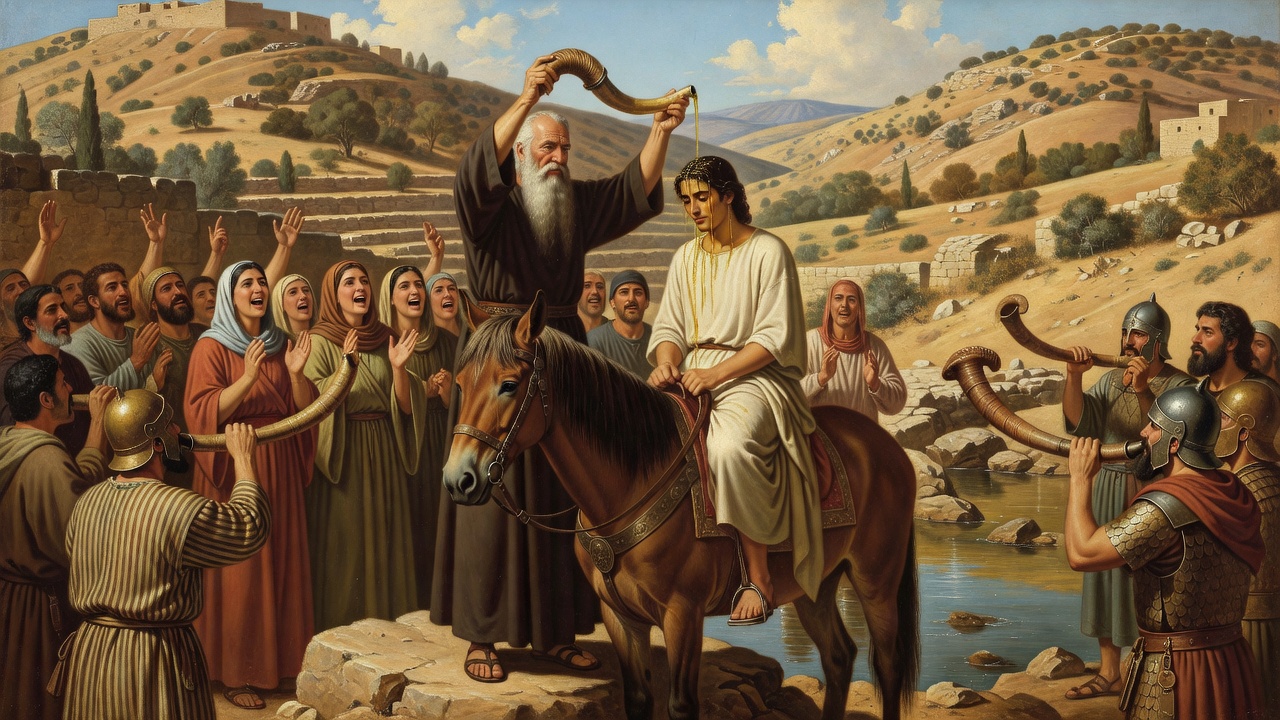
- Riding the king's own mule was a decisive public declaration of royal authority. By David's explicit instruction, Solomon was escorted down to the spring of Gihon, where Zadok anointed him king with oil taken from the tabernacle to the sound of ram's horns and popular celebration.Sources: Gihon · Zadok · the Bible text itself
- Upon hearing of Solomon's public coronation, Adonijah fled in terror and sought asylum by taking hold of the horns of the sacrificial altar. Solomon granted him conditional clemency, sparing his life so long as he proved himself a worthy man.Sources: Adonijah · the Bible text itself
Notes written with AI assistance from open sources (Theographic Bible Metadata, CC BY-SA 4.0; Easton’s Bible Dictionary, public domain) and reviewed before publishing.
Places in this chapter
- Shunem · Today: Sulam · 32.606, 35.334 · verse 3
- Serpent’s Stone · Today: within 100 m of Bir Ayub · 31.767, 35.236 · verse 9
- Gihon · Today: Gihon Spring · 31.773, 35.236 · verses 33, 38, 44, 45
- Jerusalem · 31.777, 35.234 · verse 40
Only places identified with high confidence are shown (90% or more according to the scholarly sources compiled by OpenBible). Period map: DARE (Digital Atlas of the Roman Empire), CC BY 4.0; modern map: © OpenStreetMap contributors; places: OpenBible.info (CC BY 4.0).
Credits and license for this translation
Bibiri Kuyie Nnɑ́ɑǹtì Pɑ́tíri
The Holy Bible in the Ditammari language of Benin
copyright © 2001 SIM International
Language: Ditammari
Translation by: SIM
This translation text is made available to you under the
terms of the Creative Commons License: Attribution-Noncommercial-No Derivative Works.
( http://creativecommons.org/licenses/by-nc-nd/3.0/ )
In addition, you have permission to port the text to different file formats, as long as you
do not change any of the text or punctuation of the Bible.
You may share, copy, distribute, transmit, and extract portions
or quotations from this work, provided that you include the above copyright
information:
You must give Attribution to the work.
You do not sell this work for a profit.
You do not make any derivative works that change any of the actual words or punctuation of the Scriptures.
Permissions beyond the scope of this license may be
available if you contact
us with your request.
This translation is made available to you under the terms of the
Creative Commons Attribution-No Derivatives license 4.0.
You may share and redistribute this Bible translation or extracts from it in any format, provided that:
You include the above copyright and source information.
You do not make any derivative works that change any of the actual words or punctuation of the Scriptures.
Pictures included with Scriptures and other documents on this site are licensed just for use with those Scriptures and documents.
For other uses, please contact the respective copyright owners.
2022-05-31
Source: http://ebible.org/tbzsim/ · eBible.org