Zechariah 1
Biblica® Open Nueva Biblia Viva 2008 · Tap a verse to see its cross-references.
About this book
About Zechariah
- Easton's Bible Dictionary (1897) presents Zechariah as a prophet of Judah, the eleventh of the twelve minor prophets, and, like Ezekiel, of priestly descent. He calls himself the son of Berechiah, while Ezra calls him the son of Iddo, whom Easton identifies as his grandfather. Easton dates the start of his prophetic work to the second year of Darius, 520 B.C., about sixteen years after the first company returned from exile, and notes that he was a contemporary of Haggai.Sources: Easton: Zechariah · Zechariah
- Zechariah addressed people who had returned from exile. Zerubbabel, also known by the Persian name Sheshbazzar, led the first returning company and, in the second year after the return, built an altar and laid the temple foundation on the ruins of the house destroyed by Nebuchadnezzar. Joshua, son of Jozadak, was high priest under Zerubbabel, and Easton says the night visions were meant to console these returned exiles and stir up hope.Sources: Easton: Zechariah · Zerubbabel · Joshua
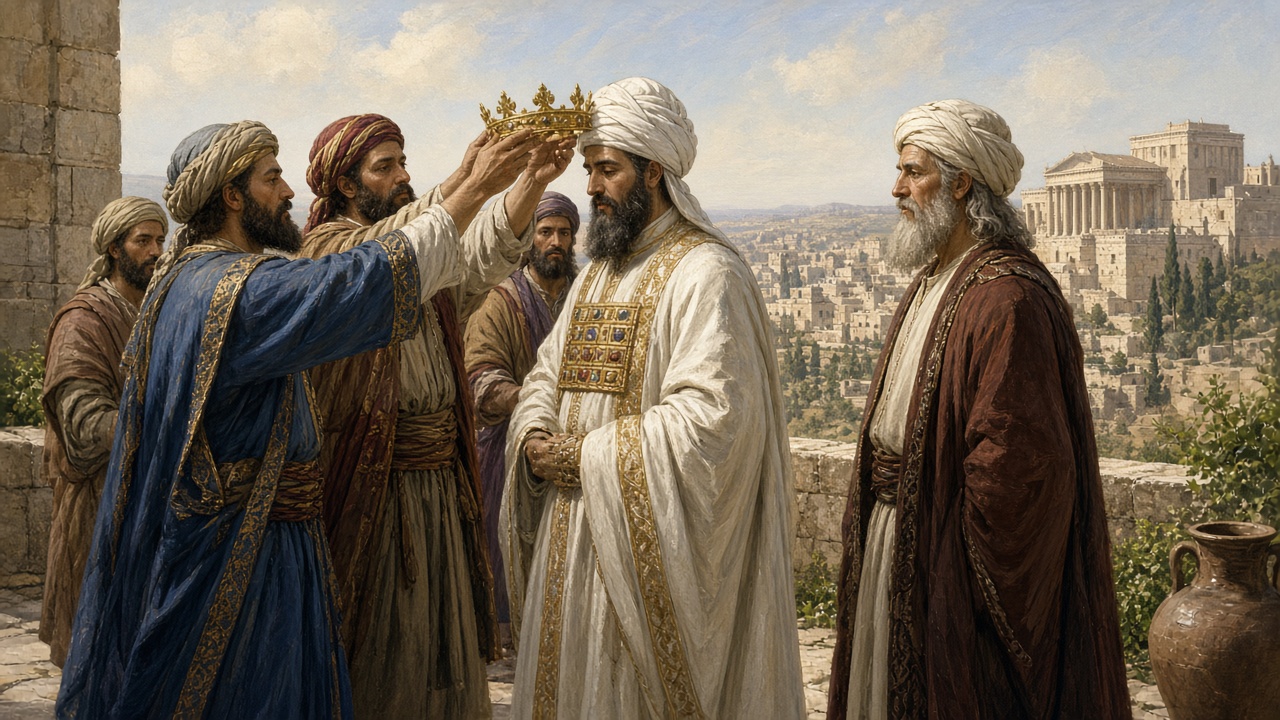
- Easton divides the book into two parts, chapters 1-8 and chapters 9-14. The first opens with a preface recalling the nation's past as a solemn warning, then eight visions in a single night and the symbolic crowning of Joshua; chapters 7 and 8, given two years later, answer whether mourning for the city's destruction should continue and encourage the people with the assurance of God's presence and blessing. The second part bears no date. Easton thinks a considerable interval separates it from the first and describes its two burdens as God's dealings down to the Advent and as glory, final conflict, and triumph in what he calls the latter day.Sources: Easton: Zechariah
- Easton explains the name Zechariah as meaning that Jehovah is renowned or remembered. A notable scene is the symbolic crowning of Joshua; Easton reads it as showing how the kingdoms of the world become the kingdom of God's Christ. Helem, named in Zechariah 6:10, is identified as one who returned from Babylon.Sources: Easton: Zechariah · Helem · Joshua
Notes written with AI assistance from open sources (Theographic Bible Metadata, CC BY-SA 4.0; Easton’s Bible Dictionary, public domain) and reviewed before publishing.
Un llamado a volver al Señor
1En el mes octavo del segundo año del reinado de Darío, el Señor le habló a Zacarías hijo de Berequías y nieto de Idó. El Señor Todopoderoso le pidió que les diera a los israelitas este mensaje: 2«Yo, que soy el Señor, estuve muy enojado con los antepasados de ustedes. 3Pero si ustedes vuelven a serme fieles devotos, entonces yo volveré a estar con ustedes en todo momento. Lo afirmo yo, el Señor Todopoderoso.
4»¡No sean como sus antepasados! A ellos, los primeros profetas les rogaron en vano que dejaran de actuar de forma tan malvada. “¡Vamos, vuélvanse de nuevo en fieles devotos del Señor”, les decían en nombre del Señor. Pero no. Ellos no quisieron seguir la exhortación; no les hicieron caso a sus palabras.
5»Hace tiempo ya que murieron sus antepasados, y también los profetas antiguos. 6Pero se cumplió en ellos todo lo que les advertí por medio de mis profetas. Sí, el castigo anunciado cayó sobre ellos. Entonces al fin se arrepintieron. “Hemos recibido del Señor Todopoderoso lo que merecían nuestras malas acciones”, dijeron. “El Señor hizo lo que nos había advertido que haría”».
El hombre entre los mirtos
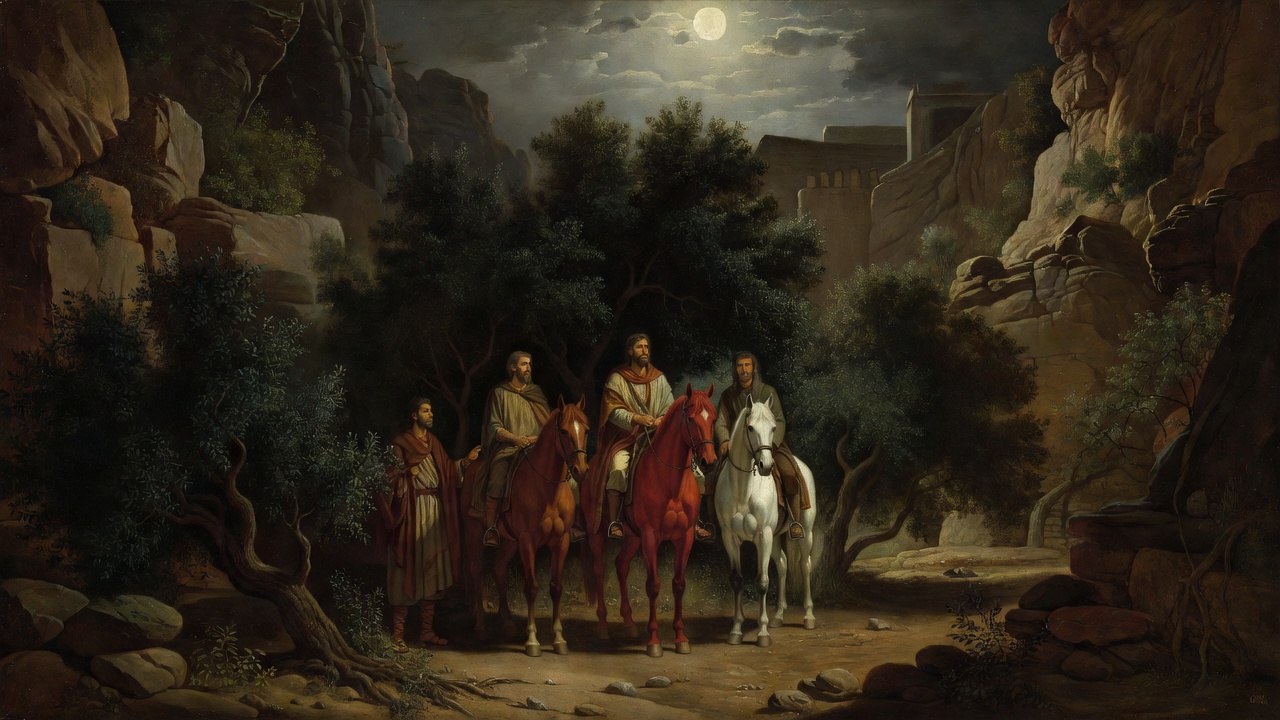
7En el día veinticuatro del mes onceavo, el mes llamado sebat, del segundo año del reinado de Darío, el Señor le habló a Zacarías hijo de Berequías y nieto de Idó. Lo hizo con estas palabras. 8Vi en la noche a un hombre montado sobre un caballo alazán que estaba entre los mirtos, en medio de un valle. Detrás de él había otros caballos: alazanes, bayos y blancos, cada uno con su jinete. 9Un ángel se paró a mi lado, y yo le pregunté: «Señor, ¿para qué son todos estos caballos?». El ángel me respondió: «Te explicaré». 10Entonces el jinete del caballo alazán, que estaba entre los mirtos, me dijo: «A estos caballos el Señor los ha enviado a recorrer la tierra».
11Entonces los demás jinetes informaron al ángel del Señor: «Hemos recorrido toda la tierra, y en todo lugar hay paz y prosperidad». 12Después de oír esto, el ángel del Señor dijo en oración: « Señor Todopoderoso, durante setenta años has castigado mucho a Jerusalén y las ciudades de Judá. ¿Cuánto tiempo más tendrá que pasar antes de que les muestres tu misericordia nuevamente?».
13Y el Señor le respondió con palabras alentadoras y buenas al ángel que estaba parado a mi lado. 14Entonces el ángel me dijo: «Proclama este mensaje del Señor Todopoderoso: “Amo mucho a Jerusalén, es tan inmenso el amor que le tengo, que hasta siento celos por ella. 15Estoy encolerizado con las naciones paganas que viven tan tranquilas, porque se aprovecharon de que estuve enojado un poco con mi pueblo, y estas naciones aprovecharon para afligir a mi pueblo mucho más de lo que debían. 16Por lo tanto, así digo yo, el Señor: Volveré a tener misericordia de Jerusalén, y haré que mi templo sea reedificado. Lo afirmo yo, el Señor Todopoderoso”».
17El ángel me dijo que también diera este mensaje de parte del Señor Todopoderoso: «Nuevamente las ciudades de Israel volverán a rebosar de prosperidad, y el Señor consolará otra vez a Jerusalén, la bendecirá y vivirá en ella».
18Luego levanté la vista, y vi cuatro cuernos. 19Entonces le pregunté al ángel que hablaba conmigo: «¿Qué significan estos cuernos?». Y él me respondió: «Representan las cuatro potencias que han esparcido a Judá, a Israel y a Jerusalén».
20Entonces el Señor me mostró cuatro herreros. 21Y le pregunté: «¿Qué han venido a hacer estos hombres?». El ángel me respondió: «Han venido a derribar los cuernos que dispersaron a Judá, y para acabar por completo con su poder, por lo que le hicieron a Judá».
Did you know?
Zechariah's Call to Repentance and Night Visions
- Zechariah's prophetic ministry began in the second year of King Darius (520 BC), about sixteen years after the first company of exiles returned. Although described as the son of Berechiah, biblical records also associate him with his grandfather Iddo, reflecting his priestly lineage.Sources: Zechariah · the Bible text itself
- In his night vision among the myrtle trees, an angel asks about the seventy years of indignation against Jerusalem and Judah. The LORD responds with comforting words, promising that mercy will return, the temple will be rebuilt, and Jerusalem will be chosen once again.Sources: Jerusalem · the Bible text itself
- The chapter concludes with a vision of four horns that scattered Judah, Israel, and Jerusalem, followed by four craftsmen sent to terrify and cast down these hostile foreign powers.Sources: the Bible text itself
Notes written with AI assistance from open sources (Theographic Bible Metadata, CC BY-SA 4.0; Easton’s Bible Dictionary, public domain) and reviewed before publishing.
Places in this chapter
- Jerusalem · 31.777, 35.234 · verses 12, 14, 16, 17, 19
- Zion · Today: Jerusalem · 31.777, 35.234 · verses 14, 17
Only places identified with high confidence are shown (90% or more according to the scholarly sources compiled by OpenBible). Period map: DARE (Digital Atlas of the Roman Empire), CC BY 4.0; modern map: © OpenStreetMap contributors; places: OpenBible.info (CC BY 4.0).
Credits and license for this translation
Biblica® Open Nueva Biblia Viva 2008
The Holy Bible in Spanish: Biblica® Open Nueva Biblia Viva 2008 (Bible)
copyright © 2008 Biblica, Inc.
Language: Español
Contributor: Biblica, Inc.
Biblica® Open Nueva Biblia Viva™
Copyright © 2006, 2008 by Biblica, Inc.
“Biblica” es una marca registrada en la oficina de Patentes y Marcas de los Estados Unidos por Biblica, Inc. Usado con permiso.
“Biblica” is a trademark registered in the United States Patent and Trademark Office by Biblica, Inc. Used with permission.
Creative Commons license
This work is made available under the Creative Commons Attribution-ShareAlike 4.0 International License (CC BY-SA). To view a copy of this license, visit https://creativecommons.org/licenses/by-sa/4.0 or send a letter to Creative Commons, PO Box 1866, Mountain View, CA 94042, USA.
You have permission to copy and distribute this Work, as long as you do not change it and you keep the title as it is. Changing or translating this Work will create a derivative work. When you publish this derivative work, you must list what changes you have made where people can see them, such as on a website. You must also show where the original Work is from: “The original Work by its copyright holders is available for free at www.biblica.com and open.bible .”
Notice of copyright must appear on the title or copyright page of the work as follows:
Biblica® Open Nueva Biblia Viva™
Copyright © 2006, 2008 by Biblica, Inc.
“Biblica” es una marca registrada en la oficina de Patentes y Marcas de los Estados Unidos por Biblica, Inc. Usado con permiso.
“Biblica” is a trademark registered in the United States Patent and Trademark Office by Biblica, Inc. Used with permission.
You must also make your derivative work available under the same license (CC BY-SA).
If you would like to notify Biblica, Inc. regarding your translation of this work, please contact us at https://open.bible/#feedback .
This translation is made available to you under the terms of the
Creative Commons Attribution Share-Alike license 4.0.
You have permission to share and redistribute this Bible translation in any format and to make reasonable revisions and adaptations of this translation, provided that:
You include the above copyright and source information.
If you make any changes to the text, you must indicate that you did so in a way that makes it clear that the original licensor is not necessarily endorsing your changes.
If you redistribute this text, you must distribute your contributions under the same license as the original.
Pictures included with Scriptures and other documents on this site are licensed just for use with those Scriptures and documents.
For other uses, please contact the respective copyright owners.
Note that in addition to the rules above, revising and adapting God's Word involves a great responsibility to be true to God's Word. See Revelation 22:18-19.
2025-05-21
Source: http://ebible.org/spaonbv/ · eBible.org