Micah 1
Biblica® Open Nueva Biblia Viva 2008 · Tap a verse to see its cross-references.
About this book
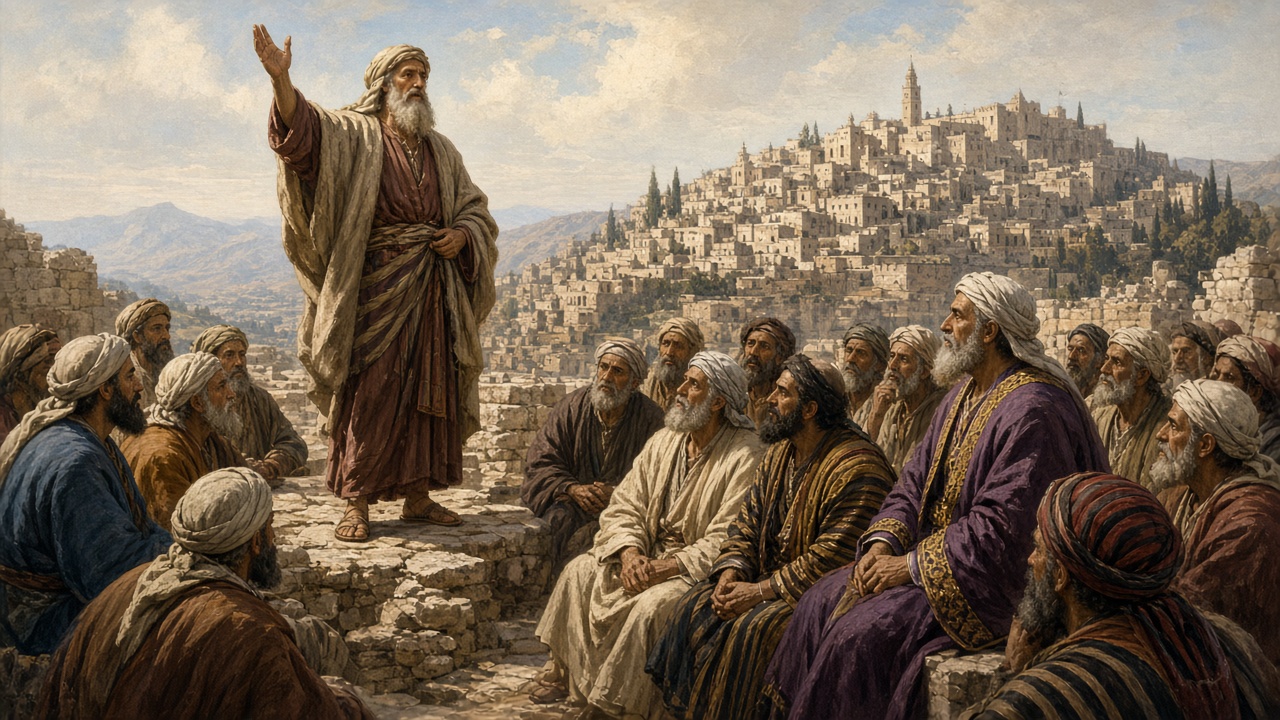
About Micah
- According to the superscription, as Easton's Bible Dictionary (1897) records it, Micah exercised his office in the reigns of Jotham, Ahaz, and Hezekiah. Easton offers two ways of reckoning that ministry: from the beginning of Jotham's reign to the end of Hezekiah's (B.C. 759-698), about fifty-nine years, or from Jotham's death to Hezekiah's accession (B.C. 743-726), only sixteen years.Sources: Easton: Micah, Book of
- Easton's entry on Micah calls him the Morasthite, to distinguish him from Micaiah the son of Imlah. It describes him as a prophet of Judah, a contemporary of Isaiah, and a native of Moresheth of Gath, and notes that very little is known of the circumstances of his life.Sources: Micah
- The kings named in the superscription ruled Judah in succession. Easton says that Jotham, son of Uzziah, reigned in the fear of God and prospered; that Ahaz turned to idolatry and appealed to Tiglath-pileser of Assyria against Rezin of Damascus and Pekah of Israel; and that Hezekiah, Ahaz's son, carried out a reformation to abolish idolatry in Judah, including worship of the bronze serpent.Sources: Jotham · Ahaz · Hezekiah
- Easton's Bible Dictionary (1897) places the book sixth among the so-called minor prophets and describes three sections, each opening with a rebuke, "Hear ye," and closing with a promise: chapters 1-2; chapters 3-5, addressed especially to the princes and heads of the people; and chapters 6-7, in which Jehovah is represented as holding a controversy with his people. The whole concludes with a song of triumph over the great deliverance the Lord will achieve for his people.Sources: Easton: Micah, Book of
- Easton notes that the book opens with words also spoken by Micaiah the son of Imlah: "Hearken, O people, every one of you." He records that the prediction in Micah 5:2 about the place where Christ should be born is quoted in Matthew 2:6, and lists further links: Micah 5:2 with John 7:42, Micah 7:6 with Matthew 10:21, 35-36, and the closing verse, Micah 7:20, with the song of Zacharias in Luke 1:72-73.Sources: Easton: Micah, Book of
Notes written with AI assistance from open sources (Theographic Bible Metadata, CC BY-SA 4.0; Easton’s Bible Dictionary, public domain) and reviewed before publishing.
1Este es el mensaje dado por el Señor a Miqueas, que vivió en el pueblo de Moréset, durante los reinados de Jotán, Acaz y Ezequías, reyes de Judá. Este mensaje está dirigido a Samaria y a Jerusalén, recibido por Miqueas en forma de visiones.
La venida del Señor
2¡Atención, todos los pueblos de la tierra! ¡Escuchen bien, habitantes de esta nación! Dios el Señor, desde su santo templo ha hecho acusaciones contra ustedes.
3¡Miren! ¡El Señor viene! Deja su trono en el cielo y viene hacia la tierra caminando sobre la cumbre de los montes. 4Es tanto el poder y la fuerza que irradia, que los montes se derriten a su paso y fluyen como cera puesta en el fuego; los valles se dividen como cortados por las aguas que se desbordan con fuerza.
5¿Y por qué ocurre esto? ¡Por los actos malvados cometidos por los israelitas, por las maldades de los descendientes de Jacob! En Samaria se admiran los actos malvados de los israelitas; en Jerusalén abundan las injusticias y toda clase de maldad.
6Por lo tanto, toda la ciudad de Samaria será derribada y se convertirá en un montón de ruinas, se verá después del castigo como si fuera un campo arado para plantar viñas. El Señor destruirá sus murallas y sus fortalezas defensivas; dejará al descubierto sus cimientos, y las piedras con las que fueron construidas serán arrancadas y esparcidas por el valle. 7Todas las imágenes de sus ídolos serán destruidas, ya sea con fuego o a golpes de martillo. Como esos ídolos fueron hechos con el salario que recibían las prostitutas, serán quemados y convertidos en monedas para pagar a las prostitutas.
Lamento de Miqueas
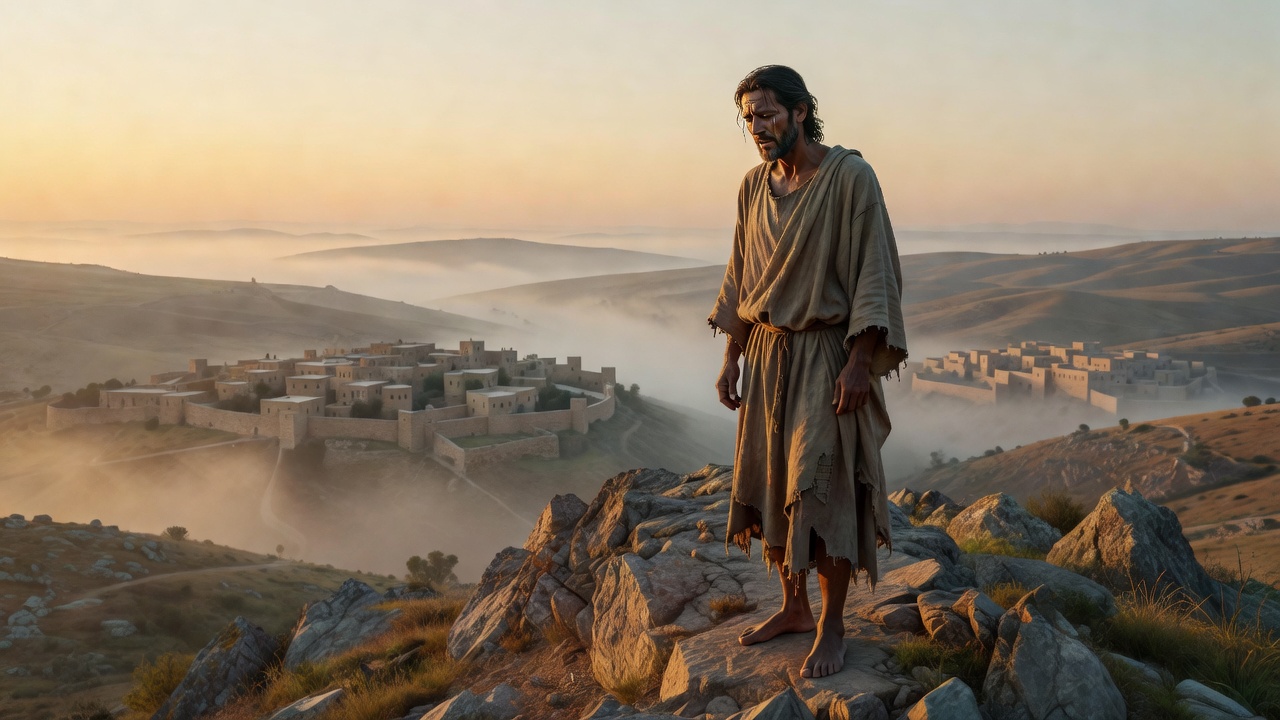
8Lloraré y me sentiré muy triste; andaré descalzo y desnudo. Aullaré como si fuera un chacal, y chillaré como si fuera un avestruz herido. 9El motivo de mi tristeza es que Samaria ha sido herida de muerte, y no hay remedio que la cure. Y lo peor es que su mal ha llegado hasta Judá. ¡Se ha extendido hasta la entrada de Jerusalén, que es mi pueblo!
10¡No digan nada de esto en la ciudad de Gat, ni se pongan a llorar! ¡Revuélquense en el polvo por la angustia y en la vergüenza de la ciudad de Bet Leafrá! 11Allí van los de Safir, llevados como esclavos, azotados, desnudos y avergonzados. Los habitantes de Zanán no se atreven a salir fuera de sus murallas. Los habitantes de Bet Ésel están llorando, y ustedes se quedan sin su apoyo. 12El pueblo de Marot en vano anhela días mejores; sólo amargura les espera porque el Señor ha extendido su castigo hasta alcanzar a Jerusalén.
13¡Rápido! ¡Engancha los carros a los caballos y huye, pueblo de Laquis! Tú fuiste la primera de las ciudades de Judá que siguió el mal ejemplo de Israel. En ti se hallaron los mismos delitos que se cometieron en Israel.
14Despídanse de Moréset Gat, pues no hay forma de salvarla. La ciudad de Aczib ha engañado a los reyes de Israel. 15Habitantes de Maresá, también contra ustedes será enviado un conquistador. ¡El orgullo de Israel irá a parar a Adulán!
16Habitantes de Sion, rasúrense la barba y rápense la cabeza en señal de dolor, pues sus hijos, que ustedes tanto aman, serán llevados como esclavos a tierras lejanas.
Did you know?
Judgment on Samaria and Jerusalem
- Micah was a prophet from the town of Moresheth in Judah who ministered during the reigns of kings Jotham, Ahaz, and Hezekiah. His opening message pronounces impending divine judgment on both Samaria, the capital of the northern kingdom of Israel, and Jerusalem, the capital of Judah.Sources: Micah · the Bible text itself
- The chapter includes a poetic lament over several settlements in the Judean foothills and low country, such as Lachish, Zaanan, and Beth-le-aphrah (meaning house of dust, where inhabitants are told to roll in dust). Micah warns that the devastation reaching Samaria would advance directly to the gates of Jerusalem.Sources: Beth-le-aphrah · the Bible text itself
Notes written with AI assistance from open sources (Theographic Bible Metadata, CC BY-SA 4.0; Easton’s Bible Dictionary, public domain) and reviewed before publishing.
Places in this chapter
- Jerusalem · 31.777, 35.234 · verses 1, 5, 9, 12
- Samaria · 32.276, 35.195 · verses 1, 5, 6, 9
- Lachish · Today: Tell ed Duweir · 31.565, 34.849 · verse 13
- Zion · Today: Jerusalem · 31.777, 35.234 · verse 13
- Mareshah · Today: Tel Maresha · 31.593, 34.898 · verse 15
Only places identified with high confidence are shown (90% or more according to the scholarly sources compiled by OpenBible). Period map: DARE (Digital Atlas of the Roman Empire), CC BY 4.0; modern map: © OpenStreetMap contributors; places: OpenBible.info (CC BY 4.0).
Credits and license for this translation
Biblica® Open Nueva Biblia Viva 2008
The Holy Bible in Spanish: Biblica® Open Nueva Biblia Viva 2008 (Bible)
copyright © 2008 Biblica, Inc.
Language: Español
Contributor: Biblica, Inc.
Biblica® Open Nueva Biblia Viva™
Copyright © 2006, 2008 by Biblica, Inc.
“Biblica” es una marca registrada en la oficina de Patentes y Marcas de los Estados Unidos por Biblica, Inc. Usado con permiso.
“Biblica” is a trademark registered in the United States Patent and Trademark Office by Biblica, Inc. Used with permission.
Creative Commons license
This work is made available under the Creative Commons Attribution-ShareAlike 4.0 International License (CC BY-SA). To view a copy of this license, visit https://creativecommons.org/licenses/by-sa/4.0 or send a letter to Creative Commons, PO Box 1866, Mountain View, CA 94042, USA.
You have permission to copy and distribute this Work, as long as you do not change it and you keep the title as it is. Changing or translating this Work will create a derivative work. When you publish this derivative work, you must list what changes you have made where people can see them, such as on a website. You must also show where the original Work is from: “The original Work by its copyright holders is available for free at www.biblica.com and open.bible .”
Notice of copyright must appear on the title or copyright page of the work as follows:
Biblica® Open Nueva Biblia Viva™
Copyright © 2006, 2008 by Biblica, Inc.
“Biblica” es una marca registrada en la oficina de Patentes y Marcas de los Estados Unidos por Biblica, Inc. Usado con permiso.
“Biblica” is a trademark registered in the United States Patent and Trademark Office by Biblica, Inc. Used with permission.
You must also make your derivative work available under the same license (CC BY-SA).
If you would like to notify Biblica, Inc. regarding your translation of this work, please contact us at https://open.bible/#feedback .
This translation is made available to you under the terms of the
Creative Commons Attribution Share-Alike license 4.0.
You have permission to share and redistribute this Bible translation in any format and to make reasonable revisions and adaptations of this translation, provided that:
You include the above copyright and source information.
If you make any changes to the text, you must indicate that you did so in a way that makes it clear that the original licensor is not necessarily endorsing your changes.
If you redistribute this text, you must distribute your contributions under the same license as the original.
Pictures included with Scriptures and other documents on this site are licensed just for use with those Scriptures and documents.
For other uses, please contact the respective copyright owners.
Note that in addition to the rules above, revising and adapting God's Word involves a great responsibility to be true to God's Word. See Revelation 22:18-19.
2025-05-21
Source: http://ebible.org/spaonbv/ · eBible.org